Link Copied!
Angelina Grimké Quotes (1805-1879)
Activist

About Angelina Grimké
Angelina Emily Grimké Weld (February 21, 1805 – October 26, 1879) was an American political activist, women's rights advocate, supporter of the women's suffrage movement, and besides her sister, Sarah Moore Grimké, the only known white Southern woman to be a part of the abolition movement. Her partner was the abolitionist Theodore Dwight Weld.
Best Angelina Grimké Quotes
Shortest
Earliest
Explore our curated collection of the most famous and impactful Angelina Grimké quotes.
“The time to assert a right is the time when that right is denied.”

“I know you do not make the laws but I also know that you are the wives and mothers, the sisters and daughters of those who do.”

“Men who hold the rod over slaves rule in the councils of the nation; and they deny our right to petition and remonstrate against abuses of our sex and our kind.”
“We may talk of occupying neutral ground, but on this subject, in its present attitude, there is no such thing as neutral ground. He that is not for us is against us”

“I fled to the land of Penn; for here, thought I, sympathy for the slave will surely be found. But I found it not. The people were kind and hospitable, but the slave had no place in their thoughts.”
“Let the zeal and love, the faith and works of our English sisters quicken ours; that while the slaves continue to suffer, and when they shout deliverance, we may feel the satisfaction of having done what we could.”
“I will lift up my voice like a trumpet, and show this people their transgression, their sins of omission towards the slave, and what they can do towards affecting Southern mind, and overthrowing Southern oppression.”


“If the arm of the North had not caused the Bastille of slavery to totter to its foundation, you would not hear those cries. A few years ago, and the South felt secure, and with a contemptuous sneer asked, "Who are the abolitionists? The abolitionists are nothing?"”

“What if the mob should now burst in upon us, break our meeting, and commit violence upon our persons? Would that be anything compared with what the slaves endure? No, no; and we do not remember them "as bound with them," if shrink in the time of peril, or feel unwilling to sacrifice ourselves, if need be, for their sake.”
“Women of Philadelphia! Allow me as a Southern woman, with much attachment to the land of my birth, to entreat you to come up to this work. Especially let me urge you to petition. Men may settle this and other questions at the ballot box, but you have no such right. It is only through petitions that you can reach the legislature.”

“If a law commands me to sin I will break it; if it calls me to suffer, I will let it take its course unresistingly. The doctrine of blind obedience and unqualified submission to any human power, whether civil or ecclesiastical, is the doctrine of despotism, and ought to have no place among Republicans and Christians.”
“As a Southerner, I feel that it is my duty to stand up here tonight and bear testimony against slavery. I have seen it! I have seen it! I know it has horrors that can never be described. I was brought up under its wing: I witnessed for many years its demoralizing influences and its destructiveness to human happiness. It is admitted by some that the slave is not happy under the worst forms of slavery. But I have never seen a happy slave.”

“To work as we should in this cause, we must know what slavery is. Let me urge everyone to buy the books which have been written on this subject and read them, and then lend them to your neighbors. Give your money no longer for things which pander to pride and lust, but aid in scattering "the living coals of truth upon the naked heart of this nation"-in circulating appeals to the sympathies of Christians in behalf of the outraged and suffering slave.”
“The ground upon which you [abolitionists] stand is holy ground; never—never surrender it. If you surrender it, the hope of the slave is extinguished, and the chains of his servitude will be strengthened a hundred fold … But remember you must be willing to suffer the loss of all things – willing to be the scorn and reproach of professor and profane. You must obey our great master’s injunction: “Fear not them that kill the body, and after that, have nothing more that they can do.””
“Do you ask, then, "What has the North to do?" I answer, cast out first the spirit of slavery from your own hearts, and then lend your aid to convert the South. Each one present has a work to do, be his or her situation what it may, however limited their means or insignificant their supposed influence. The great men of this country will not do this work; the church will never do it. A desire to please the world, to keep the favor of all parties and of all conditions, makes them dumb on this and every other unpopular subject.”
“How wonderfully constituted is the human mind! How it resists, as long as it can, all efforts to reclaim it from error! I feel that all this disturbance is but an evidence that our efforts are the best that could have been adopted, or else the friends of slavery would not care for what we say and do. The South knows what we do. I am thankful that they are reached by our efforts. Many times have I wept in the land of my birth over the system of slavery. I knew of none who sympathized in my feelings; I was unaware that any efforts were made to deliver the oppressed; no voice in the wilderness was heard calling on the people to repent and do works meet for repentance, and my heart sickened within me. Oh, how should I have rejoiced to know that such efforts as these were being made.”
“Many persons go to the South for a season, and are hospitably entertained in the parlor and at the table of the slaveholder. They never enter the huts of the slaves; they know nothing of the dark side of the picture, and they return home with praises on their lips of the generous character of those with whom they had tarried. Or if they have witnessed the cruelties of slavery, by remaining silent spectator they have naturally become callous-an insensibility has ensued which prepares them to apologize even for barbarity. Nothing but the corrupting influence of slavery on the hearts of the Northern people can induce them to apologize for it; and much will have been done for the destruction of Southern slavery when we have so reformed the North that no one here will be willing to risk his reputation by advocating or even excusing the holding of men as property.”
“I have been suffering for the last two days on account of [my brother] Henry’s boy [slave] having run away, because he was threatened with a whipping … and yet … I am constantly told that the situation of slaves is very good, much better than that of their owners … No wonder poor John ran away at the threat of a flogging, when he has told me more than once that when Henry last whipped him he was in pain for a week afterwards. I don’t know how the boy must have felt, but I know that the night was one of agony for me; for it was dreadful not only to hear the blows, but the oaths and curses Henry uttered went like daggers to my heart. And this was done too, in the house of one who is regarded as a light in the church.... I was directed to go to Henry and tenderly remonstrate with him ...I said that would be treating him worse than he would treat his horse.He now became excited, and replied that he considered his horse no comparison better than John, and would not treat it so … I felt so much overcome as to be compelled to seat myself or rather to fall into a chair before him, but I don’t think he observed this ...”
“My mind is composed & I cannot but feel astonished at the total change which has passed over me during the last 6 months. Then I delighted in going to meeting 4 & 5 times every week, but now my Master says “be still” & I would rather be at home, for I find that every stream from which I used to drink the refreshing waters of salvation is dry & that I have been led to the fountain itself. Once, Oh how precious were the means of grace to my soul with how much power did sermons come home to my heart, but now I sometimes wish I could close my ears to the preacher’s voice and retire into the closet of my heart & old converse with him who speaks as never man spake. And it is possible I would ask myself tonight, is is possible that today is the last time I expect to visit the Presbyterian Church, the last time I expect to teach my interesting class in Sabbath School and it is right that I should separate myself from a people whom I have loved so tenderly & who have been the helpers of my joy, is it right to give up instructing those dear children whom I have so often carried in the arms of faith & love to a throne of grace.”
“I appeal to you, my friends, as mothers; Are you willing to enslave your children? You start back with horror and indignation at such a question. But why, if slavery is no wrong to those upon whom it is imposed? Why, if as has often been said, slaves are happier than their masters, free from the cares and perplexities of providing for themselves and their families? Why not place your children in the way of being supported without your having the trouble to provide for them, or they for themselves? Do you not perceive that as soon as this golden rule of action is applied to yourselves that you involuntarily shrink from the test; as soon as your actions are weighed in this balance of the sanctuary that you are found wanting? Try yourselves by another of the Divine precepts, "Thou shalt love thy neighbor as thyself." Can we love a man as we love ourselves if we do, and continue to do unto him, what we would not wish any one to do to us? Look too, at Christ's example, what does he say of himself, "I came not to be ministered unto, but to minister." Can you for a moment imagine the meek, and lowly, and compassionate Saviour, a slaveholder? Do you not shudder at this thought as much as at that of his being a warrior? But why, if slavery is not sinful?”

What Angelina Grimké Said About Others
Discover personal opinions Angelina Grimké shared regarding contemporaries.
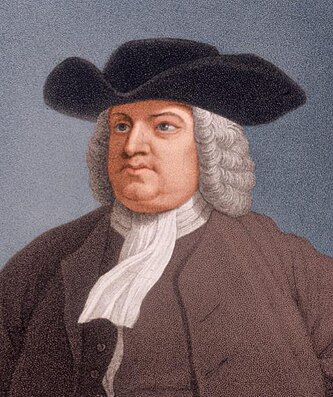
Angelina Grimké on William Penn
“I fled to the land of Penn; for here, thought I, sympathy for the slave will surely be found. But I found it not. The people were kind and hospitable, but the slave had no place in their thoughts.”

Quotes About Angelina Grimké
Gain deeper perspective through quotes about Angelina Grimké from others.
Susan B. Anthony on Angelina Grimké
“I never saw that great woman, Mary Wollstonecraft, but I l have read her eloquent and unanswerable arguments in behalf of the liberty of womankind. I have met and known most of the progressive women who came after her — Lucretia Mott, the Grimké sisters, Elizabeth Cady Stanton, Lucy Stone — a long galaxy of great women. I have heard them speak, saying in only slightly different phrases exactly what I heard these newer advocates of the cause say at these meetings. Those older women have gone on and most of those who work with me in the early years have gone. I am here for a little time only and then my place will be filled as theirs was filled. The fight must not cease; you must see that it does not stop. There have been others also just as true and devoted to the cause — I wish I could name every one — but with such women consecrating their lives, failure is impossible!”

Gerda Lerner on Angelina Grimké
“I came into the study of history through my work on a biography of Sarah and Angelina Grimké... I was fascinated with the lives and characters of these two women, who had not had a biography written about them since 1885... They spoke to me in a very personal way and I wanted to transmit what I received from these women of another century to readers of my day.”

Mary Livermore on Angelina Grimké
“When the early Woman Suffragists took their stand for a redress of the wrongs of women, they used no vague or ambiguous language. As early as 1838 Angelina Grimké and Abby Kelley, who were the first women orators I ever heard, uttered their protest against the wrongs of woman, from an anti-slavery platform. They severely denounced the custom of society which closed the doors of remunerative industries against women, and thereby condemned large numbers to abject dependence and compulsory poverty.”

Lucy Stone on Angelina Grimké 2 quotes
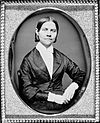
“The anti-slavery cause had come to break stronger fetters than those that held the slave. The idea of equal rights was in the air. The wail of the slave, his clanking fetters, his utter need, appealed to everybody. Women heard. Angelina and Sarah Grimké and Abby Kelley went out to speak for the slaves. Such a thing had never been heard of. An earthquake shock could hardly have startled the community more. Some of the abolitionists forgot the slave in their efforts to silence the women. The Anti-Slavery Society rent itself in twain over the subject. The Church was moved to its very foundation in opposition.”
Ida Tarbell on Angelina Grimké
“Some of her best friends protested [Grimké speaking in mixed gatherings of men and women]. It was not "proper," nor "right," for a woman to attempt to instruct a man. But Angelia Grimke had gone far beyond the point where propriety weighted when it was a question of humanity. She held that "Whatever is morally right for a man to do is morally right for a woman to do. I recognize no rights but human rights."”

Grimké on Angelina Grimké
About Angelina Grimké
Angelina Emily Grimké Weld (February 21, 1805 – October 26, 1879) was an American political activist, women's rights advocate, supporter of the women's suffrage movement, and besides her sister, Sarah Moore Grimké, the only known white Southern woman to be a part of the abolition movement. Her partner was the abolitionist Theodore Dwight Weld.