Link Copied!
Gabriel Marcel Quotes (1889-1973)
Philosopher, Playwright

About Gabriel Marcel
Gabriel Honoré Marcel (7 December 1889 – 8 October 1973) was a French philosopher, playwright, music critic and leading Christian existentialist.
Best Gabriel Marcel Quotes
Shortest
Earliest
Explore our curated collection of the most famous and impactful Gabriel Marcel quotes.

“The dynamic element in my philosophy, taken as a whole, can be seen as an obstinate and untiring battle against the spirit of abstraction.”
“When the pessimist Besme says in La Ville that nothing is, he means precisely this, that there is no experience that withstands the analytical test.”

“The greatest merit of the critical spirit is that it tends to cure fanaticism, and it is logical enough that in our own fanatical times the critical spirit should tend to disappear.”

“It would be relevant … to point out the sinister part played by speed, by belief in speed as a value, by, in a word, a kind of impatience that has had a profound effect in changing even the very rhythms of the life of the spirit for the worse.”

“The great pessimists in the history of thought [...] have prepared our minds to understand that despair can be what it was for Nietzsche (though on an infra-ontological level and in a domain fraught with mortal dangers) the springboard to the loftiest affirmation.”
“I am therefore led to assume or to recognise a form of participation which has the reality of a subject; this participation cannot be, by definition, an object of thought; it cannot serve as a solution - it appears beyond the realm of problems: it is metaproblematical.”

“No philosopher would be willing to accept the idea of philosophy as a way of escape, but might there not be a question of the philosopher being in duty bound to refuse to accept a world, like our real world here, of disorder and crime where the values of the mind and spirit can no longer find a home?”

“Life in a world centred on function is liable to dispair because in reality the world is empty, it rings hollow; and if it resist this temptation it is only to the extent that there comes into plat from within it and in its favour certain hidden forces which are beyond its power to conceive or to recognise.”
“No two beings, and no two situations, are really commensurable with each other. To become aware of this fact is to undergo a sort of crisis. But it is with this crisis in our moral awareness as a starting-point, that there becomes possible that cry from us towards the creative principle, and that demand by it on us, which each must answer in his own way.”
“No doubt I shall be told: "In the immense majority of cases this is an illusion." But it is of the essence of hope to exlclude the consideration of cases; moreover, it can be shown that there exists an ascedning dialectic of hope, whereby hope rises to a plane which transcends the level of all possible empirical disproof - the plane of salvation as opposed to that of success in whatever form”

“The past, when it is merely known historically (that is, as a subject for abstract study), somehow piles itself up outside our real lives. ... I think that one of the duties of a philosopher, if he shows himself worthy of his vocation today, is to attack quite directly those dissimulating forces which are all working toward what might be called the neutralization of the past; and whose conjoint effect consists in arousing in contemporary man a feeling of what I should like to call insulation in time.”

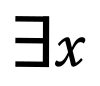
“Is there such a thing as being? What is it? etc. Yet immediately an abyss opens under my feet: I who ask these questions about being, how can I be sure that I exist?
Yet surely I, who formulate this problem should be able to remain outside it - before or beyond it? Clearly this is not so. The more I consider it the more I find that this problem tends inevitably to invade the proscenium from which it is excluded in theory: it is only by means of a fiction that Idealism in its traditional form seeks to maintain on the margin of being the consciousness which asserts or denies it.”
Yet surely I, who formulate this problem should be able to remain outside it - before or beyond it? Clearly this is not so. The more I consider it the more I find that this problem tends inevitably to invade the proscenium from which it is excluded in theory: it is only by means of a fiction that Idealism in its traditional form seeks to maintain on the margin of being the consciousness which asserts or denies it.”
“And yet it is clear that the normal development of a human being implies an increasingly precise and, as it were, automatic division between what concerns him and what does not, between things for which he is responsible and those for which he is not. Each one of us becomes the centre of a sort of mental space arranged in concentric zones of decreasing interest and participat ion. It is as though each one of us secreted a kind of shell which gradually hardened and imprisoned him; and this sclerosis is bound up with the hardening of the categories in accordance with which we conceive and evaluate the world.”
“We ought to be able to see more clearly just for what reason the mass-man is so easily turned into a fanatic. What I seem to myself to have grasped is this, that such permeability is due to the fact that man, that the individual, in order to belong to the mass, to be a mass-man, has had, as a preliminary, though without having had the least awareness of it, to divest himself of that substantial reality which was linked to his initial individuality or rather to the fact of his belonging to a small actual group. The incredibly sinister role of the press, the cinema, the radio, has consisted in passing that original reality through a pair of flattening rollers to substitute for it a superimposed pattern of ideas and images with no real roots in the deep being of the subject of this experiment.”

“There are today an increasing number of people whose awareness is, in the strict sense of the phrase, without a focus; and the techniques which have transformed the framework of daily life for such people at such a prodigious pace – I am thinking particularly of the cinema and the radio – are making a most powerful contribution towards this defocalizing process. … The human creature under normal conditions finds his bearings in relation to other people, and also to physical objects, that are not only close to him in space but also linked to him by a feeling of intimacy. Of this feeling of intimacy, I would say that in itself it tends to create a focus for human awareness. One might go farther and speak of a kind of constellation, at once material and spiritual, which under normal conditions assembles itself around each human being. … This kind of constellation around the individual life is, in a great many countries, in process of dissolution.”

Gabriel Marcel Quotes by Topic
Find exactly what you are looking for by browsing this categorized list of Gabriel Marcel quotes by topic.
Gabriel Marcel on Critical theory
“The greatest merit of the critical spirit is that it tends to cure fanaticism, and it is logical enough that in our own fanatical times the critical spirit should tend to disappear.”

Gabriel Marcel on Speed
“It would be relevant … to point out the sinister part played by speed, by belief in speed as a value, by, in a word, a kind of impatience that has had a profound effect in changing even the very rhythms of the life of the spirit for the worse.”
Gabriel Marcel on Mass media
“The incredibly sinister role of the press, the cinema, the radio, has consisted in passing that original reality through a pair of flattening rollers to substitute for it a superimposed pattern of ideas an images with no real roots in the deep being of the subject of this experiment.”

Gabriel Marcel on Value (ethics)
“No philosopher would be willing to accept the idea of philosophy as a way of escape, but might there not be a question of the philosopher being in duty bound to refuse to accept a world, like our real world here, of disorder and crime where the values of the mind and spirit can no longer find a home?”

Gabriel Marcel on Vocation
“I think that one of the duties of a philosopher, if he shows himself worthy of his vocation today, is to attack quite directly those dissimulating forces which are all working toward what might be called the neutralization of the past; and whose conjoint effect consists in arousing in contemporary man a feeling of what I should like to call insulation in time.”
Gabriel Marcel on Historicism
“The past, when it is merely known historically (that is, as a subject for abstract study), somehow piles itself up outside our real lives. ... I think that one of the duties of a philosopher, if he shows himself worthy of his vocation today, is to attack quite directly those dissimulating forces which are all working toward what might be called the neutralization of the past; and whose conjoint effect consists in arousing in contemporary man a feeling of what I should like to call insulation in time.”
What Gabriel Marcel Said About Others
Discover personal opinions Gabriel Marcel shared regarding contemporaries.
Gabriel Marcel on Mera Jism Meri Marzi
“Finally, what I have said about the dog s obedience applies
also to my union with my body ; my body is only properly mine to the degree to which I am able to control it. But here, too, there is a limit, an inner limit ; if as a consequence of some serious illness, I lose all control of my body, it tends to cease to be my body, for the very profound reason that, as we say in the common
idiom, I am no longer myself. But at the other extreme, pos
sibly as a yogi I also cease to be myself,...., whereas in the mean position which is that of what we call normal life, such control is always partial, always threatened
to some degree.”

Gabriel Marcel on Albert Camus
“There is a fundamental question which Camus never seems to have put to himself: by what right am I qualified to pass this sort of verdict on the world [the verdict that the world is absurd]? Of two things, one: either I myself do not belong to the world under discussion, but in that case have I not every reason to suppose that it is impenetrable to me and that I am not qualified to judge its value- or, on the other hand, I really am part of the world, and if the world is absurd, so am I absurd too. Camus, perhaps, might concede this. It is, however, a destructive concession. Again, of two things, one: either I am myself absurd in my ultimate nature- in which case so are my judgements absurd, they negate themselves, it cannot be conceded that they have any sort of validity- or, on the other hand, we have to admit that I have a double nature, that is there is a part of me which is not absurd and which can make valid judgements about absurdity: but how did this aspect of me which is not absurd get there? I cannot even admit the possibility of its existence without beginning to formulate a kind of dualism which, in some sense, splits my original assertion of the total absurdity of the universe apart.”

About Gabriel Marcel
Gabriel Honoré Marcel (7 December 1889 – 8 October 1973) was a French philosopher, playwright, music critic and leading Christian existentialist.