Link Copied!
Cato the Elder Quotes (-234--149)
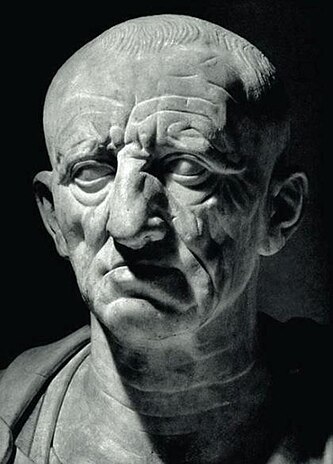


About Cato the Elder
Marcus Porcius Cato (234 BC – 149 BC), Roman statesman, often called "The Censor," Sapiens, Priscus, or Major (the Elder), to distinguish him from Cato the Younger (his great-grandson).
Best Cato the Elder Quotes
Shortest
Earliest
Explore our curated collection of the most famous and impactful Cato the Elder quotes.
“Ceterum censeo Carthaginem esse delendam.”

“Those who commit private theft pass their lives in confinement and fetters; plunderers of the public, in gold and purple.”
Cato the Elder Quotes by Topic
Find exactly what you are looking for by browsing this categorized list of Cato the Elder quotes by topic.
Cato the Elder on Fools
Cato the Elder on Agriculture
“When you have decided to purchase a farm, be careful not to buy rashly; do not spare your visits and be not content with a single tour of inspection. The more you go, the more will the place please you, if it be worth your attention. Give heed to the appearance of the neighbourhood, - a flourishing country should show its prosperity. "When you go in, look about, so that, when needs be, you can find your way out."”

Cato the Elder on Husbandry
“When you have decided to purchase a farm, be careful not to buy rashly; do not spare your visits and be not content with a single tour of inspection. The more you go, the more will the place please you, if it be worth your attention. Give heed to the appearance of the neighbourhood, - a flourishing country should show its prosperity. "When you go in, look about, so that, when needs be, you can find your way out."”

Cato the Elder on Manager
“These are the duties of the overseer: He should maintain discipline. He should observe the feast days. He should respect the rights of others and steadfastly uphold his own. He should settle all quarrels among the hands; If any one is at fault he should administer the punishment. He should take care that no one on the place is in want, or lacks food or drink; in this respect he can afford to be generous, for he will thus more easily prevent picking and stealing.”

What Cato the Elder Said About Others
Discover personal opinions Cato the Elder shared regarding contemporaries.
Cato the Elder on Plutarch 4 quotes
“He said they that were serious in ridiculous matters would be ridiculous in serious affairs.”

Quotes About Cato the Elder
Gain deeper perspective through quotes about Cato the Elder from others.
Introduction on Cato the Elder
“The pursuits of commerce would be as admirable as they are profitable if they were not subject to so great risks: and so, likewise, of banking, if it was always honestly conducted. For our ancestors considered, and so ordained in their laws, that, while the thief should be cast in double damages, the usurer should make four-fold restitution.”
Of buying a farm on Cato the Elder
“When you have decided to purchase a farm, be careful not to buy rashly; do not spare your visits and be not content with a single tour of inspection. The more you go, the more will the place please you, if it be worth your attention. Give heed to the appearance of the neighbourhood, - a flourishing country should show its prosperity. "When you go in, look about, so that, when needs be, you can find your way out."”

Misattributed Quotes
Quotes mistakenly credited to Cato the Elder
“Woman is a violent and uncontrolled animal, and it is useless to let go the reins and then expect her not to kick over the traces. You must keep her on a tight rein [...] Women want total freedom or rather - to call things by their names - total licence. If you allow them to achieve complete equality with men, do you think they will be easier to live with? Not at all. Once they have achieved equality, they will be your masters ...”
About Cato the Elder
Marcus Porcius Cato (234 BC – 149 BC), Roman statesman, often called "The Censor," Sapiens, Priscus, or Major (the Elder), to distinguish him from Cato the Younger (his great-grandson).