Link Copied!
Apollo Quotes (0-)
King
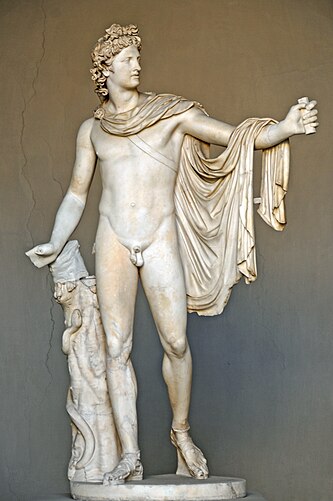



About Apollo
Apollo, deity of archery, healing, herds and flocks, knowledge, light, music and arts, oracles, and protection of the young, in Greek and Roman religion.
Best Apollo Quotes
Shortest
Earliest
Explore our curated collection of the most famous and impactful Apollo quotes.
“Yea, is not even Apollo, with hair and harpstring of gold,
A bitter God to follow, a beautiful God to behold?”
A bitter God to follow, a beautiful God to behold?”
“O divine Appollo and first Eye of the Sky | understand my prayers and fill the radius | remove the wandering fleece from my eyes | and to prepare my journey | please help me and guide me | yes, like an ornate and wise eternal light. (Lorenzo Spirito Gualtieri)”
“Ah good boy, in whose virtue one advances! | So I went to the stars. Now you show well | that you were born from the gods, and that other gods | they will be born from you. You are well worthy | that every war that fate still threatens | at the house of Assáraco, calm down | for your greatness, to which Troy is lesser, | yes, you already don't understand. (Publius Virgilio Marone, Aeneid) referring to Ascanius”
“Sing to Apollo, God of Day,
Whose golden beames with morning play,
And make her eyes so brightly shine,
Aurora’s face is call’d Divine.
Sing to Phoebus, and that Throne
Of Diamonds which he sits upon.
Io, Pæans let us sing,
To Physickes and to Poesies King Crowne all his Altars with bright fire,
Laurels bind about his Lire,
A Daphnean Coronet for his Head,
The Muses dance about his Bed;
When on his ravishing Lute he playes,
Strew his Temple round with Bayes.
Io, Pæans let us sing,
To the glittering Delian King.”
“In the Phrygian fields Marsyas | not only sweet sounds and sings, | but being more learned boasts | of the ruler of Pindus. || Fauns, Satyrs, and Sylvans, | Semi-goats, Semi-Gods, | to the sweet and beautiful poems | with pointed ears stan. || The Satyr is swollen with pride it comes that Apollo mocks himself; | Phoebus descends to the challenge, | and filled my heart with indignation. || The Capriped Satyr sings; | the anger within the God is inflamed, | as in wood ascosa flame | it usually sparkles in the wind. || L'Amadriadi listeners | to like Marsyas they give a sign: | but he brings wood to her beautiful lip Phoebus, and gives breath to it. || Sweet breath now pushes you; | now tremoli and shipped, | flying, the light fingers, | make the Goddesses marvel. || New laurel is grafted into the crin | of the Muses to the ruler, | but the fury did not abate which Marsyas stirred in him. || Formerly of Styx at the peat lake | he swore revenge on her, | and is now in a hurry to complete it above the miserable mortal. || The miserable man is tied to a pine tree he wants it to die little by little; | he already flays it and squojas it | with the rustic knife. || Blood drips, and veins and muscles | they reveal themselves, they show themselves; | and his limbs unravel, | and they are all a plague. || If such a reward were waiting today | who believes himself to be a new Apollo, | what should feral collapse | and yet put up with it! || The exalted poet is indeed mad he hates and takes pride in himself. | The nightingale with hoarse song | so he challenges the vile bird. || But even Phoebus I already don't praise, | because the comparison was low, | and he insulted himself, | when he challenged him to the poem. || He had to with silence | curb vile pride, | nor did he have to be a gentle singer | with a Satyr chattering. || The taller bear, in chains, | aware of his strength, | of the mastin he does not hear and despises | often rabid barking. || This is how Apollo should have shown himself; | but can anyone conquer himself? | Nor is there any virtue that is nearby don't make any mistakes. (Teresa Bandettini)”
Apollo Quotes by Topic
Find exactly what you are looking for by browsing this categorized list of Apollo quotes by topic.
Apollo on Vegetarianism 2 quotes
“I saw that he [Pythagoras] approached the altars in purity, and suffered not his belly to be polluted by partaking of the flesh of animals and that he kept his body pure of all garments woven of dead animal refuse ... I also saw that his philosophical system was in other respects oracular and true.”

Apollo on Freedom
“Make yourself known as a philosopher, that is a free man.”

Apollo on Self-sufficiency
“The soul that does not consider the question of the body’s self-sufficiency cannot make itself self-sufficient.”

Apollo on Artemis
“Driving off with her fast-trotting deer over the hills ... fawning beasts whimper in homage and tremble as Artemis passes by.”

Apollo on Work
“Plato said that virtue has no master. If a person does not honor this principle and rejoice in it, but is purchasable for money, he creates many masters for himself.”

Apollo on Money
“Plato said that virtue has no master. If a person does not honor this principle and rejoice in it, but is purchasable for money, he creates many masters for himself.”

Apollo on Refusal of work
“Plato said that virtue has no master. If a person does not honor this principle and rejoice in it, but is purchasable for money, he creates many masters for himself.”

Apollo on Principles
“Plato said that virtue has no master [Republic 617e]. If a person does not honor this principle and rejoice in it, but is purchasable for money, he creates many masters for himself.”

Apollo on Wage
“Plato said that virtue has no master [Republic 617e]. If a person does not honor this principle and rejoice in it, but is purchasable for money, he creates many masters for himself.”
Apollo on Selling out
“Plato said that virtue has no master [Republic 617e]. If a person does not honor this principle and rejoice in it, but is purchasable for money, he creates many masters for himself.”

Apollo on Olympic Games
“You request my presence at the Olympic Games, and for that reason you have sent envoys. For myself, I would come for the spectacle of physical struggle, except that I would be abandoning the greater struggle for virtue.”

Apollo on Percy Jackson & the Olympians
Apollo on Pythagoreanism
“If someone associates with a true Pythagorean, what will he will get from him, and in what quantity? I would say: statesmanship, geometry, astronomy, arithmetic, harmonics, music, medicine, complete and god-given prophecy, and also the higher rewards — greatness of mind, of soul, and of manner, steadiness, piety, knowledge of the gods and not just supposition, familiarity with blessed spirits and not just faith, friendship with both gods and spirits, self-sufficiency, persistence, frugality, reduction of essential needs, ease of perception, of movement, and of breath, good color, health, cheerfulness, and immortality.”
Apollo on Science in classical antiquity
“If someone associates with a true Pythagorean, what will he will get from him, and in what quantity? I would say: statesmanship, geometry, astronomy, arithmetic, harmonics, music, medicine, complete and god-given prophecy, and also the higher rewards — greatness of mind, of soul, and of manner, steadiness, piety, knowledge of the gods and not just supposition, familiarity with blessed spirits and not just faith, friendship with both gods and spirits, self-sufficiency, persistence, frugality, reduction of essential needs, ease of perception, of movement, and of breath, good color, health, cheerfulness, and immortality.”

Apollo on Circe
“And straightway Circe became aware of the doom of a suppliant and the guilt of murder. Wherefore in reverence for the ordinance of Zeus, the god of suppliants, who is a god of wrath yet mightily aids slayers of men, she began to offer the sacrifice with which ruthless suppliants are cleansed from guilt when they approach the altar. First, to atone for the murder still unexpiated, she held above their heads the young of a sow whose dugs yet swelled from the fruit of the womb, and, severing its neck, sprinkled their hands with the blood; and again she made propitiation with other drink offerings, calling on Zeus the Cleanser, the protector of murder-stained suppliants, And all the defilements in a mass her attendants bore forth from the palace—the Naiad nymphs who ministered all things to her. And within, Circe, standing by the hearth, kept burning atonement-cakes without wine, praying the while that she might stay from their wrath the terrible Furies, and that Zeus himself might be propitious and gentle to them both, whether with hands stained by the blood of a stranger or, as kinsfolk, by the blood of a kinsman, they should implore his grace.”

What Apollo Said About Others
Discover personal opinions Apollo shared regarding contemporaries.
Apollo on Neil Armstrong 2 quotes
“I'll not assert that it was a diversion which prevented a war, but nevertheless, it was a diversion.”

Apollo on Orpheus 2 quotes
“Here the sweet bard his tuneful lyre unstrung, And ceas'd the heavenly music of his tongue; But, with the sound entranc'd, the listening ear Still thought him singing, and still seem'd to hear.”
Apollo on Steven Pressfield
Apollo on Apollonius of Tyana
Apollo on Indian people
“In India I found a race of mortals living upon the Earth, but not adhering to it. Inhabiting cities, but not being fixed to them, possessing everything but possessed by nothing.”

Apollo on Vitruvius
“Delphicus Apollo Socratem omnium sapientissimum Pythiae responsis est professus. Is autem memoratur prudenter doctissimeque dixisse, oportuisse hominum pectora fenestrata et aperta esse, uti non occultos haberent sensus sed patentes ad considerandum. Utinam vero rerum natura sententiam eius secuta explicata et apparentia ea constituisset!”
Apollo on Pythagoras
“If someone associates with a true Pythagorean, what will he will get from him, and in what quantity? I would say: statesmanship, geometry, astronomy, arithmetic, harmonics, music, medicine, complete and god-given prophecy, and also the higher rewards — greatness of mind, of soul, and of manner, steadiness, piety, knowledge of the gods and not just supposition, familiarity with blessed spirits and not just faith, friendship with both gods and spirits, self-sufficiency, persistence, frugality, reduction of essential needs, ease of perception, of movement, and of breath, good color, health, cheerfulness, and immortality.”
About Apollo
Apollo, deity of archery, healing, herds and flocks, knowledge, light, music and arts, oracles, and protection of the young, in Greek and Roman religion.