Link Copied!
`Abd al-Qadir Bada'uni Quotes (1540-1605)

About `Abd al-Qadir Bada'uni
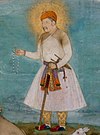
ʿAbd-ul-Qadir Bada'uni (c. 21 August 1540 – c. 5 November 1605) was a historian and translator living in the Mughal Empire.
Best `Abd al-Qadir Bada'uni Quotes
Shortest
Earliest
Explore our curated collection of the most famous and impactful `Abd al-Qadir Bada'uni quotes.
“Hindustan is a nice large place where everything is allowed, and no one cares for another (i.e. interferes in the affairs of others) and people may go as they may.”

““…and in the same year the Sultan for the second time marched against Ranthambhor, and destroyed the country round it, and overthrew the idols and idol-temples, but returned without attempting to reduce the fort…””
““In the year 998 (H./1589 C.E.) Raja Todarmal and Raja Bhagwandas who had remained behind at Lahore hastened to the abode of hell and torment (that is, died) and in the lowest pit became food of serpents and scorpions. May Allah scorch them both.””
““In this year also Sulaiman Kirrani, ruler of Bengal, who gave himself the tide of Hazrati A’la, and had conquered die city of Katak-u-Banaras, that mine of heathenism, and having made the stronghold of Jagannath into the home of Islam, held sway from Kamru to Orissa, attained the mercy of God…””
““And in the year AH 912 (AD 1506), after the rising of the Canopus, he marched against the fortress of ÛntgaRh and laid siege to it, and many of his men joyfully embraced martyrdom, after that he took the fort and gave the infidels as food to the sword… He then cast down the idol-temples, and built there lofty mosques.””

““…At the time of his return he restored the fort of Dholpur also to Binayik Deo, and having spent the rainy season in Agra after the rising of the Canopus in the year AH 910 (AD 1504), marched to reduce the fortress of Mandrayal, which lie took without fighting from the Rajah of Mandrayal, who sued for peace; he also destroyed all the idol-temples and churches of the place…””
“From thence he went to Mathra (Mathura) which is a place of worship of the infidels and the birthplace of Kishan, the son of Basudev, whom the Hindus Worship as a divinity - where there are idol temples without number, and took it without any contest and razed it to the ground. Great wealth and booty fell into the hands of the Muslims, among the rest they broke up by the orders of the Sultan, a golden idol.”

““And in the year AH 698 (AD 1298) he appointed Ulugh Khan to the command of a powerful army, to proceed into the country of Gujarat… Ulugh Khan carried off an idol from Nahrwala… and took it to Dihli where he caused it to be trampled under foot by the populace; then he pursued Rai Karan as far as Somnat, and a second time laid waste the idol temple of Somnat, and building a mosque there retraced his steps.””
“A free-lance adventurer, Muhammad Bakhtyar Khalji, was moving further east. In 1200 AD he sacked the undefended university town of Odantpuri in Bihar and massacred the Buddhist monks in the monasteries. In 1202 AD he took Nadiya by surprise. Badauni records in his Muntakhab-ut-Tawarikh that “property and booty beyond computation fell into the hands of the Muslims and Muhammad Bakhtyar having destroyed the places of worship and idol temples of the infidels founded mosques and Khanqahs”.”

“'In the year AH 402 (AD 1011) he set out for Thanesar and Jaipal, the son of the former Jaipal, offered him a present of fifty elephants and much treasure. The Sultan, however, was not to be deterred from his purpose; so he refused to accept his present, and seeing Thanesar empty he sacked it and destroyed its idol temples, and took away to Ghaznin, the idol known as Chakarsum on account of which the Hindus had been ruined; and having placed it in his court, caused it to be trampled under foot by the people..”

“Jalaluddin Khalji led an expedition to Ranthambhor in 1291 AD. On the way he destroyed Hindu temples at Jhain. The broken idols were sent to Delhi to be spread before the gates of the Jama Masjid. His nephew Alauddin led an expedition to Vidisha in 1292 AD. According to Badauni, Alauddin “brought much booty to the Sultan and the idol which was the object of worship of the Hindus, he caused to be cast in front of the Badaun gate to be trampled upon by the people. The services of Alauddin were highly appreciated, the jagir of Oudh also was added to his other estates.””
““…And in the year AH 631 (AD 1233) having made an incursion in the direction of the province of Malwah and taken Bhilsa and also captured the city of Ujjain, and having destroyed the idol-temple of Ujjain which had been built six hundred years previously, and was called Mahakal, he levelled it to its foundations, and threw down the image of Rai Vikrmajit from whom the Hindus reckon their era… and brought certain other images of cast molten brass and placed them on the ground in front of the door of the mosque of old Dihli and ordered the people to trample them under foot…””

““…The fortress of Badalgarh, which lies below the fortress of Gwaliar, a very lofty structure, was taken from Rai Man Singh and fell into the hands of the Muslims, and a brazen animal which was worshipped by the Hindus also fell into their hands, and was sent by them to Agra, whence it was sent by Sultan Ibrahim to Dihli, and was put over the city gate. The image was removed to Fathpur in the year AH 992 (AD 1584), ten years before the composition of this history, where it was seen by the author of this work. It was converted into gongs, and bells, and implements of all kinds.””

“Muslim power in India suffered a serious setback after Iltutmish. Balban had to battle against a revival of Hindu power. The Katehar Rajputs of what came to be known as Rohilkhand in later history, had so far refused to submit to Islamic imperialism. Balban led an expedition across the Ganges in 1254 AD. According to Badauni, “In two days after leaving Delhi, he arrived in the midst of the territory of Katihar and put to death every male, even those of eight years of age, and bound the women.” But in spite of such wanton cruelty, Muslim power continued to decline till the Khaljis revived it after 1290 AD.”

““In this year on the dismissal of Husain Khan the Emperor gave the pargana of Lak’hnou as jagir to Mahdi Qasim Khan… Husain Khan was exceedingly indignant with Mahdi Qasim Khan on account of this… After a time he left her in helplessness, and the daughter of Mahdi Qasim Bêg at Khairabad with her brothers, and set off from Lak’hnou with the intention of carrying on a religious war, and of breaking the idols and destroying the idol-temples. He had heard that the bricks of these were of silver and gold, and conceiving a desire for this and all the other abundant and unlimited treasures, of which he had heard a lying report, he set out by way of Oudh to the Siwalik mountains…””

““…In the second year after this arrangement Muhammad Bakhtyar brought an army from Behar towards Lakhnauti and arrived at the town of Nudiya, with a small force; Nudiya is now in ruins. Rai Lakhmia (Lakhminia) the governor of that town… fled thence to Kamran, and property and booty beyond computation fell into the hands of the Muslims, and Muhammad Bakhtyar having destroyed the places of worship and idol temples of the infidels founded Mosques and Monasteries and schools and caused a metropolis to be built called by his own name, which now has the name of Gaur.
There where was heard before
The clamour and uproar of the heathen,
Now there is heard resounding
The shout of ‘Allaho Akbar’.””
There where was heard before
The clamour and uproar of the heathen,
Now there is heard resounding
The shout of ‘Allaho Akbar’.””
““…The temple of Nagarkot, which is outside the city, was taken at the very outset… On this occasion many mountaineers became food for the flashing sword. And that golden umbrella, which was erected on the top of the cupola of the temple, they riddled with arrows… And black cows, to the number of 200, to which they pay boundless respect, and actually worship, and present to the temple, which they look upon as an asylum, and let loose there, were killed by the Musulmans. And, while arrows and bullets were continually falling like drops of rain, through their zeal and excessive hatred of idolatry they filled their shoes full of blood and threw it on the doors and walls of the temple… the army of Husain Quli Khan was suffering great hardships. For these reasons he concluded a treaty with them… and having put all things straight he built the cupola of a lofty mosque over the gateway of Rajah Jai Chand.”186”

“Asjadi composed the following qaSida in honour of this expedition:
When the King of kings marched to Somnat,
He made his own deeds the standard of miracles...
'Once more he led his army against Somnat, which is a large city on the coast of the ocean, a place of worship of the Brahmans who worship a large idol. There are many golden idols there. Although certain historians have called this idol Manat, and say that it is the identical idol which Arab idolaters brought to the coast of Hindustan in the time of the Lord of the Missive (may the blessings and peace of God be upon him), this story has no foundation because the Brahmans of India firmly believe that this idol has been in that place since the time of Kishan, that is to say four thousand years and a fraction' The reason for this mistake must surely be the resemblance in name, and nothing else' The fort was taken and Mahmud broke the idol in fragments and sent it to Ghaznin, where it was placed at the door of the Jama' Masjid and trodden under foot.'....”
“The judge of Mathura laid a complaint before the Shaikh [the governor] to the effect that a wealthy and stiff-necked brahman of that place had carried off the materials that he, the judge, had collected for the construction of a mosque and had built of them an idol-temple and that, when the judge had attempted to prevent him, he had, in the presence of witnesses, opened his foul mouth to curse the Prophet and had shown his contempt for Muslims in various other ways. [The brahman was summoned.] Abu’l-Fazl represented to the emperor [Akbar] what he had heard of the case from the people and stated that it was certainly proved that he had uttered abuse of the Prophet. Some of the religious scholars were of the opinion that he should suffer death, while others were in favor of his being publicly paraded on the back of an ass and heavily fined. The question was argued at length. The Shaikh required the emperor’s sanction to the execution of the brahman. No open sanction was given, and the emperor said in private, “Punishments for offences against the Sharica are in the hands of you, the religious scholars; what do you require of me?” The brahman remained for some time in custody on the charge, and the ladies of the imperial harem busied themselves in interceding for his release, but the Shaikh’s known opinions stood in the way. At last, when the Shaikh’s importunity exceeded all bounds, the emperor said, “You have received your answer, it is that which I have already given you.” No sooner had the Shaikh reached his lodging than he issued orders for the execution of the brahman. When this matter was reported to the emperor, he was exceedingly angry. The ladies of his harem complained in private and the Hindu courtiers in public, saying, “You have pampered these mullas till their insolence has reached such a pitch that they pay no heed to your wishes and, merely to display their own power and authority, put men to death without your orders.” One night he set forth the whole case and asked certain time-serving jurists and stirrers-up of strife for a decision on the question. One of them said, “The witnesses who have been produced prove that [the sadr] has committed an offense against the person under cover of the law.” Another said, “The strange thing is that Shaikh cAbd un-nabi should claim to be a descendant of the greatest of the Imams [i.e., Abu Hanifa], according to whose school of theology the cursing of the Prophet by unbelievers who have submitted to the rule of Islam gives no ground for any breach of agreement by Muslims, and in no way absolves Muslims from their obligation to safeguard infidel subjects.” [Akbar then turned to Bada’uni:]
“Have you heard that, supposing there are ninety-nine traditions awarding the punishment of death for a certain offense and one tradition in accordance with which the accused person may be set at liberty, jurists should give the preference to that one tradition?” “Yes, it is just as Your Majesty has said; but this question turns on the maxim ‘Verily legal punishments and inflictions are set aside by doubts’ “Perhaps Shaikh cAbd un-nabi was not aware of this ruling, that he put the unfortunate brahman to death. Yet how could it be so?” “The Shaikh is, beyond all doubt, a learned man, but he must have had some wise purpose in view, in knowingly giving an order contrary to this tradition.” “What purpose can he have had in view?” “The closing of sedition and the uprooting of the germs of insolence from the minds of the common people.” [The discussion continued.] All at once the emperor, opposing my decision, said, “What you say is nonsense!” I immediately made my submission and retired. From this time forth the fortunes of Shaikh Abd un-nabi began to decline.”
“Have you heard that, supposing there are ninety-nine traditions awarding the punishment of death for a certain offense and one tradition in accordance with which the accused person may be set at liberty, jurists should give the preference to that one tradition?” “Yes, it is just as Your Majesty has said; but this question turns on the maxim ‘Verily legal punishments and inflictions are set aside by doubts’ “Perhaps Shaikh cAbd un-nabi was not aware of this ruling, that he put the unfortunate brahman to death. Yet how could it be so?” “The Shaikh is, beyond all doubt, a learned man, but he must have had some wise purpose in view, in knowingly giving an order contrary to this tradition.” “What purpose can he have had in view?” “The closing of sedition and the uprooting of the germs of insolence from the minds of the common people.” [The discussion continued.] All at once the emperor, opposing my decision, said, “What you say is nonsense!” I immediately made my submission and retired. From this time forth the fortunes of Shaikh Abd un-nabi began to decline.”

`Abd al-Qadir Bada'uni Quotes by Topic
Find exactly what you are looking for by browsing this categorized list of `Abd al-Qadir Bada'uni quotes by topic.
`Abd al-Qadir Bada'uni on Khalji dynasty 2 quotes
“Jalaluddin Khalji led an expedition to Ranthambhor in 1291 AD. On the way he destroyed Hindu temples at Jhain. The broken idols were sent to Delhi to be spread before the gates of the Jama Masjid.”

`Abd al-Qadir Bada'uni on Vidisha
“Jalaluddin Khalji led an expedition to Ranthambhor in 1291 AD. On the way he destroyed Hindu temples at Jhain. The broken idols were sent to Delhi to be spread before the gates of the Jama Masjid. His nephew Alauddin led an expedition to Vidisha in 1292 AD. According to Badauni, Alauddin “brought much booty to the Sultan and the idol which was the object of worship of the Hindus, he caused to be cast in front of the Badaun gate to be trampled upon by the people. The services of Alauddin were highly appreciated, the jagir of Oudh also was added to his other estates.””

`Abd al-Qadir Bada'uni on Chhan, Sawai Madhopur
“Jalaluddin Khalji led an expedition to Ranthambhor in 1291 AD. On the way he destroyed Hindu temples at Jhain. The broken idols were sent to Delhi to be spread before the gates of the Jama Masjid. His nephew Alauddin led an expedition to Vidisha in 1292 AD. According to Badauni, Alauddin “brought much booty to the Sultan and the idol which was the object of worship of the Hindus, he caused to be cast in front of the Badaun gate to be trampled upon by the people. The services of Alauddin were highly appreciated, the jagir of Oudh also was added to his other estates.””
`Abd al-Qadir Bada'uni on Mamluk dynasty (Delhi)
“Muslim power in India suffered a serious setback after Iltutmish. Balban had to battle against a revival of Hindu power. The Katehar Rajputs of what came to be known as Rohilkhand in later history, had so far refused to submit to Islamic imperialism. Balban led an expedition across the Ganges in 1254 AD. According to Badauni, “In two days after leaving Delhi, he arrived in the midst of the territory of Katihar and put to death every male, even those of eight years of age, and bound the women.” But in spite of such wanton cruelty, Muslim power continued to decline till the Khaljis revived it after 1290 AD.”

`Abd al-Qadir Bada'uni on Rohilkhand
“Muslim power in India suffered a serious setback after Iltutmish. Balban had to battle against a revival of Hindu power. The Katehar Rajputs of what came to be known as Rohilkhand in later history, had so far refused to submit to Islamic imperialism. Balban led an expedition across the Ganges in 1254 AD. According to Badauni, “In two days after leaving Delhi, he arrived in the midst of the territory of Katihar and put to death every male, even those of eight years of age, and bound the women.” But in spite of such wanton cruelty, Muslim power continued to decline till the Khaljis revived it after 1290 AD.”

What `Abd al-Qadir Bada'uni Said About Others
Discover personal opinions `Abd al-Qadir Bada'uni shared regarding contemporaries.
`Abd al-Qadir Bada'uni on Akbar 2 quotes
““In this year on the dismissal of Husain Khan the Emperor gave the pargana of Lak’hnou as jagir to Mahdi Qasim Khan… Husain Khan was exceedingly indignant with Mahdi Qasim Khan on account of this… After a time he left her in helplessness, and the daughter of Mahdi Qasim Bêg at Khairabad with her brothers, and set off from Lak’hnou with the intention of carrying on a religious war, and of breaking the idols and destroying the idol-temples. He had heard that the bricks of these were of silver and gold, and conceiving a desire for this and all the other abundant and unlimited treasures, of which he had heard a lying report, he set out by way of Oudh to the Siwalik mountains…””
`Abd al-Qadir Bada'uni on Jalal-ud-Din Khalji
“Jalaluddin Khalji led an expedition to Ranthambhor in 1291 AD. On the way he destroyed Hindu temples at Jhain. The broken idols were sent to Delhi to be spread before the gates of the Jama Masjid.”

`Abd al-Qadir Bada'uni on Ghiyas ud din Balban
“Muslim power in India suffered a serious setback after Iltutmish. Balban had to battle against a revival of Hindu power. The Katehar Rajputs of what came to be known as Rohilkhand in later history, had so far refused to submit to Islamic imperialism. Balban led an expedition across the Ganges in 1254 AD. According to Badauni, “In two days after leaving Delhi, he arrived in the midst of the territory of Katihar and put to death every male, even those of eight years of age, and bound the women.” But in spite of such wanton cruelty, Muslim power continued to decline till the Khaljis revived it after 1290 AD.”

Quotes About `Abd al-Qadir Bada'uni
Gain deeper perspective through quotes about `Abd al-Qadir Bada'uni from others.
Badaoni on `Abd al-Qadir Bada'uni
“Abdul Qadir Badaoni who was then one of Akbar's court chaplains or imams, states that he sought an interview with the emperor when the royal troops were marching against Rana Pratap in 1576, begging leave of absence for "the privilege of joining the campaign to soak his Islamic beard in Hindu infidel blood".”
Sharma Sri Ram. on `Abd al-Qadir Bada'uni
“Badayuni alone remains. In order to understand his criticism it is necessary to understand him first. He was an ultra-conservative in religious matters for whom the beaten path was the only path to salvation. All non-Muslims were condemned to eternal hell according to him. He could not mention a Hindu name without boiling over with pious wrath. Shi’as were equally creatures for contempt. If Birbar is called *a bastard’, Shi’as were dubbed ‘heretics, fools, worshippers of the devil, fit only to be cast out’. He could not tolerate even a scholar of Muhammad Ghaus’s reputation if he happened to show common courtesy to Hindus. He would not go to pay his respects to Muhammad Ghaus when he discovered that he used to show respect to certain Hindus by rising to salute them. When Abu’l FaizI becomes a Shi’a, he is at a loss how to describe the change, and says alternately that he became a religious recluse and a Hindu, Islam to him seemed to centre not even in the observances of its outward ceremonials alone but in the display of militant hostility towards the non-Muslims. He was prepared heartily to condemn any one found negligent in these outward things.”
About `Abd al-Qadir Bada'uni
ʿAbd-ul-Qadir Bada'uni (c. 21 August 1540 – c. 5 November 1605) was a historian and translator living in the Mughal Empire.