Link Copied!
Zeno of Elea Quotes (-490--430)
Philosopher, King, Inventor


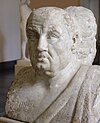
About Zeno of Elea
Zeno of Elea (pronounced /ˈziːnoʊ əv ˈɛliə/, Greek: Ζήνων ὁ Ἐλεάτης) (ca. 490 BC? – ca. 430 BC?) was a pre-Socratic Greek philosopher of southern Italy and a member of the monistic Eleatic school founded by Parmenides. Aristotle declared him the inventor of the dialectic, which involves a dialogue between two or more people who may hold differing views, yet wish to pursue truth by seeking agreement with one another; in contrast to debate, in which two or more people hold differing views and wish to persuade an audience or prove one another wrong. He is most famous for his paradoxes, which Bertrand Russell described as "immeasurably subtle and profound."
Zeno of Elea Quotes
Shortest
Earliest
Explore our curated collection of the most famous and impactful Zeno of Elea quotes.
“The truth is, that these writings of mine were meant to protect the arguments of Parmenides against those who make fun of him and seek to show the many ridiculous and contradictory results which they suppose to follow from the affirmation of the one. My answer is addressed to the partisans of the many, whose attack I return with interest by retorting upon them that their hypothesis of the being of many, if carried out, appears to be still more ridiculous than the hypothesis of the being of one. Zeal for my master led me to write the book in the days of my youth, but some one stole the copy; and therefore I had no choice whether it should be published or not; the motive, however, of writing, was not the ambition of an elder man, but the pugnacity of a young one.”
Zeno of Elea Quotes by Topic
Find exactly what you are looking for by browsing this categorized list of Zeno of Elea quotes by topic.
Zeno of Elea on Motion 3 quotes
“That which is in locomotion must arrive at the half-way stage before it arrives at the goal.”

Zeno of Elea on Hypothesis
“The truth is, that these writings of mine were meant to protect the arguments of Parmenides against those who make fun of him and seek to show the many ridiculous and contradictory results which they suppose to follow from the affirmation of the one. My answer is addressed to the partisans of the many, whose attack I return with interest by retorting upon them that their hypothesis of the being of many, if carried out, appears to be still more ridiculous than the hypothesis of the being of one. Zeal for my master led me to write the book in the days of my youth, but some one stole the copy; and therefore I had no choice whether it should be published or not; the motive, however, of writing, was not the ambition of an elder man, but the pugnacity of a young one.”
What Zeno of Elea Said About Others
Discover personal opinions Zeno of Elea shared regarding contemporaries.
Zeno of Elea on Parmenides
“The truth is, that these writings of mine were meant to protect the arguments of Parmenides against those who make fun of him and seek to show the many ridiculous and contradictory results which they suppose to follow from the affirmation of the one. My answer is addressed to the partisans of the many, whose attack I return with interest by retorting upon them that their hypothesis of the being of many, if carried out, appears to be still more ridiculous than the hypothesis of the being of one.”

Quotes About Zeno of Elea
Gain deeper perspective through quotes about Zeno of Elea from others.
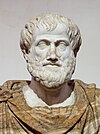
Aristotle on Zeno of Elea
“Zeno's arguments about motion, which cause so much disquietude to those who try to solve the problems that they present, are four in number. The first asserts the non-existence of motion on the ground that that which is in locomotion must arrive at the half-way stage before it arrives at the goal. [...] The second is the so-called 'Achilles', and it amounts to this, that in a race the quickest runner can never overtake the slowest, since the pursuer must first reach the point whence the pursued started, so that the slower must always hold a lead.”
John Lemprière on Zeno of Elea
“It is said that he attempted to deliver his country from the tyranny of Nearchus. His plot was discovered, and he was exposed to (he most excruciating torments to reveal the names of his accomplices; but this be bore with unparalleled fortitude, and, not to be at last conquered by tortures, he cut off his tongue with his teeth, and spit it into the face of the tyrant. Some say that he was pounded alive in a mortar, and that in the midst of his torments he called to Nearchus, as if to reveal something of importance; the tyrant approached him, and Zeno, as if willing to whisper to him, caught his ear with his teeth, and bit it off.”
Soren Kierkegaard on Zeno of Elea
“All skepticism is a kind of idealism. Hence when the skeptic Zeno pursued the study of skepticism by endeavoring existentially to keep himself unaffected by whatever happened, so that when once he had gone out of his way to avoid a mad dog, he shamefacedly admitted that even a skeptical philosopher is also sometimes a man, I find nothing ridiculous in this. There is no contradiction, and the comical always lies in a contradiction. On the other hand, when one thinks of all the miserable idealistic lecture-witticisms, the jesting and coquetry in connection with playing the idealist while in the professorial chair, so that the lecturer is not really an idealist, but only plays the fashionable game of being an idealist; when one remembers the lecture-phrase about doubting everything, while occupying the lecture platform, aye, then it is impossible not to write a satire merely by recounting the facts. Through an existential attempt to be an idealist, one would learn in the course of half a year something very different from this game of hide-and-seek on the lecture platform. There is no special difficulty connected with being an idealist in the imagination; but to exist as an idealist is an extremely strenuous task, because existence itself constitutes a hindrance and an objection. To express existentially what one has understood about oneself, and in this manner to understand oneself, is in no way comical. But to understand everything except one’s own self is very comical.”
John Palmer on Zeno of Elea
“Zeno of Elea, 5th c. B.C. thinker, is known exclusively for propounding a number of ingenious paradoxes. The most famous of these purport to show that motion is impossible by bringing to light apparent or latent contradictions in ordinary assumptions regarding its occurrence. Zeno also argued against the commonsense assumption that there are many things by showing in various ways how it, too, leads to contradiction. We may never know just what led Zeno to develop his famous paradoxes. While it is typically said that he aimed to defend the paradoxical monism of his Eleatic mentor, Parmenides, the Platonic evidence on which this view has resided ultimately fails to support it. Since Zeno's arguments in fact tend to problematize the application of quantitative conceptions to physical bodies and to spatial expanses as ordinarily conceived, the paradoxes may have originated in reflection upon Pythagorean efforts to apply mathematical notions to the natural world. Zeno's paradoxes have had a lasting impact through the attempts, from Aristotle down to the present day, to respond to the problems they raise.”
Robert M. Pirsig on Zeno of Elea
“The followers of Heraclitus insisted the Immortal Principle was change and motion. But Parmenides' disciple, Zeno, proved through a series of paradoxes that any perception of motion and change is illusory. Reality had to be motionless.”


About Zeno of Elea
Zeno of Elea (pronounced /ˈziːnoʊ əv ˈɛliə/, Greek: Ζήνων ὁ Ἐλεάτης) (ca. 490 BC? – ca. 430 BC?) was a pre-Socratic Greek philosopher of southern Italy and a member of the monistic Eleatic school founded by Parmenides. Aristotle declared him the inventor of the dialectic, which involves a dialogue between two or more people who may hold differing views, yet wish to pursue truth by seeking agreement with one another; in contrast to debate, in which two or more people hold differing views and wish to persuade an audience or prove one another wrong. He is most famous for his paradoxes, which Bertrand Russell described as "immeasurably subtle and profound."