Link Copied!
Zadie Smith Quotes (1975-)
Novelist




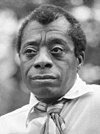

About Zadie Smith
Zadie Smith (born October 27, 1975) is a British novelist. Her fiction is mainly set in London.
Best Zadie Smith Quotes
Shortest
Earliest
Explore our curated collection of the most famous and impactful Zadie Smith quotes.
“He traced the genealogy of the feeling”

“Ryan's freckles were a join-the-dot's enthusiast's wet dream.”
“The greatest lie ever told about love is that it sets you free.”
“A carefully preserved English accent also upped the fear factor.”
“… dressed all in yellow spreading warmth and the promise of sex.”
“It was in the shady groves of dictionaries that Jack fell in love.”


“The more blessed she felt on earth, the more rarely she turned to heaven.”
“Revelation is where all crazy people end up. It's the last stop on the nutso express.”



“You always wanted to make it clear you weren't like the rest of us. You're still doing it.”
“… and catholics give out forgiveness at the same time politicians give out promises and whores give out.”
“In a whisper he began begging for—and, as the sun set, received—the concession people always beg for: a little more time.”

“He talked and talked, the kind of talking you do to stave off the inevitable physical desire. The kind of talk that only increases it.”
“Is there anything more likely to take the shine off an affair that when the lover strikes up a convivial relationship with the lovee's mother.”
“But why do they always have to be laughing and making a song-and-dance about everything? I cannot believe homosexuality is that much fun. Heterosexuality certainly is not.”


“His death is like the soft down on the back of your hand, passing unnoticed in the firmest of handshakes, though the slightest breeze makes every damn one of the tiny hairs stand on end.”
“[Q:] What moves you most in a literary work?
[A:] Ingenuity, honesty, perversity, bravery and — I must admit — natural talent. I feel the same wonder at a brilliant debut as I do watching Simone Biles doing her back flips.”
[A:] Ingenuity, honesty, perversity, bravery and — I must admit — natural talent. I feel the same wonder at a brilliant debut as I do watching Simone Biles doing her back flips.”
Zadie Smith Quotes by Topic
Find exactly what you are looking for by browsing this categorized list of Zadie Smith quotes by topic.
Zadie Smith on Cambridge
Zadie Smith on Black Lives Matter
“In 2016 the Black Lives Matter movement has consolidated this sense of a leaderless movement with foot soldiers in every corner of the land. Some of them are indeed sitting in and marching and campaigning, but it's my sense that many more have taken the message and applied it in disparate ways to their daily practice. I see black hair, in its natural state-free of endpapers-springing out of all the scalps of my friends and students and myself. I see kids expanding the old strictures of the hip-hop aesthetic into Afro-punk and Afro-weird and black-girl-magic and every kind of hyphenated existence. And I see the walk. I see folks making a lot of a little.”

What Zadie Smith Said About Others
Discover personal opinions Zadie Smith shared regarding contemporaries.
Zadie Smith on Fyodor Dostoyevsky
Zadie Smith on Harriet Jacobs
“(The last book that made you cry?) “Incidents in the Life of a Slave Girl,” by Harriet Jacobs.”
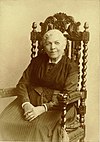
Zadie Smith on Doris Lessing
“I also can’t get along with Turgenev, though I love Russians, or Doris Lessing, though I am a feminist.”
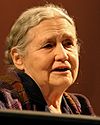
Zadie Smith on Jean Rhys
“...Jean Rhys or Octavia Butler, lady writers much loved but rarely copied. There's too much freedom in them.”
Zadie Smith on Ottessa Moshfegh
“(What’s the last great book you read?) ...Ottessa Moshfegh’s razor-sharp short stories “Homesick for Another World””
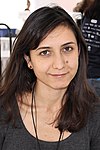
Zadie Smith on C. S. Lewis
Zadie Smith on John Berger
“(What’s the last great book you read?) ...John Berger’s “Portraits” is among the greatest books on art I’ve ever read. I had a sort of spiritual experience with it.”

Zadie Smith on Riad Sattouf
“(What’s the last great book you read?) ...I tore through two volumes of “The Arab of the Future,” by Riad Sattouf — it’s the most enjoyable graphic novel I’ve read in a while.”
Zadie Smith on James Baldwin
Zadie Smith on Roland Barthes
Zadie Smith on George Eliot
“Middlemarch by George Eliot. A work of genius. But more important — and from a purely selfish point of view — a woman wrote it. That might seem ridiculous to male writers, but a man never has to think twice about the gender of genius. He’s got too many examples on his side of the fence. Eliot was the first woman I read who could go toe-to-toe with, say, Tolstoy. I was 15. Since then, I’ve learned how many grand achievements in the novel have been female, but when I was a teenager, that was news to me.”

Zadie Smith on E. M. Forster
“Forster took a risk, opening the comic novel to let in the things it was not designed for; small patches of purple prose were the result. But Forster's innovation remains: he allowed the English comic novel the possibility of a spiritual and bodily life, not simply to exist as an exquisitely worked game of social ethics but as a messy human concoction. He expanded the comic novel's ethical space (while unbalancing its moral certainties) simply by letting more of life in. Austen asks for toleration from her readers. Forster demands something far stickier, more shameful: love.”

Zadie Smith on Franz Kafka
“Kafka's Jewishness was a kind of dream, whose authentic moment was located always in the nostalgic past. His survey of the insectile situation of young Jews in Inner Bohemia can hardly be improved upon: "With their posterior legs they were still glued to their father's Jewishness, and with their waving anterior legs they found no new ground." Alienation from oneself, the conflicted assimilation of migrants, losing one place without gaining another This feels like Kafka in the genuine clothes of an existential prophet, Kafka in his twenty-first-century aspect (if we are to assume, as with Shakespeare, that every new century will bring a Kafka close to our own concerns). For there is a sense in which Kafka's Jewish question ("What have I in common with Jews?") has become everybody's question, Jewish alienation the template for all our doubts. What is Muslimness? What is femaleness? What is Polishness? What is Englishness? These days we all find our anterior legs flailing before us. We're all insects, all Ungeziefer, now.”
About Zadie Smith
Zadie Smith (born October 27, 1975) is a British novelist. Her fiction is mainly set in London.