Link Copied!
Wong Shun-leung Quotes (1935-1997)
Artist
About Wong Shun-leung
Wong Shun-leung (黃淳樑 1935 – 1997) was considered by many to be "the most famous fighter of the Wing Chun clan in the early 1950's". Comments From Wong Shun-leung and Tsui Shan-ting, by Ray Van Raamsdonk Since his reputation was world-wide as a Wing Chun master and a sought after seminar speaker, Interview with Wong Shun-leung, by: Rusper Patel Martial & Laquo Wong had been interviewed many times. Based on information gathered during his various interviews, Wong had expressed his profound knowledge of various aspects of fighting. Today's martial artists can obviously become better fighters if they can fully understand and absorb Wong's profound knowledge of fighting. Following is a small collection of his profound opinions regarding various fighting principles and combat concepts.
Best Wong Shun-leung Quotes
Shortest
Earliest
Explore our curated collection of the most famous and impactful Wong Shun-leung quotes.
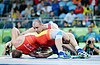
“"This situation can happen to anyone. If you learn Wing Chun you can cope with it better than someone that doesn't know Wing Chun." Interview with Wong Shun-leung, by: Daniel Poon, Qi Magazine”
“"Boxing moves the head to dodge punches, but in Wing Chun we don't, because the head can't be faster than the hand." Interview with Wong Shun-leung, by: Daniel Poon, Qi Magazine”

“" The first punch causes the brain to go to one side of the skull.
If a quick second hit comes, the person is knocked out. " Comments From Wong Shun-leung and Tsui Shan-ting, by Ray Van Raamsdonk”
If a quick second hit comes, the person is knocked out. " Comments From Wong Shun-leung and Tsui Shan-ting, by Ray Van Raamsdonk”
“"To escape from a rear arm lock, straighten the arm by choosing the best line of force. The hand turns and goes in an upward direction. Then step in and unbalance the opponent." Comments From Wong Shun-leung and Tsui Shan-ting, by Ray Van Raamsdonk”
“"In Wing Chun we hit the larger part of the face, usually at an angle, so the butt of the chin is avoided. In Wing Chun, the main target area is from the mouth upward..." Interview with Wong Shun-leung, by: Erle Montaigue”
“"Boxing moves the head to dodge punches, but in Wing Chun we don't,
because the head can't be faster than the hand." Interview with Wong Shun-leung, by: Daniel Poon, Qi Magazine”
because the head can't be faster than the hand." Interview with Wong Shun-leung, by: Daniel Poon, Qi Magazine”
“"If you hold two arms out in front of you and someone grabs them, then you can use the third set elbow movement to escape. Bring the hand right in to touch the body. If the hand is held in a fist, it doesn't work. Then press down with the elbow. " Comments From Wong Shun-leung and Tsui Shan-ting, by Ray Van Raamsdonk”
“"Against a strong kicker there are two ways to fight. If you are experienced, just go into their center and hit. But if you aren't, then back up. Each time the opponent misses, he will lose one degree of confidence. After a while you have more chances." Comments From Wong Shun-leung and Tsui Shan-ting, by Ray Van Raamsdonk”

“"For low side kick attacks, Wong Shun-leung uses the feet. For knee attacks, he said if you hit straight the knee cannot really get you. Against the Thai boxing round kick Wong kicks straight forward, rather than use a clashing force with a Bong leg. This forces the kicker straight back." Comments From Wong Shun-leung and Tsui Shan-ting, by Ray Van Raamsdonk”
“"Wong Shun-leung said that when you punch the head the brain hits the side of the skull. If the brain is against the side of the skull and a second hit follows, then damage and a knockout results because there is no cushioning possible. This is why Wing Chun has its rapid fire punches instead of the pull back approach." Comments From Wong Shun-leung and Tsui Shan-ting, by Ray Van Raamsdonk”
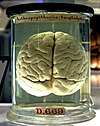
“"In Wing Chun if you throw two fast punches to someone's head they'll be knocked out. The first punch causes the brain to go to one side of the skull. If a quick second hit comes, the person is knocked out. If you withdraw the hand to give the second punch, then the brain can recover (will have more time to recover), but if you don't give this time then a knockout results." Comments From Wong Shun-leung and Tsui Shan-ting, by Ray Van Raamsdonk”
“"For such a fight, you must train hard to just develop the self confidence to enter such a match . You must, by way of your self confidence, know that you can win . When Ving Tsun (Wing Chun) practitioners go to fight and are defeated then the mentality is not to think that the other person is better than himself . Instead he needs to ask himself what were his mistakes to invite the attack . This is the kind of positive thinking which any fighter must possess." Interview with Wong Shun-leung, by: Rusper Patel”
“"''Try not to use two actions. Like when kicking, Wing Chun doesn't like to lift the knee first and then kick because this is a two step action. Also the line of force is wrong because your kick will not have ground support. Instead, your kick will transmit back to your body to off-balance you. This is why Yip Man's kick in the second set looks a bit funny at first. We want to travel in a straight line from the ground to the target, not lift the knee first." Comments From Wong Shun-leung and Tsui Shan-ting, by Ray Van Raamsdonk”
“"I am now teaching Wing Chun and am in no position to criticise other Gung-fu systems. I would like to say, however, that many styles ask men to imitate animal positions. Humans don't have the ability to imitate some positions. For example, some animals can leap around from here to there quite easily because they have long tails to help them maintain balance. We humans don't have such a tail to aid us, and so some techniques may not be natural. Therefore, when someone asks me what animal style Wing Chun is, I will always say that it is 'human style'. We use the weapons which nature has given us to the best of our ability."”
“"The late Sifu Wong Shun-leung, of “Hong Kong” wing chun fame, in his seminars around the world over the years, liked to make a comparison with the modern combat sport of Western boxing, which he observed had changed quite dramatically over just the last sixty or so years, from the crouching-like postures of boxers like Joe Louis in the 30s and 40s, to the flashy footwork of the likes of Muhammad Ali in the 60s and 70s, through to the more upright and flat-footed approach of recent champions such as Mike Tyson." WING CHUN HISTORY, An alternative viewpoint, by David Peterson”
“"The situation where you need to wrestle is when both opponents want to grab. Western boxing is supposed to be hitting, but you still see situations where they want to hold on to each other. This is because one of them is scared. If you are scared then you will try to hold onto your opponent. It is very difficult for someone to lock or hold onto you if you know Wing Chun. You can stop the other guy holding or grabbing. If someone grabs you, you will only try to grab back if you are scared. But if you are not scared, then he cannot force you into a wrestling situation." Interview with Wong Shun-leung, by: Daniel Poon, Qi Magazine”
“"I think the kicks in Wing Chun are enough. It´s much easier to use your hands than to use your feet. Your hand is able to reach your opponent long before your foot. Why take the long way to attack (circle), when there is a much more direct method of attack? If you are using your hands, then your opponent can´t see a kick coming if you have to use it. When you teach Kung Fu, you can fool a lot of people, but not yourself. You can make like a movie and do many complicated movements and kicks, but you only fool yourself as to whether that would work in a real situation of life and death." Interview with Wong Shun-leung, by: Erle Montaigue”
“"In training Biu Jee we are taught to be free . The first forms tell us about normal situations. Biu Jee is for the abnormal situations . The ideas in Biu Jee sometimes will contradict normal Ving Tsun (Wing Chun) ideas in order to allow the person to survive in a bad situation . We are told to do what is necessary to survive and so there are no limitations . Styles have different concepts and objectives . With Ving Tsun (Wing Chun) we want to attack our opponent in a very direct and savage manner . Other styles will contradict this objective by attempting non-direct tactics . If we combine them our objectives can become confused in the heat of the fight . We will be less effective ." Interview with Wong Shun-leung, by: Rusper Patel”
“"In boxing, the style has changed over the years from crouching to being more and more vertical. Also people used to jump around, but the modern boxer like Tyson just moves in flat footed to demolish his opponent in a scientific way. In Wing Chun a person does not bob as in boxing. When two beginners fight it doesn't matter how they fight, but against professionals it makes a difference. Even a smaller [person] is better off to keep the body vertical and step back, then to bob and weave. This is because the hand can move faster than the body. Boxing is still like a game because there are rules for how you can hit and how you can't hit. If you attack someone and they bend their head, then in Wing Chun you can still hit them with your hand even without pulling your hand back." Comments From Wong Shun-leung and Tsui Shan-ting, by Ray Van Raamsdonk”

About Wong Shun-leung
Wong Shun-leung (黃淳樑 1935 – 1997) was considered by many to be "the most famous fighter of the Wing Chun clan in the early 1950's". Comments From Wong Shun-leung and Tsui Shan-ting, by Ray Van Raamsdonk Since his reputation was world-wide as a Wing Chun master and a sought after seminar speaker, Interview with Wong Shun-leung, by: Rusper Patel Martial & Laquo Wong had been interviewed many times. Based on information gathered during his various interviews, Wong had expressed his profound knowledge of various aspects of fighting. Today's martial artists can obviously become better fighters if they can fully understand and absorb Wong's profound knowledge of fighting. Following is a small collection of his profound opinions regarding various fighting principles and combat concepts.