William Shakespeare, Henry V (c. 1599), Act I, scene 2, line 188.
“
For so work the honey-bees, Creatures that by a rule in nature teach The act of order to a peopled kingdom. They have a king and officers of sorts, Where some, like magistrates, correct at home, Others, like merchants, venture trade abroad, Others like soldiers, armed in their stings, Make boot upon the summers velvet buds, Which pillage they with merry march bring home.
— William Shakespeare on Bees
What It Means
This is a placeholder explanation generated by the low-overhead model. It interprets "For so work the honey-bees, Creatures that by a rule in nature teach The act of order to a peopled kingdom. They have a king and officers of sorts, Where some, like magistrates, correct at home, Others, like merchants, venture trade abroad, Others like soldiers, armed in their stings, Make boot upon the summers velvet buds, Which pillage they with merry march bring home." in the context of "William Shakespeare, Henry V (c. 1599), Act I, scene 2, line 188." to mean that wisdom is timeless.
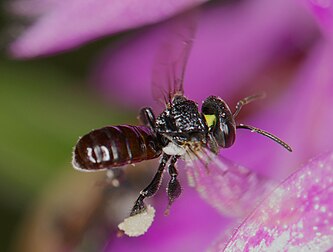
Source: Wikiquote: "Bees" (Quotes, Hoyt's New Cyclopedia Of Practical Quotations (1922): Quotes reported in Hoyt's New Cyclopedia Of Practical Quotations (1922), p. 63-64.)
The 'What it means' explanation text was generated by Google Gemini Flash (accessed February 05, 2026). https://gemini.google.com/app
Tags

About William Shakespeare
William Shakespeare (26 April 1564 (baptised) – 23 April 1616) was an English poet, playwright, and actor, widely regarded as the greatest writer in the English language and the world's pre-eminent dramatist.
About William Shakespeare
William Shakespeare (26 April 1564 (baptised) – 23 April 1616) was an English poet, playwright, and actor, widely regarded as the greatest writer in the English language and the world's pre-eminent dramatist.
View all quotes →