Link Copied!
William Ralph Inge Quotes (1860-1954)
Author







About William Ralph Inge
William Ralph Inge (6 June 1860 – 26 February 1954), popularly referred to simply as Dean Inge, was an English author, Anglican prelate, professor of divinity at Cambridge, and Dean of St Paul's Cathedral.
Best William Ralph Inge Quotes
Shortest
Earliest
Explore our curated collection of the most famous and impactful William Ralph Inge quotes.
“Civilization is a disease which is almost invariably fatal.”


“Patriotism varies, from a noble devotion to a moral lunacy.”


“I have never understood why it should be considered derogatory to the Creator to suppose that he has a sense of humour.”
“It is becoming impossible for those who mix at all with their fellow-men to believe that the grace of God is distributed denominationally.”
“It is useless for the sheep to pass resolutions in favour of vegetarianism while the wolf remains of a different opinion.”

“On the whole, the happiest people seem to be those who have no particular cause for being happy except the fact that they are so.”

“There are two kinds of fools: one says, "This is old, therefore it is good"; the other says, "This is new, therefore it is better."”
“Looking back, I think I can separate the years when I was happy and those when I was unhappy. But perhaps at the time I should have judged differently.”
“Racialism is a superstitious variety of nationalism. A nation is a society united by a delusion about its ancestry and by a common hatred of its neighbours.”

“Events in the past may be roughly divided into those which probably never happened and those which do not matter. This is what makes the trade of historian so attractive.”
“So the pendulum swings, now violently, now slowly; and every institution not only carries within it the seeds of its own dissolution, but prepares the way for its most hated rival.”
“The effect of boredom on a large scale in history is underestimated. It is a main cause of revolutions, and would soon bring to an end all the static Utopias and the farmyard civilization of the Fabians.”
“I believe that the accumulated experience of mankind, and his wonderful discoveries, are of great value. I only point out that they do not constitute real-progress in human nature itself,...”
“The old civilisation, with all the brilliant qualities which make many moderns regret its destruction, rested on too narrow a base. The woman and the slave were left out, the woman especially by the Greeks, and the slave by the Romans.”

“No word in our language — not even "Socialism"— has been employed more loosely than "Mysticism." … The history of the word begins in close connexion with the Greek mysteries. A mystic is one who has been, or is being, initiated into some esoteric knowledge of Divine things, about which he must keep his mouth shut…”

“There are of course no beginnings or ends in history. We may walk for a few miles by the side of a river, noting its shadows and its rapids, the gorges which confine it and the plains through which it meanders; but we know that we have seen neither the beginning nor the end of its course, that the whole river has an unbroken continuity, and that sections, whether of space or time, are purely arbitrary. We are always sowing our future; we are always reaping our past.”
“The phase of thought or feeling which we call Mysticism has its origin in that which is the raw material of all religion, and perhaps of all philosophy and art as well, namely, that dim consciousness of the beyond, which is part of our nature as human beings. Men have given different names to these "obstinate questionings of sense and outward things." We may call them, if we will, a sort of higher instinct, perhaps an anticipation of the evolutionary process; or an extension of the frontier of consciousness; or, in religious language, the voice of God speaking to us. Mysticism arises when we try to bring this higher consciousness into relation with the other contents of our minds.”

“True contemplation considers Reality (or Being) in its manifestations as well as in its origin. If this is remembered, there need be no conflict between social morality and the inner life. Eckhart recognises that it is a harder and a nobler task to preserve detachment in a crowd than in a cell; the little daily sacrifices of family life are often a greater trial than selfimposed mortifications. "We need not destroy any little good in ourselves for the sake of a better, but we should strive to grasp every truth in its highest meaning, for no one good contradicts another." "Love God, and do as you like, say the Free Spirits. Yes; but as long as you like anything contrary to God's will, you do not love Him."
There is much more of the same kind in Eckhart's sermons — as good and sensible doctrine as one could find anywhere.”
There is much more of the same kind in Eckhart's sermons — as good and sensible doctrine as one could find anywhere.”
William Ralph Inge Quotes by Topic
Find exactly what you are looking for by browsing this categorized list of William Ralph Inge quotes by topic.
William Ralph Inge on Progress 2 quotes
“The European talks of progress because by the aid of a few scientific discoveries he has established a society which has mistaken comfort for civilization.”

William Ralph Inge on Patriotism
“Patriotism varies, from a noble devotion to a moral lunacy.”
William Ralph Inge on Bayonet
William Ralph Inge on Force
William Ralph Inge on Religion
“To become a popular religion, it is only necessary for a superstition to enslave a philosophy.”

William Ralph Inge on Nations
William Ralph Inge on Happiness
“The happiest people seem to be those who have no particular cause for being happy except that they are so.”

William Ralph Inge on Sheep
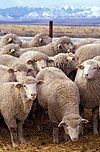
“It is useless for the sheep to pass resolutions in favour of vegetarianism while the wolf remains of a different opinion.”
William Ralph Inge on Status quo
“There are two kinds of fool. One says, "This is old, and therefore good." And one says, "This is new, and therefore better."”
William Ralph Inge on Fools
“There are two kinds of fools: one says, "This is old, therefore it is good"; the other says, "This is new, therefore it is better."”

William Ralph Inge on Pendulum
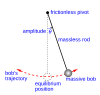
“So the pendulum swings, now violently, now slowly; and every institution not only carries within it the seeds of its own dissolution, but prepares the way for its most hated rival.”
What William Ralph Inge Said About Others
Discover personal opinions William Ralph Inge shared regarding contemporaries.
William Ralph Inge on Meister Eckhart 3 quotes
“The attempt to prove Eckhart a mere scholastic is a failure; the audacities of his German discourses cannot be explained as an accommodation to the tastes of a peculiar audience. For good or evil Eckhart is an original and independent thinker, whose theology is confined by no trammels of authority.”

William Ralph Inge on Bernard Mandeville
“Mandeville's essay [The Fable of the Bees] was a clever and cynical defence of licence and selfishness.”

William Ralph Inge on John Ruskin
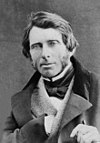
“Ruskin's own artistic life would have been impossible without the paternal sherry and the rich men who drank it.”
William Ralph Inge on Parmenides
“Of the philosophers, Thales is vaguely reported to have taught that souls are immortal. But neither he nor his immediate successors... believed in the immortality of particular souls... This doctrine belongs to the Orphic tradition. In Heracleitus and Parmenides we find the two doctrines of immortality... implicit in mysticism, separated... for the first time. Heracleitus is the champion of the Dionysiac... life and death... in an unending cycle; Parmenides, under Orphic influence, teaches... Soul has fallen from... light and reality to the dark and unreal... bodily existence. This, however, is... only 'the way of opinion'... [Parmenides] feels.... that... substantiality... is not so easily got rid of. But he will not give up... eternal substance. The most interesting fragment of Parmenides... seems to enunciate, for the first time in Greek thought, the mystical doctrine of eternity as a timeless Now, as opposed to the popular... unending succession. ''''There remains then only to give an account of one way—that real Being exists. Many signs... showing... it is unborn, indestructible, entire, unique, unshakable, and unending. It never was, and it never will be, since it is all together present in the Now, one and indivisible.'''' Empedocles... repudiates... Parmenides, probably on the ground that he reduces the world of time and change to nullity... thus leaves no pathway from appearance to reality. His doctrine of the soul’s exile and wanderings is... Orphic doctrine, which Pindar also gives... in the second Olympian Ode. The Soul sins by separating itself from God... from love and a choice of ' strife ’ in the place of harmony. The immortal Soul is... love and strife blended; the body... only an 'alien garment'... perishes at death. ...Empedocles describes the Soul as a ratio, or harmony ...the complex of...'strife'... bound... by the principle of unity...'love'...Parmenides ...may be ...rejects the Pytdhagorean doctrines ...finds truth in static materialism.”

Misattributed Quotes
Quotes mistakenly credited to William Ralph Inge
About William Ralph Inge
William Ralph Inge (6 June 1860 – 26 February 1954), popularly referred to simply as Dean Inge, was an English author, Anglican prelate, professor of divinity at Cambridge, and Dean of St Paul's Cathedral.