Link Copied!
William Morris Quotes (1834-1896)
Poet, Activist, King









About William Morris
William Morris (24 March 1834 – 3 October 1896) was a British textile designer, poet, novelist, translator, and socialist activist associated with the British Arts and Crafts Movement.
Best William Morris Quotes
Shortest
Earliest
Explore our curated collection of the most famous and impactful William Morris quotes.
“The greatest foe to art is luxury, art cannot live in its atmosphere.”


“Earth, left silent by the wind of night,
Seems shrunken 'neath the gray unmeasured height.”
Seems shrunken 'neath the gray unmeasured height.”


“I must now shock you by telling you that we have no longer anything which you, a native of another planet, would call a government.”


““Came Launcelot walking; this is true, the kiss
Wherewith we kissed in meeting that spring day,
I scare dare talk of that remembered bliss.””
Wherewith we kissed in meeting that spring day,
I scare dare talk of that remembered bliss.””


“No pillager or wrecker had been there;
It seemed that time had passed on otherwhere,
Nor laid a finger on this hidden place
Rich with the wealth of some forgotten race.”
It seemed that time had passed on otherwhere,
Nor laid a finger on this hidden place
Rich with the wealth of some forgotten race.”

William Morris Quotes by Topic
Find exactly what you are looking for by browsing this categorized list of William Morris quotes by topic.
William Morris on Civilization 4 quotes
“Apart from the desire to produce beautiful things, the leading passion of my life has been and is hatred of modern civilization.”

William Morris on Work 2 quotes
“It is assumed by most people nowadays that all work is useful, and by most well-to-do people that all work is desirable. Most people, well-to-do or not, believe that, even when a man is doing work which appears to be useless, he is earning his livelihood by it — he is "employed," as the phrase goes; and most of those who are well-to-do cheer on the happy worker with congratulations and praises, if he is only "industrious" enough and deprives himself of all pleasure and holidays — in the sacred cause of labour. In short, it has become an article of the creed of modern morality that all labour is good in itself — a convenient belief to those who live on the labour of others. But as to those on whom they live, I recommend them not to take it on trust, but to look into the matter a little deeper.”

William Morris on Art
William Morris on Minimalism
William Morris on Wind
William Morris on Words
William Morris on Thrushes
William Morris on Comfort
William Morris on Design
William Morris on March
William Morris on Friendship
“Forsooth, brethren, fellowship is heaven and lack of fellowship is hell; fellowship is life and lack of fellowship is death; and the deeds that ye do upon the earth, it is for fellowship's sake that ye do them.”

What William Morris Said About Others
Discover personal opinions William Morris shared regarding contemporaries.
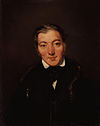
William Morris on Robert Owen
“I must mention, I can scarce do more, the honoured name of Robert Owen, as representative of the nobler hopes of his day, just as More was of his, and the lifter of the torch of Socialism amidst the dark days of the confusion consequent on the reckless greed of the early period of the great factory industries.”
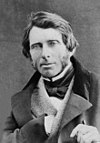
William Morris on John Ruskin
“...there were a few who were in open rebellion against the said Whiggery — a few, say two, Carlyle and Ruskin. The latter, before my days of practical Socialism, was my master towards the ideal aforesaid, and, looking backward, I cannot help saying, by the way, how deadly dull the world would have been twenty years ago but for Ruskin!”
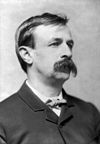
William Morris on Edward Bellamy
“Mr. Bellamy's ideas of life are curiously limited; he has no idea beyond existence in a great city; his dwelling of man in the future is Boston (U.S.A.) beautified. In one passage, indeed, he mentions villages, but with unconscious simplicity shows that they do not come into his scheme of economical equality, but are mere servants of the great centres of civilisation. This seems strange to some of us, who cannot help thinking that our experience ought to have taught us that such aggregations of population afford the worst possible form of dwelling-place, whatever the second-worst might be. In short, a machine-life is the best which Mr. Bellamy can imagine for us on all sides; it is not to be wondered at then this his only idea of making labour tolerable is to decrease the amount of it by means of fresh and ever fresh developments of machinery.”
Quotes About William Morris
Gain deeper perspective through quotes about William Morris from others.
Ch. on William Morris 8 quotes
“When I was journeying (in a dream of the night) down the well-remembered reaches of the Thames betwixt Streatley and Wallingford, where the foothills of the White Horse fall back from the broad stream, I came upon a clear-seen mediæval town standing up with roof and tower and spire within its walls, grey and ancient, but untouched from the days of its builders of old. All this I have seen in the dreams of the night clearer than I can force myself to see them in dreams of the day. So that it would have been nothing new to me the other night to fall into an architectural dream if that were all, and yet I have to tell of things strange and new that befell me after I had fallen asleep.”
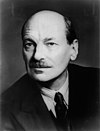
Clement Attlee on William Morris
“William Morris, [is] a prime favourite with a Socialist like myself, but also, in my view - especially in the Defence of Guinevere - a great poet.”
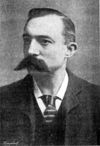
Robert Blatchford on William Morris
“I cannot help thinking that it does not matter what goes into the Clarion this week, because William Morris is dead. And what socialist will care for any other news this week, beyond that one sad fact? … William Morris was our best man; and he is dead. It is true that much of his work still lives, and will live. But we have lost him, and, great as was his work, he himself was greater. Many a man of genius is dwarfed by his creations. We could all name men whose personalities seem unworthy of their own words and actions; men who resemble mean jars filled with honey, or foul lamps emitting brilliant beams. Morris was of a nobler kind. He was better than his best. Though his words fell like sword strokes, one always felt that the warrior was stronger than the sword. For Morris was not only a genius, he was a man. Strike at him where you would, he rang true. … His face was as honest as a lion's and you accepted his word as you accept a date from the almanac. This is a censorious world, and as a rule, let a man be chaste as ice, pure as snow, he shall not escape calumny. Yet I have never heard a single word of detraction or dislike spoken of William Morris. Nor is there a Socialist to-day in England but will feel that he has lost a friend. He was our best man. We cannot spare him; we cannot replace him. In all England there lives no braver, kinder, honester, cleverer, heartier man than William Morris. He is dead, and we cannot help feeling for a while that nothing else matters.”
Edward Burne-Jones on William Morris
“When I first knew Morris nothing would content him but being a monk, and getting to Rome, and then he must be an architect, and apprenticed himself to Street, and worked for two years, but when I came to London and began to paint he threw it all up, and must paint too, and then he must give it up and make poems, and then he must give it up and make window hangings and pretty things, and when he had achieved that, he must be a poet again, and then after two or three years of Earthly Paradise time, he must learn dyeing, and lived in a vat, and learned weaving, and knew all about looms, and then made more books, and learned tapestry, and then wanted to smash everything up and begin the world anew, and now it is printing he cares for, and to make wonderful rich-looking books — and all things he does splendidly — and if he lives the printing will have an end — but not I hope, before Chaucer and the Morte d'Arthur are done; then he'll do I don't know what, but every minute will be alive.”
George Eliot on William Morris

Henry James on Morris on William Morris
“His talk indeed is wonderfully to the point and remarkable for clear good sense. He said no one thing that I remember, but I was struck with the very good judgment shewn in everything he uttered. He’s an extraordinary example, in short, of a delicate sensitive genius and taste, served by a perfectly healthy body and temper. All his designs are quite as good (or rather nearly so) as his poetry. Altogether it was a long rich sort of visit, with a strong peculiar flavour of its own.”
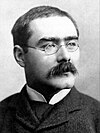
Rudyard Kipling on William Morris
“B[urne] J[ones] was in all ways the biggest. He had the most glorious sense of humour. Morris had none. It annoyed him as flies annoy cattle . But to hear the two together , discussing the workshop side of their art - fabrication of colours ; design of glass windows and the inlay of the little bits , and how the lines cut each other , as they loafed in the studio between whiles was a thing to be grateful for , even though one did not comprehend it.”
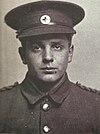
F. R. Leavis on William Morris
“William Morris was one of the most versatile, energetic and original men of his time, a force that impinged decisively on the world of practice.”
C. S. Lewis on William Morris 2 quotes
“Other stories have only scenery: his have geography. He is not concerned with ‘painting’ landscapes; he tells you the lie of the land, and then you paint the landscapes for yourself. To a reader long fed on the almost botanical and entomological niceties of much modern fiction—where, indeed, we mostly skip if the characters go through a jungle—the effect is at first very pale and cold, but also very fresh and spacious. We begin to relish what my friend called the ‘Northernness’. No mountains in literature are as far away as distant mountains in Morris. The world of his imagining is as windy, as tangible, as resonant and three dimensional, as that of Scott or Homer.”

About William Morris
William Morris (24 March 1834 – 3 October 1896) was a British textile designer, poet, novelist, translator, and socialist activist associated with the British Arts and Crafts Movement.