William Kingdon Clifford Quotes (1845-1879)
Philosopher, King, Mathematician

About William Kingdon Clifford

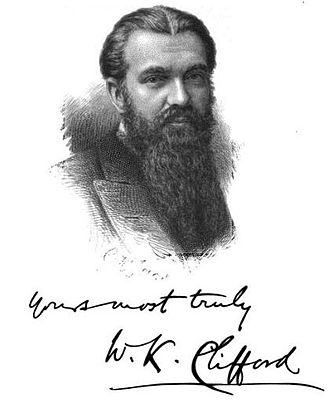
William Kingdon Clifford (May 4, 1845 – March 3, 1879) was an English mathematician and philosopher.

Best William Kingdon Clifford Quotes

Shortest
Earliest

Explore our curated collection of the most famous and impactful William Kingdon Clifford quotes.

β€œForce is not a fact at all, but an idea embodying what is approximately the fact.”
William Kingdon Clifford
β€œWe ought not to teach to little children, as a known fact, that which is not a known fact.”
William Kingdon Clifford
β€œNo mathematician can give any meaning to language about matter, force, inertia, used in text-books of mechanics.”
William Kingdon Clifford
β€œThere is in the true man of science a desire stronger than the wish to have his beliefs upheld; namely, the desire to have them true.”
William Kingdon Clifford
β€œIf God holds all mankind guilty for the sin of Adam, if he has visited upon the innocent the punishment of the guilty, if he is to torture any single soul for ever, then it is wrong to worship him.”
William Kingdon Clifford
β€œEnergy [is of two kinds: 1. Energy of motion; 2. Energy of position].”
William Kingdon Clifford
β€œI am endeavouring in a general way to explain the laws of double refraction on this hypothesis, but have not yet arrived at any results sufficiently decisive to be communicated.”
β€œForce, defined as above, is not conserved at all. It may appear and disappear; it is continually being created and destroyed. "Conservation of force" is, mathematically speaking, a contradiction in terms.”
William Kingdon Clifford
β€œThe goodness and greatness of a man do not justify us in accepting a belief upon the warrant of his authority, unless there are reasonable grounds for supposing that he knew the truth of what he was saying. And there can be no grounds for supposing that a man knows that which we, without ceasing to be men, could not be supposed to verify.”
William Kingdon Clifford
β€œIs a physical force, such as the attraction of earth, analogous to our "exertion of force" in muscular work? No, for the sensation of muscular effort is complicated. It involves nerve and muscle, which we know not to be present in the simpler cases, e.g., the motion of a stone let fall. To talk of pushing or pulling in such a case is a personification of external nature.”
William Kingdon Clifford
β€œCausation is defined by some modern philosophers as unconditional uniformity of succession, e.g., existence of fire follows from putting a lighted match to the fuel.
This idea must be got rid of to understand force. All universally true laws of nature are laws of co-existence, not succession. ...In every case the law at work is seen to be a law of co-existence, not succession.”
β€œIt is hardly in human nature that a man should quite accurately gauge the limits of his own insight; but it is the duty of those who profit by his work to consider carefully where he may have been carried beyond it. If we must needs embalm his possible errors along with his solid achievements, and use his authority as an excuse for believing what he cannot have known, we make of his goodness an occasion to sin.”
β€œGeneral Results.β€”Force is a quality of position, definite in magnitude and direction at any point; not constant.
Energy is the name of two different quantities.
1. Energy of motion, half the rate at which a body carries momentum.
2. Energy of position, defined by the statement of the law that the work done in getting from one position to another is the same by whatever path the change of position is made.”
William Kingdon Clifford
β€œThe name philosopher, which meant originally 'lover of wisdom,' has come in some strange way to mean a man who thinks it is his business to explain everything in a certain number of large books. It will be found, I think, that in proportion to his colossal ignorance is the perfection and symmetry of the system which he sets up; because it is so much easier to put an empty room tidy than a full one.”
β€œRemember, then, that [scientific thought] is the guide of action; that the truth which it arrives at is not that which we can ideally contemplate without error, but that which we may act upon without fear; and you cannot fail to see that scientific thought is not an accompaniment or condition of human progress, but human progress itself. And for this reason the question what its characters are... is the question of all questions for the human race.”
William Kingdon Clifford
β€œMomentum may be roughly described as quantity motion. A body moving at a speed of say twenty an hour, has a certain quantity of motion. If the body goes forty miles an hour there is twice as motion; or if twice as much matter goes twenty miles hour, there is also twice as much motion. Momentum is measured by the quantity of matter moving at a rate mass times velocity.”
William Kingdon Clifford
β€œWe have no reason to fear lest a habit of conscientious inquiry should paralyse the actions of our daily life.
But because it is not enough to say, "It is wrong to believe on unworthy evidence," without saying also what evidence is worthy, we shall now go on to inquire under what circumstances it is lawful to believe on the testimony of others; and then, further, we shall inquire more generally when and why we may believe that which goes beyond our own experience, or even beyond the experience of mankind.”
William Kingdon Clifford
β€œTo sum up: it is wrong always, everywhere, and for anyone, to believe anything upon insufficient evidence.
If a man, holding a belief which he was taught in childhood or persuaded of afterwards, keeps down and pushes away any doubts which arise about it in his mind, purposely avoids the reading of books and the company of men that call into question or discuss it, and regards as impious those questions which cannot easily be asked without disturbing it--the life of that man is one long sin against mankind.”
William Kingdon Clifford
β€œA little reflection will show us that every belief, even the simplest and most fundamental, goes beyond experience when regarded as a guide to our actions. … Even the fundamental "I am," which cannot be doubted, is no guide to action until it takes to itself "I shall be," which goes beyond experience. The question is not, therefore, "May we believe what goes beyond experience?" for this is involved in the very nature of belief; but "How far and in what manner may we add to our experience in forming our beliefs?"”
William Kingdon Clifford
β€œ2. Energy of position is quite a different thing. If take a book lying on the table and lift it up, and put on the desk above the table, it acquires energy of position, and the energy acquired is measured by the weight [assuming gravity to be constant] of the book measured by the difference of height between the two positions. [Energy of position, like force, may be said to exist any point of space, whether a body is there or not.] The difference of energy between two positions is the quantity of work that must be done to remove a body of unit from one position to the other.”
William Kingdon Clifford
β€œInquiry into the evidence of a doctrine is not to be made once for all, and then taken as finally settled. It is never lawful to stifle a doubt; for either it can be honestly answered by means of the inquiry already made, or else it proves that the inquiry was not complete.
"But," says one, "I am a busy man; I have no time for the long course of study which would be necessary to make me in any degree a competent judge of certain questions, or even able to understand the nature of the arguments."
Then he should have no time to believe.”
β€œ

We may believe what goes beyond our experience, only when it is inferred from that experience by the assumption that what we do not know is like what we know.

We may believe the statement of another person, when there is reasonable ground for supposing that he knows the matter of which he speaks, and that he is speaking the truth so far as he knows it.

It is wrong in all cases to believe on insufficient evidence; and where it is presumption to doubt and to investigate, there it is worse than presumption to believe.

”
β€œI hold in fact
(1) That small portions of space are in fact of a nature analogous to little hills on a surface which is on the average flat; namely, that the ordinary laws of geometry are not valid in them.
(2) That this property of being curved or distorted is continually being passed on from one portion of space to another after the manner of a wave.
(3) That this variation of the curvature of space is what really happens in that phenomenon which we call the motion of matter, whether ponderable or etherial.
(4) That in the physical world nothing else takes place but this variation, subject possibly to the law of continuity.”
William Kingdon Clifford
β€œWhen a body is let fall from a higher position to lower one, it has, at the instant when it is let go, energy of motion; but it gains, in falling, as much energy of motion as it loses energy of position. It is found that the sum of energy of motion and energy of position is always constant. ...Energy is a quantity which can be greater or less but has no direction. ...This constancy is expressed by including them in common name of Energy, and saying that energy is conserved, or is indestructible. This form of speech might be applied to other cases of alternate immortality, where one of two things comes into existence on disappearance of the other.”
William Kingdon Clifford
β€œOur lives are guided by that general conception of the course of things which has been created by society for social purposes. Our words, our phrases, our forms and processes and modes of thought, are common property, fashioned and perfected from age to age; an heirloom which every succeeding generation inherits as a precious deposit and a sacred trust to be handled on to the next one, not unchanged but enlarged and purified, with some clear marks of its proper handiwork. Into this, for good or ill, is woven every belief of every man who has speech of his fellows. An awful privilege, and an awful responsibility, that we should help to create the world in which posterity will live.”

William Kingdon Clifford Quotes by Topic

Find exactly what you are looking for by browsing this categorized list of William Kingdon Clifford quotes by topic.

William Kingdon Clifford on Belief 4 quotes
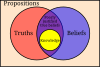
β€œIt is wrong always, everywhere, and for anyone, to believe anything upon insufficient evidence.”
William Kingdon Clifford
View all 4 quotes on Belief →

William Kingdon Clifford on Theory of relativity 4 quotes

β€œNo mathematician can give any meaning to the language about matter, force, inertia used in current text-books of mechanics.”
William Kingdon Clifford
View all 4 quotes on Theory of relativity →

William Kingdon Clifford on Science 3 quotes

β€œRemember, then, that [scientific thought] is the guide of action; that the truth which it arrives at is not that which we can ideally contemplate without error, but that which we may act upon without fear; and you cannot fail to see that scientific thought is not an accompaniment or condition of human progress, but human progress itself. And for this reason the question what its characters are...is the question of all questions for the human race.”
William Kingdon Clifford
View all 3 quotes on Science →

William Kingdon Clifford on Credulity 2 quotes
β€œThe harm which is done by credulity in a man is not confined to the fostering of a credulous character in others, and consequent support of false beliefs.”
William Kingdon Clifford
View all 2 quotes on Credulity →

William Kingdon Clifford on Doubt 2 quotes

β€œInquiry into the evidence of a doctrine is not to be made once for all, and then taken as finally settled. It is never lawful to stifle a doubt; for either it can be honestly answered by means of the inquiry already made, or else it proves that the inquiry was not complete.”
William Kingdon Clifford
View all 2 quotes on Doubt →

William Kingdon Clifford on Ethics of belief

β€œIt is wrong always, everywhere, and for anyone, to believe anything upon insufficient evidence.”

William Kingdon Clifford on Immortality
β€œ[E]nergy is conserved, or is indestructible. This form of speech might be applied to other cases of alternate immortality, where one of two things comes into existence on disappearance of the other.”
William Kingdon Clifford

William Kingdon Clifford on Causality

β€œCausation is defined by some modern philosophers as unconditional uniformity of succession, e.g., existence of fire follows from putting a lighted match to the fuel. This idea must be got rid of to understand force. All universally true laws of nature are laws of co-existence, not succession.”
William Kingdon Clifford

William Kingdon Clifford on Animal cognition

β€œ[T]here is every reason to believe that we were gregarious animals before we became men... And a belief in the ejectβ€”some sort of recognition of a kindred consciousness in one's fellow beingsβ€”is clearly a condition of gregarious action among animals so highly developed as to be called conscious at all.”
William Kingdon Clifford

William Kingdon Clifford on Energy

β€œIt is found that the sum of energy of motion and energy of position is always constant. ...Energy is a quantity which can be greater or less but has no direction. ...[E]nergy is conserved, or is indestructible. This form of speech might be applied to other cases of alternate immortality, where one of two things comes into existence on disappearance of the other.”
William Kingdon Clifford

William Kingdon Clifford on Philosophy

β€œThe name philosopher, which meant originally 'lover of wisdom,' has come in some strange way to mean a man who thinks it is his business to explain everything in a certain number of large books. It will be found, I think, that in proportion to his colossal ignorance is the perfection and symmetry of the system which he sets up; because it is so much easier to put an empty room tidy than a full one.”
William Kingdon Clifford

William Kingdon Clifford on Skepticism

β€œIf a man, holding a belief which he was taught in childhood or persuaded of afterwards, keeps down and pushes away any doubts which arise about it in his mind, purposely avoids the reading of books and the company of men that call into question or discuss it, and regards as impious those questions which cannot easily be asked without disturbing it—the life of that man is one long sin against mankind.”
William Kingdon Clifford

What William Kingdon Clifford Said About Others

Discover personal opinions William Kingdon Clifford shared regarding contemporaries.

William Kingdon Clifford on Bernhard Riemann

β€œRiemann has shown that as there are different kinds of lines and surfaces, so there are different kinds of space of three dimensions; and that we can only find out by experience to which of these kinds the space in which we live belongs. In particular, the axioms of plane geometry are true within the limits of experiment on the surface of a sheet of paper, and yet we know that the sheet is really covered with a number of small ridges and furrows, upon which (the total curvature not being zero) these axioms are not true. Similarly, he says although the axioms of solid geometry are true within the limits of experiment for finite portions of our space, yet we have no reason to conclude that they are true for very small portions; and if any help can be got thereby for the explanation of physical phenomena, we may have reason to conclude that they are not true for very small portions of space.”
William Kingdon Clifford

Quotes About William Kingdon Clifford

Gain deeper perspective through quotes about William Kingdon Clifford from others.

Eric Temple Bell on William Kingdon Clifford
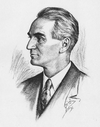
β€œPearson's enthusiasm for W. K. Clifford's intuitive dynamics and physics, also for Clifford's violent hostility to traditional beliefs, influenced at least his earlier thinking. Both Clifford and Pearson were creative mathematicians; neither fitted the milk-and-water, namby-pamby 'great man' ideal of the 'great mathematician' which seems to be the accepted norm in historical accounts of mathematicians; and at least one of them would have hooted at the idea that he was, or was to become, an object of reverence for generations of students.”
William Kingdon Clifford

A. D'Abro on William Kingdon Clifford

β€œWith the new views advocated by Riemann... the texture, structure or geometry of space is defined by the metrical field, itself produced by the distribution of matter. Any non-homogeneous distribution of matter would then entail a variable structure of geometry for space from place to place. ... Riemann's exceedingly speculative ideas on the subject of the metrical field were practically ignored in his day, save by the English mathematician Clifford, who translated Riemann's works, prefacing them to his own discovery of the non-Euclidean Clifford space. Clifford realised the potential importance of the new ideas and suggested that matter itself might be accounted for in terms of these local variations of the non-Euclidean space, thus inverting in a certain sense Riemann's ideas. But in Clifford's day this belief was mathematically untenable. Furthermore, the physical exploration of space seemed to yield unvarying Euclideanism. ...it was reserved for the theoretical investigator Einstein, by a stupendous effort of rational thought, based on a few flimsy empirical clues, to unravel the mystery and to lead Riemann's ideas to victory. (In all fairness to Einstein... he does not appear to have been influenced directly by Riemann.) Nor were Clifford's hopes disappointed, for the varying non-Euclideanism of the continuum was to reveal the mysterious secret of gravitation, and perhaps also of matter, motion, and electricity. ... Einstein had been led to recognize that space of itself was not fundamental. The fundamental continuum whose non-Euclideanism was fundamental was... one of Space-Time... possessing a four-dimensional metrical field governed by the matter distribution. Einstein accordingly applied Riemann's ideas to space-time instead of to space... He discovered that the moment we substitute space-time for space (and not otherwise), and assume that free bodies and rays of light follow geodesics no longer in space but in space-time, the long-sought-for local variations in geometry become apparent. They are all around us, in our immediate vicinity... We had called their effects gravitational effects... never suspecting that they were the result of those very local variations in the geometry for which our search had been in vain....the theory of relativity is the theory of the space-time metrical field.”

William James on William Kingdon Clifford
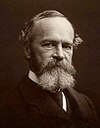
β€œBut even the distant reader must allow that Clifford's mental personality belonged to the highest possible type to say no more. The union of the mathematician with the poet, fervor with measure, passion with correctness, this surely is the ideal. And if in these modern days we are to look for any prophet or saviour who shall influence our feelings towards the universe as the founders and renewers of past religions have influenced the minds of our fathers, that prophet, if he ever come, must, like Clifford, be no mere sentimental worshipper of science, but an expert in her ways. And he must have what Clifford had in so extraordinary a degreeβ€”that lavishly generous confidence in the worthiness of average human nature to be told all truth, the lack of which in Goethe made him an inspiration to the few but a cold riddle to the many.”
William Kingdon Clifford

Sir Frederick Pollock on William Kingdon Clifford

β€œStudents of Spinoza will easily trace the connection between his theory of mind and matter and the doctrine set forth in Clifford's essays on "Body and Mind," and "The Nature of Things-in themselves. … Briefly put, the conception is that mind is the one ultimate reality; not mind as we know it in the complex forms of conscious feeling and thought, but the simpler elements out of which thought and feeling are built up. The hypothetical ultimate element of mind, or atom of mind-stuff, precisely corresponds to the hypothetical atom of matter, being the ultimate fact of which the material atom is the phenomenon. Matter and the sensible universe are the relations between particular organisms, that is, mind organized into consciousness, and the rest of the world. This leads to results which would in a loose and popular sense be called materialist. But the theory must, as a metaphysical theory, be reckoned on the idealist side. To speak technically, it is an idealist monism. Indeed it is a very subtle form of idealism, and by no means easy of apprehension at first sight. Nevertheless there are distinct signs of a convergence towards it on the part of recent inquirers who have handled philosophical problems in a scientific spirit, and particularly those who have studied psychology on the physiological side. Perhaps we shall be told that this proves the doctrine to be materialism in disguise; but it is hardly worth while to dispute about names while more serious things remain for discussion. And the idea does require much more working out; involving, as it does, extensive restatement and rearrangement of metaphysical problems. It raises not only several questions, but preliminary (and really fundamental) problems as to what questions are reasonable.”

Gerald James Whitrow on William Kingdon Clifford

β€œThe models of Einstein and de Sitter are static solutions of Einstein's modified gravitational equations for a world-wide homogeneous system. They both involve a positive cosmological constant λ, determining the curvature of space. If this constant is zero, we obtain a third model in classical infinite Euclidean space. This model is empty, the space-time being that of Special Relativity. It has been shown that these are the only possible static world models based on Einstein's theory. In 1922, Friedmann... broke new ground by investigating non-static solutions to Einstein's field equations, in which the radius of curvature of space varies with time. This possibility had already been envisaged, in a general sense, by Clifford in the eighties.”
William Kingdon Clifford

About William Kingdon Clifford

William Kingdon Clifford (May 4, 1845 – March 3, 1879) was an English mathematician and philosopher.