Link Copied!
William Herschel Quotes (1738-1822)
Composer
About William Herschel
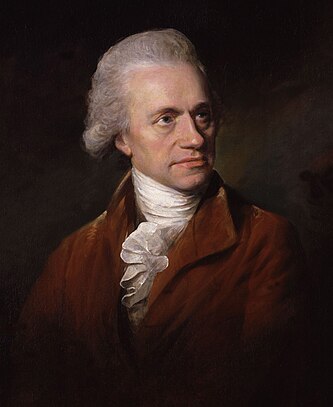
Sir Frederick William Herschel KH FRS (German: Friedrich Wilhelm Herschel) (15 November 1738 – 25 August 1822) was a German-born British astronomer, technical expert, telescope maker, organist and composer who became famous for discovering Uranus. He also discovered infrared radiation and made many other contributions to astronomy.
Best William Herschel Quotes
Shortest
Earliest
Explore our curated collection of the most famous and impactful William Herschel quotes.
“Hier ist wahrhaftig ein Loch im Himmel !”
“An object may not only contain stars, but also nebulosity not composed of them.”

“A proportional condensation of the nebulous matter in the brighter places will sufficiently account for their different degree of shining.”
“According to my theory, a dark spot in the sun is a place in its atmosphere which happens to be free from luminous decompositions [above it].”
“I compared it to H Geminorum and the small star in the quartile between Auriga and Gemini, and finding it so much larger than either of them, suspected it to be a comet.”
“The starlike appearance of the following six nebulæ is so considerable that the best description... was to compare them to stars with certain deficiencies.”

“We can hardly suppose a possibility of the production of a globular form without a consequent revolution of the nebulous matter, which in the end may settle in a regular rotation about some fixed axis.”

“I must freely confess that by continuing my sweeps of the heavens my opinion of the arrangement of the stars and their magnitudes, and of some other particulars, has undergone a gradual change...”
“A nebulous matter, diffused in such exuberance throughout the regions of space, must surely draw our attention to the purpose for which it probably may exist; and it must be the business of a critical inquirer to attend to all the appearances under which it will be exposed to his view...”
“It is very probable that the great stratum called the Milky Way is that in which the sun is placed, though perhaps not in the very centre of its thickness. ...We gather this from the appearance of the Galaxy, which seems to encompass the whole heavens, as it certainly must do if the sun is within it.”

“That the emission of light must waste the sun, is not a difficulty that can be opposed to our hypothesis. Many of the operations of Nature are carried on in her great laboratory which we cannot comprehend. Perhaps the many telescopic comets may restore to the sun what is lost by the emission of light.”

“The number of stands I invented for these telescopes it would not be easy to assign. ...In 1781 I began to construct a thirty foot aërial reflector, and having made a stand for it, I cast the mirror thirty-six inches in diameter. This was cracked in cooling. I cast it a second time, and the furnace I had built in my house broke.”
“A standard of reference for the arrangement of the stars may be had by comparing their distribution to a certain properly modified equality of scattering. The equality which I propose does not require that the stars should be at equal distances from each other, nor is it necessary that all those of the same nominal magnitude should be equally distant from us.”

“In future... we shall look upon those regions into which we may now penetrate by means of such large telescopes, as a naturalist regards a rich extent of ground or chain of mountains containing strata variously inclined and directed, as well as consisting of very different materials. The surface of a globe or map therefore will but ill delineate the interior parts of the heavens.”
“'We may... have surmised nebulae to be no other than clusters of stars disguised by their very great distance, but a longer experience and better acquaintance with the nature of nebulae, will not allow a general admission of such a principle, although undoubtedly a cluster of stars may assume a nebulous appearance when it is too remote for us to discern the stars of which it is composed.”

“The number of compound nebulæ... being so considerable, it will follow, that if they owe their origin to the breaking up of some former extensive nebulosities of the same nature with those which have been shewn to exist at present, we might expect that the number of separate nebulæ should far exceed the former, and that moreover these scattered nebulas should be found not only in great abundance, but also in proximity or continuity with each other... Now this is exactly what by observation, we find to be the state of the heavens.”
“Instead of inquiring after the nature of the cause of the condensation of nebulous matter, it would indeed be sufficient for the present purpose to call it merely a condensing principle; but since we are already acquainted with the centripetal force of attraction which gives a globular figure to planets, keeps them from flying out of their orbits in tangents, and makes one star revolve around another, why should we not look up to the universal gravitation of matter as the cause of every condensation, accumulation, compression, and concentration of the nebulous matter?”
“These [ binary stars] may serve another very important end. ...Several stars of the first magnitude have been observed or suspected to have a proper motion; hence we may surmise that our sun, with all its planets and comets, may also have a motion towards some particular point of the heavens. ...If this surmise should have any foundation, it will show itself in a series of some years in a kind of systematical parallax, or change due to the motion of the whole solar system.”

“I compared also the present appearance of this nebula with the delineation which Huyghens has given of it in his Systema Saturnium... The changes that are thus proved to have already happened, prepare us for those that may be expected hereafter to take place, by the gradual condensation of the nebulous matter; for had we no where an instance of any alteration in the appearance of nebula, they might be looked upon as permanent celestial bodies, and the successive changes, to which by the action of an attracting principle they have been conceived to be subject, might be rejected as being unsupported by observation.”
“In this case, radiant heat will at least partly, if not chiefly, consist, if I may be permitted the expression, of invisible light; that is to say, of rays coming from the sun, that have such a momentum as to be unfit for vision. And admitting, as is highly probable, that the organs of sight are only adapted to receive impressions from particles of a certain momentum, it explains why the maximum of illumination should be in the middle of the refrangible rays; as those which have greater or less momenta are likely to become equally unfit for the impression of sight.”
William Herschel Quotes by Topic
Find exactly what you are looking for by browsing this categorized list of William Herschel quotes by topic.
William Herschel on Saturn 2 quotes
“August 28, 1780, having brought the telescope to the parallel of Saturn, I discovered a sixth satellite of that planet; and 'l also saw the spots upon Saturn better than I had ever seen them before; so that I may date the finishing of the forty~feet telescope from that time.”

William Herschel on Telescope
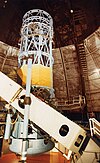
“I have tried to improve telescopes and practiced continually to see with them. These instruments have play'd me so many tricks that I have at last found them out in many of their humours.”
William Herschel on Milky Way
“As we are used (says he) to call the appearance of the heavens, where it is surrounded with a bright zone, the milky-way, it may not be amiss to point out some other very remarkable nebulae, which cannot well be less, but are probably much larger, than our own system ; and being extended, the inhabitants of the planets that attend the stars which compose them, must likewise perceive the same phenomenon; for which reason that may also be called milky-ways, by way of distinction.”

William Herschel on Jupiter
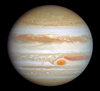
“Galileo claimed to have seen mountains on the Moon, to have proved the Milky Way was made up of tiny stars, and to have seen four small bodies orbiting Jupiter. These last, with an eye to getting a position in Florence, he quickly named 'the Mediciean Stars. But when all was finished, no one besides my brother could get a glimpse of Jupiter or Saturn, for the great length of the tube would not allow it to be kept in a straight line. This difficulty, however, was soon removed by substituting tin tubes.”
What William Herschel Said About Others
Discover personal opinions William Herschel shared regarding contemporaries.
William Herschel on Gottfried Leibniz
“As to Leibnitz, he is certainly a good philosopher, but in his Theodicée he goes too far and would have all actions necessary. His foreordained harmony is not the least credible nor feasible. If you can get a book entitled: An Essay on the Origin of Evil, by Dr W. King, you will find a much better solution of the question: 'whence comes evil?' Leibnitz does indeed reconcile it all with the goodness of God, but not so reasonably as Dr King.”

Quotes About William Herschel
Gain deeper perspective through quotes about William Herschel from others.
Friedrich Bessel on William Herschel
“The naked eye has its limit of vision in the stars of the sixth magnitude. The light of fainter stars than these does not affect the retina enough for them to be seen. A very small telescope penetrates to smaller, and, in general, without doubt, to more distant stars. A more powerful one penetrates deeper into space, and as its power is increased, so the boundaries of the visible universe are widened, and the number of stars increased to millions and millions. Whoever has followed the history of the series of Herschel's telescopes will have observed this. But Herschel was not content with the bare fact, but strove ever to know how far a telescope of a certain construction and size could penetrate, compared with the naked and unassisted eye. These investigations were never for the discovery of new facts concerning the working of his instruments; it was for the knowledge of the distribution of the fixed stars in space itself that he strove. Herschel's instruments were designed to aid vision to the last extent. They were only secondarily for the taking of measures. His efforts were not for a knowledge of the motions, but of the constitution and construction of the heavenly bodies.”
David H. Clark on William Herschel
“Like Bradley, Herschel made an unexpected discovery in searching for parallax. He selected for observation stars close to each other in the sky, following the guidance of Galileo. Although Herschel failed to find parallax, he did find that in some cases the stars he observed appeared to be in relative motion around their common center of gravity. They were clearly "binary stars," bound by gravity to orbit one another. It is now realized that almost half of all stars can be found in binary systems.”
Michael Hoskin on William Herschel 4 quotes
“Being self-taught, he had not known that astronomers were expected to focus on the solar system. Instead, he explored the construction of the universe, and it was on later generations that the questions he asked and the methods he devised to answer them were to have profound influence.”
Michael D. Lemonick on William Herschel 2 quotes
“It's no exaggeration to say that modern astronomy was invented, more or less single-handedly, by William Herschel in the last decades of the eighteenth century.”
Patrick Moore on William Herschel
“William Herschel was the first man to give a reasonably correct picture of the shape of our star-system or galaxy; he was the best telescope-maker of his time, and possibly the greatest observer who ever lived.”

Adrienne Rich on William Herschel
“"Planetarium" was written after a visit to a real planetarium, where I read an account of the work of Caroline Herschel, the astronomer, who worked with her brother William, but whose name remained obscure, as his did not.”

Ch.2 "Life on William Herschel 5 quotes
“In consequence of the harassing and fatiguing life he had led during the winter months, he used to retire to bed with a bason of milk or glass of water, and Smith's 'Harmonics and Optics,' Ferguson's 'Astronomy,' &c., and so went to sleep buried under his favourite authors; and his first thoughts on rising were how to obtain instruments for viewing those objects himself of which he had been reading.”
Ch.4 "Life on William Herschel 7 quotes
“According to Herschel, the sun consisted of three essentially different parts. First, there was a solid nucleus, non-luminous, cool, and even capable of being inhabited. Second, above this was an atmosphere proper; and, lastly, outside of this was a layer in which floated the clouds, or bodies which gave to the solar surface its intense brilliancy.”
About William Herschel
Sir Frederick William Herschel KH FRS (German: Friedrich Wilhelm Herschel) (15 November 1738 – 25 August 1822) was a German-born British astronomer, technical expert, telescope maker, organist and composer who became famous for discovering Uranus. He also discovered infrared radiation and made many other contributions to astronomy.