Link Copied!
William Fleming Quotes (1791-1866)
Philosopher
About William Fleming
William Fleming (1791 – 1866) was a British philosopher, and Professor of Moral Philosophy at the University of Glasgow, known from his 1857 Vocabulary of philosophy, mental, moral, and metaphysical.
Best William Fleming Quotes
Shortest
Earliest
Explore our curated collection of the most famous and impactful William Fleming quotes.
“In the philosophy of Locke the archetypes of our ideas are the things really existing out of us.”
“He who is certain, or presumes to say he knows, is, whether he be mistaken or in the right, a dogmatist.”
“Common sense is a phrase employed to denote that degree of intelligence, sagacity, and prudence, which is common to all men.”

“Paley’s “Horæ Paulinæ,” which consists of gathering together undesigned coincidences, is an example of the consilience of inductions.”
“The term intellect includes all those powers by which we acquire, retain, and extend our knowledge, as perception, memory, imagination, judgment, &c.”

“Moral obligation, being the obligation of a free agent, implies a law, and a law implies a law-giver. The will of God, therefore, is the true ground of all obligation, strictly and properly so called.”

“Ferguson states that the history of mankind, in their rudest state, may be considered under two heads, viz., that of the savage, who is not yet acquainted with property, and that of the barbarian, to whom it is, although not ascertained by laws, a principal object of care and desire.”
“The difference between a parable and an apologue is, that the former, being drawn from human life, requires probability in the narration, whereas the apologue, being taken from inanimate things or the inferior animals, is not confined strictly to probability. The fables of Æsop are apologues.”

“Pantheism, when explained to mean the absorption of the infinite in the finite, of God in nature, is atheism; and the doctrine of Spinoza has been so regarded by many. When explained to mean the absorption of nature in God, of the finite in the infinite, it amounts to an exaggeration of atheism.”
“The principle of deduction is, that things which agree with the same thing agree with one another. The principle of induction is, that in the same circumstances and in the same substances, from the same causes the same effects will follow. The mathematical and metaphysical sciences are founded on deduction; the physical sciences rest on induction.”
“Of late years, and by the best writers, the term conscience, and the phrases “moral faculty,” “moral judgment,” “faculty of moral perception,” “moral sense,” “susceptibility of moral emotion,” have all been applied to that faculty by which we have ideas of right and wrong in reference to actions, and correspondent feelings of approbation and disapprobation.”
“Moral Philosophy is the Science of human duty. The knowledge of human duty implies a knowledge of human nature. To understand what man ought to do, it is necessary to know what man is. Not that the Moral Philosopher, before entering upon those inquiries which peculiarly belong to him, must go over the Science of human nature in all its extent. But it is necessary to examine those elements of human nature which have a direct bearing upon human conduct.”

William Fleming Quotes by Topic
Find exactly what you are looking for by browsing this categorized list of William Fleming quotes by topic.
William Fleming on Synthesis

William Fleming on System
“SYSTEM (σύστημα, σύν ἵστημιavu, to place together) — is a full and connected view of all the truths of some department of knowledge. An organized body of truth, or truths arranged under one and the same idea, which idea is as the life or soul which assimilates all those truths. No truth is altogether isolated. Every truth has relation to some other. And we should try to unite the facts of our knowledge so as to see them in their several bearings. This we do when we frame them into a system. To do so legitimately we must begin by analysis and end with synthesis. But system applies not only to our knowledge, but to the objects of our knowledge. Thus we speak of the planetary system, the muscular system, the nervous system. We believe that the order to which we would reduce our ideas has a foundation in the nature of things. And it is this belief that encourages us to reduce our knowledge of things into systematic order. The doing so is attended with many advantages. At the same time a spirit of systematizing may be carried too far. It is only in so far as it is in accordance with the order of nature that it can be useful or sound. Condillac has a Traite des Systemes, in which he traces their causes and their dangerous consequences.”

Quotes About William Fleming
Gain deeper perspective through quotes about William Fleming from others.
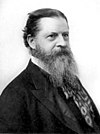
Charles Sanders Peirce on William Fleming
“William Fleming (1791-1866) wrote a manual of moral philosophy, a book on political economy, and the Vocabulary.”
About William Fleming
William Fleming (1791 – 1866) was a British philosopher, and Professor of Moral Philosophy at the University of Glasgow, known from his 1857 Vocabulary of philosophy, mental, moral, and metaphysical.