Link Copied!
William Ellery Channing Quotes (1780-1842)
Theologian



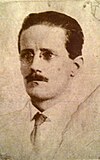


































About William Ellery Channing
William Ellery Channing (April 7 1780 – October 2 1842) was the foremost Unitarian theologian and preacher in the United States in the early nineteenth century.
Best William Ellery Channing Quotes
Shortest
Earliest
Explore our curated collection of the most famous and impactful William Ellery Channing quotes.
“All noble enthusiasms pass through a feverish stage, and grow wiser and more serene.”
“God deliver us all from prejudice and unkindness, and fill us with the love of truth and virtue.”
“We honor revelation too highly to make it the antagonist of reason, or to believe that it calls us to renounce our highest powers.”

“The office of government is not to confer happiness, but to give men opportunity to work out happiness for themselves.”
“I have chosen for the subject of this lecture Self-culture, or the care which every man owes to himself, to the unfolding and perfecting of his nature.”
“The miracles of Christ were studiously performed in the most unostentatious way. He seemed anxious to veil His majesty under the love with which they were wrought.”
“Did any man at his death ever regret his conflicts with himself, his victories over appetite, his scorn of impure pleasure, or his sufferings for righteousness' sake?”


“Religion is faith in an infinite Creator, who delights in and enjoins that rectitude which conscience commands us to seek. This conviction gives a Divine sanction to duty.”
“Let us aspire towards this living confidence, that it is the will of God to unfold and exalt without end the spirit that trusts itself to Him in well-doing as to a faithful Creator.”

“I am a living member of the great Family of All Souls; and I cannot improve or suffer myself without diffusing good or evil around me through an ever-enlarging sphere.”
“There is but a very minute portion of the creation which we can turn into food and clothes, or gratification for the body; but the whole creation may be used to minister to the sense of beauty.”

“Real greatness has nothing to do with a man's sphere. It does not lie in the magnitude of his outward agency, in the extent of the effects which he produces. The greatest men may do comparatively little.”

“Government, the peace-officer at home, breathes war abroad, organizes it into a science, reduces it to a system, makes it a trade, and applauds it as if it were the most honorable work of nations.”

“The sin that now rises to memory as your bosom sin, let this first of all be withstood and mastered. Oppose it instantly by a detestation of it, by a firm will to conquer it, by reflection, by reason, and by prayer.”
“Another powerful principle of our nature, which is the spring of war, is the passion for superiority, for triumph, for power. The human mind is aspiring, impatient of inferiority, and eager for preeminence and control.”
“A clear thought, a pure affection, a resolute act of a virtuous will, have a dignity of quite another kind, and far higher than accumulations of brick and granite and plaster and stucco, however cunningly put together.”

“The mind, in proportion as it is cut off from free communication with nature, with revelation, with God, with itself, loses its life, just as the body droops when debarred from the air and the cheering light from heaven.”


“The influence of war on the community at large, on its prosperity, its morals, and its political institutions, though less striking than on the soldiery, is yet baleful. How often is a community impoverished to sustain a war in which it has no interest?”

“"Whatever you may suffer, speak the truth. Be worthy of the entire confidence of your associates. Consider what is right as to what must be done. It is not necessary that you should keep your property, or even your life, but it is necessary that you should hold fast your integrity."”
William Ellery Channing Quotes by Topic
Find exactly what you are looking for by browsing this categorized list of William Ellery Channing quotes by topic.
William Ellery Channing on Religion 3 quotes
“The true office of religion is to bring out the whole nature of man in harmonious activity…”

William Ellery Channing on Work 3 quotes
“Labor is discovered to be the grand conqueror, enriching and building up nations more surely than the proudest battles.”

William Ellery Channing on Soul 3 quotes
“The strongest love which the human heart has ever felt has been that for its Heavenly Parent. Was it not then constituted for this love?”

William Ellery Channing on Perfection 3 quotes
“Religious instruction should aim chiefly to turn men’s aspirations and efforts to that perfection of the soul, which constitutes it a bright image of God.”
William Ellery Channing on Preaching 2 quotes
“We doubt whether a man ever brings his faculties to bear with their whole force on a subject, until he writes upon it.”

William Ellery Channing on Wakefulness 2 quotes
“We need not war to awaken human energy. There is at least equal scope for courage and magnanimity in blessing, as in destroying mankind.”

William Ellery Channing on God 2 quotes
“Religious instruction should aim chiefly to turn men’s aspirations and efforts to that perfection of the soul, which constitutes it a bright image of God.”

William Ellery Channing on Hedonism 2 quotes
“There is but a very minute portion of the creation which we can turn into food and clothes, or gratification for the body; but the whole creation may be used to minister to the sense of beauty.”
William Ellery Channing on Magnanimity 2 quotes
“I see the marks of God in the heavens and the earth, but how much more in a liberal intellect, in magnanimity, in unconquerable rectitude, in a philanthropy which forgives every wrong, and which never despairs of the cause of Christ and human virtue.”

William Ellery Channing on Books 2 quotes
“It is chiefly through books that we enjoy intercourse with superior minds, and these invaluable means of communication are in the reach of all. In the best books, great men talk to us, give us their most precious thoughts, and pour their souls into ours.”
William Ellery Channing on Asceticism 2 quotes
“I call that mind free, which masters the senses, which protects itself against animal appetites, which contemns pleasure and pain in comparison to its own energy, which penetrates beneath the body and recognises its own reality and greatness, which passes life, not in asking what it shall eat or drink, but in hungering, thirsting, and seeking after righteousness.”

William Ellery Channing on High culture 2 quotes
“A rational, moral being cannot, without infinite wrong, be converted into a mere instrument of others’ gratification. He is necessarily an end, not a means. A mind, in which are sown the seeds of wisdom, disinterestedness, firmness of purpose, and piety, is worth more than all the outward material interests of a world. It exists for itself, for its own perfection, and must not be enslaved to its own or others’ animal wants.”

Quotes About William Ellery Channing
Gain deeper perspective through quotes about William Ellery Channing from others.
Lucretia Mott on William Ellery Channing
“I would ask, if this modesty is not attractive also, when manifested in the other sex? It was strikingly marked in Horace Mann, when presiding over the late National Educational Convention in this city. The retiring modesty of William Ellery Channing was beautiful, as well as of many others who have filled elevated stations in society. These virtues, differing as they may in degree in man and woman, are of the same nature, and call forth our admiration wherever manifested.”

Misattributed Quotes
Quotes mistakenly credited to William Ellery Channing
About William Ellery Channing
William Ellery Channing (April 7 1780 – October 2 1842) was the foremost Unitarian theologian and preacher in the United States in the early nineteenth century.