Link Copied!
Will Durant Quotes (1885-1981)
Philosopher, Writer, Scientist




















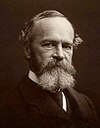













































About Will Durant
William James Durant (5 November 1885 – 7 November 1981) was an American historian, philosopher and writer, best remembered for his works The Story of Philosophy, and The Story of Civilization.
Best Will Durant Quotes
Shortest
Earliest
Explore our curated collection of the most famous and impactful Will Durant quotes.
“Man is as young as the risks he takes.”


“Time, subjectively, is the conscious sequence of perceptions.”

“Civilization exists by geological consent, subject to change without notice.”

“A sensation is the feeling of an external stimulus or an internal condition.”
“By mind I mean the totality of perceptions, memories and ideas in an organism.”
“Life is that which is discontent, which struggles and seeks, which suffers and creates.”
“Space, subjectively, is the coexistence of perceptions — perceiving two objects at once.”
“She is a woman now, and not an idle girl, not a domestic ornament or a sexual convenience anymore.”

“Power dements even more than it corrupts, lowering the guard of foresight and raising the haste of action.”

“See him, the newborn, dirty but marvelous, ridiculous in actuality, infinite in possibility, capable of that ultimate miracle, growth.”
“Great organizers, as much as inevitable slaves, tend to stoic moods: it is difficult to be either master or servant if one is sensitive.”
“India will teach us the tolerance and gentleness of mature mind, understanding spirit and a unifying, pacifying love for all human beings.”


“Middle age begins with marriage; for then work and responsibility replace carefree play, passion surrenders to the limitations of social order, and poetry yields to prose.”

“The principle of the family was mutual aid; but the principle of society is competition, the struggle for existence, the elimination of the weak and the survival of the strong.”

“Here is a fulfillment of long centuries of civilization and culture; here, in romantic love, more than the triumph of thought or the victories of power is the topmost reach of human beings.”
“Philosophy is a hypothetical interpretation of the unknown (as in metaphysics), or of the inexactly known (as in ethics or political philosophy); it is the front trench in the siege of truth.”

Will Durant Quotes by Topic
Find exactly what you are looking for by browsing this categorized list of Will Durant quotes by topic.
Will Durant on The Story of Civilization 12 quotes
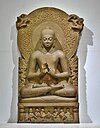
“One of the best of the Chinese Buddhist shrines is the Temple of the Sleeping Buddha, near the Summer Palace outside Peking; Fergusson called it “the finest architectural achievement in China.””

Will Durant on History 8 quotes
View all 8 quotes on History →Will Durant on Culture of India 6 quotes
“They are the oldest extant philosophy and psychology of our race; the surprisingly subtle and patient effort of man to understand the mind and the world, and their relation. The Upanishads are as old as Homer, and as modem as Kant.”

Will Durant on Indian literature 5 quotes
“In one sense drama in India is as old as the Vedas, for at least the germ of drama lies in the Upanishads.”

Will Durant on Chinese art 5 quotes
“One of the best of the Chinese Buddhist shrines is the Temple of the Sleeping Buddha, near the Summer Palace outside Peking; Fergusson called it “the finest architectural achievement in China.””

Will Durant on History of science and technology in the Indian subcontinent 5 quotes
“In the time of Alexander, says Garrison, "Hindu physicians and surgeons enjoyed a well-deserved reputation for superior knowledge and skill," and even Aristotle is believed by some students to have been indebted to them.”

Will Durant on Vijayanagara Empire 5 quotes
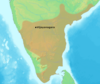
“Vijayanagar—the name both of a kingdom and of its capital—is a melancholy instance of forgotten glory. In the years of its grandeur it comprised all the present native states of the lower peninsula, together with Mysore and the entire Presidency of Madras.”
Will Durant on Economy of India 4 quotes
““The Indians,” says Megasthenes, “neither put out money at usury” (interest), “nor know how to borrow. It is contrary to established usage for an Indian either to do or to suffer wrong; and therefore they neither make contracts nor require securities.””

Will Durant on Indian art 4 quotes
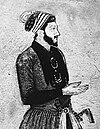
“Aurangzeb was a misfortune for Mogul and Indian art. Dedicated fanatically to an exclusive religion, he saw in art nothing but idolatry and vanity. Already Shah Jehan had prohibited the erection of Hindu temples;127 Aurangzeb not only continued the ban, but gave so economical a support to Moslem building that it, too, languished under his reign. Indian art followed him to the grave.”

Will Durant on China 3 quotes
“The average Chinese is at once an animist, a Taoist, a Buddhist and a Confucianist.”

Will Durant on Civilization 3 quotes
“Civilization is not inherited; it has to be learned and earned by each generation anew; if the transmission should be interrupted for one century, civilization would die, and we should be savages again.”
Will Durant on British Raj 3 quotes
“It might have been supposed that the building of 30,000 miles of railways would have brought a measure of prosperity to India. But these railways were built not for India but for England; not for the benefit of the Hindu, but for the purposes of the British army and British trade.”

What Will Durant Said About Others
Discover personal opinions Will Durant shared regarding contemporaries.
Will Durant on Akbar 5 quotes
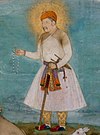
“Like a good Turk he had no effeminate distaste for human blood; when, at the age of fourteen, he was invited to win the title of Ghazi—Slayer of the Infidel—by killing a Hindu prisoner, he cut off the man’s head at once with one stroke of his scimitar. These were the barbarous beginnings of a man destined to become one of the wisest, most humane and most cultured of all the kings known to history.”
Will Durant on Women in Hinduism 4 quotes
“Nevertheless, despite all this equipment, woman fared poorly in India. Her high status in Vedic days was lost under priestly influence and Mohammedan example. The Code of Manu set the tone against her in phrases reminiscent of an early stage in Christian theology... Doubtless the influx of Islamic ideas had something to do with the decline in the status of woman in India after Vedic days. The custom of purdah (curtain)—the seclusion of married women—came into India with the Persians and the Mohammedans, and has therefore been stronger in the north than in the south. Partly to protect their wives from the Moslems, Hindu husbands developed a system of purdah so rigid that a respectable woman could show herself only to her husband and her sons, and could move in public only under a heavy veil; even the doctor who treated her and took her pulse had to do so through a curtain.”

Will Durant on Baruch Spinoza 3 quotes
“"Spinoza did not seek to found a sect, and he founded none"; yet all philosophy after him is permeated with his thought.”

Will Durant on Wu Daozi 3 quotes
“The greatest painter of the T’ang epoch, and, by common consent, of all the Far East, rose above distinctions of school, and belonged rather to the Buddhist tradition of Chinese art. Wu Tao-tze deserved his name—Wu, Master of the Tao or Way, for all those impressions and formless thoughts which Lao-tze and Chuang-tze had found too subtle for words seemed to flow naturally into line and color under his brush.”
Will Durant on John Calvin 2 quotes
“It is remarkable, how much of Roman Catholic tradition and theory survived in Calvin's theology.”

Will Durant on Nakae Tōju 2 quotes
“Nakaye was a man of saintly sincerity, but his philosophy pleased neither the people nor the government. The Shogunate trembled at the notion that every man might judge for himself what was right and what was wrong.”

Will Durant on Wang Yangming 2 quotes
“In 1795 an edict went forth against the further teaching of the Oyomei philosophy; and so docile was the mind of Japan that from that time on Oyomei concealed itself within the phrases of Confucianism, or entered as a modest component into that military Zen which, by a typical paradox of history, transformed the pacific faith of Buddha into the inspiration of patriotic warriors.”
Will Durant on Sushruta 2 quotes
“The great names in Hindu medicine are those of Sushruta in the fifth century before, and Charaka in the second century after Christ. Sushruta, professor of medicine in the University of Benares, wrote down in Sanskrit a system of diagnosis and therapy whose elements had descended to him from his teacher Dhanwantari. His book dealt at length with surgery, obstetrics, diet, bathing, drugs, infant feeding and hygiene, and medical education.”
Will Durant on Gu Kaizhi 2 quotes
“He insisted on being a philosopher, too; under his portrait of the emperor he wrote: “In Nature there is nothing high which is not soon brought low. . . . When the sun has reached its noon, it begins to sink; when the moon is full it begins to wane. To rise to glory is as hard as to build a mountain out of grains of dust; to fall into calamity is as easy as the rebound of a tense spring.” His contemporaries ranked him as the outstanding man of his time in three lines: in painting, in wit, and in foolishness.”
Will Durant on Kaṇāda 2 quotes
“Two systems of Hindu thought propound physical theories suggestively similar to those of Greece. Kanada, founder of the Vaisheshika philosophy, held that the world was composed of atoms as many in kind as the various elements. The Jains more nearly approximated to Democritus by teaching that all atoms were of the same kind, producing different effects by diverse modes of combination. Kanada believed light and heat to be varieties of the same substance; Udayana taught that all heat comes from the sun; and Vachaspati, like Newton, interpreted light as composed of minute particles emitted by substances and striking the eye.”

Will Durant on Shah Jahan 2 quotes
“Toward the end of his reign Jehangir took more and more to his cups, and neglected the tasks of government. Inevitably conspiracies arose to replace him; already in 1622 his son Jehan had tried to seize the throne. When Jehangir died Jehan hurried up from the Deccan where he had been hiding, proclaimed himself emperor, and murdered all his brothers to ensure his peace of mind. His father passed on to him his habits of extravagance, intemperance and cruelty. The expenses of Jehan’s court, and the high salaries of his innumerable officials, absorbed more and more of the revenue produced by the thriving industry and commerce of the people. The religious tolerance of Akbar and the indifference of Jehangir were replaced by a return to the Moslem faith, the persecution of Christians, and the ruthless and wholesale destruction of Hindu shrines.”
Will Durant on Plato 2 quotes
“What Plato lacks above all, perhaps, is the Heracleitean sense of flux and change; he is too anxious to have the moving picture of this world become a fixed and still tableau. He loves order exclusively, like any timid philosopher; he has been frightened by the democratic turbulence of Athens into an extreme neglect of individual values; he arranges men in classes like an entomologist classifying flies; and he is not averse to using priestly humbug to secure his ends. His state is static; it might easily become an old-fogey society, ruled by inflexible octogenarians hostile to invention and jealous of change. It is mere science without art; it exalts order, so dear to the scientific mind, and quite neglects that liberty which is the soul of art; it worships the name of beauty, but exiles the artists who alone can make beauty or point it out. It is a Sparta or a Prussia, not an ideal state.”

About Will Durant
William James Durant (5 November 1885 – 7 November 1981) was an American historian, philosopher and writer, best remembered for his works The Story of Philosophy, and The Story of Civilization.