Link Copied!
Wilhelm Röpke Quotes (1899-1966)



About Wilhelm Röpke
Wilhelm Röpke (October 10, 1899 – February 12, 1966) was a German economist and social critic, best known as one of the spiritual fathers of the social market economy. A Professor of Economics, first in Jena, then in Graz, Marburg, Istanbul, and finally Geneva, Switzerland, Röpke theorised and collaborated to organise the post-World War II economic re-awakening of the war-wrecked German economy, deploying a program sometimes referred to as the sociological neoliberalism (compared to ordoliberalism, a more sociologically inclined variant of German liberalism).
Best Wilhelm Röpke Quotes
Shortest
Earliest
Explore our curated collection of the most famous and impactful Wilhelm Röpke quotes.
“The questionable things of this world come to grief on their nature, the good ones on their own excesses.”
“The place of any good in this scale of values is determined ultimately by the strength of the subjective demand for it.”
“We need a combination of supreme moral sensitivity and economic knowledge. Economically ignorant moralism is as objectionable as morally callous economism. Ethics and economics are two equally difficult subjects, and while the former needs discerning and expert reason, the latter cannot do without humane values.”
“It is no use seeking salvation in institutions, programs, and projects. We shall save ourselves only if more and more of us have the unfashionable courage to take counsel with our own souls and, in the midst of all this modern hustle and bustle, to bethink ourselves of the firm, enduring, and proved truths of life.”
“It is economism to allow material gain to obscure the danger that we may forfeit liberty, variety, and justice and that the concentration of power may grow, and it is also economism to forget that people do not live by cheaper vacuum cleaners alone but by other and higher things which may wither in the shadows of giant industries and monopolies.”

“Since men obviously cannot live in a religious vacuum, they cling to surrogate religions of all kinds, to political passions, ideologies, and pipe dreams—unless, of course, they prefer to drug themselves with the sheer mechanics of producing and consuming, with sport and betting, with sexuality, with rowdiness and crime and the thousand other things which fill our daily newspapers.”
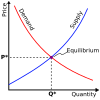
“The market economy is not everything. It must find its place in a higher order of things which is not ruled by supply and demand, free prices, and competition. It must be firmly contained within an all-embracing order of society in which the imperfections of and harshness of economic freedom are corrected by law and in which man is not denied conditions of life appropriate to his nature.”
“The total weight of taxation, progressive personal taxes hostile to the accumulation of wealth, the "negative saving" of hire purchase, and, above all, the constant expansion of the Welfare State, which undermines both the will and the power of the individual to practise thrift, are the principal forces militating against savings, and accordingly the immediate causes of constant inflationary pressure.”
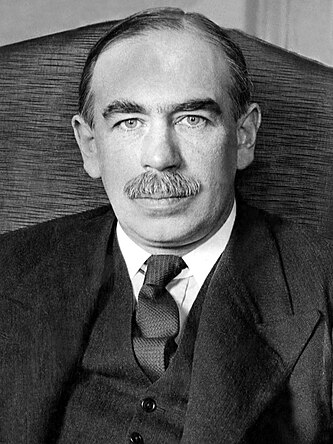
“It is impossible indeed not to look with considerable uneasiness at the type of the "modern economist" as he developed after Keynes' revolutionary book, whom Keynes himself regarded with alarm at the end of his days. It is the type of man who is obsessed by one thing, i.e. "effective demand," which he thinks must be kept up at whatever cost, while he forgets the working of the mechanism of prices, wages, interest and exchange rates.”
“It is a poor species of human being which this grim vision conjures up before our eyes: “fragmentary and disintegrated” man, the end product of growing mechanization, specialization, and functionalization, which decompose the unity of human personality and dissolve it in the mass, an aborted form of Homo sapiens created by a largely technical civilization, a race of spiritual and moral pygmies lending itself willingly—indeed gladly, because that way lies redemption—to use as raw material for the modern collectivist and totalitarian mass state.”

“The more we gained knowledge of these new totalitarian systems of mass-rule, the more we realized not only their similarity of structure, but also the fact that we had to do with a type of dominance that had been known in earlier epochs. We discovered that what the ancients called “tyrannis,” or ”cheirokratia,” what Sulla or the tyrants of the Italian Renaissance had practised, and what finally alarmed the world in the French Revolution and under Napoleon, had surprisingly many similarities with modern totalitarianism, although this latter had elements with which they cannot be compared, and although it possessed means of domination unknown in past ages.”

“In Economics as almost everywhere else, with all our cleverness, we have become decidedly less wise, while knowing more and more about less and less. We have lost the sense of proportion—so indispensable for every economist—while analysing the curiosities of hypothetical economic situations and forgetting what has a bearing on real economic life. In spinning out the fine threads of the New Economics, we forget the most elementary principles of economics, and while stressing what might at best in highly exceptional circumstances we overlook what are almost perennial truths. While proudly parading our elaborate equations we unlearnt that simple common sense which consists in reckoning with human reactions and institutions as they really are.”
“Whether in Bolshevism, Fascism, or Nazism, we meet continually with the forcible and ruthless usurpation of the power of the State by a minority drawn from the masses, resting on their support, flattering them and threatening them at the same time; a minority led by a charismatic leader and brazenly identifying itself with the State. It is a tyranny that does away with all the guarantees of the constitutional State, constituting as the only party the minority that has created it, furnishing that party with far-reaching judicial and administrative functions, and permitting within the whole life of the nation no groups, no activities, no opinions, no associations or religions, no publications, no educational institutions, no business transactions, that are not dependent on the will of the Government.”

“Consider, in this connection, the case of the ardent socialist. He finds that there is very much wrong with our world, and we all probably agree with him. His enthusiastic conclusion will be that "Capitalism" must be replaced by "Socialism." But it is safe to say that, in most cases, the socialist will find it very hard to define the one as well as the other. The idea uppermost in his mind will be that now there is "anarchy" and "jungle" and that afterwards there will be order, justice, and planning. His opponent, defending not "Capitalism" but the market economy, will explain that both theory and ample experience prove that socialism is most likely to be a bitter disappointment. All the time it is quite probable that they will talk at cross purposes because the socialist has in mind quite different problems to be solved whereas his opponent never meant the market economy to be the answer to all these problems but only to one of them, i.e., our special problem of economic order. He will say with Shaw that "no sane person refuses to wear spectacles because they do not cure a tooth-ache."”

“This brings me to the very center of my convictions, which, I hope, I share with many others. I have always been reluctant to talk about it because I am not one to air my religious views in public, but let me say it here quite plainly: the ultimate source of our civilization's disease is the spiritual and religious crisis which has overtaken all of us and which each must master for himself. Above all, man is Homo religiosus, and yet we have, for the past century, made the desperate attempt to get along without God, and in the place of God we have set up the cult of man, his profane or even ungodly science and art, his technical achievements, and his State. We may be certain that some day the whole world will come to see, in a blinding flash, what is now clear to only a few, namely, that this desperate attempt has created a situation in which man can have no spiritual and moral life, and this means that he cannot live at all for any length of time, in spite of television and speedways and holiday trips and comfortable apartments. We seem to have proved the existence of God in yet another way: by the practical consequences of His assumed non-existence.”

“All these peculiarities of the structure of modern tyranny, whose ugliest and extremest form was Nazism, are marked by the entire dissolution of the values and standards without which our society, or any other, cannot exist in the long run: a pernicious anaemia of morality, a cynical unconcern in the choice of means, which in the absence of firm principles become ends in themselves; a nihilistic lack of principle, and, in a word, what may be described literally as Satanism and Nihilism. Everything rots away, and finally there remains only one fixed aim of the tyranny, to which all moral principles, all promises, treaties, guarantees, and ideologies are ruthlessly sacrificed—the naked lust for domination, for the preservation of the continually threatened power, a power held on to for no other purpose than the continued enjoyment of all its fruits. […] All the ideals and emotions blatantly appealed to—social justice, national community, peace, religion, family life, welfare of the masses, claims in the international field, the return to simpler and more natural forms of life, and so forth—prove as a rule to be nothing more than crudely-painted inter-changeable boards for the staging of mass propaganda.”

Wilhelm Röpke Quotes by Topic
Find exactly what you are looking for by browsing this categorized list of Wilhelm Röpke quotes by topic.
Wilhelm Röpke on Spontaneous order
Wilhelm Röpke on Atheism
“The ultimate source of our civilization's disease is the spiritual and religious crisis which has overtaken all of us and which each must master for himself. Above all, man is Homo religiosus, and yet we have, for the past century, made the desperate attempt to get along without God, and in the place of God we have set up the cult of man, his profane or even ungodly science and art, his technical achievements, and his State. We may be certain that some day the whole world will come to see, in a blinding flash, what is now clear to only a few, namely, that this desperate attempt has created a situation in which man can have no spiritual and moral life, and this means that he cannot live at all for any length of time, in spite of television and speedways and holiday trips and comfortable apartments. We seem to have proved the existence of God in yet another way: by the practical consequences of His assumed non-existence.”

Wilhelm Röpke on Religion
“The ultimate source of our civilization's disease is the spiritual and religious crisis which has overtaken all of us and which each must master for himself. Above all, man is Homo religiosus, and yet we have, for the past century, made the desperate attempt to get along without God, and in the place of God we have set up the cult of man, his profane or even ungodly science and art, his technical achievements, and his State. We may be certain that some day the whole world will come to see, in a blinding flash, what is now clear to only a few, namely, that this desperate attempt has created a situation in which man can have no spiritual and moral life, and this means that he cannot live at all for any length of time, in spite of television and speedways and holiday trips and comfortable apartments. We seem to have proved the existence of God in yet another way: by the practical consequences of His assumed non-existence.”

Wilhelm Röpke on Existence of God
“The ultimate source of our civilization's disease is the spiritual and religious crisis which has overtaken all of us and which each must master for himself. Above all, man is Homo religiosus, and yet we have, for the past century, made the desperate attempt to get along without God, and in the place of God we have set up the cult of man, his profane or even ungodly science and art, his technical achievements, and his State. We may be certain that some day the whole world will come to see, in a blinding flash, what is now clear to only a few, namely, that this desperate attempt has created a situation in which man can have no spiritual and moral life, and this means that he cannot live at all for any length of time, in spite of television and speedways and holiday trips and comfortable apartments. We seem to have proved the existence of God in yet another way: by the practical consequences of His assumed non-existence.”

What Wilhelm Röpke Said About Others
Discover personal opinions Wilhelm Röpke shared regarding contemporaries.
Wilhelm Röpke on John Maynard Keynes 2 quotes
“John Maynard Keynes, who died in 1946 at the age of 62, is not only the best known economist of our times but also a man who by any standards must be reckoned as one of the leading personages of the first half of the twentieth century. The history of the era which followed World War I can no more dispense with the name of this singular individual than it can with the names of Einstein, Churchill, Roosevelt, or Hitler. It is only in this broad perspective that Keynes' full importance becomes visible. How ought we to judge the influence of this man? Is he the Copernicus of economics, as so many claim, the man who banished the ghosts of economics grown rigid in the chains of tradition, who opened the door to prosperity and stability? Or did he destroy more than he created and has he summoned into being spirits that today he possibly would be gladly rid of? It is difficult to make a simple answer to these questions. A fair judgment would have to take into account not only the manifold talents and personal charm of the man, but would require also the dissection of issues which have nourished most of the economic controversies of our time and which have given even the experts pause. We may begin by noting a characteristic trait of this animated, impulsive, and artistically sensitive man: his virtuoso-like ability to change positions on important questions, positions which he had only shortly before defended with intelligence and vigor.”
About Wilhelm Röpke
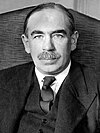
Wilhelm Röpke (October 10, 1899 – February 12, 1966) was a German economist and social critic, best known as one of the spiritual fathers of the social market economy. A Professor of Economics, first in Jena, then in Graz, Marburg, Istanbul, and finally Geneva, Switzerland, Röpke theorised and collaborated to organise the post-World War II economic re-awakening of the war-wrecked German economy, deploying a program sometimes referred to as the sociological neoliberalism (compared to ordoliberalism, a more sociologically inclined variant of German liberalism).