Link Copied!
Werner Heisenberg Quotes (1901-1976)
Physicist, Scientist


















About Werner Heisenberg
Werner Karl Heisenberg (5 December 1901 – 1 February 1976) was a German theoretical physicist, one of the main pioneers of the theory of quantum mechanics, and a principal scientist in the Nazi nuclear weapons program during World War II. He published his Umdeutung paper in 1925, a major reinterpretation of old quantum theory. In the subsequent series of papers with Max Born and Pascual Jordan, during the same year, his matrix formulation of quantum mechanics was substantially elaborated. He is known for the uncertainty principle, which he published in 1927. Heisenberg was awarded the 1932 Nobel Prize in Physics "for the creation of quantum mechanics".
Best Werner Heisenberg Quotes
Shortest
Earliest
Explore our curated collection of the most famous and impactful Werner Heisenberg quotes.
“I was lucky enough to look over the good Lord's shoulder while He was at work.”
“Every experiment destroys some of the knowledge of the system which was obtained by previous experiments.”


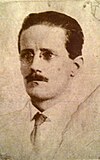
“In general, scientific progress calls for no more than the absorption and elaboration of new ideas — and this is a call most scientists are happy to heed.”
“Quantum theory provides us with a striking illustration of the fact that we can fully understand a connection though we can only speak of it in images and parables.”

“The existing scientific concepts cover always only a very limited part of reality, and the other part that has not yet been understood is infinite.”
“There is a fundamental error in separating the parts from the whole, the mistake of atomizing what should not be atomized. Unity and complementarity constitute reality.”
“Whenever we proceed from the known into the unknown we may hope to understand, but we may have to learn at the same time a new meaning of the word "understanding." ”

“If one finds a difficulty in a calculation which is otherwise quite convincing, one should not push the difficulty away; one should rather try to make it the centre of the whole thing.”
“The great scientific contribution in theoretical physics that has come from Japan since the last war may be an indication of a certain relationship between philosophical ideas in the tradition of the Far East and the philosophical substance of quantum theory.”
“I think that modern physics has definitely decided in favor of Plato. In fact the smallest units of matter are not physical objects in the ordinary sense; they are forms, ideas which can be expressed unambiguously only in mathematical language.”
“The more precise the measurement of position, the more imprecise the measurement of momentum, and vice versa.
• Variant translation: The more precisely the position is determined, the less precisely the momentum is known in this instant, and vice versa.”
• Variant translation: The more precisely the position is determined, the less precisely the momentum is known in this instant, and vice versa.”

“[E]ven in the most precise part of science, in mathematics, we cannot avoid using concepts that involve contradictions. ...[I]t is well known that the concept of infinity leads to contradictions... but it would be practically impossible to construct... mathematics without this concept.”
“After these conversations with Tagore some of the ideas that had seemed so crazy suddenly made much more sense. That was a great help for me.
• Variant: After the conversations about Indian philosophy, some of the ideas of Quantum Physics that had seemed so crazy suddenly made much more sense.”
• Variant: After the conversations about Indian philosophy, some of the ideas of Quantum Physics that had seemed so crazy suddenly made much more sense.”
“I remember discussions with Bohr which went through many hours till very late at night and ended almost in despair; and when at the end of the discussion I went alone for a walk in the neighbouring park I repeated to myself again and again the question: Can nature possibly be so absurd as it seemed to us in these atomic experiments?”
“Of course, we all know that our own reality depends on the structure of our consciousness; we can objectify no more than a small part of our world. But even when we try to probe into the subjective realm, we cannot ignore the central order…In the final analysis, the central order, or 'the one' as it used to be called and with which we commune in the language of religion, must win out.”

“If nature leads us to mathematical forms of great simplicity and beauty... that no one has previously encountered, we cannot help thinking that they are "true", that they reveal a genuine feature of nature... You must have felt this too: the almost frightening simplicity and wholeness of the relationships which nature suddenly spreads out before us and for which none of us was in the least prepared.”

“The physicist may be satisfied when he has the mathematical scheme and knows how to use for the interpretation of the experiments. But he has to speak about his results also to non-physicists who will not be satisfied unless some explanation is given in plain language. Even for the physicist the description in plain language will be the criterion of the degree of understanding that has been reached.”

“The Greek philosophers thought of static forms and found them in the regular solids. Modern science, however, has from its beginning in the sixteenth and seventeenth centuries started from the dynamic problem. The constant element in physics since Newton is not a configuration or a geometrical form, but a dynamic law.”
“Can you, or anyone else, reach the central order of things or events, whose existence seems beyond doubt, as directly as you can reach the soul of another human being? I am using the term 'soul' quite deliberately so as not to be misunderstood. If you put your question like that, I would say yes. ... the word 'soul' refers to the central order, to the inner core of a being whose outer manifestations may be highly diverse and pass our understanding.”

“The equation of motion holds at all times, it is in this sense eternal, whereas the geometrical forms, like the orbits, are changing. Therefore, the mathematical forms that represent the elementary particles will be solutions of some eternal law of motion for matter. Actually this is a problem which has not yet been solved.”

“The law of causality is no longer applied in quantum theory and the law of conservation of matter is no longer true for the elementary particles. Obviously Kant could not have foreseen the new discoveries, but since he was convinced that his concepts would be "the basis of any future metaphysics that can be called science" it is interesting to see where his arguments have been wrong.”

“The problem of values is nothing but the problem of our acts, goals and morals. It concerns the compass by which we must steer our ship if we are to set a true course through life. The compass itself has been given different names by various religions and philosophies: happiness, the will of God, the meaning of life-to mention just a few. The differences in the names reflect profound differences in the awareness of different human groups. I have no wish to belittle these differences, but I have the clear impression that all such formulations try to express man's relatedness to a central order.”

Werner Heisenberg Quotes by Topic
Find exactly what you are looking for by browsing this categorized list of Werner Heisenberg quotes by topic.
Werner Heisenberg on Atomic theory 3 quotes
“There is a fundamental error in separating the parts from the whole, the mistake of atomizing what should not be atomized. Unity and complementarity constitute reality.”

Werner Heisenberg on Art 3 quotes
“Art is always an idealization; the ideal is different from reality—at least from the reality of the shadows, as Plato would have put it—but idealization is necessary for understanding.”

Werner Heisenberg on Indian philosophy 2 quotes
“After these conversations with Tagore some of the ideas that had seemed so crazy suddenly made much more sense. That was a great help for me.”

Werner Heisenberg on Force field (physics) 2 quotes
“The theory of relativity... showed in a conclusive way that the concept of the ether as a substance, to which Maxwell's equations refer, had to be abandoned. ...the result was that the fields had to be considered as an independent reality.”
Werner Heisenberg on Infinity 2 quotes
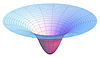
“[E]ven in the most precise part of sience, in mathematics, we cannot avoid using concepts that involve contradictions. ...[I]t is well known that the concept of infinity leads to contradictions that have been analyzed, but it would be practically impossible to construct the main parts of mathematics without this concept.”
Werner Heisenberg on Water 2 quotes
“[W]ith Thales... Aristotle ascribes the statement: "Water is the material cause of all things." This... expresses, as Nietzsche... pointed out, three fundamental ideas of philosophy. First, ...the material cause of all things; second, ...that this ...be answered in conformity with reason, without ...myths or mysticism; third, ...that ...it must be possible to reduce everything to one principle.”

Werner Heisenberg on Electromagnetism 2 quotes
“The third closed system of concepts and axioms has its origin in the phenomena of electricity and magnetism and has reached its final form in the first decade of the twentieth century through the work of Lorentz, Einstein and Minkowski. It comprises electrodynamics, special relativity, optics, magnetism, and one may include the de Broglie theory of matter waves of all different sorts of elementary particles, but not the wave theory of Schrodinger.”

Werner Heisenberg on Thermodynamics 2 quotes
“[I]n the nineteenth century, even the theory of heat could be reduced to mechanics by the assumption that heat really consists of a complicated statistical motion of the smallest parts of matter. By combining the concepts of the mathematical theory of probability with the concepts of Newtonian mechanics Clausius, Gibbs and Boltzmann were able to show that the fundamental laws in the theory of heat could be interpreted as statistical laws following from Newton's mechanics when applied to very complicated mechanical systems.”

Werner Heisenberg on Concept 2 quotes
“[H]ow free are we in choosing the concepts for formulating our questions? Any scientific work can only be defined by formulating the questions... But in order to formulate the questions we need concepts by which we hope to get hold of the phenomena. These concepts are usually taken from the past history of science; they suggest already a possible picture of the phenomena. But if we are going to enter into a new realm of phenomena, these concepts may act as a collection of prejudices, which hamper progress... Even then we have to use concepts, and we can't help falling back on those given to us by tradition.”

Werner Heisenberg on History of science 2 quotes
“There is an enormous difference between modern science and Greek philosophy, and that is just the empiristic attitude... Since the time of Galileo and Newton, modern science has been based upon a detailed study of nature and upon the postulate that only such statements should be made, as have been verified or at least can be verified by experiment. The idea that one can single out some events from nature by an experiment... to find out what is the constant law in the continuous change, did not occur to the Greek philosophers. Therefore, modern science has from its beginning stood on a much more modest, but at the same time much firmer, basis than ancient philosophy. Therefore, the statements of modern physics are in some way meant much more seriously than the statements of Greek philosophy.”

Werner Heisenberg on Time 2 quotes
“The way in which the convergent mathematical schemes did not fulfill the requirements of relativity and quantum theory was... interesting. ...[O]ne scheme ...interpreted in terms of actual events in space and time, led to a...time reversal... The physicists are convinced... that the processes... do not occur in nature... if... separated by measurable distance in space and time. ...If we assume that the laws of nature do contain a third universal constant... of the order of 10-13 cm, then... our usual concepts... apply only to regions in space and time that are large compared to the universal constant. We should... be prepared for phenomena of a qualitatively new character when we... approach regions... smaller than the nuclear radii. The phenomenon of time reversal... might therefore belong to these smallest regions.”

Werner Heisenberg on Classical mechanics 2 quotes
“Newton's system was for a long time considered as final and the task... seemed simply to be an expansion.... From the theory of the motion of mass points one could go over to the mechanics of solid bodies, to rotatory motions, and one could treat the continuous motion of fluid or the vibrating motion of an elastic body. All these... were gradually developed... with the evolution of mathematics, especially of the differential calculus... checked by experiments. Acoustics and hydrodynamics became a part of mechanics. Another science... was astronomy. Improvements... led to... more accurate determinations of the motions of the planets... When the phenomena of electricity and magnetism were discovered, the... forces were compared to the gravitational forces... Finally, in the nineteenth century, even the theory of heat could be reduced...”

What Werner Heisenberg Said About Others
Discover personal opinions Werner Heisenberg shared regarding contemporaries.
Werner Heisenberg on Niels Bohr 2 quotes
“Anyone who is not shocked by quantum theory has not understood it.”

Werner Heisenberg on Thales 2 quotes
“[W]ith Thales... Aristotle ascribes the statement: "Water is the material cause of all things." This... expresses, as Nietzsche... pointed out, three fundamental ideas of philosophy. First, ...the material cause of all things; second, ...that this ...be answered in conformity with reason, without ...myths or mysticism; third, ...that ...it must be possible to reduce everything to one principle.”
Werner Heisenberg on Anaximander 2 quotes
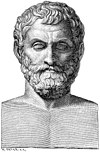
“[P]hysicists... try to find a fundamental law of motion for matter from which all elementary particles and their properties can be derived mathematically. This fundamental equation... may refer either to waves of a known type... or to waves... which have nothing to do with any of the known waves or elementary particles. In the first case it would mean that all other elementary particles can be reduced in some way to a few sorts of "fundamental" elementary particles... In the second case all different elementary particles could be reduced to some universal substance... energy or matter, but none of the... particles could be preferred... as... more fundamental. The latter... corresponds to... Anaximander, and... this view is the correct one.”
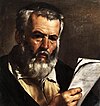
Werner Heisenberg on Rabindranath Tagore
“After these conversations with Tagore some of the ideas that had seemed so crazy suddenly made much more sense. That was a great help for me.”

Werner Heisenberg on Plato
“With regard to this question modern physics takes a definite stand against the materialism of Democritus and for Plato and the Pythagoreans. The elementary particles are certainly not eternal and indestructible units of matter, they can actually be transformed into each other. … The elementary particles in Plato's Timaeus are finally not substance but mathematical forms.”

Werner Heisenberg on Johannes Kepler
“Galileo argued that nature, God's second book, is written in mathematical letters... Kepler is even more explicit in his work on world harmony; he says: God created the world in accordance with his ideas of creation. These ideas are the pure archetypal forms which Plato termed Ideas, and they can be understood by man as mathematical constructs. They can be understood by Man, because Man was created in the spiritual image of God. Physics is reflection on the divine Ideas of Creation, therefore physics is divine service.”

Werner Heisenberg on Parmenides
“Greek philosophy returned for some time to the concept of the One in the teachings of Parmenides... His most important contribution... was, perhaps, that he introduced a purely logical argument into metaphysics. "One cannot know what is not—that is impossible—nor utter it; for it is the same thing that can be thought and that can be." Therefore, only the One is, and there is no becoming or passing away. Parmenides denied the existence of empty space for logical reasons. Since all change requires empty space... he dismissed change as an illusion.”

Werner Heisenberg on Immanuel Kant
“[I]t looks in the first moment as though his central concept of the "synthetic judgements a priori" had been completely annihilated by the discoveries of our century. The theory of relativity has... revealed entirely new features of space and time, of which nothing is seen in Kant's a priori forms of pure intuition. The law of causality is no longer applied in quantum theory and the law of conservation of matter is no longer true for the elementary particles. Obviously Kant could not have foreseen the new discoveries, but since he was convinced that his concepts would be "the basis of any future metaphysics that can be called science" it is interesting to see where his arguments have been wrong.”

Werner Heisenberg on René Descartes
“[I]n the Copenhagen interpretation of quantum theory we can indeed proceed without mentioning ourselves as individuals, but we cannot disregard the fact that natural science is formed by men. Natural science does not simply describe and explain nature; it is part of the interplay between nature and ourselves; it describes nature as exposed to our nature of questioning. This was a possibility of which Descartes could not have thought, but it makes a sharp separation between the world and the I impossible. If one follows the great difficulty which even eminent scientists like Einstein had in understanding and accepting the Copenhagen interpretation... one can trace the roots... to the Cartesian partition....it will take a long time for it [this partition] to be replaced by a really different attitude toward the problem of reality.”

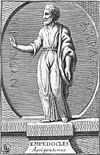
Werner Heisenberg on Empedocles
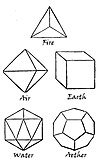
“Empedocles... changed... [Greek philosophy] from monism to a kind of pluralism. To avoid the difficulty that one primary substance cannot explain the variety of things and events, he assumed four basic elements, earth, water, air and fire.... mixed... and separated by... Love and Strife. Therefore, these latter two... are responsible for the imperishable change. Empedocles describes the formation of the world... First, ...the infinite Sphere of the One, as in the philosophy of Parmenides. But in the primary substance all the four "roots" are mixed... by Love. Then, when Love is passing out and Strife coming in, the elements are partially separated and partially combined. After that the elements are completely separated and Love is outside the World. Finally, Love is bringing the elements together again and Strife is passing out, so... we return to the original Sphere. This doctrine... represents... a more materialistic view... Here for the first time... a few [fundamentally different] substances... explains the infinite variety of things and events. Pluralism never appeals to those who are wont to think in fundamental principles. But it is a reasonable... compromise, which avoids the difficulty of monism and allows... some order.”
Werner Heisenberg on Heraclitus
“In... Heraclitus... Becoming occupies the foremost place. He regarded that which moves, the fire, as the basic element. The difficulty, to reconcile the... one fundamental principle with the infinite variety of phenomena, is solved... by recognizing... strife of... opposites is... a kind of harmony. ...[T]he world is ...one and many ..."the opposite tension" of ...opposites ...constitutes the unity of the One. He says: "...war is common to all and strife is justice ...all things come into being and pass away through strife." ...[T]hat infinite and eternal undifferentiated Being ...cannot ...explain the infinite variety of things. This leads to the antithesis of Being and Becoming and ...to the solution of Heraclitus ...change ...is the fundamental principle; the "imperishable change, that renovates the world," as the poets have called it. But ...change ...is not a material cause and therefore is represented ...by the fire ...both matter and a moving force. ...[P]hysics is ...extremely near to ...Heraclitus ...[i]f we replace ..."fire" by ..."energy" ...Energy is a substance, since its total ...does not change, and ...elementary particles can ...be made from this ...Energy may be called the fundamental cause for all change in the world. ...Energy is ...that which moves; it may be called the primary cause of all change, and ...can be transformed into matter or heat or light. The strife between opposites in the philosophy of Heraclitus can be found in the strife between two different forms of energy.”

Quotes About Werner Heisenberg
Gain deeper perspective through quotes about Werner Heisenberg from others.
Official Biography at the Nobel Prize site, from on Werner Heisenberg
“Heisenberg's name will always be associated with his theory of quantum mechanics, published in 1925, when he was only 23 years old. For this theory and the applications of it which resulted especially in the discovery of allotropic forms of hydrogen, Heisenberg was awarded the Nobel Prize for Physics for 1932. His new theory was based only on what can be observed, that is to say, on the radiation emitted by the atom. We cannot, he said, always assign to an electron a position in space at a given time, nor follow it in its orbit, so that we cannot assume that the planetary orbits postulated by Niels Bohr actually exist. Mechanical quantities, such as position, velocity, etc. should be represented, not by ordinary numbers, but by abstract mathematical structures called "matrices" and he formulated his new theory in terms of matrix equations.”
Max Born on Werner Heisenberg
“When he arrived he looked like a simple peasant boy, with short, fair hair, clear bright eyes and a charming expression. He took his duties as an assistant more seriously than Pauli and was a great help to me. His incredible quickness and acuteness of apprehension has always enabled him to do a colossal amount of work without much effort; he finished his hydrodynamic thesis, worked on atomic problems partly alone, partly in collaboration with me, and helped me to direct my research students.”

Fritjof Capra on Werner Heisenberg
“In 1929, Heisenberg spent some time in India as the guest of the celebrated Indian poet Rabindranath Tagore, with whom he had long conversations about science and Indian philosophy. This introduction to Indian thought brought Heisenberg great comfort, he told me. He began to see that the recognition of relativity, interconnectedness, and impermanence as fundamental aspects of physical reality, which had been so difficult for himself and his fellow physicists, was the very basis of the Indian spiritual traditions. “After these conversations with Tagore,” he said, “some of the ideas that had seemed so crazy suddenly made much more sense. That was a great help for me.””
Alan Moore on Werner Heisenberg
“We gaze continually at the world and it grows dull in our perceptions. Yet seen from the another's vantage point, as if new, it may still take our breath away. Come... dry your eyes, for you are life, rarer than a quark and unpredictable beyond the dreams of Heisenberg. Come, dry your eyes. And let's go home.”

Heisenberg on Werner Heisenberg
“Heisenberg in cattedra / spiegava il Principio di indeterminazione / a una platea di eletti. / In un angolo Fermi e Dirac / si guardarono un attimo sbigottiti / poi si scambiarono brevi formule / scritte sui palmi delle mani”
Walter J. Moore on Werner Heisenberg
“In 1925, the world view of physics was a model of a great machine composed of separable interacting material particles. During the next few years, Schrodinger and Heisenberg and their followers created a universe based on superimposed inseparable waves of probability amplitudes. This new view would be entirely consistent with the Vedantic concept of All in One.”
Nevill Francis Mott on Werner Heisenberg
“From 1946 onward, as Germany's leading physicist, he had two disappointments. His efforts to bring scientists into government failed, and his scientific work, offering suggestions for a new unified field theory, was not generally accepted.”
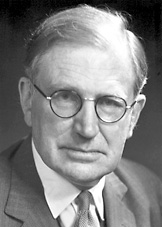
Oppenheimer on Werner Heisenberg
“J. Robert Oppenheimer: You're talking about turning theory into a practical weapons system faster than the Nazis. Leslie Groves: Who have a twelve month head start. J. Robert Oppenheimer: Eighteen. Leslie Groves: How could you possibly know that? J. Robert Oppenheimer: Our fast neutron research took six months. The man they've undoubtedly put in charge will have made that leap instantly. Leslie Groves: Who do you think they put in charge? J. Robert Oppenheimer: Werner Heisenberg. He has the most intuitive understanding of atomic structure I've ever seen. Leslie Groves: You know his work? J. Robert Oppenheimer: I know him. Just like I know Walter Bothe, von Weizsäcker, Diebner... In a straight race, the Germans win. We've got one hope. Leslie Groves: Which is? J. Robert Oppenheimer: Antisemitism. Leslie Groves: What? J. Robert Oppenheimer: Hitler called quantum physics "Jewish science", said it right to Einstein's face. Our one hope is that Hitler is so, so blinded by hate that he's denied Heisenberg proper resources, because it'll take vast resources.”
Misattributed Quotes
Quotes mistakenly credited to Werner Heisenberg
“Some subjects are so serious that one can only joke about them.”
“I am the one who knocks.”
About Werner Heisenberg
Werner Karl Heisenberg (5 December 1901 – 1 February 1976) was a German theoretical physicist, one of the main pioneers of the theory of quantum mechanics, and a principal scientist in the Nazi nuclear weapons program during World War II. He published his Umdeutung paper in 1925, a major reinterpretation of old quantum theory. In the subsequent series of papers with Max Born and Pascual Jordan, during the same year, his matrix formulation of quantum mechanics was substantially elaborated. He is known for the uncertainty principle, which he published in 1927. Heisenberg was awarded the 1932 Nobel Prize in Physics "for the creation of quantum mechanics".