Link Copied!
Wendell Phillips Quotes (1811-1884)
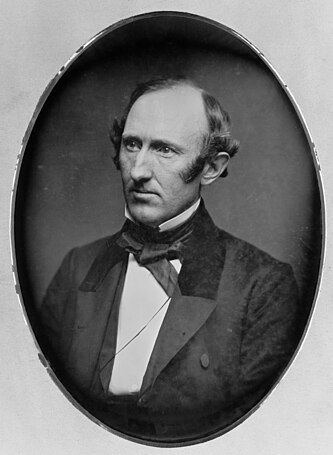






About Wendell Phillips
Wendell Phillips (29 November 1811 – 2 February 1884), born in Boston, Massachusetts, was an American abolitionist, advocate of Native American rights, and orator.
Best Wendell Phillips Quotes
Shortest
Earliest
Explore our curated collection of the most famous and impactful Wendell Phillips quotes.
“Aristocracy is always cruel.”


“Every man meets his Waterloo at last.”


“Sit not, like the figure on our silver coin, looking ever backward.”
“Whether in chains or in laurels, Liberty knows nothing but victories.”
“The best use of laws is to teach men to trample bad laws under their feet.”
“He who stifles free discussion, secretly doubts whether what he professes to believe is really true.”
“In God's world there are no majorities, no minorities; one, on God's side, is a majority.”
“[R]aces love to be judged in two ways—by the great men they produce, and by the average merit of the mass of the race.”
“Truth is one forever, absolute; but opinion is truth filtered through the moods, the blood, the disposition, of the spectator.”

“Write on my gravestone: "Infidel, Traitor" — infidel to every church that compromises with wrong; traitor to every government that oppresses the people.”
“Revolutions are not made; they come. A revolution is as natural a growth as an oak. It comes out of the past. Its foundations are laid far back.”

“Take the whole range of imaginative literature, and we are all wholesale borrowers. In every matter that relates to invention, to use, or beauty or form, we are borrowers.”


“The agitator must stand outside of organizations, with no bread to earn, no candidate to elect, no party to save, no object but truth — to tear a question open and riddle it with light.”
“Corruption does not so much rot the masses: it poisons Congress. Credit-Mobilier and money rings are not housed under thatched roofs: they flaunt at the Capitol. As usual in chemistry, the scum floats uppermost.”

“Eternal vigilance is the price of liberty — power is ever stealing from the many to the few…. The hand entrusted with power becomes … the necessary enemy of the people. Only by continual oversight can the democrat in office be prevented from hardening into a despot: only by unintermitted Agitation can a people be kept sufficiently awake to principle not to let liberty be smothered in material prosperity.”

Wendell Phillips Quotes by Topic
Find exactly what you are looking for by browsing this categorized list of Wendell Phillips quotes by topic.
Wendell Phillips on Revolution 2 quotes
View all 2 quotes on Revolution →Wendell Phillips on Liberty 2 quotes
View all 2 quotes on Liberty →Wendell Phillips on Journalism 2 quotes
“We live under a government of men and morning newspapers.”

Wendell Phillips on United States 2 quotes
“Give it only the fulcrum of Plymouth Rock, an idea will upheave the continent.”

Wendell Phillips on Destiny
“Every man meets his Waterloo at last.”
Wendell Phillips on Action
Wendell Phillips on Religion
“The Puritan did not stop to think; he recognized God in his soul, and acted.”

Wendell Phillips on Majority
“In God's world, there are no majorities, no minorities; one, on God's side, is a majority.”
Wendell Phillips on Education
Wendell Phillips on Censorship
“He who stifles free discussion, secretly doubts whether what he professes to believe is really true.”
Wendell Phillips on Victory
“There are two kinds of defeat. Whether in chains or in laurels, Liberty knows nothing but victories.”

Quotes About Wendell Phillips
Gain deeper perspective through quotes about Wendell Phillips from others.
Susan B. Anthony on Wendell Phillips
“Mrs. R. (Ernestine Rose) and myself were talking of the know nothing organizations, when she criticized Lucy Stone and Wendell Philips with regard to their feelings toward foreigners. Said she had heard them both express themselves in terms of prejudice against granting to foreigners the rights of Citizenship.”

Bettina Aptheker about the on Wendell Phillips
“Wendell Phillips, whose wife was part of the American delegation, introduced a counter-motion that the women be seated as full delegates. He spoke: "It is the custom there in America not to admit colored men into respectable society; and we have been told again and again that we are outraging the decencies of humanity when we permit colored men to sit by our side. When we have submitted to brick-bats and the tar-tub and feathers in New England rather than yield to the custom prevalent there to not admitting colored brethren into our friendship, shall we yield to parallel custom or prejudice against women in Old England? We cannot yield this question... for it is a matter of conscience.... We have argued it over and over again, and decided it time after time, in every society in the land, in favor of the women... It is a matter of conscience, and British virtue ought not to ask us to yield."”
H. P. Blavatsky on Wendell Phillips 2 quotes
“The ancients were always distinguished—especially the Chaldean astrologers and Magians—for their ardent love and pursuit of knowledge in every branch of science... As chemists they were unequalled, and in his famous lecture on The Lost Arts, Wendell Phillips says: “ The chemistry of the most ancient period had reached a point which we have never even approached.” The secret of the malleable glass, which, “if supported by one end by its own weight, in twenty hours dwindles down to a fine line that you can curve around your wrist,” would be as difficult to rediscover in our civilized countries as to fly to the moon. p. 50”
George William Curtis on Wendell Phillips
“Mister Toombs was willing to dissolve the Union to save slavery, Mister Phillips, to save liberty; while Mister Seward, denounced and derided by both, declared that the deepest instinct of the American people was for union. Reserved rights. State rights, limited powers, the advantages of union and disunion, were the cucumbers from which we were busily engaged in distilling light, overlooking the fact of nationality in discussing the conditions of union. We were speculating upon costume. We gravely proved that the clothes were the clothes of a woman, or of a child, without seeing that whatever the clothes might be there was a full-grown man inside of them. "The Constitution is a contract between sovereign States", shouted Mister Toombs, "let Georgia tear it and separate". "The Constitution is a league with hell", calmly replied Mister Phillips, "let New York cut off New Orleans to rot alone". "Oh, dear! it"s a dreadful dilemma", whimpered President Buchanan. "States have no right to secede, and the United States have no right to coerce. Oh, dear me! it"s perfectly awful! I"m the most patriotic of men, but what shall I do? what shall I do?" Separate! Cut off! Secede! It was of a living body they spoke, which, pierced anywhere, quivered everywhere.”

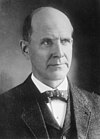
Eugene V. Debs on Wendell Phillips
“Robert G. Ingersoll and Wendell Phillips were the two greatest orators of their time, and probably of all time. Their power sprang from their passion for freedom, for truth, for justice, for a world filled with light and with happy human beings. But for this divine passion neither would have scaled the sublime heights of immortal achievement. The sacred fire burned within them and when they were aroused it flashed from their eyes and rolled from their inspired lips in torrents of eloquence. Had Ingersoll and Phillips devoted their lives to the practice of law for pay the divine fire within them would have burned to ashes and they would have died in mediocrity.”
Frederick Douglass on Wendell Phillips
“The good Lord had had a chance for a long time before the abolition. I believe that there is a moral government; and that God reigns. I am no pessimist; I give thanks to the good Lord, and also to the good men through whom He has worked. Prominent among them was Garrison, and scarcely less so was Phillips...”

The Autobiography of W.E.B. Du Bois: A Soliloquy on Viewing My Life from the Last Decade of Its First Century on Wendell Phillips
“All 13 of us graduates had orations, and mine was on Wendell Phillips. The great anti-slavery agitator had just died in February and I presume that some of my teachers must have suggested the subject, although it is quite possible that I chose it myself. But I was fascinated by his life and his work and took a long step toward a wider conception of what I was going to do.”
Frances Harper on Wendell Phillips
“Phillips, the peerless, grand and brave,/A tower of strength to the outcast slave./Earth has no marble too pure and white/To enrol his name in golden light.”

Irving Howe Introduction on Wendell Phillips
“behind them (The Masses staff) still throbbed the tradition of nineteenth-century American radicalism, the un-ambiguous nay-saying of Thoreau and the Abolitionists. This tradition implied that the individual person was still able to square off against the authority of the state; it signified a stance-one could not quite speak of it as a politics-of individual defiance and rectitude, little concerned because little involved with the complexities of society. The radicalism of nineteenth-century New England had been a radicalism of individual declaration far more than of collective action; and while Max Eastman and his friends were indeed connected with a movement, the Socialist party of Debs, in essential spirit they were intellectual freebooters, more concerned with speaking out than speaking to. They swore by Marx, but behind them could still be heard the voices of Thoreau and Wendell Phillips-and it was a good thing.”
Gerda Lerner on Wendell Phillips
“In 1834, a Boston mob dragging William Lloyd Garrison through the streets with a rope around his neck, was observed by the young lawyer Wendell Phillips, offspring of a wealthy and respected family. He was so incensed by the sight that he joined in Garrison's defense and soon became one of the leading and most militant abolitionists.”

Lucy Parsons on Wendell Phillips
“Women are stripped to the skin in the presence of leering, white-skinned, black-hearted brutes and lashed into insensibility and strangled to death from the limbs of trees. A girl child of fifteen years was lynched recently by these brutal bullies. Where has justice fled? The eloquence of Wendell Phillips is silent now. John Brown’s body lies moldering in the grave. But will his spirit lie there moldering, too? Brutes, inhuman monsters—you heartless brutes—you whom nature forms by molding you in it, deceive not yourselves by thinking that another John Brown will not arise.”

Mrs. Ware on Wendell Phillips
“"It's just what Wendell Phillips said," she declared. "'The Puritan's idea of hell is a place where everybody has to mind his own business.'"”
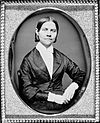
Lucy Stone on Wendell Phillips
“Wendell Phillips says, “The best and greatest thing one is capable of doing, that is his sphere.””
Misattributed Quotes
Quotes mistakenly credited to Wendell Phillips
About Wendell Phillips
Wendell Phillips (29 November 1811 – 2 February 1884), born in Boston, Massachusetts, was an American abolitionist, advocate of Native American rights, and orator.