Link Copied!
Wei Wu Wei Quotes (1895-1986)
Philosopher, Writer, Playwright
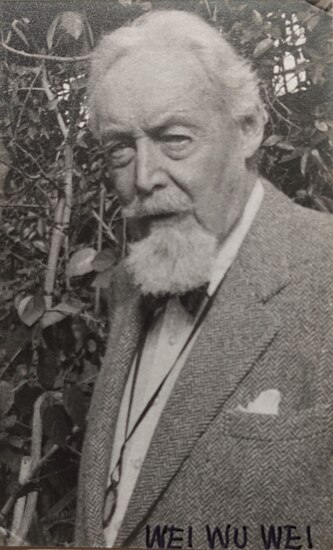

About Wei Wu Wei
Wei Wu Wei was the pen-name of Terence James Stannus Gray (14 September 1895 – 5 January 1986) an English-born philosopher, playwright and writer.
Best Wei Wu Wei Quotes
Shortest
Earliest
Explore our curated collection of the most famous and impactful Wei Wu Wei quotes.
“There is no becoming. ALL IS.”


“Living should be perpetual and universal benediction.”
“There is no mystery whatever — only inability to perceive the obvious.”

“Realisation is a matter of becoming conscious of that which is already realised.”

“In order to be effective truth must penetrate like an arrow — and that is likely to hurt.”
“The Buddha forbore to specify: as long as there is any "one" to suffer — he will.”
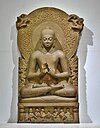


“The qualities we possess should never be a matter for satisfaction, but the qualities we have discarded.”
“Are we not wasps who spend all day in a fruitless attempt to traverse a window-pane — while the other half of the window is wide open?”
“Why are you unhappy?
Because 99.9 per cent
Of everything you think,
And of everything you do,
Is for yourself —
And there isn't one.”
Because 99.9 per cent
Of everything you think,
And of everything you do,
Is for yourself —
And there isn't one.”
“The writer of these lines has nothing whatsoever to teach anyone; his words are just his contribution to our common discussion of what must inevitably be for us the most important subject which could be discussed by sentient beings.”
“Doctrines, scriptures, sutras, essays, are not to be regarded as systems to be followed. They merely contribute to understanding. They should be for us a source of stimulation, and nothing more... Adopted, rather than used as a stimulus, they are a hindrance”
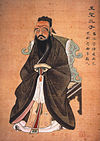
“There seem to two kinds of searchers: those who seek to make their ego something other than it is, i.e. holy, happy, unselfish (as though you could make a fish unfish), and those who understand that all such attempts are just gesticulation and play-acting, that there is only one thing that can be done, which is to disidentify themselves with the ego, by realising its unreality, and by becoming aware of their eternal identity with pure being.”
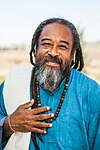
“The inadequacy of the short paragraphs that follow is due to the insufficiency of their expression. They are offered in the hope that the verity which underlies them may penetrate the mist of their presentation and kindle a spark that shall develop into the flame of fulfilment.
Please be so good as to believe that there is nothing whatever mysterious about this matter. If it were easy, should we not all be Buddhas? No doubt, but the apparent difficulty is due to our conditioning. The apparent mystery, on the other hand, is just obnubilation, an inability to perceive the obvious owing to a conditioned reflex which causes us persistently to look in the wrong direction!”
Please be so good as to believe that there is nothing whatever mysterious about this matter. If it were easy, should we not all be Buddhas? No doubt, but the apparent difficulty is due to our conditioning. The apparent mystery, on the other hand, is just obnubilation, an inability to perceive the obvious owing to a conditioned reflex which causes us persistently to look in the wrong direction!”
“There seems never to have been a time at which sentient beings have not escaped from the dungeon of individuality. In the East liberation was elaborated into a fine art, but it may be doubted whether more people made their escape from solitary confinement outside the organised religions than by means of them.
In the West reintegration was sporadic, but in recent years it has become a widespread preoccupation. Unfortunately its technical dependence on oriental literature — sometimes translated by scholars whose knowledge of the language was greater than their understanding of the subject — has proved a barrier which rendered full comprehension laborious and exceedingly long. Therefore it appears to be essential that such teaching as may be transmissible shall be given in a modern idiom and in accordance with our own processes of thought. But this presentation can never be given by the discursive method to which we are used for the acquisition of conceptual knowledge, for the understanding required is not conceptual and therefore is not knowledge.
This may account for the extraordinary popularity of such works as the Tao Te Ching, and in a lesser degree for that of the Diamond and Heart Sutras and Padma Sambhava's Knowing the Mind. For despite the accretion of superfluous verbiage in which the essential doctrine of some of the latter has become embedded, their direct pointing at the truth, instead of explaining it, goes straight to the heart of the matter and allows the mind itself to develop its own vision. An elaborately developed thesis must always defeat its own end where this subject matter is concerned, for only indication could produce this understanding, which requires an intuitional faculty, and it could never be acquired wholesale from without.”
Wei Wu Wei Quotes by Topic
Find exactly what you are looking for by browsing this categorized list of Wei Wu Wei quotes by topic.
Wei Wu Wei on Ego 2 quotes
“The Saint is a man who disciplines his ego. The Sage is a man who rids himself of his ego.”
Wei Wu Wei on Life
“Living should be perpetual and universal benediction.”

Wei Wu Wei on Mystery
“There is no mystery whatever — only inability to perceive the obvious.”
Wei Wu Wei on Truth
“In order to be effective truth must penetrate like an arrow — and that is likely to hurt.”

About Wei Wu Wei
Wei Wu Wei was the pen-name of Terence James Stannus Gray (14 September 1895 – 5 January 1986) an English-born philosopher, playwright and writer.