Link Copied!
Warren S. McCulloch Quotes (1898-1969)
About Warren S. McCulloch
Warren Sturgis McCulloch (November 16, 1898 – September 24, 1969) was an American neurophysiologist and cybernetician, known for his work on the foundation for certain brain theories and his contribution to the cybernetics movement.
Best Warren S. McCulloch Quotes
Shortest
Earliest
Explore our curated collection of the most famous and impactful Warren S. McCulloch quotes.
“Don't bite my finger, look where I am pointing.”
“You have to have the facts before you can pervert them.”
“With all of these limitations and hazards well in mind, let us ask whether a knower so conceived is capable of constructing the physics of the world which includes himself. But, in so doing, let us be perfectly frank to admit that causality is a superstition.”

“I met Walter Pitts, then in his teens, who promptly set me right in matters of theory. It is to him that I am principally indebted for all subsequent success. He remains my best adviser and sharpest critic. You shall never publish this until it passes through his hands.”
“We suppose that some axonal terminations cannot at first excite the succeeding neuron; but if at any time the neuron fires, and the axonal terminations are simultaneously excited, they become synapses of the ordinary kind, henceforth capable of exciting the neuron. The loss of an inhibitory synapse gives an entirely equivalent result.”
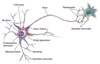
“[1917 Winter] Rufus Jones called me in. "Warren," said he, "what is thee going to be?" And I said, "I don't know." "And what is thee going to do?" And again I said, "I have no idea; but there is one question I would like to answer: What is a number, that a man may know it, and a man, that he may know a number?" He smiled and said, "Friend, thee will be busy as long as thee lives."”
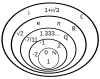
“Because of the "all-or-none" character of nervous activity, events and the relations among them can be treated by means of propositional logic. It is found that the behaviour of every net can be described in these terms, with the addition of more complicated logical means for nets containing cycles; and that for any logical expression satisfying certain conditions, one can find in net behaving ever fashion it describes.”
“My object, as a psychologist, was to invent a kind of least psychic event, or "psychon," that would have the following properties: First, it was to be so simple an event that it either happened or else it did not happen. Second, it was to happen only if its bound cause had happened – shades of Duns Scotus! – that is, it was to imply its temporal antecedent. Third, it was to propose this to subsequent psychons. Fourth, these were to be compounded to produce the equivalents of more complicated propositions concerning their antecedents.”
“No more would I go along with Plato in exiling the poets, who play on the limbic cortex. Not even they are powerful enough to evoke the whole of man. If we are to survive our own destruction of our world and of ourselves by our advance of culture we had better learn soon to modify our genes to make us more intelligent. It is our last chance, that by increasing our diversity we may be able to make some sort of man that can survive without an ecological niche on this our earth. We may be able to live in gas masks and eat algae and distill the ocean.
I doubt that we have time enough.
We are, I think, nearing the end of a course that left the main line of evolution to overspecialize in brain to its own undoing.
Time will tell.”
I doubt that we have time enough.
We are, I think, nearing the end of a course that left the main line of evolution to overspecialize in brain to its own undoing.
Time will tell.”
“To make psychology into experimental epistemology is to attempt to understand the embodiment of mind. Here we are confronted by what seem to be three questions, although they may ultimately be only one. The three exist as categorically disperate desiderata.
The first is at the logical level: We lack an adequate, appropriate calculus for triadic relations.
The second is the psychological level: We do not know how we generate hypotheses that are natural and simple.
The third is that the physiological level: we have no circuit theory for the reticular formation that marshals our abductions.
Logically, the problem is far from simple. To be exact, no proposed theory of relations yields a calculus to handle our problem. When I was growing up, only the Aristotelian logic of classes was ever taught, and that badly. The Organon itself contains only a clumsy description of the apagoge - perhaps from the notes of some students who have not understand his master...”
“This book is not for the engineer content with hardware, nor for the biologist uneasy outside his specialty; for it depicts that miscegenation of Art and Science which begets inanimate objects that behave like living systems. They regulate themselves and survive: They adapt and they compute: They invent. They co-operate and they compete. Naturally they evolve rapidly.
Pure mathematics, being mere tautology, and pure physics, being mere fact, could not have engendered them; for creatures to live, must sense the useful and the good; and engines to run must have energy available as work : and both, to endure, must regulate themselves. So it is to Thermodynamics and to its brother Σp log p, called Information Theory, that we look for the distinctions between work and energy and between signal and noise.
For like cause we look to reflexology and its brother feedback, christened Multiple Closed Loop Servo Theory, for mechanical explanation of Entelechy in Homeostasis and in appetition. This is that governance, whether in living creatures and their societies or in our living artefacts, that is now called Cybernetics.”

Warren S. McCulloch Quotes by Topic
Find exactly what you are looking for by browsing this categorized list of Warren S. McCulloch quotes by topic.
Warren S. McCulloch on Information theory
“Pure mathematics, being mere tautology, and pure physics, being mere fact, could not have engendered them; for creatures to live, must sense the useful and the good; and engines to run must have energy available as work : and both, to endure, must regulate themselves. So it is to Thermodynamics and to its brother Σp log p, called Information theory, that we look for the distinctions between work and energy and between signal and noise.”

Quotes About Warren S. McCulloch
Gain deeper perspective through quotes about Warren S. McCulloch from others.
Seymour Papert on Warren S. McCulloch
“When McCulloch's essays are hard to understand, the trouble lies less often in the internal logic of the individual arguments than in the perception of a unifying theme that runs, sometimes with exuberant clarity, sometimes in a tantalizingly elusive way, through the whole work. The consequent perplexity is partly intentional -- McCulloch is at least as much concerned with questions as with answers -- and partly the result of his way of expressing the general through the particular.”
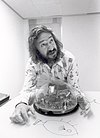
Richard Langton Gregory on Warren S. McCulloch
“As a young man, Warren McCulloch set himself the goal of developing an experimental epistemology, to understand the mind in terms of the brain. More particularly, he sought to discover the logical calculus immanent in nervous activity.”
Marvin Minsky on Warren S. McCulloch
“And he had a grand view of this, the importance of cybernetics, which was correct, so, otherwise you would have said he was delusional. . .but I must have spent the most part of a year just hanging around him and trying to understand how he could see such importance in ordinary things”

Phil Husbands on Warren S. McCulloch
“[A] famous photograph... showing McCulloch (1898–1969) and Norbert Wiener (1894–1964) with British Cyberneticians Ross Ashby (1903–1972) and Grey Walter (1910–1977), first appeared in de Latil (1953) with the caption "The four pioneers of Cybernetics get together in Paris", and encapsulates a view of the development of cybernetics that has slowly become more accepted: that there were important British contributions from the outset... Warren McCulloch embraced these influences and had significant contact with a number of British cyberneticians, forming friendships and collaborations with several, as well as mentoring others.”
About Warren S. McCulloch
Warren Sturgis McCulloch (November 16, 1898 – September 24, 1969) was an American neurophysiologist and cybernetician, known for his work on the foundation for certain brain theories and his contribution to the cybernetics movement.