Link Copied!
Warren Buffett Quotes (1930-)
King
















-100px.png)



















About Warren Buffett
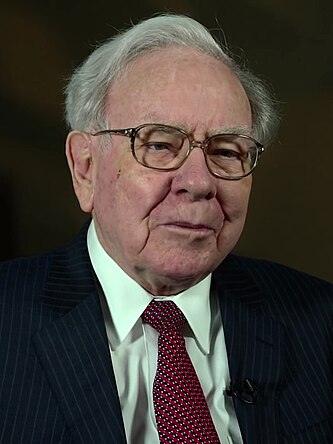
Warren Edward Buffett (born 30 August 1930) is an American business magnate, investor, and philanthropist. He is currently the chairman and CEO of Berkshire Hathaway. He is one of the most successful investors in the world and has a net worth of over $113 billion as of June 2022, making him the world's fifth-wealthiest person.
Best Warren Buffett Quotes
Shortest
Earliest
Explore our curated collection of the most famous and impactful Warren Buffett quotes.
“Look for integrity, intelligence and energy.”


“I'm convinced that there is much inefficiency in the market.”

“Take the job that you would take if you were independently wealthy.”


“Size seems to make many organizations slow-thinking, resistant to change and smug.”
“People will always try to stop you doing the right thing if it is unconventional.”
“We will reject interesting opportunities rather than over-leverage our balance sheet.”
“You couldn't advance in a finance department in this country unless you taught that the world was flat.”
“In terms of cryptocurrencies, generally, I can say with almost certainty that they will come to a bad ending.”


“I eat like a normal 6-year-old, but if you look at the mortality statistics, I mean, 6-year-olds don't die very often.”
“We don't get paid for activity, just for being right. As to how long we'll wait, we'll wait indefinitely.”
“Confidence comes back one at a time, but fear, is instantaneous.
Interview with Tae Kim, CNBC, (12 September 2018)”
Interview with Tae Kim, CNBC, (12 September 2018)”

“Never count on making a good sale. Have the purchase price be so attractive that even a mediocre sale gives good results.”
“It takes 20 years to build a reputation and five minutes to ruin it. If you think about that, you'll do things differently.”
“In fact, when we own portions of outstanding businesses with outstanding managements, our favorite holding period is forever.”
“There's a whole bunch of things I don't know a thing about — I just stay away from those. So, I stay within what I call my circle of competence.”
“Our stay-put behavior reflects our view that the stock market serves as a relocation center at which money is moved from the active to the patient.”
“There will continue to be wide discrepancies between price and value in the marketplace, and those who read their Graham and Dodd will continue to prosper.”
“Upon leaving [the derivatives business], our feelings about the business mirrored a line in a country song: "I liked you better before I got to know you so well."”

“It's simply to say that managers and investors alike must understand that accounting numbers is the beginning, not the end, of business valuation.”
“I've reluctantly discarded the notion of my continuing to manage the portfolio after my death — abandoning my hope to give new meaning to the term "thinking outside the box."”
“You're dealing with a lot of silly people in the marketplace; it's like a great big casino and everyone else is boozing. If you can stick with Pepsi, you should be O.K.”
“Investors making purchases in an overheated market need to recognize that it may often take an extended period for the value of even an outstanding company to catch up with the price they paid.”

“Capitalism is all about somebody coming and trying to take the castle. Now what you need is .... you need a castle that has some durable competitive advantage — some castle that has a moat around it.”
“Management's objective is to achieve a return on capital over the long term which averages somewhat higher than that of American industry generally — while utilizing sound accounting and debt policies.”
“We never want to count on the kindness of strangers in order to meet tomorrow's obligations. When forced to choose, I will not trade even a night's sleep for the chance of extra profits.”

“I could end the deficit in five minutes. You just pass a law that says that any time there's a deficit of more than 3% of GDP, all sitting members of Congress are ineligible for re-election.”
“Long ago, Ben Graham taught me that “Price is what you pay; value is what you get.” Whether we're talking about socks or stocks, I like buying quality merchandise when it is marked down.”

“Success in investing doesn't correlate with I.Q. once you're above the level of 125. Once you have ordinary intelligence, what you need is the temperament to control the urges that get other people into trouble in investing.”
“Our performance, relatively, is likely to be better in a bear market than in a bull market ... in a year when the general market had a substantial advance, I would be well satisfied to match the advance of the averages.”
“[T]he idea of buying dollar bills for 40 cents takes immediately with people or it doesn't take at all. It's like an inoculation. ...It doesn't seem to be a matter of I.Q. or academic training. It's instant recognition, or it's nothing.”
“The 400 of us pay a lower part of our income in taxes than our receptionists do, or our cleaning ladies, for that matter. If you're in the luckiest 1 percent of humanity, you owe it to the rest of humanity to think about the other 99 percent.”

“An irresistible footnote: in 1971, pension fund managers invested a record 122% of net funds available in equities — at full prices they couldn't buy enough of them. In 1974, after the bottom had fallen out, they committed a then record low of 21% to stocks.”
“Risk comes from not knowing what you're doing. "The Three Essential Warren Buffett Quotes To Live By" forbes.com (20 April 2014)”
“I like to study failure, actually. My partner says, "I want to know where I'll die so I'll never go there." We want to see what has caused businesses to go bad. The biggest thing that kills them is complacency. ... The danger would always be that you rest on your laurels.”
“A very low cost index fund where you don't put in all your money at one time ... If you accumulate a low cost index fund over 10 years ... with fairly regular sums, I think you will probably do better than 90% of the people around you that take up investing at a similar time.”
“You can't make a good deal with a bad person. "23 Quotes from Warren Buffett on Life and Generosity" forbes.com (02 December 2013)”
“Opportunities come infrequently. When it rains gold, put out the bucket, not the thimble. "25 Best Warren Buffett Quotes" The Motley Fool (28 September 2014)”

“Over the years, Charlie [Munger, Berkshire Hathaway Vice Chairman] and I have observed many accounting-based frauds of staggering size. Few of the perpetrators have been punished; many have not even been censured. It has been far safer to steal large sums with pen than small sums with a gun.”
“Instead, we try to apply Aesop's 2,600-year-old equation to opportunities in which we have reasonable confidence as to how many birds are in the bush and when they will emerge (a formulation that my grandsons would probably update to "A girl in a convertible is worth five in the phonebook.").”
“We're more comfortable in that kind of business. It means we miss a lot of very big winners. But we wouldn't know how to pick them out anyway. It also means we have very few big losers - and that's quite helpful over time. We're perfectly willing to trade away a big payoff for a certain payoff.”
“In a bull market, one must avoid the error of the preening duck that quacks boastfully after a torrential rainstorm, thinking that its paddling skills have caused it to rise in the world. A right-thinking duck would instead compare its position after the downpour to that of the other ducks on the pond.”

“I have been on twenty public company corporate boards, not counting any Berkshire subsidiaries. ... The independent directors, in many cases, are the least independent. ... If the income you receive as a corporate director ... is an important part of your income ... how in the world is that independent?”
“The most common cause of low prices is pessimism — some times pervasive, some times specific to a company or industry. We want to do business in such an environment, not because we like pessimism but because we like the prices it produces. It's optimism that is the enemy of the rational buyer.”
“We've long felt that the only value of stock forecasters is to make fortune tellers look good. Even now, Charlie and I continue to believe that short-term market forecasts are poison and should be kept locked up in a safe place, away from children and also from grown-ups who behave in the market like children.”

“In my view, for most people, the best thing to do is to own the S&P 500 index fund. People will try and sell you other things because there’s more money in it for them if they do. And I’m not saying that that’s a conscious act on their part. Most good salespeople believe their own baloney.”
“You... have to have the knowledge to... make a very general estimate about the value of the underlying businesses. But you do not cut it close. That is what Ben Graham meant by having a margin of safety.”
“What counts for most people in investing is not how much they know, but rather how realistically they define what they don't know. "The genius of Warren Buffett in 23 quotes" MarketWatch (19 August 2015)”
“The common intellectual theme of the investors from Graham-Doddsville is this: they search for discrepencies between the value of a business and the price of small pieces of that business in the market... through the medium of marketable stocks...”
“But a pin lies in wait for every bubble. And when the two eventually meet, a new wave of investors learns some very old lessons: First, many in Wall Street — a community in which quality control is not prized — will sell investors anything they will buy. Second, speculation is most dangerous when it looks easiest.”
“We're going to move a lot of crude (oil) in this country, and we have to learn how to do it very safely. "Buffett: Moving Oil By Rail Safely Is A Major Industry Concern" Investing.com (24 April 2014)”

“Just because Charlie and I can clearly see dramatic growth ahead for an industry does not mean we can judge what its profit margins and returns on capital will be as a host of competitors battle for supremacy. At Berkshire we will stick with businesses whose profit picture for decades to come seems reasonably predictable. Even then, we will make plenty of mistakes.”
“After 25 years of buying and supervising a great variety of businesses, Charlie and I have not learned how to solve difficult business problems. What we have learned is to avoid them. To the extent we have been successful, it is because we concentrated on identifying one-foot hurdles that we could step over because we acquired any ability to clear seven-footers.”
“Our future rates of gain will fall far short of those achieved in the past. Berkshire's capital base is now simply too large to allow us to earn truly outsized returns. If you believe otherwise, you should consider a career in sales but avoid one in mathematics (bearing in mind that there are really only three kinds of people in the world: those who can count and those who can't).”
“When the price of a stock can be influenced by a "herd" on Wall Street with prices set at the margin by the most emotional person, or the greediest person, or the most depressed person, it is hard to argue that the market always prices rationally. In fact, market prices are often nonsensical.”
“It's a game of a million inferences. There are a lot of things to draw inferences from — cards played and not played. These inferences tell you something about the probabilities. It's got to be the best intellectual exercise out there. You're seeing through new situations every ten minutes. Bridge is about weighing gain/loss ratios. You're doing calculations all the time.”
“I make no attempt to forecast the general market — my efforts are devoted to finding undervalued securities. However, I do believe that widespread public belief in the Inevitability of profits from investments in stocks will lead to eventual trouble. Should this occur, prices, but not intrinsic values in my opinion, of even undervalued securities can be expected to be substantially affected.”
“The worst sort of business is one that grows rapidly, requires significant capital to engender the growth, and then earns little or no money. Think airlines. Here a durable competitive advantage has proven elusive ever since the days of the Wright Brothers. Indeed, if a farsighted capitalist had been present at Kitty Hawk, he would have done his successors a huge favor by shooting Orville down.”
“Intrinsic value can be defined simply: It is the discounted value of the cash that can be taken out of a business during its remaining life. The calculation of intrinsic value, though, is not so simple. As our definition suggests, intrinsic value is an estimate rather than a precise figure, and it is additionally an estimate that must be changed if interest rates move or forecasts of future cash flows are revised.”
“Draw a circle around the businesses you understand and then eliminate those that fail to qualify on the basis of value, good management and limited exposure to hard times. ... Buy into a company because you want to own it, not because you want the stock to go up. ... People have been successful investors because they've stuck with successful companies. Sooner or later the market mirrors the business.”
“We have tried occasionally to buy toads at bargain prices with results that have been chronicled in past reports. Clearly our kisses fell flat. We have done well with a couple of princes — but they were princes when purchased. At least our kisses didn't turn them into toads. And, finally, we have occasionally been quite successful in purchasing fractional interests in easily-identifiable princes at toad-like prices.”
“Ben's Mr. Market allegory may seem out-of-date in today's investment world, in which most professionals and academicians talk of efficient markets, dynamic hedging and betas. Their interest in such matters is understandable, since techniques shrouded in mystery clearly have value to the purveyor of investment advice. After all, what witch doctor has ever achieved fame and fortune by simply advising "Take two aspirins"?”
“Most companies are saddled with institutional constraints. A company's history, for example, may commit it to an industry that now offers limited opportunity. A more common problem is a shareholder constituency that pressures its manager to dance to Wall Street's tune. Many CEOs resist, but others give in and adopt operating and capital-allocation policies far different from those they would choose if left to themselves.”
“If I was running $1 million today, or $10 million for that matter, I'd be fully invested. Anyone who says that size does not hurt investment performance is selling. The highest rates of return I've ever achieved were in the 1950s. I killed the Dow. You ought to see the numbers. But I was investing peanuts then. It's a huge structural advantage not to have a lot of money. I think I could make you 50% a year on $1 million. No, I know I could. I guarantee that.”
“Those who attended [the annual meeting] last year saw your Chairman pitch to Ernie Banks. This encounter proved to be the titanic duel that the sports world had long awaited. After the first few pitches — which were not my best, but when have I ever thrown my best? — I fired a brushback at Ernie just to let him know who was in command. Ernie charged the mound, and I charged the plate. But a clash was avoided because we became exhausted before reaching each other.”
“I insist on a lot of time being spent, almost every day, to just sit and think. That is very uncommon in American business. I read and think. So I do more reading and thinking, and make less impulse decisions than most people in business. I do it because I like this kind of life. "10 Brilliant Quotes From Warren Buffett, America's Second-Richest Person " entrepreneur.com (13 November 2014)”
“I wouldn't mind going to jail if I had three cellmates who played bridge. ... The approach and strategies [of bridge and stock investing] are very similar. In the stock market you do not base your decisions on what the market is doing, but on what you think is rational. With bridge, you need to adhere to a disciplined bidding system. While there is no one best system, there is one that works best for you. Once you choose a system, you need to stick with it.”

“[T]he secret has been out for 50 years, ever since Ben Graham and Dave Dodd wrote Security Analysis, yet I have seen no trend toward value investing in... 35 years... There seems to be some perverse human characteristic that likes to make easy things difficult.”
“The primary test of managerial economic performance is the achievement of a high earnings rate on equity capital employed (without undue leverage, accounting gimmickry, etc.) and not the achievement of consistent gains in earnings per share. In our view, many businesses would be better understood by their shareholder owners, as well as by the general public, if managements and financial analysts modified the primary emphasis they place upon earnings per share, and upon yearly changes in that figure.”
“Tom [Knapp] was a chemistry major at Princeton before the war; when he came back... he was a beach bum. And then one day he read that Dave Dodd was giving a night course in investments at Columbia. Tom took it on a non-credit basis, and he got so interested... that he enrolled at Columbia Business School where he got the MBA... He took Dodd's course again, and took Ben Graham's course. ...35 years later ...I found him on the beach ...he owns the beach!”
“It's not like I am reciting... the names of a bunch of lottery winners. ...I knew what they had been taught and ...had some personal knowledge of their intellect, character and temperament. ...[T]his group has assumed far less risk than average; note their record in years when the general market is weak. While they differ greatly in style, these investors are, mentally, always buying the business, not buying the stock. ...[A]ll exploit the difference between the market price of a business and its intrinsic value.”
“If you understood a business perfectly and the future of the business, you would need very little in the way of a margin of safety. So, the more vulnerable the business is, assuming you still want to invest in it, the larger margin of safety you'd need. If you're driving a truck across a bridge that says it holds 10,000 pounds and you've got a 9,800 pound vehicle, if the bridge is 6 inches above the crevice it covers, you may feel okay, but if it's over the Grand Canyon, you may feel you want a little larger margin of safety...”
“The approach and strategies are very similar in that you gather all the information you can and then keep adding to that base of information as things develop. You do whatever the probabilities indicated based on the knowledge that you have at that time, but you are always willing to modify your behaviour or your approach as you get new information. In bridge, you behave in a way that gets the best from your partner. And in business, you behave in the way that gets the best from your managers and your employees.”

“Long ago, Sir Isaac Newton gave us three laws of motion, which were the work of genius. But Sir Isaac's talents didn't extend to investing: He lost a bundle in the South Sea Bubble, explaining later, "I can calculate the movement of the stars, but not the madness of men." If he had not been traumatized by this loss, Sir Isaac might well have gone on to discover the Fourth Law of Motion: For investors as a whole, returns decrease as motion increases.”

“For example: (1) As if governed by Newton's First Law of Motion, an institution will resist any change in its current direction; (2) Just as work expands to fill available time, corporate projects or acquisitions will materialize to soak up available funds; (3) Any business craving of the leader, however foolish, will be quickly supported by detailed rate-of-return and strategic studies prepared by his troops; and (4) The behavior of peer companies, whether they are expanding, acquiring, setting executive compensation or whatever, will be mindlessly imitated.”
“The Washington Post Company in 1973 was selling for $80 million in the market. ...[Y]ou could have sold the assets ...for not less than $400 million ...Now, if the stock had declined even further... to $40 million... its beta would have been greater. ...This is truly Alice in Wonderland. I have never been able to figure out why it's riskier to buy $400 million worth of properties for $40 million than for $80 million.”
“The strategy we've adopted precludes our following standard diversification dogma. Many pundits would therefore say the strategy must be riskier than that employed by more conventional investors. We disagree. We believe that a policy of portfolio concentration may well decrease risk if it raises, as it should, both the intensity with which an investor thinks about a business and the comfort-level he must feel with its economic characteristics before buying into it. In stating this opinion, we define risk, using dictionary terms, as "the possibility of loss or injury."”

“Walter never went to college, but took a course from Ben Graham at night at the New York Institute of Finance. Walter left Graham-Newman [Partnership] in 1955... He knows how to identify securities that sell at considerably less than their value to a private owner. And that's all he does. ...He simply says, if a business is worth a dollar and I can buy it for 40 cents, something good may happen to me. And he does it over and over again.”
“Of course, Charlie and I can identify only a few Inevitables, even after a lifetime of looking for them. Leadership alone provides no certainties: Witness the shocks some years back at General Motors, IBM and Sears, all of which had enjoyed long periods of seeming invincibility. Though some industries or lines of business exhibit characteristics that endow leaders with virtually insurmountable advantages, and that tend to establish Survival of the Fattest as almost a natural law, most do not. Thus, for every Inevitable, there are dozens of Impostors, companies now riding high but vulnerable to competitive attacks.”
“But now for the final exam: If you expect to be a net saver during the next five years, should you hope for a higher or lower stock market during that period? Many investors get this one wrong. Even though they are going to be net buyers of stocks for many years to come, they are elated when stock prices rise and depressed when they fall. In effect, they rejoice because prices have risen for the "hamburgers" they will soon be buying. This reaction makes no sense. Only those who will be sellers of equities in the near future should be happy at seeing stocks rise. Prospective purchasers should much prefer sinking prices.”
“Our Graham & Dodd investors... do not discuss beta, the capital asset pricing model or covariance in returns among securities. ...[M]ost of them would have difficulty defining these terms. The investors simply focus on two variables: price and value.”
“I call investing the greatest business in the world ... because you never have to swing. You stand at the plate, the pitcher throws you General Motors at 47! U.S. Steel at 39! and nobody calls a strike on you. There's no penalty except opportunity lost. All day you wait for the pitch you like; then when the fielders are asleep, you step up and hit it.
• Variant: The stock market is a no-called-strike game. You don't have to swing at everything — you can wait for your pitch. The problem when you're a money manager is that your fans keep yelling, "Swing, you bum!"”
• Variant: The stock market is a no-called-strike game. You don't have to swing at everything — you can wait for your pitch. The problem when you're a money manager is that your fans keep yelling, "Swing, you bum!"”
“When returns on capital are ordinary, an earn-more-by-putting-up-more record is no great managerial achievement. You can get the same result personally while operating from your rocking chair. Just quadruple the capital you commit to a savings account and you will quadruple your earnings. You would hardly expect hosannas for that particular accomplishment. Yet, retirement announcements regularly sing the praises of CEOs who have, say, quadrupled earnings of their widget company during their reign — with no one examining whether this gain was attributable simply to many years of retained earnings and the workings of compound interest.”
“I happen to have a talent for allocating capital. But my ability to use that talent is completely dependent on the society I was born into. If I'd been born into a tribe of hunters, this talent of mine would be pretty worthless. I can't run very fast. I'm not particularly strong. I'd probably end up as some wild animal's dinner.
But I was lucky enough to be born in a time and place where society values my talent, and gave me a good education to develop that talent, and set up the laws and the financial system to let me do what I love doing — and make a lot of money doing it. The least I can do is help pay for all that.”
But I was lucky enough to be born in a time and place where society values my talent, and gave me a good education to develop that talent, and set up the laws and the financial system to let me do what I love doing — and make a lot of money doing it. The least I can do is help pay for all that.”

“I don't have a problem with guilt about money. The way I see it is that my money represents an enormous number of claim checks on society. It is like I have these little pieces of paper that I can turn into consumption. If I wanted to, I could hire 10,000 people to do nothing but paint my picture every day for the rest of my life. And the GNP would go up. But the utility of the product would be zilch, and I would be keeping those 10,000 people from doing AIDS research, or teaching, or nursing. I don't do that though. I don't use very many of those claim checks. There's nothing material I want very much. And I'm going to give virtually all of those claim checks to charity when my wife and I die.”
“You know, if I'm playing bridge and a naked woman walks by, I don't ever see her — don't test me on that! ... You know, I wouldn't mind going to jail if I had the right three cell mates, so we could play bridge all the time. ... It takes some investment to play it ... I mean, you cannot sit down and learn how to play it like most games. ... There's a lotta lessons in it ... you have to look at all the facts. You have to draw inferences from what you've seen, what you've heard. You have to discard improper theories about what the hand had as more evidence comes in sometimes. You have to be open to a possible change of course if you get new information. You have to work with a partner, particularly on defense.”

“The sad fact is that most major acquisitions display an egregious imbalance: They are a bonanza for the shareholders of the acquiree; they increase the income and status of the acquirer's management; and they are a honey pot for the investment bankers and other professionals on both sides. But, alas, they usually reduce the wealth of the acquirer's shareholders, often to a substantial extent. That happens because the acquirer typically gives up more intrinsic value than it receives. Do that enough, says John Medlin, the retired head of Wachovia Corp., and "you are running a chain letter in reverse." ... The acquisition problem is often compounded by a biological bias: Many CEOs attain their position in part because they possess an abundance of animal spirits and ego.”
“The free market's the best mechanism ever devised to put resources to their most efficient and productive use. ... The government isn't particularly good at that. But the market isn't so good at making sure that the wealth that's produced is being distributed fairly or wisely. Some of that wealth has to be plowed back into education, so that the next generation has a fair chance, and to maintain our infrastructure, and provide some sort of safety net for those who lose out in a market economy. And it just makes sense that those of us who've benefited most from the market should pay a bigger share. ... When you get rid of the estate tax, you're basically handing over command of the country's resources to people who didn't earn it. It's like choosing the 2020 Olympic team by picking the children of all the winners at the 2000 Games.”

“More than 99% of my wealth will go to philanthropy during my lifetime or at death. Measured by dollars, this commitment is large. In a comparative sense, though, many individuals give more to others every day.
Millions of people who regularly contribute to churches, schools, and other organizations thereby relinquish the use of funds that would otherwise benefit their own families. The dollars these people drop into a collection plate or give to United Way mean forgone movies, dinners out, or other personal pleasures. In contrast, my family and I will give up nothing we need or want by fulfilling this 99% pledge.
Moreover, this pledge does not leave me contributing the most precious asset, which is time. Many people, including — I'm proud to say — my three children, give extensively of their own time and talents to help others. Gifts of this kind often prove far more valuable than money.”
Millions of people who regularly contribute to churches, schools, and other organizations thereby relinquish the use of funds that would otherwise benefit their own families. The dollars these people drop into a collection plate or give to United Way mean forgone movies, dinners out, or other personal pleasures. In contrast, my family and I will give up nothing we need or want by fulfilling this 99% pledge.
Moreover, this pledge does not leave me contributing the most precious asset, which is time. Many people, including — I'm proud to say — my three children, give extensively of their own time and talents to help others. Gifts of this kind often prove far more valuable than money.”
“The line separating investment and speculation, which is never bright and clear, becomes blurred still further when most market participants have recently enjoyed triumphs. Nothing sedates rationality like large doses of effortless money. After a heady experience of that kind, normally sensible people drift into behavior akin to that of Cinderella at the ball. They know that overstaying the festivities—that is, continuing to speculate in companies that have gigantic valuations relative to the cash they are likely to generate in the future—will eventually bring on pumpkins and mice. But they nevertheless hate to miss a single minute of what is one helluva party. Therefore, the giddy participants all plan to leave just seconds before midnight. There's a problem, though: They are dancing in a room in which the clocks have no hands.”
“There's no question that trade can be an act of war, and I think it's led to bad things like the attitudes it's brought out in the United States. We should be looking to trade with the rest of the world. We should do what we do best, and they should do what they do best.
With eight countries possessing nuclear weapons, including a few I would call quite unstable, I don't think it's a great idea to design a world where a few countries say, "Haha, we've won" while other countries are envious.
… The main thing is that trade should not be a weapon. The United States has become an incredibly important country starting from nothing 250 years ago — there's never been anything like it. And it's a big mistake when you have 7.5 billion people who don't like you very well and you have 300 million people crowing about how well they've done.
I don't think it's right and I don't think it's wise. The more prosperous the rest of the world becomes, it won't be at our expense — the more prosperous we'll become and the safer we'll feel and your children will feel someday.”
With eight countries possessing nuclear weapons, including a few I would call quite unstable, I don't think it's a great idea to design a world where a few countries say, "Haha, we've won" while other countries are envious.
… The main thing is that trade should not be a weapon. The United States has become an incredibly important country starting from nothing 250 years ago — there's never been anything like it. And it's a big mistake when you have 7.5 billion people who don't like you very well and you have 300 million people crowing about how well they've done.
I don't think it's right and I don't think it's wise. The more prosperous the rest of the world becomes, it won't be at our expense — the more prosperous we'll become and the safer we'll feel and your children will feel someday.”
“My old boss, Ben Graham, told me very early on you get more trouble with a good idea than a bad idea, because the good idea works. I mean, it's a good idea to buy a home, for example. And then people go crazy sometimes. The good idea works, and it works, and it works. Stocks work out better than bonds most of the time. And, after a while, people forget that there were some other limiting conditions. With Edgar Lawrence Smith's book, it was that when bonds yield the same as stocks — which was the case then — the stocks are going to outperform because they have this retained earnings. So stocks started going up in the Twenties and all of a sudden they were selling at 5 or 6 times the prices as when they bought the book. And the original correct perception on his part had experienced changing conditions, but people ... got their confirmation through stock prices. That's what happens in bull markets. People start out thinking stocks are cheap, and then they start thinking stocks have gone up. And, a stock can be a good buy or a bad buy. A bond can be a good buy or a bad buy. It depends on price.”
“The problem with municipal finance generally is that, you know, Neville Chamberlain said “not in our time,” in terms of peace and, basically, many politicians think “not in my time” when they’re dealing with fiscal matters. The pension situation, first states, then cities, and so-on, you… it’s absolutely terrible, because really don’t wanna face – they want, they can give promises now which translate into votes, and they don’t really have to with the pensions they really don’t have to deliver on those until they’re long gone. And Puerto Rico, they’ve been kicking the can down the road for a long time, and they even raised new money, I think, not much more than a year ago, a very high price for hedge funds. The answer to financial problems is not more borrowing, more borrowing, but they’ll do it as long as they can and finally the day of reckoning comes and it would have been so much easier to tackle the problem earlier and no, you know, you got all different classes of bondholders and other claimants and they’re gonna fight like crazy. Charlie [Munger] always says, he says, “an ounce of prevention is worth a ton of cure,” and now you’re in the cure stage in Puerto Rico. "Buffett on Puerto Rico's debt crisis" CNBC (2 May 2016)”
“Some material things make my life more enjoyable; many, however, would not. I like having an expensive private plane, but owning a half-dozen homes would be a burden. Too often, a vast collection of possessions ends up possessing its owner. The asset I most value, aside from health, is interesting, diverse, and long-standing friends.
My wealth has come from a combination of living in America, some lucky genes, and compound interest. Both my children and I won what I call the ovarian lottery. (For starters, the odds against my 1930 birth taking place in the U.S. were at least 30 to 1. My being male and white also removed huge obstacles that a majority of Americans then faced.) My luck was accentuated by my living in a market system that sometimes produces distorted results, though overall it serves our country well. I've worked in an economy that rewards someone who saves the lives of others on a battlefield with a medal, rewards a great teacher with thank-you notes from parents, but rewards those who can detect the mispricing of securities with sums reaching into the billions. In short, fate's distribution of long straws is wildly capricious.
The reaction of my family and me to our extraordinary good fortune is not guilt, but rather gratitude. Were we to use more than 1% of my claim checks on ourselves, neither our happiness nor our well-being would be enhanced. In contrast, that remaining 99% can have a huge effect on the health and welfare of others. That reality sets an obvious course for me and my family: Keep all we can conceivably need and distribute the rest to society, for its needs. My pledge starts us down that course.”
My wealth has come from a combination of living in America, some lucky genes, and compound interest. Both my children and I won what I call the ovarian lottery. (For starters, the odds against my 1930 birth taking place in the U.S. were at least 30 to 1. My being male and white also removed huge obstacles that a majority of Americans then faced.) My luck was accentuated by my living in a market system that sometimes produces distorted results, though overall it serves our country well. I've worked in an economy that rewards someone who saves the lives of others on a battlefield with a medal, rewards a great teacher with thank-you notes from parents, but rewards those who can detect the mispricing of securities with sums reaching into the billions. In short, fate's distribution of long straws is wildly capricious.
The reaction of my family and me to our extraordinary good fortune is not guilt, but rather gratitude. Were we to use more than 1% of my claim checks on ourselves, neither our happiness nor our well-being would be enhanced. In contrast, that remaining 99% can have a huge effect on the health and welfare of others. That reality sets an obvious course for me and my family: Keep all we can conceivably need and distribute the rest to society, for its needs. My pledge starts us down that course.”

Warren Buffett Quotes by Topic
Find exactly what you are looking for by browsing this categorized list of Warren Buffett quotes by topic.
Warren Buffett on Bitcoin 3 quotes
View all 3 quotes on Bitcoin →Warren Buffett on Gross Domestic Product 3 quotes
“I just think that - when a country needs more income and we do, we're only taking in 15 percent of GDP, I mean, that - that - when a country needs more income, they should get it from the people that have it.”

Warren Buffett on Investment 3 quotes
“... there are three connected realities that cause investing success to breed failure. First, a good record quickly attracts a torrent of money. Second, huge sums invariably act as an anchor on investment performance: What is easy with millions, struggles with billions (sob!). Third, most managers will nevertheless seek new money because of their personal equation – namely, the more funds they have under management, the more their fees.”
Warren Buffett on Manager 2 quotes
View all 2 quotes on Manager →Warren Buffett on Sales 2 quotes
View all 2 quotes on Sales →What Warren Buffett Said About Others
Discover personal opinions Warren Buffett shared regarding contemporaries.
Warren Buffett on Charlie Munger
“Charlie's mind has a greater span than I do. He has read more biographies, hundreds per year. He soaks them up and remembers [them].”

Warren Buffett on Bill Gates
“It's a business I don't know anything about, but I admire Bill Gates enormously. I know him individually, and I think he's incredible in business.”

Warren Buffett on Philip Arthur Fisher
“Above all, dividend policy should always be clear, consistent and rational. A capricious policy will confuse owners and drive away would-be investors. Phil Fisher put it wonderfully 54 years ago in Chapter 7 of his Common Stocks and Uncommon Profits, a book that ranks behind only The Intelligent Investor and the 1940 edition of Security Analysis in the all-time-best list for the serious investor. Phil explained that you can successfully run a restaurant that serves hamburgers or, alternatively, one that features Chinese food. But you can’t switch capriciously between the two and retain the fans of either.”

Warren Buffett on John Bogle
“ … Huge institutional investors, viewed as a group, have long underperformed the unsophisticated index-fund investor who simply sits tight for decades. A major reason has been fees: Many institutions pay substantial sums to consultants who, in turn, recommend high-fee managers. And that is a fool’s game. There are a few investment managers, of course, who are very good – though in the short run, it’s difficult to determine whether a great record is due to luck or talent. Most advisors, however, are far better at generating high fees than they are at generating high returns. In truth, their core competence is salesmanship. Rather than listen to their siren songs, investors – large and small – should instead read Jack Bogle’s The Little Book of Common Sense Investing.”
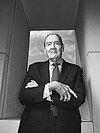
Warren Buffett on Benjamin Graham
“A story that was passed down from Ben Graham illustrates the lemminglike behavior of the crowd: "Let me tell you the story of the oil prospector who met St. Peter at the Pearly Gates. When told his occupation, St. Peter said, “Oh, I’m really sorry. You seem to meet all the tests to get into heaven. But we’ve got a terrible problem. See that pen over there? That’s where we keep the oil prospectors waiting to get into heaven. And it’s filled—we haven’t got room for even one more.” The oil prospector thought for a minute and said, “Would you mind if I just said four words to those folks?” “I can’t see any harm in that,” said St. Pete. So the old-timer cupped his hands and yelled out, “Oil discovered in hell!” Immediately, the oil prospectors wrenched the lock off the door of the pen and out they flew, flapping their wings as hard as they could for the lower regions. “You know, that’s a pretty good trick,” St. Pete said. “Move in. The place is yours. You’ve got plenty of room.” The old fellow scratched his head and said, “No. If you don’t mind, I think I’ll go along with the rest of ’em. There may be some truth to that rumor after all."”
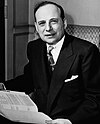
Quotes About Warren Buffett
Gain deeper perspective through quotes about Warren Buffett from others.
Benjamin C. Bradlee on Warren Buffett
“Boy, if he doesn't give capitalism a good name, who does?”
Justin Elliott on Warren Buffett
Richard I. Kirkland Jr. on Warren Buffett
“Buffett does not believe that it is wise to bequeath great wealth and plans to give most of his money to his charitable foundation. ... Buffett is not cutting his children out of his fortune because they are wastrels or wantons or refuse to go into the family business — the traditional reasons rich parents withhold money. Says he: "My kids are going to carve out their own place in this world, and they know I'm for them whatever they want to do." But he believes that setting up his heirs with "a lifetime supply of food stamps just because they came out of the right womb" can be "harmful" for them and is "an antisocial act." To him the perfect amount to leave children is "enough money so that they would feel they could do anything, but not so much that they could do nothing." For a college graduate, Buffett reckons "a few hundred thousand dollars" sounds about right.”
Stephanie Loiacono on Warren Buffett
“Buffett believes the most important quality for an investor is temperament, not intellect. A successful investor doesn't focus on being with or against the crowd. The stock market will swing up and down. But in good times and bad, Buffett stays focused on his goals.”
Barack Obama on Warren Buffett 2 quotes
“Buffett had invited me to Omaha to discuss tax policy. More specifically, he wanted to know why Washington continued to cut taxes for people in his income bracket when the country was broke. ... Buffett's low rates were a consequence of the fact that, like most wealthy Americans, almost all his income came from dividends and capital gains, investment income that since 2003 has been taxed at only 15 percent. The receptionist's salary, on the other hand, was taxed at almost twice that rate once FICA was included. From Buffett's perspective, the discrepancy was unconscionable.”


Disputed Quotes
Quotes attributed to Warren Buffett that are questionable.
Misattributed Quotes
Quotes mistakenly credited to Warren Buffett
About Warren Buffett
Warren Edward Buffett (born 30 August 1930) is an American business magnate, investor, and philanthropist. He is currently the chairman and CEO of Berkshire Hathaway. He is one of the most successful investors in the world and has a net worth of over $113 billion as of June 2022, making him the world's fifth-wealthiest person.