Link Copied!
Walter Terence Stace Quotes (1886-1967)
Philosopher
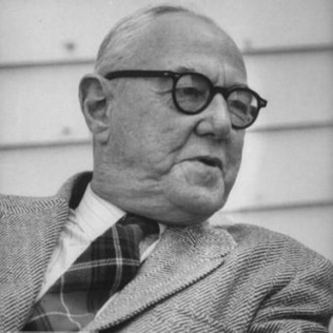

About Walter Terence Stace
Walter Terence Stace (17 November 1886 – 2 August 1967) was a British colonial civil servant, educator, public philosopher and epistemologist, who became best known for his writings on mysticism.
Best Walter Terence Stace Quotes
Shortest
Earliest
Explore our curated collection of the most famous and impactful Walter Terence Stace quotes.
“Mystics more often than not avoid direct reference to themselves.”
“The pure religious consciousness lies in a region which is forever beyond all proof or disproof.”

“Thus to say that God is ineffable is to say that no concepts apply to Him, and that He is without qualities.”

“There is no such thing as natural theology. God is either known by revelation - that is to say, by intuition - or not at all.”

“All religious thought and speech are through and through symbolic. And this fundamental insight is perhaps as old as religion itself.”
“It is certainly the case that there can exist an atheistic mysticism, a mystical experience naked and not clothed in any religious garb.”

“The task of thought in our time is to replace the lost religious and metaphysical foundation of morals by a secular and naturalistic foundation.”
“The same character of revelation, which we find in poetry, attaches to mystical illumination, although here the revelation is always the divine.”

“Thus we see that mysticism naturally, though not necessarily, becomes intimately associated with whatever is the religion of the culture in which it appears.”



“The incommensurability of the mystical with the sensory-intellectual consciousness is also the ultimate reason why we have to exclude visions and voices, telepathy, precognition, and clairvoyance from the category of the mystical.”
“People are often mistaken about what is good for the health of their bodies. That is why we have doctors. And people are just as likely to be mistaken about what will be good for the happiness of their souls. That is why we have moralists.”
“It is not that science proves that the world is not moral. Science as such is not concerned with values, and proves nothing of the sort. Nevertheless, as a matter of history, it is science which has suggested this view to the modern mind by its insistence on mechanistic categories.”

“But it is not an exaggeration to say that mystical experience is everywhere unitary in the same sense that everywhere aesthetic experience is unitary. British, American, German, Indian, Chinese, Japanese art are of course very different from one another. Yet they have one root in their basic experience of beauty.”
“But the divine mystery is inherent in the divine, a part of the nature of God, and can never disappear. And this means that it is still a mystery even to the mystic who has directly experienced it, nay, even to God Himself. That is why it is ineffable. The mystery and the ineffability of God are one and the same thing.”

“The real turning point between the medieval age of faith and the modern age of unfaith came when the scientists of the seventeenth century turned their backs upon what used to be called “final causes.” The final cause of a thing or event meant the purpose which it was supposed to serve in the universe, its cosmic purpose.”

“If God does not lie at the end of any telescope, neither does he lie at the end of any syllogism. I can never starting from the natural order prove the divine order. The proof of the divine order must lie, somehow, within itself. It must be its own witness. For it, like the natural order, is complete within itself, self-contained.”
Walter Terence Stace Quotes by Topic
Find exactly what you are looking for by browsing this categorized list of Walter Terence Stace quotes by topic.
Walter Terence Stace on Existence of God
Walter Terence Stace on Mystery
“But the divine mystery is inherent in the divine, a part of the nature of God, and can never disappear. And this means that it is still a mystery even to the mystic who has directly experienced it, nay, even to God Himself. That is why it is ineffable. The mystery and the ineffability of God are one and the same thing.”
Walter Terence Stace on Open individualism
“If we make use of the philosopher's distinction between the pure ego and the empirical ego, then what follows from this argument is that there exists a multiplicity of empirical egos in the universe, but that there can be only one pure ego. Hence the mystic who has reached what seems at first to be his own private pure ego has in fact reached the pure ego of the universe, the pure cosmic ego.”
Walter Terence Stace on Eternity
“It is a commonplace that eternity is not an endless prolongation of time, has nothing to do with time. Eternity is a characteristic of the mystical experience. The word eternity doubtless meant originally endlessness of time, which must count, therefore, as its literal meaning. But in its religious and metaphysical use it is a metaphor for the characteristic of the experience. For in that experience time drops away and is no more seen.”

Walter Terence Stace on Empiricism
“It is usually a good idea to bear in mind the distinction between philosophy and an empirical science such as psychology. I once received a valuable lesson in this. A very distinguished astronomer visited the Department of Philosophy in Princeton and gave us a lecture entitled “An Astronomer’s Philosophy.” We philosophers were delighted. And I in my enthusiasm offered to reciprocate by giving a lecture to the astronomers which was to be entitled “A Philosopher’s Astronomy.” But this proposal was received by the astronomers with marked coldness.”

Walter Terence Stace on Infinity
“It is only by intuition that the infinite can be apprehended. But why is this? Why cannot the infinite be apprehended by concepts? To see this we must understand that the word "infinite," in the religious sense, has nothing at all to do with that sense of the word in which it is applied to space, time, and the number series. We may call this latter the mathematical infinite to distinguish it from the religious infinite. And it is the confusion between these two which misled us into the false trail of supposing that the infinity of God's mind refers to the amount of His knowledge and that the finitude of man's mind refers to his ignorance. The religious infinite, or in other words the infinity of God, means that than 'which there is no other'. In this sense neither space nor time could be infinite, since space is an "other" to time, and time is an "other" to space.”
Walter Terence Stace on Scientific revolution
“The founders of modern science - for instance, Galileo, Kepler, and Newton - were mostly pious men who did not doubt God’s purposes. Nevertheless they took the revolutionary step of consciously and deliberately expelling the idea of purpose as controlling nature from their new science of nature. They did this on the ground that inquiry into purposes is useless for what science aims at: namely, the prediction and control of events. To predict an eclipse, what you have to know is not its purpose but its causes. Hence science from the seventeenth century onwards became exclusively an inquiry into causes. The conception of purpose in the world was ignored and frowned on. This, though silent and almost unnoticed, was the greatest revolution in human history, far outweighing in importance any of the political revolutions whose thunder has reverberated through the world.”

Walter Terence Stace on Classical mechanics
“The founders of modern science - for instance, Galileo, Kepler, and Newton - were mostly pious men who did not doubt God’s purposes. Nevertheless they took the revolutionary step of consciously and deliberately expelling the idea of purpose as controlling nature from their new science of nature. They did this on the ground that inquiry into purposes is useless for what science aims at: namely, the prediction and control of events. To predict an eclipse, what you have to know is not its purpose but its causes. Hence science from the seventeenth century onwards became exclusively an inquiry into causes. The conception of purpose in the world was ignored and frowned on. This, though silent and almost unnoticed, was the greatest revolution in human history, far outweighing in importance any of the political revolutions whose thunder has reverberated through the world.”

Walter Terence Stace on Houri
“It is true that simple-minded religious men have conceived their goal as a state of continued existence beyond the grave filled with all happy things and experiences. But plainly such happy things and experiences were no more than symbolic, and the happy heavens containing such things have the character of myth. To the human mind, fast fettered by the limits of its poor imagination, they stand for and represent the goal. One cannot conceive the inconceivable. So in place of it one puts whatever one can imagine of delight; wine and houris if one's imagination is limited to these; love, kindness, sweetness of spiritual living if one is of a less materialistic temper. But were these existences and delights, material or spiritual, to be actually found and enjoyed as present, they would be condemned by the saint along with all earthly joys. For they would have upon them the curse, the darkness, the disease, of all existent things, of all that is this or that. This is why we cannot conceive of any particular pleasure, happiness, joy, which would not cloy – which to be quite frank – would not in the end be boring.”

About Walter Terence Stace
Walter Terence Stace (17 November 1886 – 2 August 1967) was a British colonial civil servant, educator, public philosopher and epistemologist, who became best known for his writings on mysticism.