Link Copied!
Walter Pater Quotes (1839-1894)
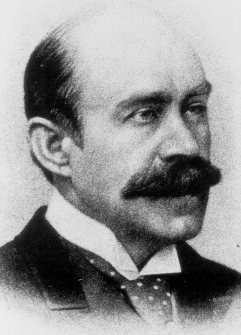


About Walter Pater
Walter Horatio Pater (4 August 1839 – 30 July 1894) was an English essayist and literary critic.
Best Walter Pater Quotes
Shortest
Earliest
Explore our curated collection of the most famous and impactful Walter Pater quotes.
“To know when one's self is interested, is the first condition of interesting other people.”
“It is the addition of strangeness to beauty that constitutes the romantic character in art.”

“What we have to do is to be forever curiously testing new opinions and courting new impressions.”
“Every intellectual product must be judged from the point of view of the age and the people in which it was produced.”

“Rousseau … asked himself how he might make as much as possible of the interval that remained; and he was not biassed by anything in his previous life when he decided that it must be by intellectual excitement.”
“A book, like a person, has its fortunes with one; is lucky or unlucky in the precise moment of its falling in our way, and often by some happy accident counts with us for something more than its independent value.”
“We need some imaginative stimulus, some not impossible ideal such as may shape vague hope, and transform it into effective desire, to carry us year after year, without disgust, through the routine-work which is so large a part of life.”
“Not the fruit of experience, but experience itself, is the end. A counted number of pulses only is given to us of a variegated, dramatic life. How may we see in them all that is to to be seen in them by the finest senses? How shall we pass most swiftly from point to point, and be present always at the focus where the greatest number of vital forces unite in their purest energy. To burn always with this hard, gem-like flame, to maintain this ecstasy, is success in life.”

“The presence that thus rose so strangely beside the waters, is expressive of what in the ways of a thousand years men had come to desire. Hers is the head upon which all "the ends of the world are come," and the eyelids are a little weary. It is a beauty wrought out from within upon the flesh, the deposit, little cell by cell, of strange thoughts and fantastic reveries and exquisite passions. Set it for a moment beside one of those white Greek goddesses or beautiful women of antiquity, and how would they be troubled by this beauty, into which the soul with all its maladies has passed! All the thoughts and experience of the world have etched and moulded there, in that which they have of power to refine and make expressive the outward form, the animalism of Greece, the lust of Rome, the reverie of the middle age with its spiritual ambition and imaginative loves, the return of the Pagan world, the sins of the Borgias. She is older than the rocks among which she sits; like the vampire, she has been dead many times, and learned the secrets of the grave; and has been a diver in deep seas, and keeps their fallen day about her; and trafficked for strange webs with Eastern merchants: and, as Leda, was the mother of Helen of Troy, and, as Saint Anne, the mother of Mary; and all this has been to her but as the sound of lyres and flutes, and lives only in the delicacy with which it has moulded the changing lineaments, and tinged the eyelids and the hands. The fancy of a perpetual life, sweeping together ten thousand experiences, is an old one; and modern thought has conceived the idea of humanity as wrought upon by, and summing up in itself, all modes of thought and life. Certainly Lady Lisa might stand as the embodiment of the old fancy, the symbol of the modern idea.”

Walter Pater Quotes by Topic
Find exactly what you are looking for by browsing this categorized list of Walter Pater quotes by topic.
Walter Pater on Romanticism
Walter Pater on Strangeness
“It is the addition of strangeness to beauty that constitutes the romantic character in art.”
Walter Pater on High culture
“The service of philosophy, of speculative culture, towards the human spirit is to rouse, to startle it into sharp and eager observation. … Not the fruit of experience, but experience itself, is the end.”

Walter Pater on Theory
“Philosophical theories or ideas, as points of view, instruments of criticism, may help us to gather up what might otherwise pass unregarded by us. “Philosophy is the microscope of thought.” The theory or idea or system which requires of us the sacrifice of any part of this experience, in consideration of some interest into which we cannot enter, or some abstract theory we have not identified with ourselves, or what is only conventional, has no real claim upon us.”

Walter Pater on Love's Labour's Lost
“As happens with every true dramatist, Shakspere is for the most part hidden behind the persons of his creation. Yet there are certain of his characters in which we feel that there is something of self-portraiture. And it is not so much in his grander, more subtle and ingenious creations that we feel this — in Hamlet and King Lear — as in those slighter and more spontaneously developed figures, who, while far from playing principal parts, are yet distinguished by a peculiar happiness and delicate ease in the drawing of them; figures which possess, above all, that winning attractiveness which there is no man but would willingly exercise, and which resemble those works of art which, though not meant to be very great or imposing, are yet wrought of the choicest material. Mercutio, in Romeo and Juliet, belongs to this group of Shakspere’s characters — versatile, mercurial people, such as make good actors, and in whom the “Nimble spirits of the arteries,” the finer but still merely animal elements of great wit, predominate. A careful delineation of minor, yet expressive traits seems to mark them out as the characters of his predilection; and it is hard not to identify him with these more than with others. Biron, in Love’s Labours Lost, is perhaps the most striking member of this group. In this character, which is never quite in touch, never quite on a perfect level of understanding, with the other persons of the play, we see, perhaps, a reflex of Shakspere himself, when he has just become able to stand aside from and estimate the first period of his poetry.”
What Walter Pater Said About Others
Discover personal opinions Walter Pater shared regarding contemporaries.
Walter Pater on John Henry Newman 2 quotes
“Different classes of persons, at different times, make, of course, very various demands upon literature. Still, scholars, I suppose, and not only scholars but all disinterested lovers of books, will always look to it, as to all other fine art, for a refuge, a sort of cloistral refuge, from a certain vulgarity in the actual world. A perfect poem like Lycidas, a perfect fiction like Esmond, the perfect handling of a theory like Newman's Idea of a University, has for them something of the uses of a religious "retreat."”
Walter Pater on Benjamin Jowett
“He seemed to have taken the measure not merely of all opinions, but of all possible ones, and to have put the last refinements on literary expression. The charm of that was enhanced by a certain mystery about his own philosophic and other opinions. You know at that time his writings were thought by some to be obscure. These impressions of him had been derived from his Essays on St. Paul's Epistles, which at that time were much read and pondered by the more intellectual sort of undergraduates.”

Walter Pater on Women
“She is older than the rocks among which she sits: like the vampire, she has been dead many times, and learned the secrets of the grave; and has been a diver in deep seas and keeps their fallen day about her; and trafficked for strange webs with Eastern merchants; and, as Leda, was the mother of Helen of Troy, and, as Saint Anne, the mother of Mary; and all this has been to her but as the sound of lyres and flutes, and lives only in the delicacy with which it has moulded the changing lineaments, and tinged the eyelids and the hands.”

Quotes About Walter Pater
Gain deeper perspective through quotes about Walter Pater from others.
Lord David Cecil on Walter Pater
“Pater is a neglected author to-day. One can understand why. His mind is a little languid, his style a little mannered, and himself a little over-serious. There is something ludicrous in expounding the art of enjoyment in so hushed and solemn a tone. All the same, it is a great pity to neglect Pater. To a degree unparalleled among English writers, he combined the two qualities essential for critical appreciation—common sense and uncommon sensibility.”

About Walter Pater
Walter Horatio Pater (4 August 1839 – 30 July 1894) was an English essayist and literary critic.