Link Copied!
Vyasa Quotes (0-)
Author
About Vyasa
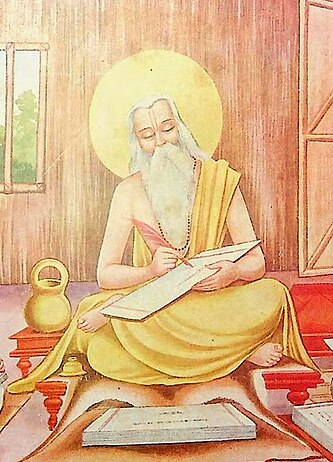
Veda Vyasa (Devanagari: व्यास, वेदव्यास veda-vyāsa), or simply Vyasa, is a central and revered figure in most Hindu traditions. He is also sometimes called Krishna Dvaipāyana (referring to his complexion and birthplace). He is the one who classified the Vedas into four parts). He is the author of the Mahabharata, as well as a character in it. He is considered to be the scribe of both the Vedas and Puranas. According to Hindu beliefs, Vyasa is an incarnation of God Vishnu.
Best Vyasa Quotes
Shortest
Earliest
Explore our curated collection of the most famous and impactful Vyasa quotes.
“What is the meaning of this?”
Unsourced — Primary work/page citation not yet verified in the QuotesCosmos archive. Per our Unnamed Sources & Verification Policy, quotes without confirmed primary editions are explicitly marked Unsourced while under editorial review.
“Remember me when things are to be done.”
Unsourced — Primary work/page citation not yet verified in the QuotesCosmos archive. Per our Unnamed Sources & Verification Policy, quotes without confirmed primary editions are explicitly marked Unsourced while under editorial review.
“I am ready, but only on one condition. Once I start writing, you should not stop dictating to me.”
Unsourced — Primary work/page citation not yet verified in the QuotesCosmos archive. Per our Unnamed Sources & Verification Policy, quotes without confirmed primary editions are explicitly marked Unsourced while under editorial review.
“All right, I also have a condition:that you should not write down anything without grasping the full significance of what I say.”

Unsourced — Primary work/page citation not yet verified in the QuotesCosmos archive. Per our Unnamed Sources & Verification Policy, quotes without confirmed primary editions are explicitly marked Unsourced while under editorial review.
“Passionless is the consciousness of being Master on the part of one who has rid himself of thirst for either seen or revealed objects.”

Unsourced — Primary work/page citation not yet verified in the QuotesCosmos archive. Per our Unnamed Sources & Verification Policy, quotes without confirmed primary editions are explicitly marked Unsourced while under editorial review.
“Therefore, arise and conquer your foes... These warriors stand already slain by Me, and you will only be an instrument of My work, O expert archer.”
Unsourced — Primary work/page citation not yet verified in the QuotesCosmos archive. Per our Unnamed Sources & Verification Policy, quotes without confirmed primary editions are explicitly marked Unsourced while under editorial review.
“The desire to possess, the thirst for and the hankering after pleasure or the means thereof, preceded by a remembrance of the pleasure in one has who has enjoyed it, is attachment.”

Unsourced — Primary work/page citation not yet verified in the QuotesCosmos archive. Per our Unnamed Sources & Verification Policy, quotes without confirmed primary editions are explicitly marked Unsourced while under editorial review.
“Those who perform all their duties for My sake, who depend upon Me and are devoted to Me, who are free from attachment, and are without malice toward all beings, such devotees certainly come to Me.”
Unsourced — Primary work/page citation not yet verified in the QuotesCosmos archive. Per our Unnamed Sources & Verification Policy, quotes without confirmed primary editions are explicitly marked Unsourced while under editorial review.
“The Supreme Lord said: I am mighty Time, the source of destruction that comes forth to annihilate the worlds. Even without your participation, the warriors arrayed in the opposing army shall cease to exist.”
Unsourced — Primary work/page citation not yet verified in the QuotesCosmos archive. Per our Unnamed Sources & Verification Policy, quotes without confirmed primary editions are explicitly marked Unsourced while under editorial review.
“18 chapters of Vyasa's Jaya constitutes the Bhagavad Gita, the sacred text of the Hindus. Thus, this work of Vyasa, called Jaya deals with diverse subjects like geography, history, warfare, religion and morality.”
Unsourced — Primary work/page citation not yet verified in the QuotesCosmos archive. Per our Unnamed Sources & Verification Policy, quotes without confirmed primary editions are explicitly marked Unsourced while under editorial review.
“You are without beginning, middle, or end; Your power has no limits. Your arms are infinite; the sun and the moon are like Your eyes, and fire is like Your mouth. I see you warming the entire creation by Your radiance.”

Unsourced — Primary work/page citation not yet verified in the QuotesCosmos archive. Per our Unnamed Sources & Verification Policy, quotes without confirmed primary editions are explicitly marked Unsourced while under editorial review.
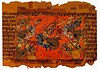
“Various inscriptions refer to the Mbh (Mahabharata) as the composition of Vyasa, the Veda divider, the son of Parasara, and as containing 100,000 verses...”
Unsourced — Primary work/page citation not yet verified in the QuotesCosmos archive. Per our Unnamed Sources & Verification Policy, quotes without confirmed primary editions are explicitly marked Unsourced while under editorial review.
Unsourced — Primary work/page citation not yet verified in the QuotesCosmos archive. Per our Unnamed Sources & Verification Policy, quotes without confirmed primary editions are explicitly marked Unsourced while under editorial review.
Unsourced — Primary work/page citation not yet verified in the QuotesCosmos archive. Per our Unnamed Sources & Verification Policy, quotes without confirmed primary editions are explicitly marked Unsourced while under editorial review.
“I recognize You as the supreme imperishable being, the Ultimate Truth to be known by the scriptures. You are the support of all creation; You are the eternal protector of Sanātan Dharma (the Eternal Religion); and You are the everlasting Supreme Divine Personality.”
Unsourced — Primary work/page citation not yet verified in the QuotesCosmos archive. Per our Unnamed Sources & Verification Policy, quotes without confirmed primary editions are explicitly marked Unsourced while under editorial review.
“Although the MBh is the text having the most information about Vyasa, there are few references to him in Sanskrit literature that predated the MBh or is atleast contemporaneous with the early phase.”
Unsourced — Primary work/page citation not yet verified in the QuotesCosmos archive. Per our Unnamed Sources & Verification Policy, quotes without confirmed primary editions are explicitly marked Unsourced while under editorial review.
“It has been said by Sanatkumara and the great-spirited Vyasa, and it is enjoined in the Veda, O, King that one should go to Pratudaka on pilgrimage.”
Unsourced — Primary work/page citation not yet verified in the QuotesCosmos archive. Per our Unnamed Sources & Verification Policy, quotes without confirmed primary editions are explicitly marked Unsourced while under editorial review.
Unsourced — Primary work/page citation not yet verified in the QuotesCosmos archive. Per our Unnamed Sources & Verification Policy, quotes without confirmed primary editions are explicitly marked Unsourced while under editorial review.
“He will be a man with strength of a myriad elephants, a great and royal rsi, of great fortune, great power, and great intelligence. And 100 powerful sons will be his, but because of his mother’s lack of virtue, he shall be born blind.”

Unsourced — Primary work/page citation not yet verified in the QuotesCosmos archive. Per our Unnamed Sources & Verification Policy, quotes without confirmed primary editions are explicitly marked Unsourced while under editorial review.
“In all living beings exists the self-benediction, ‘would that I were never to cease. May I live on’. And this self-benediction cannot exist in him who has not experienced the nature of death. And by this experience of a former life is inferred. This is the affliction of Love of Life, which flows by its own potency.”

Unsourced — Primary work/page citation not yet verified in the QuotesCosmos archive. Per our Unnamed Sources & Verification Policy, quotes without confirmed primary editions are explicitly marked Unsourced while under editorial review.
“The repulsion, the anxiety, the wish for removal and the anger at pain and the means thereof, which stick in the mind in consequence of feeling of pain, in the case of him who has felt the pain, preceded by a remembrance of the pain, is aversion.”

Unsourced — Primary work/page citation not yet verified in the QuotesCosmos archive. Per our Unnamed Sources & Verification Policy, quotes without confirmed primary editions are explicitly marked Unsourced while under editorial review.
“Pain is removed on the removal of the cause of pain. In the removal of pain consists the establishment of the Purusa in its own nature. What then is the means of attaining the state of this removal of pain? Discriminative knowledge undisturbed is the means of removal.”
Unsourced — Primary work/page citation not yet verified in the QuotesCosmos archive. Per our Unnamed Sources & Verification Policy, quotes without confirmed primary editions are explicitly marked Unsourced while under editorial review.
“Vyasa’s activities in the MBh cover the full range of activities traditionally deemed appropriate for a brahmin. Unquestionably Vyasa is the epic’s foremost expert on the Veda and the ritual activity enjoined by the Veda. Having rearranged the one Veda into four texts, Vyasa taught those to his five pupils along with MBh as the fifth Veda.”

Unsourced — Primary work/page citation not yet verified in the QuotesCosmos archive. Per our Unnamed Sources & Verification Policy, quotes without confirmed primary editions are explicitly marked Unsourced while under editorial review.

Unsourced — Primary work/page citation not yet verified in the QuotesCosmos archive. Per our Unnamed Sources & Verification Policy, quotes without confirmed primary editions are explicitly marked Unsourced while under editorial review.
“...causing of injuries to others is of three descriptions, that which is done and that which is permitted to be done. Each again is three-fold. Prompted by desire of gain, as in the case of one who desires to obtain flesh and skin; prompted by anger as in the case of a man who has received some injury; done though ignorance of the real nature of an act, under the impression that the act proposed is a virtue.”
Unsourced — Primary work/page citation not yet verified in the QuotesCosmos archive. Per our Unnamed Sources & Verification Policy, quotes without confirmed primary editions are explicitly marked Unsourced while under editorial review.
“In the religious traditions of the Hindus, the most important author of sacred texts is Krishna Dvaipayana Vyasa. He is traditionally credited with the arrangement of the Veda into four texts as well as the composition of the epic Mahbharata (Mbh), many Puranas, and other works. Vyasa, however, has been described as mythical as his existence is impossible to prove except in myths and legends such as are preserved in the epic.”
Unsourced — Primary work/page citation not yet verified in the QuotesCosmos archive. Per our Unnamed Sources & Verification Policy, quotes without confirmed primary editions are explicitly marked Unsourced while under editorial review.
“Vyasa:literally one who spreads, also known as Veda Vyasa and Krishnadvaipayana, traditionally recognized as the author) as well as protagonist) of the Sanskrit Mahabharata, the Puranas, and Upansishads and the compiler of the Vedas.”
Unsourced — Primary work/page citation not yet verified in the QuotesCosmos archive. Per our Unnamed Sources & Verification Policy, quotes without confirmed primary editions are explicitly marked Unsourced while under editorial review.
“The comprehensive picture drawn here of Vyasa in the MBh includes his functions as seer, priest, ascetic, and spiritual preceptor. Of all the epic’s, Vyasa is the one who most closely corresponds to the idea of brahminhood promulgated by the dharma literature and the MBh’s Shanti Parvan- The section of the epic having the greater similarity to the dharma literature.”

Unsourced — Primary work/page citation not yet verified in the QuotesCosmos archive. Per our Unnamed Sources & Verification Policy, quotes without confirmed primary editions are explicitly marked Unsourced while under editorial review.
“The mind stuff (chitta) -- if it be rid of thirst for objects that are seen, such as women, or food or drink or power, if it be rid of thirst for the object revealed (in the vedas) such as the attainment of Heaven or the discarnate state or of resolution into primary matter -- if even when in contact with objects either supernormal or not it be, by virtue of elevation, aware of the inadequateness of objects - will have a consciousness of being Master...”
Unsourced — Primary work/page citation not yet verified in the QuotesCosmos archive. Per our Unnamed Sources & Verification Policy, quotes without confirmed primary editions are explicitly marked Unsourced while under editorial review.
“Vyasa appears when Satyavati summons him to sire sons with Ambika and Ambalika, widows of the Kuru king Vichitravirya.”
Unsourced — Primary work/page citation not yet verified in the QuotesCosmos archive. Per our Unnamed Sources & Verification Policy, quotes without confirmed primary editions are explicitly marked Unsourced while under editorial review.
Unsourced — Primary work/page citation not yet verified in the QuotesCosmos archive. Per our Unnamed Sources & Verification Policy, quotes without confirmed primary editions are explicitly marked Unsourced while under editorial review.
“The pain which has passed away has been spent up by experience. It cannot, therefore, fall within the sphere of avoidable. And that which is present, is being experienced at the time of its existence; it cannot, therefore, be considered as the avoidable with reference to the future movement of time. Hence that pain alone which has not yet been experienced, troubles the Yogi who is sensitive as the eye-ball; it does not trouble any other knower. Hence that alone is avoidable pain.”
Unsourced — Primary work/page citation not yet verified in the QuotesCosmos archive. Per our Unnamed Sources & Verification Policy, quotes without confirmed primary editions are explicitly marked Unsourced while under editorial review.
“It is said that when Veda Vyasa conceived the Mahabharata in his mind he knew that it would be a very large work and that he would need a stenographer to take dictation....Lord Brahma appeared and told him to invoke Lord Ganesha, the god of knowledge, who would assist Vyasa in his work.”
Unsourced — Primary work/page citation not yet verified in the QuotesCosmos archive. Per our Unnamed Sources & Verification Policy, quotes without confirmed primary editions are explicitly marked Unsourced while under editorial review.
“Sage Vyasa is known as Veda Vyasa, as he classified and compiled together, the vast body of Vedas or mantras then existing. He classified the Vedas in four, namely Rig, Yajur, Sama and Atharvana and taught them respectively to four great Rishis – Sumantu, Vaisampayana, Jaimini and Paila.”
Unsourced — Primary work/page citation not yet verified in the QuotesCosmos archive. Per our Unnamed Sources & Verification Policy, quotes without confirmed primary editions are explicitly marked Unsourced while under editorial review.
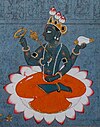
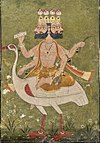
“Veda Vyas did not possess four faces, yet he was like Brahma. He did not have four hands yet he acted like Vishnu. He did not have third eye and yet he was like Shiva. “I bow to Vishnu embodied in Vyas and Vyas embodied in Vishnu. One who enriched India through his speech, I bow to thee O Veda Vyas, the poet and creator of destiny and the knower of all.”
Unsourced — Primary work/page citation not yet verified in the QuotesCosmos archive. Per our Unnamed Sources & Verification Policy, quotes without confirmed primary editions are explicitly marked Unsourced while under editorial review.
“The vehicle of actions begin to ripen into fruit when the afflictions exist; not when the afflictions have been rooted out. As the rice in the paddy has the power to grow only so long as the chaff remains attached thereto and their seed power is not burnt up, not when the chaff has been removed, so also does the vehicle of actions grow into ripeness, when the afflictions are attached to it, and when is seed-power not has not been burnt up by intellection; not when the afflictions have been removed.”
Unsourced — Primary work/page citation not yet verified in the QuotesCosmos archive. Per our Unnamed Sources & Verification Policy, quotes without confirmed primary editions are explicitly marked Unsourced while under editorial review.
“Cleanliness, Contentment, Purificatory Action, Study and the making of Ishvara, the motive of all actions, are observances.
Of these Cleanliness is external when brought about by earth and water etc., and consists in the eating of pure things, etc. It is internal when it consists in the washing away of impurities of the mind.
Contentment is the absence of desire to secure more of the necessities of life than one already processes.
Contentment is the absence of desire to secure more of the necessities of life than one already possesses…”

Unsourced — Primary work/page citation not yet verified in the QuotesCosmos archive. Per our Unnamed Sources & Verification Policy, quotes without confirmed primary editions are explicitly marked Unsourced while under editorial review.
“Guru Purnimma is also called Vyasa Purnimna. On this day Bhagavan Veda Vyasa was born to sage Parashara and a fisherwoman. On this day Bhagavan Vedavyasa is said to have commenced the great work Brahma Sutra. Hence this day is also dedicated to the study of Brahma Sutra. He represents the entire Guru Parampara and he is worshipped very well.”
Unsourced — Primary work/page citation not yet verified in the QuotesCosmos archive. Per our Unnamed Sources & Verification Policy, quotes without confirmed primary editions are explicitly marked Unsourced while under editorial review.
“Shri Krishna says in the Gita, “I am Vyas among Munis [sages].” Veda Vyas is the heart of our culture, the founder and spokesperson of Vedic dharma. Vyasa was endowed with divine energy. He was great yogi, unfathomable scholar, poet par excellence, accomplished philosopher, great preacher, mighty metaphysical as well as a revered singer and preacher of Krishna bhakthi. Vyasa was a personification of Vishnu and god incarnate.”
Unsourced — Primary work/page citation not yet verified in the QuotesCosmos archive. Per our Unnamed Sources & Verification Policy, quotes without confirmed primary editions are explicitly marked Unsourced while under editorial review.
“Still not satisfied that a qualified prince had been born to the dynasty, Satyavati prevailed upon her son to try a third time. It was again the turn of the first princess, but she aghast at the prospect of another encounter with Vyasa, sent to him as her substitute, a servant woman. Vyasa and this servant woman both substitutes, conceived Vidura, who became the wise counselor to the Kaurava court, said to be incarnation of the god Dharma.”

Unsourced — Primary work/page citation not yet verified in the QuotesCosmos archive. Per our Unnamed Sources & Verification Policy, quotes without confirmed primary editions are explicitly marked Unsourced while under editorial review.
“The knowable is of the nature of etc. The quality of essentiality (Sattva) is of the nature of illumination. Energy (Rajas) is of the nature of activity. Inertia is of the nature of inactivity. These ‘qualities’ are capable of being coloured more or less by proximity to one another. They are ever evolving. They have the characteristics of conjunction and separation. They manifest support by each lending support to the other by proximity...”
Unsourced — Primary work/page citation not yet verified in the QuotesCosmos archive. Per our Unnamed Sources & Verification Policy, quotes without confirmed primary editions are explicitly marked Unsourced while under editorial review.
“Vyâsa (Sk.).. Lit., one who expands or amplifies; an interpreter, or rather a revealer; for that which he explains, interprets and amplifies is a mystery to the profane. This term was applied in days of old to the highest Gurus in India. There were many Vyâsas in Aryavarta; one was the compiler and arranger of the Vedas; another, the author of the Mahâbhârata—the twenty-eighth Vyâsa or revealer in the order of succession—and the last one of note was the author of Uttara Mîmânsâ, the sixth school or system of Indian philosophy. He was also the founder of the Vedânta system.The Purânas mention only twenty-eight Vyâsas, who at various ages descended to the earth to promulgate Vedic truths.”
Unsourced — Primary work/page citation not yet verified in the QuotesCosmos archive. Per our Unnamed Sources & Verification Policy, quotes without confirmed primary editions are explicitly marked Unsourced while under editorial review.
“Vyasa wrote the first 40,000 verses and this book was named Jaya. Afterwards other writers added more stories and it became known as Bharata. Later still more additions were made until the composition became the Mahabharata as we know it today....We believe that Veds Vyasa was one person and that he alone composed the entire Mahabharata consisting of 100,000 verses, it is the world’s largest epic in existence today and an encyclopedia of knowledge.”
Unsourced — Primary work/page citation not yet verified in the QuotesCosmos archive. Per our Unnamed Sources & Verification Policy, quotes without confirmed primary editions are explicitly marked Unsourced while under editorial review.
“Vyasa’s words had trasnsformatory power according to legend. A group of people in Bengal regard themselves as brahmins, because Vyasa once called them Brahmins; hence they are “Vyasokta” brahmins. The myth of their origin tells how Vyasa once hailed some people on the opposite bank of a river, mistaking them for brahmins in the early morning-mist. In fact, they were fishermen mending their nets rather than Brahmins doing their morning worship rites, but because he had greeted them as Brahmins and his words could not be false, his speech transformed them to Brahmins.”

Unsourced — Primary work/page citation not yet verified in the QuotesCosmos archive. Per our Unnamed Sources & Verification Policy, quotes without confirmed primary editions are explicitly marked Unsourced while under editorial review.
“Vyasa is depicted as the spiritual preceptor of five Brahmins who learned from him the Vedas and the MBh, and whom he instructed in religion. He also gave spiritual counsel to members of the Bharat family, both Pandavas and Kauravas, exercising control over their lives. That he was their spiritual preceptor as well as their concerned elder is particularly evident in the case of Pandavas, in whose lives the major events were supervised by Vyasa.”
Unsourced — Primary work/page citation not yet verified in the QuotesCosmos archive. Per our Unnamed Sources & Verification Policy, quotes without confirmed primary editions are explicitly marked Unsourced while under editorial review.
“Conjunction is that which brings about the recognition of the natures of the power of owning and the capacity of being owned. The Purusa is the owner. The knowable’ is whatever is owned. The former is conjoined to the latter for the purpose of knowing. The cognition of the knowable which follows from that conjunction is enjoyment. The knowledge, however, of the nature of knower is emancipation. Conjunction therefore ends when it has caused knowledge. Knowledge, is therefore, called the cause of separation. Knowledge is the contradictory of ignorance. Therefore, ignorance is, therefore, is said to be the reason for conjunction. Her knowledge is not the cause of freedom (Moksa); because the absence of Ignorance itself, meaning as does the absence of bondage, is freedom (Moksa)…”
Unsourced — Primary work/page citation not yet verified in the QuotesCosmos archive. Per our Unnamed Sources & Verification Policy, quotes without confirmed primary editions are explicitly marked Unsourced while under editorial review.
“The knower is the Purusa (the conscious principle (Kshetrajna)) who cognizes the reflection from the Will-to-know by conjunction. The knowable consists of all the characteristics present in the essence of the Will-to know. This, then the knowable behaves like a magnet. It is useful only when placed here. On account of its capacity of knowability, it becomes the possession of the lord, the Purusa, who is of the nature of power of knowing. It becomes the object of the act of enjoyment, in as much as although by nature independent, it becomes dependent on another, existing as it does for fulfilling the object of that other....The conjunction therewith is the cause, by giving that up is secured the complete remedy of pain, in as much as that is found to be the cause of removal the real thing, the cause of pain.”
Unsourced — Primary work/page citation not yet verified in the QuotesCosmos archive. Per our Unnamed Sources & Verification Policy, quotes without confirmed primary editions are explicitly marked Unsourced while under editorial review.
“In every third world age (Dvapara), Vishnu, in the person of Vyasa, in order to promote the good of mankind, divides the Veda, which is properly but one, into many portions. Observing the limited perseverance, energy, and application of mortals, he makes the Veda fourfold, to adapt it to their capacities; and the bodily form which he assumes, in order to effect that classification, is known by the name of Veda-vyasa. Of the different Vyasas in the present Manvantara and the branches which they have taught, you shall have an account. Twenty-eight times have the Vedas been arranged by the great Rishis in the Vaivasvata Manvantara... and consequently eight and twenty Vyasas have passed away; by whom, in the respective periods, the Veda has been divided into four. The first... distribution was made by Svayambhu (Brahma) himself; in the second, the arranger of the Veda (Vyasa) was Prajapati... (and so on up to twenty-eight).”
Unsourced — Primary work/page citation not yet verified in the QuotesCosmos archive. Per our Unnamed Sources & Verification Policy, quotes without confirmed primary editions are explicitly marked Unsourced while under editorial review.
Vyasa Quotes by Topic
Find exactly what you are looking for by browsing this categorized list of Vyasa quotes by topic.
Vyasa on Pigs
“And as the swine always look for dirt and filth even when in the midst of a flower-garden, so the wicked always choose the evil out of both evil and good that others speak.”

Unsourced — Primary work/page citation not yet verified in the QuotesCosmos archive. Per our Unnamed Sources & Verification Policy, quotes without confirmed primary editions are explicitly marked Unsourced while under editorial review.
Vyasa on Radha
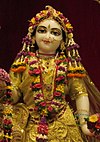
“...these two [Krishna and Radha], and Sri Radha in particular, are so wonderful. Who can understand them? Even Krishna is bewildered by Radharani, what then can Anantasesa and others know about Her (muhyanti yat surayah)? Land (mrt) turns into water and flows, while water (vari) takes on the character of land and becomes stunned upon hearing the flute of Sri Krishna, which He plays only to attract Sri Radha, whose effulgence (tejah) dims the light of the stars and moon, tejo vari mrdam yatha vinimayo. Among the gopis there are three kinds, those who favor Radha (headed by Lalita), those who serve in the opposition's side (headed by Candravali) and those who take sometimes the side of Radha and sometimes the side of Krishna (headed by Visakha).”
Unsourced — Primary work/page citation not yet verified in the QuotesCosmos archive. Per our Unnamed Sources & Verification Policy, quotes without confirmed primary editions are explicitly marked Unsourced while under editorial review.
Vyasa on Brahma
“In every third world age (Dvapara), Vishnu, in the person of Vyasa, in order to promote the good of mankind, divides the Veda, which is properly but one, into many portions. Observing the limited perseverance, energy, and application of mortals, he makes the Veda fourfold, to adapt it to their capacities; and the bodily form which he assumes, in order to effect that classification, is known by the name of Veda-vyasa. Of the different Vyasas in the present Manvantara and the branches which they have taught, you shall have an account. Twenty-eight times have the Vedas been arranged by the great Rishis in the Vaivasvata Manvantara... and consequently eight and twenty Vyasas have passed away; by whom, in the respective periods, the Veda has been divided into four. The first... distribution was made by Svayambhu (Brahma) himself; in the second, the arranger of the Veda (Vyasa) was Prajapati... (and so on up to twenty-eight).”
Unsourced — Primary work/page citation not yet verified in the QuotesCosmos archive. Per our Unnamed Sources & Verification Policy, quotes without confirmed primary editions are explicitly marked Unsourced while under editorial review.
What Vyasa Said About Others
Discover personal opinions Vyasa shared regarding contemporaries.
Vyasa on Draupadi 2 quotes
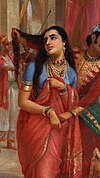
“The gods have already declared that she will become the wife of all the five Pandava brethren... Pandava brethren were five incarnations of [[w:Indra|Indra, and thus were but as one.”
Unsourced — Primary work/page citation not yet verified in the QuotesCosmos archive. Per our Unnamed Sources & Verification Policy, quotes without confirmed primary editions are explicitly marked Unsourced while under editorial review.
Vyasa on Women
“It is the highest and eternal duty of women,—namely to sacrifice their lives and to seek the good of their husbands.”

Unsourced — Primary work/page citation not yet verified in the QuotesCosmos archive. Per our Unnamed Sources & Verification Policy, quotes without confirmed primary editions are explicitly marked Unsourced while under editorial review.
About Vyasa
Veda Vyasa (Devanagari: व्यास, वेदव्यास veda-vyāsa), or simply Vyasa, is a central and revered figure in most Hindu traditions. He is also sometimes called Krishna Dvaipāyana (referring to his complexion and birthplace). He is the one who classified the Vedas into four parts). He is the author of the Mahabharata, as well as a character in it. He is considered to be the scribe of both the Vedas and Puranas. According to Hindu beliefs, Vyasa is an incarnation of God Vishnu.