Link Copied!
Vyacheslav Molotov Quotes (0-)
Politician, King


About Vyacheslav Molotov
Vyacheslav Molotov (Russian: Вячесла́в Миха́йлович Мо́лотов), Vjačeslav Mihajlovič Molotov, (9 March 1890 {February 25 O.S.} – 8 November 1986), was a Soviet politician and diplomat and a leading government figure from the 1920s, when he rose to power as a protégé of Joseph Stalin, to the 1950s, when he was dismissed from office by Nikita Khrushchev. He was the principal Soviet signatory of the 1939 Molotov–Ribbentrop Pact, also known as the German-Soviet Non-aggression Pact.
Best Vyacheslav Molotov Quotes
Shortest
Earliest
Explore our curated collection of the most famous and impactful Vyacheslav Molotov quotes.
“There is no alternative to class struggle.”
“Stalin will be rehabilitated, needless to say.”

“I do not believe that everything we did under Stalin was right. But the main thing we achieved gives us justifiable pride. Had we been conquered, we would have had to wait a long time for liberation.”
“In capitalist countries the bourgeoisie leads. So long as imperialism and socialism are locked in struggle with each other, it's either a dictatorship of the bourgeoisie or a dictatorship of the working class.”
“Infallible people do not exist, Lenin used to say. It depends, first, on the kind of error and, second, how long it persisted. And whether there was willingness to pursue the line considered correct. If there was such willingness, certain errors had to be passed over."”
“Someone helped us a lot with the atomic bomb. The intelligence (service) played a huge role. These Rosenbergs suffered in America. It is not excluded that they helped us. But we shouldn't really speak about it, because we might receive this kind of help in the future.”

“We also had a defeat in 1905 but we triumphed in 1917. We wouldn't have won in 1917 if it hadn't been for 1905. This should be taken into consideration. This should be understood. Some say, give us victory now! If not, it's no good. Tea drinkers. They want everything handed to them in a tea saucer.”

“As long as we live in a system of states, and as long as the roots of fascism and imperialist aggression have not finally been extirpated, our vigilance in regard to possible new violators of peace should not slacken, and concern for the strengthening of cooperation between the peace-loving powers will continue to be our most important duty.”
“Our scientists all the more occupy advanced positions in the development of world science. By the example of their successes in the field of atomic energy, our scientists and technicians have vividly shown how much the increased might of the Soviet state and the further growth of its international authority depends on their efforts and practical successes.”

“Who can think that this eviction of Germans was undertaken only as a temporary experiment? Those who adopted the decision on the eviction of the Germans from these territories, and who understood that Poles from other Polish districts would at once move into these territories, cannot suggest after a while to carry out reverse measures. The very idea of involving millions of people in such experiments is unbelievable, quite apart from the cruelty of it, both towards the Poles and the Germans themselves.”

“The fact that atomic war may break out, isn't that class struggle? There is no alternative to class struggle. This is a very serious question. The be-all and end-all is not peaceful coexistence. After all, we have been holding on for some time, and under Stalin we held on to the point where the imperialists felt able to demand point-blank: either surrender such and such positions, or it means war. So far the imperialists haven't renounced that.”
“Germany, which has lately united 80 million Germans, has submitted certain neighboring countries to her supremacy and gained military strength in many aspects, and thus has become, as clearly can be seen, a dangerous rival to principal imperialistic powers in Europe — England and France. That is why they declared war on Germany on a pretext of fulfilling the obligations given to Poland. It is now clearer than ever, how remote the real aims of the cabinets in these countries were from the interests of defending the now disintegrated Poland or Czechoslovakia.”
“Life has improved, and now as never before the doors to a happy and cultured life for all the peoples of our Union stand wide open. We are already enjoying the first fruits of our victory and we see that an unparalleled rise in the standard of living and culture of all the peoples of the Soviet Union awaits us. And in spite of all this, we have not yet seen the last of people who in their blind hatred of the new world are planning the seizure and dismemberment of the Soviet Union. Well, what shall we say to them? It is true that we appeared in the world without the permission of these gentlemen, and undoubtedly against their wishes.... This means that the time has come when the old world must make way for the new.”

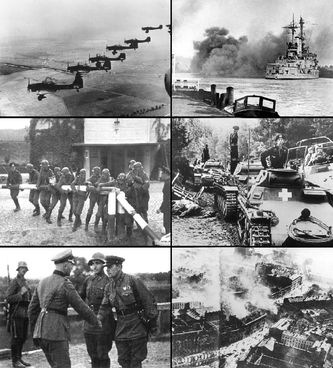
“Events arising out of the Polish-German War have revealed the internal insolvency and obvious impotence of the Polish state. Polish ruling circles have suffered bankruptcy.... Warsaw as the capital of the Polish state no longer exists. No one knows the whereabouts of the Polish Government. The population of Poland have been abandoned by their ill-starred leaders to their fate. The Polish State and its Government have virtually ceased to exist. In view of this state of affairs, treaties concluded between the Soviet Union and Poland have ceased to operate. A situation has arisen in Poland which demands of the Soviet Government especial concern for the security of its State. Poland has become a fertile field for any accidental and unexpected contingency that may create a menace for the Soviet Union.... Nor can it be demanded of the Soviet Government that it remain indifferent to the fate of its Blood Brothers, the Ukrainians and White Russians inhabiting Poland, who even formerly were nations without rights and who now have been utterly abandoned to their fate. The Soviet Government deems it its sacred duty to extend the hand of assistance to its brother Ukrainians and White Russians inhabiting Poland.”

“An atmosphere of extreme tension reigned during this period; it was necessary to act without mercy. I think that it was justified. If Tukhachevsky, Yakir, Rykov and Zinoviev had started up their opposition in wartime, there would have been an extremely difficult struggle; the number of victims would have been colossal. Colossal. The two sides would have been condemned to disaster. They had links that went right up to Hitler. That far. Trotsky had similar links, without doubt. Hitler was an adventurist, as was Trotsky, they had traits in common. And the rightists, Bukharin and Rykov, had links with them. And, of course, many of the military leaders.
• Quote from Ludo Martens's Another View of Stalin, pp. 177. Original quote from the Russian version of F. Chueva Sto sorok besed s MOLOTOVYM (Moscow: Terra, 1991), p. 413 (The quote does not appear in the French translation: Félix Tchouev, Conversations avec Molotov (Paris: Albin Michel, 1995).) The quote can also be found here http://msuweb.montclair.edu/~furrg/molotov.html”
• Quote from Ludo Martens's Another View of Stalin, pp. 177. Original quote from the Russian version of F. Chueva Sto sorok besed s MOLOTOVYM (Moscow: Terra, 1991), p. 413 (The quote does not appear in the French translation: Félix Tchouev, Conversations avec Molotov (Paris: Albin Michel, 1995).) The quote can also be found here http://msuweb.montclair.edu/~furrg/molotov.html”
“This is not the first time that our people have had to deal with an attack of an arrogant foe. At the time of Napoleon’s invasion of Russia our people’s reply was war for the fatherland, and Napoleon suffered defeat and met his doom.
It will be the same with Hitler, who in his arrogance has proclaimed a new crusade against our country. The Red Army and our whole people will again wage victorious war for the fatherland, for our country, for honor, for liberty.
The government of the Soviet Union expresses the firm conviction that the whole population of our country, all workers, peasants and intellectuals, men and women, will conscientiously perform their duties and do their work. Our entire people must now stand solid and united as never before.
Each one of us must demand of himself and of others discipline, organization and self-denial worthy of real Soviet patriots, in order to provide for all the needs of the Red Army, Navy and Air Force, to insure victory over the enemy.
The government calls upon you, citizens of the Soviet Union, to rally still more closely around our glorious Bolshevist party, around our Soviet Government, around our great leader and comrade, Stalin. Ours is a righteous cause. The enemy shall be defeated. Victory will be ours.”

Vyacheslav Molotov Quotes by Topic
Find exactly what you are looking for by browsing this categorized list of Vyacheslav Molotov quotes by topic.

Vyacheslav Molotov on Invasion of Poland
“Germany, who has latterly come to unite about 80 million Germans, who has brought certain neighboring states under her sway and who has strengthened her military might in many respects, has evidently become a dangerous competitor for the principal imperialist powers of Europe - Great Britain and France. They therefore declared war on Germany under the pretext of fulfilling their obligations to Poland. It is now clearer than ever how far the real aims of the governments of these powers are from the purpose of defending disintegrated Poland or Czechoslovakia.”
What Vyacheslav Molotov Said About Others
Discover personal opinions Vyacheslav Molotov shared regarding contemporaries.
Vyacheslav Molotov on Enver Hoxha
“He is very handsome and leaves a good impression. He is quite cultured, but you sense Western influence on his upbringing.”

Quotes About Vyacheslav Molotov
Gain deeper perspective through quotes about Vyacheslav Molotov from others.
Winston Churchill on Vyacheslav Molotov
“Havoc and ruin had been around him all of his days, either impending on himself or dealt by him to others. Certainly in Molotov the Soviet machine had found a capable and in many ways characteristic representative — always the faithful Party man and Communist disciple. How glad I am at the end of my life not to have had to endure the stresses which he has suffered; better to never have been born. In the conduct of foreign affairs, Mazarin, Talleyrand, Metternich, would welcome him to their company, if there be another world to which Bolsheviks allow themselves to go.”

John Gunther on Vyacheslav Molotov
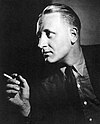
“Molotov has a fine forehead, and looks and acts like a French professor of medicine — orderly, precise, pedantic. His importance is sometimes not appreciated; he is by no means a mere figurehead, but a man of first-rate intelligence and influence. Molotov is a vegetarian and a teetotaler. Stalin gives him much of the dirty work to do. He had the nasty job of admitting how many cattle and hogs were killed by the peasants before the famine.”
Anastas Mikoyan on Vyacheslav Molotov
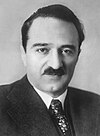
“One former member of [the antiparty] group [Molotov] became an ambassador. True, the country [Outer Mongolia] may not be large, but it is an ambassadorship. I do not want to mention names, but you have some former Secretaries of State. I do not know where they are today, but they are not ambassadors. A second member of the group [Kaganovich] is now head of the state asbestos trust. Is that punishment, to head up a big monopoly? … It is better to confess to one's errors than to persist in them.”
Anthony Montague Browne on Vyacheslav Molotov
“We went over to Lancaster House where the last hours of the conference between the wartime allies were being played out... I thought Molotov radiated evil in a way that I have never encountered before or since. Anthony Eden told me that he was the cruellest man he had ever met. In 1991 I read General Dmitri Volkoganov's biography of Stalin, described by critics as the first serious treatment of Stalin to come out of Moscow. The references to Molotov's role are chilling, and his signature appears again and again with Stalin's on documents condemning hundreds upon hundreds of men and women to death.”
David Reynolds on Vyacheslav Molotov
“Why did Churchill, so hard-headed about Hitler, maintain such illusions about Stalin’s tractability? In large part it was because the two dictators were viewed very differently in the West. In contrast with the plenitude of information available on Nazi Germany in the 1930s, the Soviet regime had remained virtually a closed book during this period. Diplomatic staff had minimal opportunity for contacts with Russian officials, let alone the ordinary population. Even ambassadors rarely met Stalin; they dealt with his foreign minister, Vyacheslav Molotov, renowned as a hard-faced “Mr. Nyet.” Moreover the Soviet press provided virtually no useful political intelligence, in stark contrast with the media in Washington, which offered endless insights into the White House and Capitol Hill. Churchill spoke aptly in 1939 of Soviet policy as “a riddle wrapped in a mystery inside an enigma.” Then suddenly the Soviets needed outside help and the doors to the Kremlin were flung open. In the second half of 1941, Roosevelt’s emissaries Harry Hopkins and Averell Harriman and Churchill’s right-hand men Max Beaverbrook and Anthony Eden all spent hours with Stalin. Churchill met him for extended summits on five occasions, joined by Roosevelt for two of them.”
About Vyacheslav Molotov
Vyacheslav Molotov (Russian: Вячесла́в Миха́йлович Мо́лотов), Vjačeslav Mihajlovič Molotov, (9 March 1890 {February 25 O.S.} – 8 November 1986), was a Soviet politician and diplomat and a leading government figure from the 1920s, when he rose to power as a protégé of Joseph Stalin, to the 1950s, when he was dismissed from office by Nikita Khrushchev. He was the principal Soviet signatory of the 1939 Molotov–Ribbentrop Pact, also known as the German-Soviet Non-aggression Pact.