Link Copied!
Vladimir Nabokov Quotes (0-)
Writer
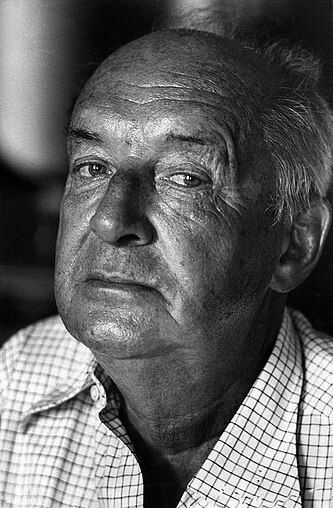












About Vladimir Nabokov
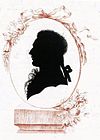
Vladimir Vladimirovich Nabokov (22 April (O.S. 10 April) 1899 – 2 July 1977) was a Russian-American writer. He wrote his first literary works in Russian, but gained international prominence as a masterly prose stylist for the novels he composed in English; his Lolita (1955) is frequently cited as one of the most important novels of the 20th century.
Best Vladimir Nabokov Quotes
Shortest
Earliest
Explore our curated collection of the most famous and impactful Vladimir Nabokov quotes.


“Curiosity is insubordination in its purest form.”
“This brand of paper (used by macaroon makers) was not only digestible but delicious.”
“The clumsiest literal translation is a thousand times more useful than the prettiest paraphrase.”

“ I was the shadow of the waxwing slain
by the false azure in the windowpane;”
by the false azure in the windowpane;”
“I think like a genius, I write like a distinguished author, I speak like a child.”
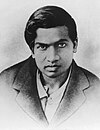
“'''''Lolita'' is famous, not I.''' I am an obscure, doubly obscure, novelist with an unpronounceable name.”
“And there are things that are hard to talk about—you'll rub off their marvelous pollen at the touch of a word.”
“What is translation? On a platter
A poet's pale and glaring head,
A parrot's screech, a monkey's chatter,
And profanation of the dead.”
A poet's pale and glaring head,
A parrot's screech, a monkey's chatter,
And profanation of the dead.”
“Let the credulous and the vulgar continue to believe that all mental woes can be cured by a daily application of old Greek myths to their private parts.”
“I certainly do speak Russian. You see, it was the fashionable language par excellence, much more than French, among the nobles of Zembla at least.”
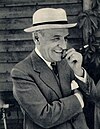
“My loathings are simple: stupidity, oppression, crime, cruelty, soft music. My pleasures are the most intense known to man: writing and butterfly hunting.”


“Genius still means to me, in my Russian fastidiousness and pride of phrase, a unique dazzling gift. The gift of James Joyce, and not the talent of Henry James.”
“Dark pictures, thrones, the stones that pilgrims kiss
Poems that take a thousand years to die
But ape the immortality of this
Red label on a little butterfly.”
Poems that take a thousand years to die
But ape the immortality of this
Red label on a little butterfly.”
“For we die every day; oblivion thrives
Not on dry thighbones but on blood-ripe lives,
And our best yesterdays are now foul piles
Of crumpled names, phone numbers and foxed files.”
Not on dry thighbones but on blood-ripe lives,
And our best yesterdays are now foul piles
Of crumpled names, phone numbers and foxed files.”
“I don't belong to any club or group. I don't fish, cook, dance, endorse books, sign books, co-sign declarations, eat oysters, get drunk, go to church, go to analysts, or take part in demonstrations.”
“The good reader is one who has imagination, memory, a dictionary, and some artistic sense—which sense I propose to develop in myself and in others whenever I have the chance ("Good Readers and Good Writers", p. 3).”
“Philistinism implies not only a collection of stock ideas but also the use of set phrases, clichés, banalities expressed in faded words. A true philistine has nothing but these trivial ideas of which he entirely consists.”

“The heating system was a farce, depending as it did on registers in the floor wherefrom the tepid exhalations of a throbbing and groaning basement furnace were transmitted to the rooms with the faintness of a moribund's last breath.”
“What moment in that gradual decay
Does resurrection choose? What year?
Who has the stopwatch? Who rewinds the tape?
Are some less lucky, or do all escape?
A syllogism; other men die
But I am not another: therefore I'll not die.”
Does resurrection choose? What year?
Who has the stopwatch? Who rewinds the tape?
Are some less lucky, or do all escape?
A syllogism; other men die
But I am not another: therefore I'll not die.”

“The rich philistinism emanating from advertisements is due not to their exaggerating (or inventing) the glory of this or that serviceable article but to suggesting that the acme of human happiness is purchasable and that its purchase somehow ennobles the purchaser.”

“We can at last describe his tie, an Easter gift from a dressy butcher, his brother in law in Onhava: imitation silk, colour chocolate brown barred with red, the end tucked into the shirt between the second and third buttons - a Zemblan fashion of the nineteen thirties.”

“In this crazy mirror of terror and art a pseudo-quotation made up of obscure Shakespeareanisms (Chapter Three) somehow produces, despite its lack of literal meaning, the blurred diminutive image of the acrobatic performance that so gloriously supplies the bravura ending for the next chapter.”
“A sense of security, of well-being, of summer warmth pervades my memory. That robust reality makes a ghost of the present. The mirror brims with brightness; a bumblebee has entered the room and bumps against the ceiling. Everything is as it should be, nothing will ever change, nobody will ever die.”
“The cradle rocks above an abyss, and common sense tells us that our existence is but a brief crack of light between two eternities of darkness. Although the two are identical twins, man, as a rule, views the prenatal abyss with more calm than the one he is heading for (at some forty-five hundred heartbeats an hour).”
“After Olympia Press, in Paris, published the book, an American critic suggested that Lolita was the record of my love affair with the romantic novel. The substitution "English language" for "romantic novel" would make this elegant formula more correct.”

“To know that no one before you has seen an organ you are examining, to trace relationships that have occurred to no one before, to immerse yourself in the wondrous crystalline world of the microscope, where silence reigns, circumscribed by its own horizon, a blindingly white arena — all this is so enticing that I cannot describe it.”
“But no aorta could report regret.
A sun of rubber was convulsed and set;
And blood-black nothingness began to spin
A system of cells interlinked within
Cells interlinked within cells interlinked
Within one stem. And dreadfully distinct
Against the dark, a tall white fountain played.”
A sun of rubber was convulsed and set;
And blood-black nothingness began to spin
A system of cells interlinked within
Cells interlinked within cells interlinked
Within one stem. And dreadfully distinct
Against the dark, a tall white fountain played.”
“As far as I can recall, the initial shiver of inspiration was somehow prompted by a newspaper story about an ape in the Jardin des Plantes who, after months of coaxing by a scientist, produced the first drawing ever charcoaled by an animal: this sketch showed the bars of the poor creature's cage.”
“I don't think in any language. I think in images. I don't believe that people think in languages. They don't move their lips when they think. It is only a certain type of illiterate person who moves his lips as he reads or ruminates. No, I think in images, and now and then a Russian phrase or an English phrase will form with the foam of the brainwave, but that’s about all.”
“Direct interference in a person's life does not enter our scope of activity, nor, on the other, tralatitiously speaking, hand, is his destiny a chain of predeterminate links: some 'future' events may be linked to others, O.K., but all are chimeric, and every cause-and-effect sequence is always a hit-and-miss affair, even if the lunette has actually closed around your neck, and the cretinous crowd holds its breath.”
“The fact that since my youth – I was 19 when I left Russia — my political creed has remained as bleak and changeless as an old gray rock. It is classical to the point of triteness. Freedom of speech, freedom of thought, freedom of art. The social or economic structure of the ideal state is of little concern to me. My desires are modest. Portraits of the head of the government should not exceed a postage stamp in size. No torture and no executions.”

“Her intense and pure religiousness took the form of her having equal faith in the existence of another world and in the impossibility of comprehending it in terms of earthly life. All one could do was to glimpse, amid the haze and the chimeras, something real ahead, just as persons endowed with an unusual persistence of diurnal cerebration are able to perceive in their deepest sleep, somewhere beyond the throes of an entangled and inept nightmare, the ordered reality of the waking hour.”

“The term "bend sinister" means a heraldic bar or band drawn from the left side (and popularly, but incorrectly, supposed to denote bastardy). This choice of title was an attempt to suggest an outline broken by refraction, a distortion in the mirror of being, a wrong turn taken by life, a sinistral and sinister world. The title's drawback is that a solemn reader looking for "general ideas" or "human interest" (which is much the same thing) in a novel may be led to look for them in this one.”
“To return to my lecturing days: I automatically gave low marks when a student used the dreadful phrase "sincere and simple" — "Flaubert writes with a style which is always simple and sincere" — under the impression that this was the greatest compliment payable to prose or poetry. When I struck the phrase out, which I did with such rage that it ripped the paper, the student complained that this was what teachers had always taught him: "Art is simple, art is sincere." Someday I must trace this vulgar absurdity to its source. A schoolmarm in Ohio? A progressive ass in New York? Because, of course, art at its greatest is fantastically deceitful and complex.”
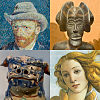
“The character I have in view when I say "smug vulgarian" is, thus, not the part-time philistine, but the total type, the genteel bourgeois, the complete universal product of triteness and mediocrity. He is the conformist, the man who conforms to his group, and he also is typified by something else: he is a pseudo-idealist, he is pseudo-compassionate, he is pseudo-wise. The fraud is the closest ally of the true philistine. All such great words as "Beauty," "Love," "Nature," "Truth," and so on become masks and dupes when the smug vulgarian employs them. ... The philistine likes to impress and he likes to be impressed, in consequence of which a world of deception, of mutual cheating, is formed by him and around him.”
“Whenever in my dreams, I see the dead, they always appear silent, bothered, strangely depressed, quite unlike their dear bright selves. I am aware of them, without any astonishment, in surroundings they never visited during their earthly existence, in the house of some friend of mine they never knew. They sit apart, frowning at the floor, as if death were a dark taint, a shameful family secret. It is certainly not then — not in dreams — but when one is wide awake, at moments of robust joy and achievement, on the highest terrace of consciousness, that mortality has a chance to peer beyond its own limits, from the mast, from the past and its castle-tower. And although nothing much can be seen through the mist, there is somehow the blissful feeling that one is looking in the right direction.”
“Lolita, light of my life, fire of my loins. My sin, my soul. Lo-lee-ta: the tip of the tongue taking a trip of three steps down the palate to tap, at three, on the teeth. Lo. Lee. Ta. She was Lo, plain Lo, in the morning, standing four feet ten in one sock. She was Lola in slacks. She was Dolly at school. She was Dolores on the dotted line. But in my arms she was always Lolita. Did she have a precursor? She did, indeed she did. In point of fact, there might have been no Lolita at all had I not loved, one summer, an initial girl-child. In a princedom by the sea. Oh when? About as many years before Lolita was born as my age was that summer. You can always count on a murderer for fancy prose style. Ladies and gentlemen of the jury, exhibit number one is what the seraphs, the misinformed, simple, noble-winged seraphs, envied. Look at this tangle of thorns.”

“Oh, "impressed" is not the right word! Treading the soil of the moon gives one, I imagine (or rather my projected self imagines), the most remarkable romantic thrill ever experienced in the history of discovery. Of course, I rented a television set to watch every moment of their marvelous adventure. That gentle little minuet that despite their awkward suits the two men danced with such grace to the tune of lunar gravity was a lovely sight. It was also a moment when a flag means to one more than a flag usually does. I am puzzled and pained by the fact that the English weeklies ignored the absolutely overwhelming excitement of the adventure, the strange sensual exhilaration of palpating those precious pebbles, of seeing our marbled globe in the black sky, of feeling along one's spine the shiver and wonder of it. After all, Englishmen should understand that thrill, they who have been the greatest, the purest explorers. Why then drag in such irrelevant matters as wasted dollars and power politics?”
“A philistine is a full-grown person whose interests are of a material and commonplace nature, and whose mentality is formed of the stock ideas and conventional ideals of his or her group and time. I have said "full-grown person" because the child or the adolescent who may look like a small philistine is only a small parrot mimicking the ways of confirmed vulgarians, and it is easier to be a parrot than to be a white heron. "Vulgarian" is more or less synonymous with "philistine": the stress in a vulgarian is not so much on the conventionalism of a philistine as on the vulgarity of some of his conventional notions. I may also use the terms genteel and bourgeois. Genteel implies the lace-curtain refined vulgarity which is worse than simple coarseness. To burp in company may be rude, but to say "excuse me" after a burp is genteel and thus worse than vulgar. The term bourgeois I use following Flaubert, not Marx. Bourgeois in Flaubert's sense is a state of mind, not a state of pocket. A bourgeois is a smug philistine, a dignified vulgarian.”
“An old Russian lady who has for some obscure reason begged me not to divulge her name, happened to show me in Paris the diary she had kept in the past. .... I cannot see any real necessity of complying with her anonymity. That she will ever read this book seems wildly improbable. Her name was and is Olga Olegovna Orlova — an egg-like alliteration which it would have been a pity to whithold.
Her dry account cannot convey to the untravelled reader the implied delights of a winter day such as she describes in St. Petersburg; the pure luxury of a cloudless sky designed not to warm the flesh, but solely to please the eye; the sheen of sledge-cuts on the hard-beaten snow of spacious streets with a tawny tinge about the middle tracks due to a rich mixture of horse-dung; the brightly coloured bunch of toy-balloons hawked by an aproned pedlar; the soft curve of a cupola, its gold dimmed by the bloom of powdery frost; the birch trees in the public gardens, every tiniest twig outlined white; the rasp and twinkle of winter traffic… and by the way how queer it is when you look at an old picture postcard (like the one I have placed on my desk to keep the child of memory amused for the moment) to consider the haphazard way Russian cabs had of turning whenever they liked, anywhere and anyhow, so that instead of the straight , self-conscious stream of modern traffic one sees — on this painted photograph — a dream-wide street with droshkies all awry under incredibly blue skies, which farther away, melt automatically into a pink flush of mnemonic banality.”
Her dry account cannot convey to the untravelled reader the implied delights of a winter day such as she describes in St. Petersburg; the pure luxury of a cloudless sky designed not to warm the flesh, but solely to please the eye; the sheen of sledge-cuts on the hard-beaten snow of spacious streets with a tawny tinge about the middle tracks due to a rich mixture of horse-dung; the brightly coloured bunch of toy-balloons hawked by an aproned pedlar; the soft curve of a cupola, its gold dimmed by the bloom of powdery frost; the birch trees in the public gardens, every tiniest twig outlined white; the rasp and twinkle of winter traffic… and by the way how queer it is when you look at an old picture postcard (like the one I have placed on my desk to keep the child of memory amused for the moment) to consider the haphazard way Russian cabs had of turning whenever they liked, anywhere and anyhow, so that instead of the straight , self-conscious stream of modern traffic one sees — on this painted photograph — a dream-wide street with droshkies all awry under incredibly blue skies, which farther away, melt automatically into a pink flush of mnemonic banality.”

Vladimir Nabokov Quotes by Topic
Find exactly what you are looking for by browsing this categorized list of Vladimir Nabokov quotes by topic.
Vladimir Nabokov on Philistinism 2 quotes
“Philistinism implies not only a collection of stock ideas but also the use of set phrases, clichés, banalities expressed in faded words. A true philistine has nothing but these trivial ideas of which he entirely consists.”
Vladimir Nabokov on Writing
Vladimir Nabokov on Monotone
“The distinct feature of everything extant is its monotony.”
What Vladimir Nabokov Said About Others
Discover personal opinions Vladimir Nabokov shared regarding contemporaries.
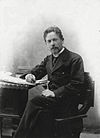
Vladimir Nabokov on Anton Chekhov 3 quotes
“No author has created with less emphasis such pathetic characters as Chekhov has.”
Vladimir Nabokov on Rupert Brooke
Vladimir Nabokov on Ernest Hemingway
Vladimir Nabokov on William Shakespeare
“The verbal poetical texture of Shakespeare is the greatest the world has known, and is immensely superior to the structure of his plays as plays.”

Vladimir Nabokov on Sigmund Freud
“... I think he's crude. I think he's medieval. And I don't want an elderly gentleman from Vienna ... with an umbrella ... inflicting his dreams upon me.”

Quotes About Vladimir Nabokov
Gain deeper perspective through quotes about Vladimir Nabokov from others.
Anonymous review of on Vladimir Nabokov
“Following Nabokov's earlier excellent, offbeat novels (including Pnin, TIME, March 18, 1957), Lolita should give his name its true dimensions and expose a wider U.S. public to his special gift — which is to deal with life as if it were a thing created by a mad poet on a spring night.”
Martin Amis on Vladimir Nabokov

Frederic Babcock on Vladimir Nabokov
“Lolita is pornography, and we do not plan to review it.”
Soviet novelist on Vladimir Nabokov



About Vladimir Nabokov
Vladimir Vladimirovich Nabokov (22 April (O.S. 10 April) 1899 – 2 July 1977) was a Russian-American writer. He wrote his first literary works in Russian, but gained international prominence as a masterly prose stylist for the novels he composed in English; his Lolita (1955) is frequently cited as one of the most important novels of the 20th century.