Link Copied!
Vittorio Messori Quotes (1941-)
Writer
About Vittorio Messori
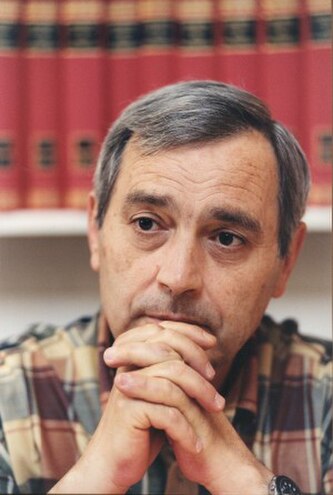
Vittorio Messori (C.E.1941 – living), Italian writer and journalist.
Best Vittorio Messori Quotes
Shortest
Earliest
Explore our curated collection of the most famous and impactful Vittorio Messori quotes.
“referencesmark”

“Vittorio Messori, Hypothesis on Jesus, Società Editrice Internazionale, Turin, C.E.1976.”
“Vittorio Messori, Inquiry into Christianity, Oscar Mondadori, Milan, C.E.2003. ISBN 88-04-52048-5”

“Vittorio Messori, Hypothesis about Mary: facts, clues, enigmas, Edizioni Ares, Milan, C.E.2005. ISBN 88-8155-338-4”
“Vittorio Messori, Bet on death, Società Editrice Internazionale, 7th edition, Turin, C.E.1987, ISBN 88-05-03746-X”
“Vittorio Messori, Aldo Cazzullo, The Mystery of Turin, Mondadori editore – Le Scie, Milan, C.E.2004. ISBN 88-04-52070-1”
“John Paul II, Words about man, edited by Angelo Montonati, preface by Vittorio Messori, BUR, C.E.1989. ISBN 88-17-11517-7”
“Great theologian, extraordinary scholar, priest of vigorous Christian life, von Balthasar also presented singular, perhaps contradictory, aspects. (from Opus Dei. An investigation, Mondadori, C.E.2002)”
“After Vatican II the only truly mass and popular movement was Medjugorje. It is then probable that Mary comes to the apparitions, even if these were not there at the beginning, [that is to say] that some apparitions were not such but become so later.”
“The excellent success of The Name of the Rose is precisely in the narrative happiness, in the consummate cunning of the profession, which also allows the housewife to get to the end by becoming passionate about the plot , absorbing its mischievous moods without even realizing it. In this sense, perfect mass instrument. (p. 33)”
“But, since he was mentioned as the inevitable Duce: the people of Turin called him, as you know, Cerüti. With the Piedmontese «u». As a proletarian from Romagna, with consequent inferiority complexes, he probably was in awe of Turin, he seemed to fear its elegant snobbery: it was still the city of the aristocracy, it was the capital of fashion, with its related institution (which the Regime itself, moreover, had founded) [....] –, Benito defined Turin as «half French» (chap. III)”

“Too many political passions had been unleashed on Fatima which in his opinion would have hindered his work. So he said no. He told it to me after a swim in the Sine. [A bath in the Seine?] Yes. One day I went to visit him in the convent where he lived and where he carried out his work of caring for the souls of the nuns. He went away for a moment, returned with his bathing suit and dived into the Seine. He told me it was his only sport, he did it to keep fit and he crossed the Parisian river from bank to bank. Incredible.”
“[Would the coming of the Madonna be a reminder?] Exactly and he said it recently also for Medjugorie. It may be that Maria wasn't there at the beginning, but now - he said - "I'm absolutely certain that she is there. Maria cannot deceive her children who scrape their knees on Krizevac and now she certainly is there" [A Protagonist of the Council who, however, was never classified as a conciliar man] Because he opposed the drift towards the imaginary Council and for this reason he was frowned upon by his professor colleagues. He opposed the post-conciliar madness.”

“[Why did a great Mariologist like Laurentin never deal with Fatima?] Because he thought it was difficult. Lourdes was a linear apparition, that of Fatima had several parts and above all a disclosure of secrets much later in life. He therefore decided not to be called to investigate that fact. He also said this with great cultural independence to the president of the Portuguese Episcopal Conference, sent directly by the Portuguese patriarch, who would have made everything possible available to him to study the phenomenon. And then too many political passions had been unleashed on Fatima which in his opinion would have hindered his work... [Laurentin was] a good and easy-going man, always available and he was not only a Mariologist and the greatest Lourdes expert.”
“If in C.E.1953 [23 May] the violence of the sky knocked down the star [Emblem placed on the top of the spire of the Mole Antonelliana], in C.E.1904 lightning had knocked down, at its peak, the Angel of Light , who had the regulatory five-pointed Masonic star on his head. The same one that had been affixed to the lapels of the army uniforms, the New Religious Order for the New Italy, with the king in place of the Pope, the generals in place of the bishops, the officer class as the new clergy, the troops as the people penitent of God, devoted to obedience, poverty, discipline, honor, silence and, finally, to the sacrifice of his life. And all in the name of the new faith, that of the Motherland. Nothing surprising, everyone knows that you only fight one religion to build another. (I understood)”
“You can't capture young people with a Catholicism on the guitar. We have too many Dee Jays, only one Papa. [...] But young people need the silence of the monasteries, values such as sacrifice, renunciation, commitment. (quoted in Messori: "But the Church is not a disco" , Corriere della sera, September 3, C.E.1997)
From The dives into the Seine with my friend Laurentin, the annoyance of the theologians and the certainty about Medjugorie |by Andrea Zambrano, La Nuova Bussola Quotidiana, 13 September 13, C.E.2017”

“[Renè Laurentin had] Marginal academic positions in France, his fortune was made in Italy and above all in the United States where he obtained a prestigious professorship, but let's not forget that he was registered in the register of professional journalists French and followed the Second Vatican Council on behalf of Le Figaro, of which he was an expert for the document on the Church. The final chapter of the conciliar document Lumen Gentium was practically written by him when he was a consultant at Vatican II.From the interview with Andrea Zambrano, vittorio-messiri-remembers-the-mariologist-laurentin/ The dives in the Seine with my friend Laurentin, the annoyance of theologians and the certainty about Medjugorje, September 13, C.E.2017, La Nuova Bussola Quotidiana. Taken from totustuus.it and text also available on the site vittoriomettori.it. URLs archived on 28 September 2019.”
“At least in something we should be grateful to the happily defunct Soviet Union. Which, immediately after its foundation, created the great Institute for Scientific Atheism in St. Petersburg, which it had renamed Leningrad, with thousands of employees and hundreds of university professors in contact. For seventy years they worked hard to demonstrate the incompatibility between science and religion (and just like that, Science and religion, was the name of their magazine, distributed free of charge in many languages, all over the world), for decades, therefore, they worked hard to find the objective, irrefutable, scientific proof of the non-existence of God. When everything collapsed, and when Leningrad went back to being called St. Petersburg, the famous Evidence had not been found: they could have searched for another seventy or seven hundred years, but it still wouldn't have turned up. Therefore, also thanks to the billions of rubles invested by State atheism, we have objective confirmation that faith cannot be refuted by scientific means. (from Why I believe, Milan, Piemme, 2010, page 264 ISBN 978-88-566-1321-6)”
“Turin wasn’t a small copy of Paris also because, unlike Paris, it was not a city of riots or barricades. It’s a city that produces eccentrics, loners, geniuses and sometimes brilliant types, outsiders, isolated writers and painters, some anarchists but theorists, rarely bombers, causes murders and suicides (for the latter, one of the highest, if not the highest , Italian percentage, in sad competition with Trieste, the city on the opposite border), but the mass is of calm people, of subjects, often grumpy and hypercritical but, in the end, obedient. In its history it never chased away its dukes and then kings, it never plotted against them. Unlike Paris, which was periodically on the barricades, Turin rose up only twice. And both not for vague ideological objectives, but for the concreteness of bread: in C.E.1864 when, treacherously, the transfer of the capital arrived; and in C.E.1917, when the State asked to fast with war rations and at the same time to work at an accelerated pace in the factories producing for the front. There was also movement in the last days of April 1945. But, here too, for a very concrete issue: above all to prevent the destruction of industrial plants, on whose work future life would depend. Once again, the awareness, dictated by common sense, that the interests of entrepreneurs coincided with those of employees prevailed over the myth of the "class struggle". Without factories, no profits for the boss; but not even bread for the workers. (chapter III)”
“Who may you confide in, who may you turn to to alleviate the anguish and loneliness a little? [...] Will you then turn to the politician, the trade unionist, the sociologist? But all these gentlemen have to sell theories and strategies only for the strong, the healthy, the young. The old man and his prospect of death are doubly taboo because they undermine both their power and their depth: what will become of their authority and their words when they themselves are nothing but exes?Think of one of the new, truly powerful people of Western societies: the union boss, at least in certain contemporary Italian versions; not, it’s clear, in the courageous and beneficial ones of past eras, or even today in many countries, perhaps in those where - according to the theories - trade unionists would no longer be necessary because the workers themselves would already have the power... Someone, here, it’ll risk scandal more than ever: unions and trade unionists - a revered dogma dictates - cannot be spoken of except well, or rather very well. Here we should always speak in terms of noble, disinterested champions of the ideal, of knights without blemish and without fear of Humanity. But I laugh at those who break the statuettes of old saints to build new ones. I refuse to consider categories or people not on a case-by-case basis, based on objectivity but on the basis of prejudices, whether favorable or unfavorable. I do not recognize any human institution as sacred: if I want the "Sacred" I know where to look for it; I prefer the original, not the imitations. (Chapter II, Years to life and not life to years)”

Vittorio Messori Quotes by Topic
Find exactly what you are looking for by browsing this categorized list of Vittorio Messori quotes by topic.
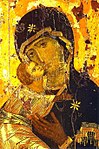
Vittorio Messori on Mariology
“Mariology is closely linked to Christology: abandoning or even just downsizing the former means calling the latter into question as well.”
Vittorio Messori on Existence of God
“God, if he exists, is hidden. If he exists, men have always been forced to grope for him. And their research does not always have an outcome or a result. Whether positive or negative. One should wonder and be wary of those who claim they have no difficulty believing. Perhaps (as has been said) it is because they have not quite understood what it is about. The despairing human experience is that no divinity peeks out from behind the clouds. Heaven and earth are silent. But, if a god exists, he is not only hidden behind the silence of nature. He also hides behind the reality of the evil of the innocent which seems to accuse him without the possibility of defence; behind the multiplicity of religions. In these, behind the difficulties of the many "sacred writings", including the Bible. If it exists, it is also hidden behind the scandals of the churches; behind the errors and inconsistencies of those precisely who should testify to their existence with life itself. (I understood)”

Vittorio Messori on European Union
“In May 1949, the Council of Europe was established in Strasbourg, a body then devoid of effective political powers and charged only with «laying the foundations for the construction of a European federation». Thus in the act of its foundation. The following year - therefore, in C.E.1950 - that Council announced a competition of ideas, open to all artists, for a flag of the future united Europe. A then young Alsatian designer, Arsène Heitz, participated with a sketch, where twelve white stars stood out in a circle on a blue background. As he later revealed, the idea was not accidental: devoted to the Madonna, he recited the rosary every day. Just when he heard about the European competition and decided to participate, he was reading the story of Saint Catherine Labouré and – stimulated by that reading – he had decided to procure, for himself and his wife, a «Miraculous Medal», which he had not known about until then. The stars, therefore, of his plan came from there: and, there, they came directly from the Apocalypse and from the "Woman clothed with the sun" with the crown around her head. As for blue, it was the traditional color of the Virgin. Among the 101 sketches that arrived from all over the world, "inexplicably", as Heitz himself said (who had participated in the competition without too much hope, almost only to respond to an impulse given to him by the discovery of the Medal), the Council of Europe chose his. It should be noted, among other things, that the head of the commission that made the choice was a Jew, Paul M.G.Lévy, director of the Council's Press and Information Service. Therefore, no confessional motivations were at work [...] Furthermore, to confirm the singularity of the choice, Heitz's proposal was opposed by the fact that, if there were 12 stars on the proposed flag, not as many were then the States of the Council. In fact, in the face of criticism, the designer had to reply that the twelve represented a "symbol of fullness" (and this is, in fact, also in the Old Testament: twelve, among other things, the sons of Jacob , like the 12 tribes of Israel; and therefore twelve is the number wanted by Jesus for his apostles, meaning that the Church is the "new chosen people"). Having adopted this symbolic perspective, the community authorities, when Europe's member states ended up exceeding a dozen, officially established that the number of stars on the flag was to be considered immutable.”

What Vittorio Messori Said About Others
Discover personal opinions Vittorio Messori shared regarding contemporaries.
Vittorio Messori on Marian devotions 3 quotes
View all 3 quotes on Marian devotions →Vittorio Messori on Paul Verlaine
“Verlaine, the maudit poet, but with a strong religious torment that ended up prevailing, speaking of the love for Mary: «all other loves are orders». With similar words, he wanted to underline that "free" character of Marian devotion that the Church has always safeguarded. Over 20 centuries, only a few dogmas have been proclaimed about her di lei: which among other things, we know, are at the service and shelter of her di lei Son di lei, well before her di lei. Only to these defined truths does the Catholic owe homage. Everything else, regarding Mary, is left to the free sensitivity and initiative of the believer.”

Quotes About Vittorio Messori
Gain deeper perspective through quotes about Vittorio Messori from others.
Source on Vittorio Messori 24 quotes
“Talking about yourself is irritating and risky. If I dare to do so it is because I would like to reassure the reader: I started from doubt; or rather by indifference. Like him, like many today. Certainly not from faith. I came to these studies after 18 years of state school. I had to learn everything, starting from nothing. At school, the only priests for me were therefore those of the "religion hours" imposed by the conciliation with the fascists. Then, suddenly, an increasingly exciting treasure hunt began in first century Palestine. The first ticket in the chain was a copy of Pascal's Thoughts, purchased for certain marginal research in the political science degree course. This book is dedicated to Blaise Pascal: without him it would never have been written. Or it would have been completely different. (chapter I)”
About Vittorio Messori
Vittorio Messori (C.E.1941 – living), Italian writer and journalist.