






















“Ch. 2,”
— Virginia Woolf, A Room of One's Own
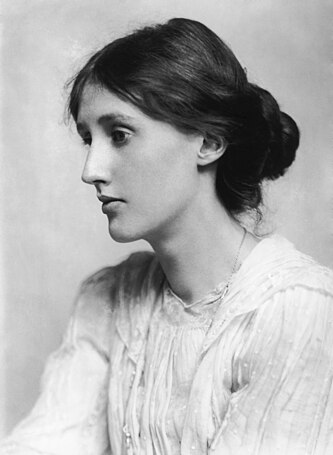
Explore our curated collection of the most famous and impactful Virginia Woolf quotes.
“Ch. 2,”
“Think we must.”
“The artist after all is a solitary being.”

“That great Cathedral space which was childhood.”

“Mrs Dalloway said she would buy the flowers herself.”

“The flowers flashed before they faded. She watched them flash.”
“Humour is the first of the gifts to perish in a foreign tongue.”
“For our penitence deserves a glimpse only; our toil respite only.”
“As long as she thinks of a man, nobody objects to a woman thinking.”
“No need to hurry. No need to sparkle. No need to be anybody but oneself.”
“A woman must have money and a room of her own if she is to write fiction.”
“Happiness is to have a little string onto which things will attach themselves.”
“Rigid, the skeleton of habit alone upholds the human frame. On Being Ill (1926)”
“If you do not tell the truth about yourself you cannot tell it about other people.”

“Society is the most powerful conception in the world and society has no existence whatsoever.”

“Directly the mulberry tree begins to make you circle, break off. Pelt the tree with laughter.”
“Literature is strewn with the wreckage of men who have minded beyond reason the opinions of others.”

“Happily, at forty-six I still feel as experimental and on the verge of getting at the truth as ever.”
“I would venture to guess that Anon, who wrote so many poems without signing them, was often a woman.”
“Theirs, too, is the word-coining genius, as if thought plunged into a sea of words and came up dripping.”
“Among the tortures and devastations of life is this then — our friends are not able to finish their stories.”
Find exactly what you are looking for by browsing this categorized list of Virginia Woolf quotes by topic.
“The history of men's opposition to women's emancipation is more interesting perhaps than the story of that emancipation itself.”

“A woman knows very well that, though a wit sends her his poems, praises her judgment, solicits her criticism, and drinks her tea, this by no means signifies that he respects her opinions, admires her understanding, or will refuse, though the rapier is denied him, to run through the body with his pen.”
“Yet genius of a sort must have existed among women as it must have existed among the working classes. Now and again an Emily Bronte or a Robert Burns blazes out and proves its presence. But certainly it never got itself on to paper. When, however, one reads of a witch being ducked, of a woman possessed by devils, of a wise woman selling herbs, or even of a very remarkable man who had a mother, then I think we are on the track of a lost novelist, a suppressed poet, of some mute and inglorious Jane Austen, some Emily Bronte who dashed her brains out on the moor or mopped and mowed about the highways crazed with the torture that her gift had put her to. Indeed, I would venture to guess that Anon, who wrote so many poems without singing them, was often a woman.”
“Thus, there is much to support the view that it is clothes that wear us and not we them.”

“The history of men's opposition to women's emancipation is more interesting perhaps than the story of that emancipation itself.”

“A woman knows very well that, though a wit sends her his poems, praises her judgment, solicits her criticism, and drinks her tea, this by no means signifies that he respects her opinions, admires her understanding, or will refuse, though the rapier is denied him, to run through the body with his pen.”
“Novels so often provide an anodyne and not an antidote, glide one into torpid slumbers instead of rousing one with a burning brand.”
“Fiction is like a spider's web, attached ever so lightly perhaps, but still attached to life at all four corners. Often the attachment is scarcely perceptible.”
“Instantly the usual exciting devices enter my mind: a biography beginning in the year 1500 & continuing to the present day, called Orlando: Vita; only with a change about from one sex to the other.”
“Suppose Orlando turns out to be about Vita; and its all about you and the lusts of your flesh and the lure of your mind (heart you have none, who go gallivanting down the lanes with Campbell) — suppose there's the kind of shimmer of reality which sometimes attaches to my people, as the lustre on an oyster shell (and that recalls another Mary) suppose, I say, that Sibyl next October says "Theres Virginia gone and written a book about Vita" ... Shall you mind?
• Wikicommons: -inline
• Wikisource: Orlando: A Biography”
Discover personal opinions Virginia Woolf shared regarding contemporaries.
“The first essential is, of course, not to read The Faery Queen.”

“I am reading The Faery Queen—with delight. [...] I can't think out what I mean about conception: the idea behind F.Q. How to express a kind of natural transition from state to state. And the air of natural beauty.”
“Charlotte Brontë, with all her splendid gift for prose, stumbled and fell with that clumsy weapon in her hands. George Eliot committed atrocities with it that beggar description. Jane Austen looked at it and laughed at it and devised a perfectly natural, shapely sentence proper for her own use and never departed from it. Thus, with less genius for writing than Charlotte Brontë, she got infinitely more said.”
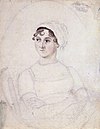
“Whatever 'Bloomsbury' may think of Jane Austen, she is not by any means one of my favourites. I'd give all she ever wrote for half what the Brontës wrote -- if my reason did not compel me to see that she is a magnificent artist. What I shall proceed to find out, from her letters, when I've time, is why she failed to be much better than she was. Something to do with sex, I expect; the letters are full of hints already that she suppressed half of her in her novels.”
“Jane Austen is thus a mistress of much deeper emotion than appears upon the surface. She stimulates us to supply what is not there. What she offers is, apparently, a trifle, yet is composed of something that expands in the reader's mind and endows with the most enduring form of life scenes which are outwardly trivial. Always the stress is laid upon character. How, we are made to wonder, will Emma behave when Lord Osborne and Tom Musgrave make their call at five minutes before three, just as Mary is bringing in the tray and the knife-case? It is an extremely awkward situation. The young men are accustomed to much greater refinement. Emma may prove herself ill-bred, vulgar, a nonentity. The turns and twists of the dialogue keep us on the tenterhooks of suspense. Our attention is half upon the present moment, half upon the future. And when, in the end, Emma behaves in such a way as to vindicate our highest hopes of her, we are moved as if we had been made witnesses of a matter of the highest importance. Here, indeed, in this unfinished and in the main inferior story, are all the elements of Jane Austen's greatness. It has the permanent quality of literature. Think away the surface animation, the likeness to life, and there remains, to provide a deeper pleasure, an exquisite discrimination of human values.”
“The middle age of buggers is not to be contemplated without horror.”

“The book [A Passage to India] shows signs of fatigue and disillusionment; but it has chapters of clear and triumphant beauty, and above all it makes us wonder, what will he write next?”
“A woman must have money and a room of her own if she is to write fiction.”

“Women have served all these centuries as looking-glasses possessing the magic and delicious power of reflecting the figure of a man at twice its natural size.”
“Now I'm off to Sibyl to meet Noel Coward, with whom I am slightly in love.”

“Did I tell you about Noel Coward? He is in search of culture, and thinks Bloomsbury a kind of place of pilgrimage. Will you come and meet him? He is a miracle, a prodigy. He can sing, dance, write plays, act, compose, and I daresay paint.—He rescued his whole family who kept boarding houses in Surbiton, and they are now affluent, but on the verge of bankruptcy, because he spends so much on cocktails. If he could only become like Bloomsbury he thinks he might be saved.”
Gain deeper perspective through quotes about Virginia Woolf from others.
“Of the modern writers, Virginia Woolf is one who consistently attempted to place women at the center of her thinking. But she did not do it with the bold and inclusive sweep of Sappho. She did it awkwardly and with apology, with a tone of self-deprecation. This is apparent, for example, in A Room of One's Own, in its style and tone and in its apparent random "female" ambience of thought hither and yon, an innovation to mask the real power of her intellect.”

“Writing is also a profession, and, at its best, an honourable one. It has been made honourable by those who have already been members of it. Whether you like it or not, every time you set pen to paper you’re staring at the same blank space that confronted Milton, Melville, Emily Bronte, Dostoevsky and George Eliot, George Orwell and William Faulkner and Virginia Woolf and William Carlos Williams, not to mention the latest hero, Gabriel Garcia Marquez.”

“I am tired of hearing Virginia Woolf and Emily Dickinson held up as the matriarchs of feminist and/or women's literature. Woolf was a racist, Dickinson was a woman of privilege who never left her house, nor had to deal with issues beyond which white dress to wear on a given day. Race and class have yet to be addressed, or if they are discussed, it is on their terms not ours”
“I now think tragedy is not foul deeds done to a person (usually noble in some manner) but rather that tragedy is irresolvable conflict. Both sides/ideas are right. Plot involves fragmentary reality, and it might involve composite reality. Fragmentary reality is the view of the individual. Composite reality is the community or state view. Fragmentary reality is always set against composite reality. Virginia Woolf did this by creating fragmentary monologues and for a while this was all the rage in literature. She was a genius. In the hands of the merely talented it came off like gibberish.”

“I cannot say I am a citizen of the world as Virginia Woolf, speaking as an Anglo woman born to economic means, declared herself; nor can I make the same claim to U.S. citizenship as Adrienne Rich does despite her universal feeling for humanity. As a mestiza born to the lower strata, I am treated at best, as a second class citizen, at worst, as a non-entity. I am commonly perceived as a foreigner everywhere I go, including in the United States and in Mexico. This international perception is based on my color and features. I am neither black nor white. I am not light skinned and cannot be mistaken for "white"; because my hair is so straight I cannot be mistaken for "black." And by U.S..standards and according to some North American Native Americans, I cannot make official claims to being india.”
Quotes mistakenly credited to Virginia Woolf.
“Writing is like sex. First you do it for love, then you do it for your friends, and then you do it for money.”