Vikram Sampath on Francis Buchanan-Hamilton
← Back to Vikram Sampath Profile
“The only other passage from the private square was into the zenana, or women’s apartments. This has remained perfectly inviolate under the usual guard of eunuchs, and contains about six hundred women, belonging to the Sultan and his late father. A great part of these are slaves, or attendants on the ladies; but they are kept in equally strict confinement with their mistresses. The ladies of the Sultan are about eighty in number. Many of them are from Hindustan Proper, and many are daughters of Brahmans or Hindu Princes, taken by force from their parents. They have all been shut up in the zenana when they were young; and have been carefully brought up to a zealous belief in the religion of Mahomet. I have sufficient reason to think that none of them are desirous of leaving their confinement; being wholly ignorant of any other manner of living, and having no acquaintance whatever beyond the walls of their prison.”
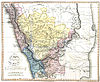
“During his extensive travels of South India, Francis Buchanan met one Mr Brown who was the Danish Resident in the French colony in Mahe. Brown gave him an exhaustive interview of the state of Malabar and its people, their customs and traditions and also their conditions before and during the rule of Haidar Ali and Tipu Sultan. He reveals to Buchanan: During the government of his father, the Hindus continued unmolested in the exercise of their religion; the customs and observances of which, in many essential points supply the place of laws . . . Tippoo, on the contrary, early undertook to render Islamism the sole religion of Malabar. In this cruel and impolite undertaking, he was warmly seconded by the Moplays [Mapillahs], men possessed of a strong zeal, and of a large share of that spirit of violence and depredation which appears to have invariably been an ingredient in the character of the professors of their religion, in every part of the world where it has spread. All the confidence of the Sultan was bestowed on Moplays, and in every place they became the officers and instruments of government. The Hindus were everywhere persecuted and plundered of their riches, of their women, and of their children. All such as could flee to other countries did so; those who could not escape took refuge in the forests, from where they waged a constant predatory war against their oppressors . . . the ancient government of this country was at last completely destroyed, and anarchy was introduced . . . During this period of total anarchy the number of Moplays was greatly increased, multitude of Hindus were circumcised by force, and many of the lower orders were converted . . . the population of the Hindus reduced to a very inconsiderable number.”