Link Copied!
Vandana Shiva Quotes (1952-)
Philosopher, Author




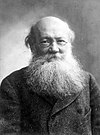



About Vandana Shiva
Vandana Shiva (born 5 November 1952) is an Indian scholar, philosopher, ecofeminist, food sovereignty advocate, and author of more than twenty books.
Best Vandana Shiva Quotes
Shortest
Earliest
Explore our curated collection of the most famous and impactful Vandana Shiva quotes.
“Those least responsible for climate change are worst affected by it.”
“Simplicity and nonviolence are the basis of an economy of wellbeing, and such an economy must be localised.”
“Whenever we engage in consumption or production patterns which take more than we need, we are engaging in violence. (p116)”

“Biopiracy (is) biological theft; illegal collection of indigenous plants by corporations who patent them for their own use.”


“The gradual spread of sterility in seeding plants would result in a global catastrophe that could eventually wipe out higher life forms, including humans, from the planet.”

“The way out of this violent cycle is to deepen democracy—to bring decisions that directly affect people’s lives as close as possible to where people are and to where they can take responsibility.”

“Just like Chief Seattle talked about being in the web of life, in India we talk about vasudhaiva kutumbkam, which means the earth family. Indian cosmology has never separated the human from the non-human—we are a continuum.”
“What could be a better indication of man’s continued dependence on nature than the fact that today’s so-called post-industrial societies satisfy most of their food needs through imports from so-called underdeveloped countries?”

“I have had to suffer the violence and brutality that comes with rising fundamentalism, and I’ve asked myself how a society that is the cradle of peace, the land of Gandhi and Buddha, could be reduced to one of the most volatile societies in the world.”


“If you look at the graph of the growth of G.M.O.s, the growth of application of glyphosate and autism, it’s literally a one-to-one correspondence. And you could make that graph for kidney failure, you could make that graph for diabetes, you could make that graph even for Alzheimer’s.”

“I do not allow myself to be overcome by hopelessness, no matter how tough the situation. I believe that if you just do your little bit without thinking of the bigness of what you stand against, if you turn to the enlargement of your own capacities, just that in itself creates new potential.”
“It is the indignity of being treated as disposable that pushes people towards religious fundamentalism in order to retrieve a sense of self, of meaning, of significance. This is why globalization breeds religious fundamentalism and free markets create terrorism and extremism, not democracy. (p80)”
“Economic reforms based on the idea of limitless growth in a limited world, can only be maintained by the powerful grabbing the resources of the vulnerable. The resource grab that is essential for “growth” creates a culture of rape—the rape of the earth, of local self-reliant economies, and of women.”
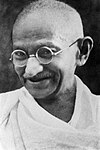
“As Gandhi taught, freedom can be reclaimed only by refusing to cooperate with unjust, immoral laws. The fight for truth—employing the principles of civil disobedience, nonviolence, and noncooperation—is not just our right as free citizens of free societies. It is our duty as citizens of the earth. (p184)”
“There is, I think, a spontaneous resurgence of thinking that centers on protection of life, celebrating life, enjoying life as both our highest duty and our most powerful form of resistance against a violent and brutal system that globalizes not just trade, but fascism, and denies civil liberties and freedoms.”

“Many conflicts within Third World countries are related to the practice of exploiting resources faster than nature can renew them or diverting them away from where people need them. Dams in every society have become major sources of conflict. As water scarcity grows, neighbors, families turn against each other.”
“Properties perceived in nature will depend on how one looks and how one looks depends on the economic interest one has in the resources of nature. The value of profit maximization is thus linked to reductionist systems, while the value of life and the maintenance of life is linked to holistic and ecological systems.”
“The ideology of development has implied the globalization of the priorities, patterns, and prejudices of the West. Instead of self-generated, development is imposed. Instead of coming from within, it is externally guided. Instead of contributing to the maintenance of diversity, development has created homogeneity...”

“Scarcity is not a result of uneven endowments—that is diversity. Scarcity is having a mismatch between a culture and nature’s giving. Cultures have evolved cultural diversity to mimic the biological diversity of climates and ecosystems. It’s when that relationship is disrupted that you get unsustainable population growth.”

Vandana Shiva Quotes by Topic
Find exactly what you are looking for by browsing this categorized list of Vandana Shiva quotes by topic.
Vandana Shiva on Feminism 4 quotes
“When we wrote Ecofeminism we raised the issue of reductionist, mechanistic science and the attitude of mastery over and conquest of nature as an expression of capitalist patriarchy. Today the contest between an ecological and feminist world-view and a worldview shaped by capitalist patriarchy is more intense than ever. This contest is particularly intense in the area of food. GMOs embody the vision of capitalist patriarchy.”

Vandana Shiva on Ecofeminism 3 quotes
“We are either going to have a future where women lead the way to make peace with the Earth or we are not going to have a future at all”

Vandana Shiva on Capitalism 2 quotes
“I have repeatedly stressed that the rape of the Earth and rape of women are intimately linked - both metaphorically, in shaping world-views, and materially, in shaping women’s everyday lives... When we wrote Ecofeminism we raised the issue of reductionist, mechanistic science and the attitude of mastery over and conquest of nature as an expression of capitalist patriarchy. Today the contest between an ecological and feminist world-view and a worldview shaped by capitalist patriarchy is more intense than ever. This contest is particularly intense in the area of food. GMOs embody the vision of capitalist patriarchy.”

Vandana Shiva on World Trade Organization
“Ecofeminism was first published one year after the Earth Summit, where two important treaties were signed by the governments of the world: the Convention on Biological Diversity and the UN Framework Convention on Climate Change. There was no World Trade Organization. However, two years after Ecofeminism, the WTO was established, privileging corporate rights, commerce and profits, and further undermining the rights of the Earth, the rights of women and the rights of future generations. We wrote about what globalization implied for nature and women. Every crisis we mentioned is deeper; every expression of violence more brutal.”

Vandana Shiva on Sustainability
“Kamla Bhasin, an Indian feminist who tried to spell out what ‘sustainable development’ could mean for all women in the world lists a number of principles of sustainability similar to the features of a subsistence perspective. It is clear to her, as it is to many women and men who are not blind to the reality that we live in a limited world, that sustainability is not compatible with the existing profit- and growth-oriented development paradigm. And this means that the standard of living of the North’s affluent societies cannot be generalized. This was already clear to Mahatma Gandhi 60 years ago, who, when asked by a British journalist whether he would like India to have the same standard of living as Britain, replied: ‘To have its standard of living a tiny country like Britain had to exploit half the globe. How many globes will India need to exploit to have the same standard of living?’ From an ecological and feminist perspective, moreover, even if there were more globes to be exploited, it is not even desirable that this development paradigm and standard of living was generalized, because it has failed to fulfil its promises of happiness, freedom, dignity and peace, even for those who have profited from it.”

Vandana Shiva on Patriarchy
“When we wrote Ecofeminism we raised the issue of reductionist, mechanistic science and the attitude of mastery over and conquest of nature as an expression of capitalist patriarchy. Today the contest between an ecological and feminist world-view and a worldview shaped by capitalist patriarchy is more intense than ever. This contest is particularly intense in the area of food. GMOs embody the vision of capitalist patriarchy. They perpetuate the idea of ‘master molecules’and mechanistic reductionism long after the life sciences have gone beyond reductionism, and patents on life reflect the capitalist patriarchal illusion of creation. There is no science in viewing DNA as a ‘master molecule’ and genetic engineering as a game of Lego, in which genes are moved around without any impact on the organism or the environment. This is a new pseudo-science that has taken on the status of a religion.Science cannot justify patents on life and seed. Shuffling genes is not making life; living organisms make themselves. Patents on seed mean denying the contributions of millions of years of evolution and thousands of years of farmers’ breeding. One could say that a new religion, a new cosmology, a new creation myth is being put in place, where biotechnology corporations like Monsanto replace Creation as ‘creators’. GMO means ‘God move over’.Stewart Brand has actually said ‘We are as gods and we had better get used to it.’”

Vandana Shiva on Genetic engineering
“When we wrote Ecofeminism we raised the issue of reductionist, mechanistic science and the attitude of mastery over and conquest of nature as an expression of capitalist patriarchy. Today the contest between an ecological and feminist world-view and a worldview shaped by capitalist patriarchy is more intense than ever. This contest is particularly intense in the area of food. GMOs embody the vision of capitalist patriarchy. They perpetuate the idea of ‘master molecules’and mechanistic reductionism long after the life sciences have gone beyond reductionism, and patents on life reflect the capitalist patriarchal illusion of creation. There is no science in viewing DNA as a ‘master molecule’ and genetic engineering as a game of Lego, in which genes are moved around without any impact on the organism or the environment. This is a new pseudo-science that has taken on the status of a religion. Science cannot justify patents on life and seed. Shuffling genes is not making life; living organisms make themselves. Patents on seed mean denying the contributions of millions of years of evolution and thousands of years of farmers’ breeding. One could say that a new religion, a new cosmology, a new creation myth is being put in place, where biotechnology corporations like Monsanto replace Creation as ‘creators’. GMO means ‘God move over’. Stewart Brand has actually said ‘We are as gods and we had better get used to it.’”

What Vandana Shiva Said About Others
Discover personal opinions Vandana Shiva shared regarding contemporaries.
Vandana Shiva on Bill Gates 2 quotes
“In May 2020, Governor Andrew Cuomo of New York announced a partnership with the Gates Foundation to 'reinvent education.' Cuomo called Gates a visionary and argued that the pandemic has created 'a moment in history when we can actually incorporate and advance [Gates'] ideas...all these buildings, all these physical classrooms-why with all the technology you have?' In fact, Gates has been trying to dismantle the public education system of the United States for two decades.”

Vandana Shiva on Karl Marx
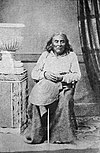
Vandana Shiva on Chief Seattle
“Just like Chief Seattle talked about being in the web of life, in India we talk about vasudhaiva kutumbkam, which means the earth family. Indian cosmology has never separated the human from the non-human—we are a continuum.”
Vandana Shiva on Donald Trump
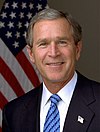
Vandana Shiva on George W. Bush
“The book, The Faith of George W. Bush, written by Christian author Stephen Mansfield, reports Bush as saying, "I feel like God wants me to run for President. I can't explain it, but I sense my country is going to need me. Something is going to happen.... I know it won't be easy on me or my family, but God wants me to do it."”
Vandana Shiva on Antonin Scalia
“Richard Epstein's book, Takings: Private Property and the Power of the Eminent Domain, is the bible of the "ownership society" of the cowboy capitalists of the 21st century. It is also the bible of judges like Clarence Thomas and Antonio Scalia who have used Epstein's philosophy of takings to undo the Clean Water Act, the Endangered Species Act, and alter laws based on the public trust doctrine.”

Vandana Shiva on Clarence Thomas
“Richard Epstein's book, Takings: Private Property and the Power of the Eminent Domain, is the bible of the "ownership society" of the cowboy capitalists of the 21st century. It is also the bible of judges like Clarence Thomas and Antonio Scalia who have used Epstein's philosophy of takings to undo the Clean Water Act, the Endangered Species Act, and alter laws based on the public trust doctrine.”

Vandana Shiva on Rabindranath Tagore
“In “The Religion of the Forest,” Tagore wrote about the influence that the forest dwellers of ancient India had on classical Indian literature. The forests are sources of water and the storehouses of a biodiversity that can teach us the lessons of democracy—of leaving space for others while drawing sustenance from the common web of life. Tagore saw unity with nature as the highest stage of human evolution.”

Vandana Shiva on Andrew Cuomo
“In May 2020, Governor Andrew Cuomo of New York announced a partnership with the Gates Foundation to 'reinvent education.' Cuomo called Gates a visionary and argued that the pandemic has created 'a moment in history when we can actually incorporate and advance [Gates'] ideas...all these buildings, all these physical classrooms-why with all the technology you have?' In fact, Gates has been trying to dismantle the public education system of the United States for two decades.”

Vandana Shiva on Warren Buffett
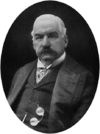
“What J.P. Morgan and John D. Rockefeller were to the Age of Robber Barons, Microsoft's Bill Gates and Berkshire Hathaway's Warren Buffett, as well as digital moguls like Mark Zuckerberg and Jeff Bezos are to the contemporary age of the rule of the 1%. Then as now, the super-rich used governments to write laws and rules to allow them to accumulate unlimited wealth; then as now, creating monopolies by enclosing the commons and killing competition is the strategy for becoming the 1%.”

Vandana Shiva on John D. Rockefeller
“What J.P. Morgan and John D. Rockefeller were to the Age of Robber Barons, Microsoft's Bill Gates and Berkshire Hathaway's Warren Buffett, as well as digital moguls like Mark Zuckerberg and Jeff Bezos are to the contemporary age of the rule of the 1%. Then as now, the super-rich used governments to write laws and rules to allow them to accumulate unlimited wealth; then as now, creating monopolies by enclosing the commons and killing competition is the strategy for becoming the 1%.”

Vandana Shiva on J. P. Morgan
“What J.P. Morgan and John D. Rockefeller were to the Age of Robber Barons, Microsoft's Bill Gates and Berkshire Hathaway's Warren Buffett, as well as digital moguls like Mark Zuckerberg and Jeff Bezos are to the contemporary age of the rule of the 1%. Then as now, the super-rich used governments to write laws and rules to allow them to accumulate unlimited wealth; then as now, creating monopolies by enclosing the commons and killing competition is the strategy for becoming the 1%.”
Quotes About Vandana Shiva
Gain deeper perspective through quotes about Vandana Shiva from others.
Silvia Federici on Vandana Shiva
“The ecological and eco-feminist movements have given the commons a new political significance. For an eco-feminist perspective on the importance of the commons in the economy of women's lives, see Vandana Shiva (1989).”

Jane Goodall blurb for on Vandana Shiva
“All of us who care about the future of Planet Earth must be grateful to Vandana Shiva. Her voice is powerful, and she is not afraid to tackle those corporate giants that are polluting, degrading and ultimately destroying the natural world.”
Naomi Klein On Fire on Vandana Shiva
“As Vandana Shiva said when accepting this prize [the Sydney Peace Price] six years ago, the roots of our crisis lie "in an economy which fails to respect ecological and ethical limits."”
Naomi Klein on Vandana Shiva
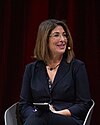
“The Indian author and activist Vandana Shiva points out that shifting to an agriculture model based on agro-ecological methods would not only sequester large amounts of carbon, it would reduce emissions and increase food security. And unlike geoengineering, "It's not a fifty-year experiment. It's an assured, guaranteed path that has been shown to work."”
Bill Moyers blurb for Oneness vs. the on Vandana Shiva
“A rock star in the worldwide battle against genetically modified seeds.”
Mark Lynas on Vandana Shiva
“When you call somebody a fraud, that suggests the person knows she is lying. I don’t think Vandana Shiva necessarily knows that. But she is blinded by her ideology and her political beliefs. That is why she is so effective and so dangerous.”
Keith Kloor on Vandana Shiva
“Shiva’s words are treated with earnest respect in liberal and environmental circles, where she is held in great esteem. If she insists that Monsanto and its GMO seeds have driven hundreds of thousands of Indian farmers to suicide—and she has said this frequently—then there must be something to it.”
About Vandana Shiva
Vandana Shiva (born 5 November 1952) is an Indian scholar, philosopher, ecofeminist, food sovereignty advocate, and author of more than twenty books.