William Hazlitt on Titian
← Back to Titian Profile
“It is the intense personal character which, I think, gives the superiority to Titian's portraits over all others, and stamps them with a living and permanent interest. Of other pictures you tire, if you have them constantly before you; of his, never. For other pictures have either an abstracted look, and you dismiss them, when you have made up your mind on the subject as a matter of criticism; or an heroic look, and you cannot be always straining your enthusiasm; or an insipid look, and you sicken of it. But whenever you turn to look at Titian's portraits, they appear to be looking at you; there seems to be some question pending between you, as though an intimate friend or inveterate foe were in the room with you; they exert a kind of fascinating power; and there is that exact resemblance of individual nature which is always new and always interesting, because you cannot carry away a mental abstraction of it, and you must recur to the object to revive it in its full force and integrity. I would as soon have Raphael's, or most other pictures, hanging up in a collection, that I might pay an occasional visit to them: Titian's are the only ones that I should wish to have hanging in the same room with me for company!”
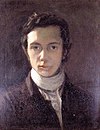
“We find the following words:— "Whether it is the human figure, and animal, or even inanimate objects, there is nothing, however unpromising in appearance, but may be raised into dignity, convey sentiment, and produce emotion, in the hands of a painter of genius. What was said of Virgil, that he threw even the dung about the ground with an air of dignity, may be applied to Titian; whatever he touched, however naturally mean, and habitually familiar, by a kind of magic he invested with grandeur and importance." —No, not by magic, but by seeking and finding in individual nature, and combined with details of every kind, that grace and grandeur and unity of effect which Sir Joshua supposes to be a mere creation of the artist's brain! Titian's practice was, I conceive, to give general appearances with individual forms and circumstances. Sir Joshua's theory goes too often, and in its prevailing bias, to separate the two things as inconsistent with each other, and thereby to destroy or bring into question that union oi striking effect with accuracy of resemblance, in which the essence of sound art (as far as relates to imitation) consists.”