Link Copied!
Thorstein Veblen Quotes (1857-1929)
Leader




About Thorstein Veblen
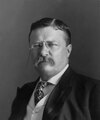
Thorstein Bunde Veblen (30 July 1857 – 3 August 1929) was a Norwegian-American sociologist and economist and a leader of the Efficiency Movement, most famous for The Theory of the Leisure Class (1899).
Best Thorstein Veblen Quotes
Shortest
Earliest
Explore our curated collection of the most famous and impactful Thorstein Veblen quotes.
“The possession of wealth confers honor; it is an invidious distinction.”
“[H]ere and now, as always and everywhere, invention is the mother of necessity.”



“In the priestly life of all anthropomorphic cults the marks of a vicarious consumption of time are visible.”
“In itself and in its consequences the life of leisure is beautiful and ennobling in all civilised men's eyes.”
“It is always sound business to take any obtainable net gain, at any cost and at any risk to the rest of the community.”

“In point of substantial merit the law school belongs in the modern university no more than a school of fencing or dancing.”
“The need of conspicuous waste... stands ready to absorb any increase in the community's industrial efficiency or output of goods.”
“In order to stand well in the eyes of the community, it is necessary to come up to a certain, somewhat indefinite, conventional standard of wealth.”
“The requirement of conspicuous wastefulness is... present as a constraining norm selectively shaping and sustaining our sense of what is beautiful.”
“In modern civilized communities... the members of each stratum accept as their ideal of decency the scheme of life in vogue in the next higher stratum.”
“Born in iniquity and conceived in sin, the spirit of nationalism has never ceased to bend human institutions to the service of dissension and distress.”

“The thief or swindler who has gained great wealth by his delinquency has a better chance than the small thief of escaping the rigorous penalty of the law.”
“It is much more difficult to recede from a scale of expenditure once adopted than it is to extend the accustomed scale in response to an accession of wealth.”
“A standard of living is of the nature of habit. ...it acts almost solely to prevent recession from a scale of conspicuous expenditure that has once become habitual.”


“The walking stick serves the purpose of an advertisement that the bearer's hands are employed otherwise than in useful effort, and it therefore has utility as an evidence of leisure.”
“It frequently happens that an element of the standard of living which set out with being primarily wasteful, ends with becoming, in the apprehension of the consumer, a necessary of life.”
“While the proximate ground of discrimination may be of another kind, still the pervading principle and abiding test of good breeding is the requirement of a substantial and patent waste of time.”

“In the modern industrial communities... the apparatus of living has grown so elaborate and cumbrous... that the consumers of these things cannot make way with them in the required manner without help.”
“There is probably no cult in which ideals of pecuniary merit have not been called in to supplement the ideals of ceremonial adequacy that guide men's conception of what is right in the matter of sacred apparatus.”
“The institution of a leisure class has emerged gradually during the transition from primitive savagery to barbarism; or more precisely, during the transition from a peaceable to a consistently warlike habit of life.”
Thorstein Veblen Quotes by Topic
Find exactly what you are looking for by browsing this categorized list of Thorstein Veblen quotes by topic.
Thorstein Veblen on Art 6 quotes
“By habitually identifying beauty with reputability, it comes about that a beautiful article which is not expensive is accounted not beautiful.”

Thorstein Veblen on German Empire 5 quotes
“The case of Germany is unexampled among Western nations both as regards the abruptness, thoroughness and amplitude of its appropriation of this technology, and as regards the archaism of its cultural furniture at the date of this appropriation.”

Thorstein Veblen on Accelerationism 3 quotes
“This requirement of mechanical accuracy and nice adaptation to specific uses has led to a gradual pervading enforcement of uniformity to a reduction to staple grades and staple character in the materials handled, and to a thorough standardizing of tools and units of measurement. Standard physical measurements are of the essence of the machine's régime.”
Thorstein Veblen on Cost 2 quotes
“It is always sound business to take any obtainable net gain, at any cost and at any risk to the rest of the community.”

Thorstein Veblen on Conservatism 2 quotes
“Conservatism, being an upper-class characteristic, is decorous; and conversely, innovation, being a lower-class phenomenon, is vulgar. […] Innovation is bad form.”

Thorstein Veblen on Aesthetics 2 quotes
“In aesthetic theory it might be extremely difficult, if not quite impracticable, to draw a line between the canon of classicism, or regard for the archaic, and the canon of beauty.”
Thorstein Veblen on Social class 2 quotes
“The institution of a leisure class has emerged gradually during the transition from primitive savagery to barbarism; or more precisely, during the transition from a peaceable to a consistently warlike habit of life.”

Thorstein Veblen on Snob 2 quotes
“"Snobbery" is here used without disrespect, as a convenient term to denote the element of strain involved in the quest for gentility on the part of persons whose accustomed social standing is less high or less authentic than their aspirations.”

Thorstein Veblen on Predation 2 quotes
“When the predatory habit of life has been settled upon the group by long habituation, it becomes the able-bodied man's accredited office in the social economy or elude him, to overcome and reduce to subservience those alien forces that assert themselves refractorily in the environment.”

Thorstein Veblen on Sports
“The addiction to sports ... marks an arrested development of the man's moral nature.”

Thorstein Veblen on Education
“In point of substantial merit the law school belongs in the modern university no more than a school of fencing or dancing.”

Thorstein Veblen on Gratification
“The superior gratification derived from the use and contemplation of costly and supposedly beautiful products is, commonly, in great measure a gratification of our sense of costliness masquerading under the name of beauty.”

What Thorstein Veblen Said About Others
Discover personal opinions Thorstein Veblen shared regarding contemporaries.
Thorstein Veblen on Frederick II of Prussia
“Imperial Germany does not depart sensibly from the pattern of Prussia under Frederick the Great, in respect of its national policies or the aims and methods of government control, nor do the preconceptions of its statesmen differ at all widely from those prevalent among the dynastic jobbers of that predaceous era of state-making.”

Thorstein Veblen on William Morris
“Hence has arisen that exaltation of the defective, of which John Ruskin and William Morris were such eager spokesmen in their time; and on this ground their propaganda of crudity and wasted effort has been taken up and carried forward since their time. And hence also the propaganda for a return to handicraft and household industry. So much of the work and speculations of this group of men as fairly comes under the characterization here given would have been impossible at a time when the visibly more perfect goods were not the cheaper.”

Thorstein Veblen on John Ruskin
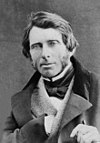
“Hence has arisen that exaltation of the defective, of which John Ruskin and William Morris were such eager spokesmen in their time; and on this ground their propaganda of crudity and wasted effort has been taken up and carried forward since their time. And hence also the propaganda for a return to handicraft and household industry. So much of the work and speculations of this group of men as fairly comes under the characterization here given would have been impossible at a time when the visibly more perfect goods were not the cheaper.”
Thorstein Veblen on John Stuart Mill
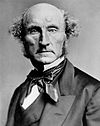
“As increased industrial efficiency makes it possible to procure the means of livelihood with less labor, the energies of the industrious members of the community are bent to the compassing of a higher result in conspicuous expenditure, rather than slackened to a more comfortable pace. ...this want ...is indefinitely expansible, after the manner commonly imputed in economic theory to higher or spiritual wants. It is owing chiefly to the presence of this element in the standard of living that J. S. Mill was able to say that "hitherto it is questionable if all the mechanical inventions yet made have lightened the day's toil of any human being."”
Quotes About Thorstein Veblen
Gain deeper perspective through quotes about Thorstein Veblen from others.
Kenneth Arrow on Thorstein Veblen
“Veblen seemed to me less sure with regard to his understanding of market forces. He’s not entirely consistent. At times he recognizes a tendency towards equalization of rates of return in different industries. But at other times he seems blind to the theoretical issues.”

C. Wright Mills on Thorstein Veblen
“Veblen ... was a masterless, recalcitrant man, and if we must group him somewhere in the American scene, it is with those most recalcitrant Americans, the Wobblies. On the edges of the higher learning, Veblen tried to live like a Wobbly. It was a strange place for such an attempt. The Wobblies were not learned, but they were, like Veblen, masterless men, and the only non-middle class movement of revolt in twentieth-century America. With his acute discontent and shyness of program Veblen was a sort of intellectual Wobbly.”

Cynthia Eagle Russett on Thorstein Veblen
“If Veblen failed to develop an evolutionary methodology, he also failed to develop a comprehensive evolutionary theory to explain in detail how institutions evolve in the cultural environment and what sorts of interaction occur between economic activity and institutional structures. Veblen was something of an intellectual butterfly, and he often lacked the patience to elaborate his ideas into a coherent system. But he teemed with fragmentary insights, and these can be pieced together to suggest the outlines of a Veblenian scheme of cultural evolution - what might be called a ‘pre-theory’ of cultural change.”
Ch. V "The Neotechnic Phase on Thorstein Veblen
“There is a political and financial vested interest in obsolete technical equipment: that underlying conflict between business interests and industrial interests, which Veblen analyzed with great acuteness in The Theory of Business Enterprise, is accentuated by the fact that vast amounts of capital are sunk in antiquated machines and burdensome utilities. Financial acquisitiveness which had originally seeded invention now furthers technical inertia [i.e., in the sense of resistance or drag]. ...Hence the continued design of automobiles in terms of superficial fashions, rather than with any readiness to take advantage of aerodynamic principles in building for comfort and speed and economy: hence the continued purchase of patent rights for improvements which are then quietly extirpated by the monopoly holding them.”
Ch. VI "Compensations on Thorstein Veblen
“One might multiply... examples from many departments: they point to a fact about the machine that has not been generally recognized by those quaint apologists for machine-capitalism who look upon every expenditure of horsepower and every fresh piece of mechanical apparatus as an automatic net gain in efficiency. In the Instinct of Workmanship Veblen has indeed wondered whether the typewriter, the telephone, and the automobile, though creditable technological achievements "have not wasted more effort and substance than they have saved," whether they are not to be credited with an appreciable economic loss, because they have increased the pace and the volume of correspondence and communication and travel out of all proportion to the real need.”
Ch. VIII "Orientation on Thorstein Veblen
“We are now entering a phase of disassociation between capitalism and technics; and we begin to see with Thorstein Veblen that their respective interests, so far from being identical, are often at war, and that the human gains of technics have been forfeited by perversion in the interests of pecuniary economy. We see in addition that many of the special gains in productivity which capitalism took credit for were in reality due to quite different agents—collective thought, cooperative action, and the general habits of order—virtues which have no necessary connection with capitalist enterprise.”
About Thorstein Veblen
Thorstein Bunde Veblen (30 July 1857 – 3 August 1929) was a Norwegian-American sociologist and economist and a leader of the Efficiency Movement, most famous for The Theory of the Leisure Class (1899).