Link Copied!
Thomas Warton Quotes (1728-1790)
Poet




About Thomas Warton
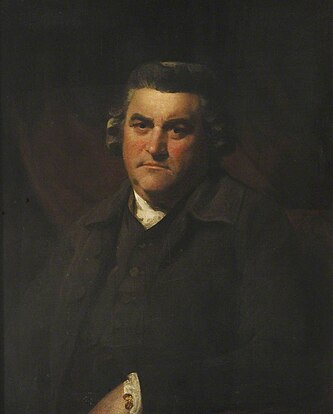
Thomas Warton (January 9, 1728 – May 21, 1790) was the British Poet Laureate from 1785 until his death. The three published volumes of his uncompleted History of English Poetry pioneered the study of medieval English literature.
Best Thomas Warton Quotes
Shortest
Earliest
Explore our curated collection of the most famous and impactful Thomas Warton quotes.
“O! what's a table richly spread
Without a woman at its head!”
Without a woman at its head!”

“Ye fetted pinnacles, ye fanes sublime,
Ye towers that wear the mossy vest of time;
Ye massy piles of old munificence,
At once the pride of learning and defence;
Ye cloisters pale, that, lengthening to the sight,
To contemplation, step by step, invite;
Ye temples dim, where pious duty pays
Her holy hymns of everlasting praise -
Hail ! Oxford, hail !”
“We are apt to form romantic and exaggerated notions about the moral innocence of our ancestors. Ages of ignorance and simplicity are thought to be ages of purity. The direct contrary, I believe, is the case...In the middle ages, not only the most flagrant violations of modesty were frequently practised and permitted, but the most infamous vices. Men are less ashamed as they are less polished.”
Thomas Warton Quotes by Topic
Find exactly what you are looking for by browsing this categorized list of Thomas Warton quotes by topic.
Thomas Warton on Arabic 3 quotes
“It may perhaps be regretted, in the mean time, that this predilection of the Arabian scholars for philosophic enquiries, prevented them from importing into Europe a literature of another kind. But rude and barbarous nations would not have been polished by the history, poetry, and oratory of the Greeks. Although capable of comprehending the solid truths of many parts of science, they are unprepared to be impressed with ideas of elegance, and to relish works of taste. Men must be instructed before they can be refined; and in the gradations of knowledge, polite literature does not take place till some progress has first been made in philosophy. Yet it is at the same time probable, that the Arabians, among their literary stores, brought into Spain and Italy many Greek authors not of the scientific species: and that the migration of this people into the western world, while it proved the fortunate instrument of introducing into Europe some of the Greek classics at a very early period, was moreover a means of preserving those genuine models of composition, and of transmitting them to the present generation.”
Thomas Warton on Astarte
“We bid those spectre-shapes avaunt, Ashtaroth and Termagaunt!”

Thomas Warton on Calvary
Thomas Warton on Saracen
Thomas Warton on Mount Carmel
“From Carmel’s almond-shaded steep We feel the cheering fragrance creep:”

What Thomas Warton Said About Others
Discover personal opinions Thomas Warton shared regarding contemporaries.
Thomas Warton on Edward Fairfax
“Milton often copies Fairfax, and not his original.”
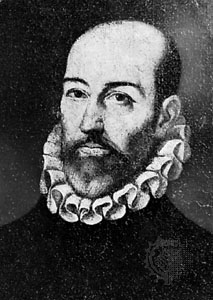
Thomas Warton on Henry Howard, Earl of Surrey
“Surrey, for his justness of thought, correctness of style, and purity of expression, may justly be pronounced the first English classical poet.”
Thomas Warton on John Somers, 1st Baron Somers
“Dr. Bathurst always boasted with singular satisfaction, the education of so learned and eloquent a lawyer, so sincere a patriot, and so elegant a scholar, as lord Somers.”
Thomas Warton on John Lydgate
“He is the first of our writers whose style is cloathed with that perspicuity, in which the English phraseology appears at this day to an English reader…Whether his subject be the life of a hermit or a hero, of saint Austin or Guy earl of Warwick, ludicrous or legendary, religious or romantic, a history or an allegory, he writes with facility.”

Quotes About Thomas Warton
Gain deeper perspective through quotes about Thomas Warton from others.
J. C. D. Clark on Thomas Warton
“Thomas Warton's History of English Poetry was published in three volumes in 1774, 1778 and 1781. It was both a major landmark of scholarship and a decisive intervention in the cultural politics of its age: for the first time, the achievement of English poetry from Chaucer to the Elizabethans was retrieved and made accessible, and the ground was prepared for a shift in hegemonic style which the Romantics exploited.”
Herbert Ellsworth Cory on Thomas Warton
“All centuries of literature swam into his learned ken. His Observations on the Faërie Queene still remains the best book ever written about Spenser.”
Walter Scott on Thomas Warton
“The late Mr Warton, with a poetical enthusiasm which converted toil into pleasure, and gilded, to himself and his readers, the dreary subjects of antiquarian lore, and with a capacity of labour apparently inconsistent with his more brilliant powers, has produced a work of great size, and, partially speaking, of great interest, from the perusal of which we rise, our fancy delighted with beautiful imagery, and with the happy analysis of ancient tale and song, but certainly with very vague ideas of the history of English poetry... Warton's History of English Poetry has remained, and will always remain, an immense commonplace-book of memoirs to serve for such an history. No antiquary can open it, without drawing information from a mine which, though dark, is inexhaustible in its treasures; nor will he who reads merely for amusement ever shut it for lack of attaining his end; while both may probably regret the desultory excursions of an author, who wanted only system, and a more rigid attention to minute accuracy, to have perfected the great task he has left incomplete.”

Robert Southey on Thomas Warton
“A change was preparing and may be traced to Winchester, which, under Dr. Warton, had become a nursery of poets. If any man may be called the father of the present race, it is Thomas Warton, a scholar by profession, an antiquary and a poet by choice; and by nature one of the best tempered and happiest of men.”
About Thomas Warton
Thomas Warton (January 9, 1728 – May 21, 1790) was the British Poet Laureate from 1785 until his death. The three published volumes of his uncompleted History of English Poetry pioneered the study of medieval English literature.