Link Copied!
Thomas Sowell Quotes (1930-)

























About Thomas Sowell
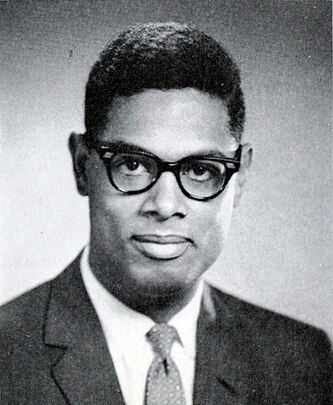
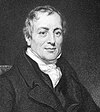
Thomas Sowell (born June 30, 1930) is an American economist and political commentator. He taught economics at Cornell University, the University of California, Los Angeles, and since 1980 at the Hoover Institution at Stanford University, where he is currently Senior Fellow.
Best Thomas Sowell Quotes
Shortest
Earliest
Explore our curated collection of the most famous and impactful Thomas Sowell quotes.

“Ideas are everywhere, but knowledge is rare.”

“Civilization is an enormous device for economizing on knowledge.”

“Most problems do not get solved. They get superseded by other concerns.”
“Understanding the limitations of human beings is the beginning of wisdom.”

“If there is one thing that is bipartisan in Washington, it is brazen hypocrisy.”
“Competition does a much more effective job than government at protecting consumers.”

“One of the grand fallacies of our time is that something beneficial should be subsidized.”
“Knowledge may be enjoyed as a speculative diversion, but it is needed for decision making.”
“Right after liberal Democrats, the most dangerous politicians are country club Republicans.”

“If you don't believe in the innate unreasonableness of human beings, just try raising children.”

“Too many Republicans treat English as a second language, with Beltway lingo being their native tongue.”

“Socialism in general has a record of failure so blatant that only an intellectual could ignore or evade it.”

“Freedom has cost too much blood and agony to be relinquished at the cheap price of rhetoric.”

“If the battle for civilization comes down to the wimps versus the barbarians, the barbarians are going to win.”
“Although I am ready to defend what I have said, many people expect me to defend what others have attributed to me.”

“People who talk incessantly about "change" are often dogmatically set in their ways. They want to change other people.”

“Some of the biggest cases of mistaken identity are among intellectuals who have trouble remembering that they are not God.”

“"'Global warming' is just the latest in a long line of hysterical crusades to which we seem to be increasingly susceptible."”
Thomas Sowell Quotes by Topic
Find exactly what you are looking for by browsing this categorized list of Thomas Sowell quotes by topic.
Thomas Sowell on Dispersed knowledge 5 quotes
“Knowledge is one of the most scarce of all resources and a pricing system economizes on its use by forcing those with the most knowledge of their own particular situation to make bids for goods and resources based on that knowledge, rather than on their ability to influence other people in planning commissions, legislatures, or royal palaces.”

Thomas Sowell on Socialism 4 quotes
“Socialism in general has a record of failure so blatant that only an intellectual could ignore or evade it.”

Thomas Sowell on Trade unions 4 quotes
“The biggest myth about labor unions is that unions are for the workers. Unions are for unions, just as corporations are for corporations and politicians are for politicians.”

Thomas Sowell on Equality 4 quotes
“If you have always believed that everyone should play by the same rules and be judged by the same standards, that would have gotten you labeled a radical 50 years ago, a liberal 25 years ago and a racist today.”

Thomas Sowell on Job security 4 quotes
“The very thing that makes a modern industrial society so efficient and so effective in raising living standards— the constant quest for newer and better ways of getting work done and more goods produced— makes it impossible to keep on having the same workers doing the same jobs in the same way.”
Thomas Sowell on Economics 3 quotes
“Many economic fallacies depend upon (1) thinking of the economy as a set of zero-sum transactions, (2) ignoring the role of competition in the marketplace, or (3) not thinking beyond the initial consequences of particular policies.”
Thomas Sowell on Price 3 quotes
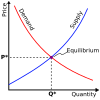
“Prices play a crucial role in determining how much of each resource gets used where and how the resulting products get transferred to millions of people. Yet this role is seldom understood by the public and it is often disregarded entirely by politicians.”
Thomas Sowell on Regulation 3 quotes
“With anti-trust laws, as with regulatory commissions, a sharp distinction must be made between their original rationales and what they actually do. The basic rationale for anti-trust laws is to prevent monopoly and other conditions which allow prices to rise above where they would be in a free and competitive marketplace. In practice, most of the famous anti-trust cases in the United States have involved some business that charged lower prices than its competitors. Often it has been complaints from these competitors which caused the government to act.”

Thomas Sowell on Firearm 3 quotes
“The grand illusion of zealots for laws preventing ordinary, law-abiding people from having guns is that "gun control" laws actually control guns. In a country with many millions of guns, not all of them registered, this is a fantasy and a farce. Guns do not vanish into thin air because there are gun control laws. Guns — whether legal or illegal — can last for centuries. Passing laws against guns may enable zealots to feel good about themselves, but at the cost of other people's lives. Why anyone would think that criminals who disobey other laws, including laws against murder, would obey gun control laws is a mystery. A disarmed population makes crime a safer occupation and street violence a safer sport.”

Thomas Sowell on Second Amendment to the United States Constitution 3 quotes
“The grand illusion of zealots for laws preventing ordinary, law-abiding people from having guns is that "gun control" laws actually control guns. In a country with many millions of guns, not all of them registered, this is a fantasy and a farce. Guns do not vanish into thin air because there are gun control laws. Guns — whether legal or illegal — can last for centuries. Passing laws against guns may enable zealots to feel good about themselves, but at the cost of other people's lives. Why anyone would think that criminals who disobey other laws, including laws against murder, would obey gun control laws is a mystery. A disarmed population makes crime a safer occupation and street violence a safer sport.”

Thomas Sowell on Knowledge 2 quotes
“Ideas are everywhere, but knowledge is rare.”
Thomas Sowell on Washington, D.C. 2 quotes
“If there is one thing that is bipartisan in Washington, it is brazen hypocrisy.”
What Thomas Sowell Said About Others
Discover personal opinions Thomas Sowell shared regarding contemporaries.
Thomas Sowell on Karl Marx 2 quotes
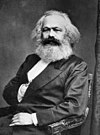
“Against anarchists Marx and Engles were in the position of defending the "authority of the majority over the minority." Marxian passages defending the use of state power against individuals in this connection were later avidly quoted by Lenin in defense of an autocratic power which Marx had not contemplated.”
Thomas Sowell on Bill Clinton
“One undeniable accomplishment of Bill Clinton's presidency was that it kept Jimmy Carter from being the worst U.S. president in history.”

Thomas Sowell on Politicians
“When I see the worsening degeneracy in our politicians, our media, our educators, and our intelligentsia, I can’t help wondering if the day may yet come when the only thing that can save this country is a military coup.”
Thomas Sowell on Economist
“Economics is not simply a topic on which to express opinions or vent emotions. It is a systematic study of what happens when you do specific things in specific ways. In economic analysis, the methods used by a Marxist economist like Oskar Lange did not differ in any fundamental way from the methods used by a conservative economist like Milton Friedman.”
Thomas Sowell on Donald Trump
“In a country with more than 300 million people, it is remarkable how obsessed the media have become with just one—Donald Trump. What is even more remarkable is that, after seven years of repeated disasters, both domestically and internationally, under a glib egomaniac in the White House, so many potential voters are turning to another glib egomaniac to be his successor.”

Thomas Sowell on Milton Friedman
“All the way back, I thought about the fact that I would be held responsible for what was said in that lecture, even though I never heard it. Thereafter, I was always in my seat when Milton Friedman walked in to give his lecture. On a term paper, I wrote that either (a) this would happen or (b) that would happen. Professor Friedman wrote in the margin: "Or (c) your analysis is wrong." "Where was my analysis wrong?" I asked him. "I didn't say your analysis was wrong," he replied. "I just wanted you to keep that possibility in mind."”

Thomas Sowell on John Stuart Mill
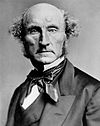
“John Stuart Mill's position as the unchallenged leader in economics and in other fields in his time was due not only to the quality of his own work but also to the happenstance that people of comparable stature did not come along at that time to contest his methods and conclusions. He was like a track star running against the clock instead of against another track star. He was never pushed — either by the criticism or the competing theories of comparably able contemporaries — to reach his utmost potential. In the long run, his reputation suffered accordingly, because in the long run there are always people of comparable stature.”
Thomas Sowell on Léon Walras
“The landmark figure in general equilibrium theory was French economist Léon Walras (1834–1910), whose complex simultaneous equations essentially created this branch of economics in the nineteenth century. Back in the eighteenth century, however, another Frenchman, François Quesnay (1694–1774), was groping toward some notion of general equilibrium with a complex table intersected by lines connecting various economic activities with one another. Karl Marx, in the second volume of Capital, likewise set forth various equations showing how particular parts of a market economy affected numerous other parts of that economy. In other words, Walras had predecessors, as most great discoverers do, but he was still the landmark figure in this field.”

Thomas Sowell on Adam Smith
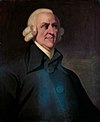
“In short, the mercantilists were preoccupied with the transfer of wealth, whether by export surpluses, imperialism, or slavery— all of which benefit some at the expense of others. Adam Smith was concerned with the creation of wealth, which is not a zero-sum process. Smith rejected government intervention in the economy to help merchants— the source of the name “mercantilism”— and instead advocated free markets along the lines of the French economists, the Physiocrats, who had coined the term laissez faire. ... The most fundamental difference between Adam Smith and the mercantilists was that Smith did not regard gold as being wealth. The very title of his book— The Wealth of Nations— raised the fundamental question of what wealth consisted of. Smith argued that wealth consisted of the goods and services which determined the standard of living of the people— the whole people, who to Smith constituted the nation. Smith rejected both imperialism and slavery— on economic grounds as well as moral grounds, ... Although Adam Smith is today often regarded as a “conservative” figure, he in fact attacked some of the dominant ideas and interests of his own times. Moreover, the idea of a spontaneously self-equilibrating system— the market economy— first developed by the Physiocrats and later made part of the tradition of classical economics by Adam Smith, represented a radically new departure, not only in analysis of social causation but also in seeing a reduced role for political, intellectual, or other elites as guides or controllers of the masses.”
Quotes About Thomas Sowell
Gain deeper perspective through quotes about Thomas Sowell from others.
William J. Baumol on Thomas Sowell
“I must take the occasion to apologize for a major omission from my article, my failure to give credit to Professor Thomas Sowell for two excellent discussions on Marxian economics which I have only recently come across. While he does not deal explicitly with the transformation problem, his discussion of Marxian value theory, which is documented with exquisite care, comes to conclusions very similar to my own on the tautological nature of the value theory and on the nature of Marx' interests in the subject. Though he does sometimes speak of value theory as a first approximation [3,1967, p. 66] he makes it clear that Marx always considered the deviations between prices and values to be systematic [3, 1967, pp. 65-6]. I recommend these pieces unhesitatingly as models of Marxian scholarship.”

Daniel Drezner on Thomas Sowell
“Sowell is an economist by training and should not be expected to know much about American foreign policy, as it’s beyond his area of expertise. I do find it a little rich, however, that Sowell has written a book complaining about what happens when intellectuals leave their knowledge reservation to opine about events of the day — and then proceeds to commit that precise sin during his book promotion. There are two possibilities here. Either Sowell has no capacity for irony, or he’s cleverly trying to add data points to support his argument.”
Richard Ebeling on Thomas Sowell
“If there was any justice in the intellectual world, Thomas Sowell would be awarded the Nobel Prize for his brilliant interdisciplinary studies on the connections between race, culture and economics around the globe.”

Herbert Gintis on Thomas Sowell
“Thomas Sowell is a gifted applied economist with much of importance to say about the larger issues in social policy and government regulation of economic affairs. [...] Sowell, however, has two failings. First, he has no heart for the plight of the poor, so his work in this area is illuminating for the false ideas he debunks, but does not contribute in any way to dealing with the problem of poverty. Second, he is a thorough-going right-wing ideologue, who is often cogent in his critique of liberal ideas, but is blind to similar, indeed often parallel, problems with conservative ideas. This book suffers especially from the second of these weaknesses. [...]Sowell has no understanding of information economics. He follows Hayek on the distributed nature of information, but he never confronts the literature that deals with the transformation of private information into public information. The importance of public information, central for instance to Durkheim and Aumann, is completely ignored in his treatment of government regulation.”
Friedrich Hayek on Thomas Sowell 2 quotes
“For many years the term Austrian school in the United States was synonymous with Mises’s disciples. The first outstanding pupils to find themselves highly respected were Murray N. Rothbard and Israel M. Kirzner. In the 1970s and 1980s the group greatly expanded, with the present most representative work probably being done by Thomas Sowell.”

David Henderson on Thomas Sowell
“All in all, Sowell offers a number of intriguing ideas in the book, but he leaves too many of them only partly developed and defended. One final example: Sowell claims that those of us who favor free markets are more empirically inclined and have less ego invested in our views than those who advocate central planning and heavy government intervention generally. That is my impression too, and it is one of the most interesting and important ideas in his book. Unfortunately, he gives no evidence for that comparison. The book would have been a great forum in which to do so, but on this idea and too many others, he leaves his readers unsatisfied.”
Russell Jacoby on Thomas Sowell 2 quotes
“Sowell likes history, but he likes it on Post-it notes. He also prefers to revisit stale arguments rather than intervene in current controversies. In a book about intellectuals and society, he manages to ignore the health-care and financial crises. Instead, he argues that intellectuals have misunderstood Herbert Hoover. Wouldn't VLII help us with the current economic crisis, to find out which ideas "worked"?”

Daniel Kuehn on Thomas Sowell
“I have a very high likelihood of finding amusement in the things that Thomas Sowell says. It's not what he says so much as the fact that he's saying it. ... Thomas Sowell is very well known for his critique of intellectuals who make claims about society. That's all well and good - he even has some good points in the critique. But I just can't bring myself to take Sowell completely seriously when he puts on his public intellectual hat, precisely because he is so widely identified as an anti-public-intellectual. ... A lot of this is just meant to be in fun - the point of Intellectuals and Society was a good point. Unfortunately, it's often people who complain the loudest about the misbehavior of others that are successful in taking the spotlight off themselves.”
Steven Pinker on Thomas Sowell
“Thomas Sowell, an eighty-seven-year-old African American economist, has written more than thirty mind-expanding books. These include his Culture trilogy which (among other things) anticipated Jared Diamond’s ideas in Guns, Germs, and Steel and explains the ubiquity of anti-Semitism; A Conflict of Visions, which identifies the rival theories of the human condition underlying left-wing and right-wing political ideologies; The Quest for Cosmic Justice, which compares this quixotic pursuit with the quest for human justice; Intellectuals and Society, an uncomfortable exposé of the follies of all-star intellectuals; and Late-Talking Children, which anticipated Simon Baron-Cohen’s work on the extreme male brain. Sowell is a libertarian conservative, which makes him taboo in mainstream intellectual circles, but even those who disagree are well advised to grasp his facts and arguments.”

T. M. Scanlon on Thomas Sowell 2 quotes
“Sowell is misled, I believe, by his own basic strategy of taking familiar controversies about the market as the model for understanding a wide range of fundamental political disagreements. To begin with, the central virtues of competitive markets are not a matter of dispute among most of the theorists whom Sowell discusses. Rawls and Dworkin, for example, make clear their respect for the efficiency of markets as mechanisms for gathering information and allocating resources. What they question is the importance to be given to this kind of efficiency, as compared to other values such as equity and individual autonomy, when we are justifying economic and legal systems. The controversy is thus a moral one that cannot be avoided simply by “leaving it to the process” (i.e., to the market), since to do that would be already to decide the matter. The market is not a neutral means for deciding all social questions, and those who have doubts about its proper role need not claim that they can “do better” than the market in the sense of producing a more efficient outcome. Sowell’s strategy is also misleading in a further way: it overlooks important differences between competitive markets and other processes that he mentions, such as the common law, constitutional government, and the processes through which traditions and languages evolve. Three distinctive features of the market are important here. First, the ideal of the perfectly competitive market is a precise theoretical notion. No actual social institution can be identified with this ideal—since any such institution involves particular legal forms of property and contract, particular imperfections in knowledge, and particular limitations on freedom of entry into the market. But it is frequently quite clear which conditions move a system closer to perfect competition and which ones disrupt it. Second, market institutions (even actual, imperfect ones) produce their outcomes mechanically: prices and employment levels emerge as the result of competition, leaving little need for interpretation. Third, the efficiency of these outcomes is supposed to be a product of the process itself, not something with which any of the participants need be consciously concerned: agents in the perfectly competitive market are assumed to be assiduous pursuers of their own interests, but there is no need for anyone at any stage even to address the question of what would be best from a social point of view.”
Viktor Vanberg on Thomas Sowell
“Sowell’s A Conflict of Visions is, on the whole, a very stimulating book and it argues a very important point, namely, that the political struggles which will shape our future social and political order are not only, and maybe not even primarily, driven by identifiable interests and by rent-seeking activities that use politics as a pure machinery for the redistribution of material wealth. Sowell rightly reminds us of the genuine power of ideas and visions in the political arena.”
Alan Wolfe on Thomas Sowell
“Perhaps Sowell’s joylessness stems from the fact that his main idea is the hatred of ideas. It is one thing to be an intellectual and love ideas: why else spend so much time reading and thinking about them? When I come across a bad idea, I disagree with it and, as I am doing here, I try to expose its silliness. But I value bad ideas well enough to take them seriously. I write about Thomas Sowell because I recognize in him a fellow intellectual. But it is by no means clear that Sowell recognizes himself as one. He does from time to time note the existence of “conservative and neo-conservative intellectuals” who offer “an alternative vision” to the dominant ideology and whose influence “no longer negligible” in the media. But then Sowell goes on to write as if the only talking heads on television belong to Bertrand Russell and Noam Chomsky. Safely back to his thesis that intellectuals are always loathsome meddlers who hate capitalism, rationalize evil, and get everything wrong, he is free to quote Eric Hoffer, Paul Johnson, and all like-thinking writers who trod this ground before him.”
Victor Davis Hanson on Thomas Sowell
“I'd say Tom is an empiricist, and by that I mean Tom looks at evidence, and then he makes a diagnosis, and then he offers a therapy for the perceived problem, and then he offers a prognosis, and he's not interested as much, if at all, on how people interpret that or what are the ramifications in contemporary political terms of his argument.”

About Thomas Sowell
Thomas Sowell (born June 30, 1930) is an American economist and political commentator. He taught economics at Cornell University, the University of California, Los Angeles, and since 1980 at the Hoover Institution at Stanford University, where he is currently Senior Fellow.