Link Copied!
Thomas Piketty Quotes (1971-)
Author
About Thomas Piketty
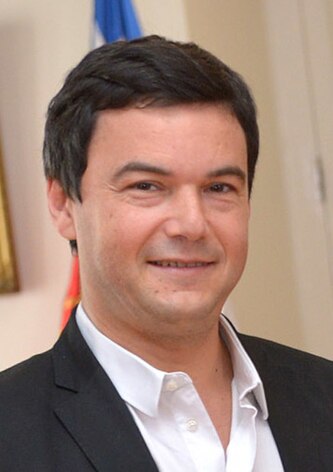
Thomas Piketty (born on 7 May 1971) is a French economist and Professor at the Paris School of Economics, who works on wealth and income inequality. He is the author of the best selling book Capital in the Twenty-First Century (2013), which emphasizes the themes of his work on wealth concentrations and distribution over the past 250 years.
Best Thomas Piketty Quotes
Shortest
Earliest
Explore our curated collection of the most famous and impactful Thomas Piketty quotes.
“Broadly speaking, the rise of the supermanager is largely an Anglo-Saxon phenomenon.”



“To put it bluntly, the discipline of economics has yet to get over its childish passion for mathematics.”
“National income is defined as the sum of all income available to the residents of a given country in a given year, regardless of the legal classification of that income.”
“We know something about billionaire consumption, but it is hard to measure some of it. Some billionaires are consuming politicians, others consume reporters, and some consume academics.”

“Let it be said at once: Trump’s victory is primarily due to the explosion in economic and geographic inequality in the United States over several decades and the inability of successive governments to deal with this.”
“There should be no more signing of international agreements that reduce customs duties and other commercial barriers without including quantified and binding measures to combat fiscal and climate dumping in those same treaties.”
“A balanced treaty between Canada and Europe, aimed at promoting a partnership for fair and sustainable development, should begin by specifying the emission targets of each signatory and the practical commitments to achieve these.”
“Modern economic growth and the diffusion of knowledge have made it possible to avoid the Marxist apocalypse but have not modified the deep structures of capital and inequality—or in any case not as much as one might have imagined in the optimistic decades following World War II.”

“Economists are all too often preoccupied with petty mathematical problems of interest only to themselves. This obsession with mathematics is an easy way of acquiring the appearance of scientificity without having to answer the far more complex questions posed by the world we live in.”
“It is time to change the political discourse on globalization: trade is a good thing, but fair and sustainable development also demands public services, infrastructure, health and education systems. In turn, these themselves demand fair taxation systems. If we fail to deliver these, Trumpism will prevail.”
“When the rate of return on capital exceeds the rate of growth of output and income, as it did in the nineteenth century and seems quite likely to do again in the twenty-first, capitalism automatically generates arbitrary and unsustainable inequalities that radically undermine the meritocratic values on which democratic societies are based.”
“Both the Clinton and the Obama administrations frequently went along with the market liberalization launched under Reagan and both Bush presidencies. At times they even outdid them.”
“In many ways, the US led the world toward the development of progressive taxation and the reduction of inequality at the global level during the first half of the 20th century... Unfortunately, one century later, in 2019, the rise of inequality creates new threats to liberal democracies. It is time to take a new step and to develop new policy instruments, in line with the challenges raised by global wealth trends.”
“The overall importance of capital today, as noted, is not very different from what it was in the eighteenth century. Only its form has changed: capital was once mainly land but is now industrial, financial, and real estate. We also know that the concentration of wealth remains high, although it is noticeably less extreme than it was a century ago. The poorest half of the population still owns nothing, but there is now a patrimonial middle class that owns between a middle and a third of total wealth, and the wealthiest ten percent now own only-two thirds of what there is to own rather than nine-tenths.”
“Whenever the rate of return on capital is significantly and durably higher than the growth rate of the economy, it is all but inevitable that inheritance (of fortunes accumulated in the past) predominates over saving (wealth accumulated in the present). ... The inequality r > g in one sense implies that the past tends to devour the future: wealth originating in the past automatically grows more rapidly, even without labor, than wealth stemming from work, which can be saved. Almost inevitably, this tends to give lasting disproportionate importance to inequalities created in the past, and therefore to inheritance.”

“The main lesson for Europe and the world is clear: as a matter of urgency, globalization must be fundamentally re-oriented. The main challenges of our times are the rise in inequality and global warming. We must therefore implement international treaties enabling us to respond to these challenges and to promote a model for fair and sustainable development. Agreements of a new type can, if necessary, include measures aimed at facilitating these exchanges. But the question of liberalizing trade should no longer be the main focus. Trade must once again become a means in the service of higher ends. It never should have become anything other than that.”
“I can now present the first fundamental law of capitalism, which links the capital stock to the flow of income from capital. The capital/income ratio β is related in a simple way to the share of income from capital in national income, denoted α. The formula is
α = r × β
Where r is the rate of return on capital.
For example, if β = 600% and r = 5%, then α = r × β = 30%.
In other words, if national wealth represents the equivalent of six years of national income, and the rate of return on capital is 5 percent per year, then capital's share in national income is 30 percent.”
“The distribution of wealth is one of today’s most widely discussed and controversial issues. But what do we really know about its evolution over the long term? Do the dynamics of private capital accumulation inevitably lead to the concentration of wealth in ever fewer hands, as Karl Marx believed in the nineteenth century? Or do the balancing forces of growth, competition, and technological progress lead in later stages of development to reduced inequality and greater harmony among the classes, as Simon Kuznets thought in the twentieth century? What do we really know about how wealth and income have evolved since the eighteenth century, and what lessons can we derive from that knowledge for the century now under way?”

“How do wealth-income and capital-output ratios evolve in the long run, and why? Until recently it was difficult to properly address this question, for one simple reason: national accounts were mostly about flows, not stocks. Economists had at their disposal a large body of historical series on flows of output, income and consumption – but limited data on stocks of assets and liabilities. When needed, for example for growth accounting exercises, estimates of capital stocks were typically obtained by cumulating past flows of saving and investment. This is fine for some purposes, but severely limits the set of questions one can ask.”
“I am trying to put the distributional question and the study of long-run trends back at the heart of economic analysis. In that sense, I am pursuing a tradition which was pioneered by the economists of the 19th century, including David Ricardo and Karl Marx. One key difference is that I have a lot more historical data. With the help of Tony Atkinson, Emmanuel Saez, Facundo Alvaredo, Gilles Postel-Vinay, Jean-Laurent Rosenthal, Gabriel Zucman and many other scholars, we have been able to collect a unique set of data covering three centuries and over 20 countries. This is by far the most extensive database available in regard to the historical evolution of income and wealth. This book proposes an interpretative synthesis based upon this collective data collection project.”
“Ceta, the EU-Canada free trade deal, should be rejected. It is a treaty which belongs to another age. This strictly commercial treaty contains absolutely no restrictive measures concerning fiscal or climate issues. It does, however, contain a considerable reference to the “protection of investors”. This enables multinationals to sue states under private arbitration courts, bypassing the public tribunals available to one and all. The legal supervision proposed is clearly inadequate, in particular concerning the key question of the remuneration of the arbitrators-cum-referees and will lead to all sorts of abuses. At the very time when American legal imperialism is gaining in strength and imposing its rules and its dues on our companies, this decline in public justice is an aberration. The priority, on the contrary, should be the construction of strong public authorities, with the creation of a prosecutor, including a European state prosecutor, capable of enforcing their decisions.”
Thomas Piketty Quotes by Topic
Find exactly what you are looking for by browsing this categorized list of Thomas Piketty quotes by topic.
Thomas Piketty on Academia
“We know something about billionaire consumption, but it is hard to measure some of it. Some billionaires are consuming politicians, others consume reporters, and some consume academics.”

Thomas Piketty on Selling out
“We know something about billionaire consumption, but it is hard to measure some of it. Some billionaires are consuming politicians, others consume reporters, and some consume academics.”

Thomas Piketty on Global warming
“The main challenges of our times are the rise in inequality and global warming. We must therefore implement international treaties enabling us to respond to these challenges and to promote a model for fair and sustainable development.”

Thomas Piketty on Sustainable development
“The main challenges of our times are the rise in inequality and global warming. We must therefore implement international treaties enabling us to respond to these challenges and to promote a model for fair and sustainable development.”

Thomas Piketty on Trumpism
“It is time to change the political discourse on globalization: trade is a good thing, but fair and sustainable development also demands public services, infrastructure, health and education systems. In turn, these themselves demand fair taxation systems. If we fail to deliver these, Trumpism will prevail.”

Thomas Piketty on Capitalism
“When the rate of return on capital exceeds the rate of growth of output and income, as it did in the nineteenth century and seems quite likely to do again in the twenty-first, capitalism automatically generates arbitrary and unsustainable inequalities that radically undermine the meritocratic values on which democratic societies are based.”

Thomas Piketty on Positive feedback
“When the rate of return on capital exceeds the rate of growth of output and income, as it did in the nineteenth century and seems quite likely to do again in the twenty-first, capitalism automatically generates arbitrary and unsustainable inequalities that radically undermine the meritocratic values on which democratic societies are based.”

Thomas Piketty on Meritocracy
“When the rate of return on capital exceeds the rate of growth of output and income, as it did in the nineteenth century and seems quite likely to do again in the twenty-first, capitalism automatically generates arbitrary and unsustainable inequalities that radically undermine the meritocratic values on which democratic societies are based.”

Thomas Piketty on Rate of return
“When the rate of return on capital exceeds the rate of growth of output and income, as it did in the nineteenth century and seems quite likely to do again in the twenty-first, capitalism automatically generates arbitrary and unsustainable inequalities that radically undermine the meritocratic values on which democratic societies are based.”

Thomas Piketty on Arbitrariness
“When the rate of return on capital exceeds the rate of growth of output and income, as it did in the nineteenth century and seems quite likely to do again in the twenty-first, capitalism automatically generates arbitrary and unsustainable inequalities that radically undermine the meritocratic values on which democratic societies are based.”

Thomas Piketty on Future
“Whenever the rate of return on capital is significantly and durably higher than the growth rate of the economy, it is all but inevitable that inheritance (of fortunes accumulated in the past) predominates over saving (wealth accumulated in the present). ... The inequality r > g in one sense implies that the past tends to devour the future: wealth originating in the past automatically grows more rapidly, even without labor, than wealth stemming from work, which can be saved. Almost inevitably, this tends to give lasting disproportionate importance to inequalities created in the past, and therefore to inheritance.”

Thomas Piketty on Inheritance
“Whenever the rate of return on capital is significantly and durably higher than the growth rate of the economy, it is all but inevitable that inheritance (of fortunes accumulated in the past) predominates over saving (wealth accumulated in the present). ... The inequality r > g in one sense implies that the past tends to devour the future: wealth originating in the past automatically grows more rapidly, even without labor, than wealth stemming from work, which can be saved. Almost inevitably, this tends to give lasting disproportionate importance to inequalities created in the past, and therefore to inheritance.”

Thomas Piketty on Capital accumulation
“The distribution of wealth is one of today’s most widely discussed and controversial issues. But what do we really know about its evolution over the long term? Do the dynamics of private capital accumulation inevitably lead to the concentration of wealth in ever fewer hands, as Karl Marx believed in the nineteenth century? Or do the balancing forces of growth, competition, and technological progress lead in later stages of development to reduced inequality and greater harmony among the classes, as Simon Kuznets thought in the twentieth century? What do we really know about how wealth and income have evolved since the eighteenth century, and what lessons can we derive from that knowledge for the century now under way?”

Quotes About Thomas Piketty
Gain deeper perspective through quotes about Thomas Piketty from others.
Margaret MacMillan on Thomas Piketty
“Recently, prominent historians and economists, among them Walter Scheidel and Thomas Piketty, have argued persuasively that major wars can also act to narrow the gap between the rich and the poor and that the experience of the nations involved in the First and Second World Wars bears this out. Major wars stimulate employment; labour becomes more valuable so wages and benefits go up; and the rich pay higher taxes voluntarily, or find it harder to avoid doing so. At the end of destructive wars it is also easier to contemplate major programmes of reconstruction and social benefits and gain support for them. As William Beveridge, whose report laid the foundations for the British welfare state, wrote, ‘Now, when the war is abolishing landmarks of every kind, is the opportunity for using experience in a clear field. A revolutionary moment in the world’s history is a time for revolution, not for patching.’”

About Thomas Piketty
Thomas Piketty (born on 7 May 1971) is a French economist and Professor at the Paris School of Economics, who works on wealth and income inequality. He is the author of the best selling book Capital in the Twenty-First Century (2013), which emphasizes the themes of his work on wealth concentrations and distribution over the past 250 years.