Link Copied!
Thomas Nagel Quotes (1937-)
Philosopher, King

About Thomas Nagel
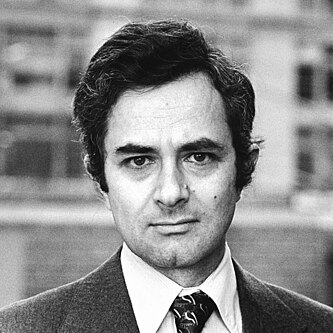
Thomas Nagel (born 4 July 1937) is an American philosopher. He is University Professor of Philosophy and Law, Emeritus, at New York University, where he taught from 1980 to 2016. His main areas of philosophical interest are legal philosophy, political philosophy, and ethics.
Best Thomas Nagel Quotes
Shortest
Earliest
Explore our curated collection of the most famous and impactful Thomas Nagel quotes.
“I should not really object to dying if it were not followed by death.”
“Consciousness is what makes the mind–body problem really intractable.”

“All of us, I believe, are fortunate to have been born.”
“[T]he organism does not have a point of view: the person or creature does.”
“Leading a human life is a full-time occupation, to which everyone devotes decades of intense concern.”
“Philosophy is the childhood of the intellect, and a culture that tries to skip it will never grow up.”

“Everyone is entitled to commit murder in the imagination once in a while, not to mention lesser infractions.”

“Without consciousness the mind-body problem would be much less interesting. With consciousness it seems hopeless.”

“A person may be greedy, envious, cowardly, cold, ungenerous, unkind, vain, or conceited, but behave perfectly by a monumental effort of will.”

“Common sense doesn't have the last word in ethics or anywhere else, but it has, as J. L. Austin said about language, the first word: it should be examined before it is discarded.”
“It is often remarked that nothing we do now will matter in a million years. But if that is true, then by the same token, nothing that will be the case in a million years matters now.”
“Eventually, I believe, current attempts to understand the mind by analogy with man-made computers that can perform superbly some of the same external tasks as conscious beings will be recognized as a gigantic waste of time.”
“Ethics increases the range of what it is about ourselves that we can will—extending it from our actions to the motives and character traits and dispositions from which they arise. We want to be able to will the sources of our actions down to the very bottom.”
“[E]very subjective phenomenon is essentially connected with a single point of view, and it seems inevitable that an objective physical theory will abandon that point of view.”
“If we tried to rely entirely on reason, and pressed it hard, our lives and beliefs would collapse — a form of madness that may actually occur if the inertial force of taking the world and life for granted is somehow lost. If we lose our grip on that, reason will not give it back to us.”

“Even if I could by gradual degrees be transformed into a bat, nothing in my present constitution enables me to imagine what the experiences of such a future stage of myself thus metamorphosed would be like. The best evidence would come from the experience of bats, if we only knew what they were like.”
“I do not believe that the source of value is unitary — displaying apparent multiplicity only in its application to the world. I believe that value has fundamentally different kinds of sources, and that they are reflected in the classification of values into types. Not all values represent the pursuit of some single good in a variety of settings.”
“We assume that our own advances in objectivity are steps along a path that extends beyond them and beyond all our capacities. But even allowing unlimited time, or an unlimited number of generations, to take as many successive steps as we like, the process can never be completed. … What is wanted is some way of making the most objective standpoint the basis of action.”
“The problem is one of opposition between subjective and objective points of view. There is a tendency to seek an objective account of everything before admitting its reality. But often what appears to a more subjective point of view cannot be accounted for in this way. So either the objective conception of the world is incomplete, or the subjective involves illusions that should be rejected.”
“Bats … present a range of activity and a sensory apparatus so different from ours that the problem I want to pose is exceptionally vivid (though it certainly could be raised with other species). Even without the benefit of philosophical reflection, anyone who has spent some time in an enclosed space with an excited bat knows what it is to encounter a fundamentally alien form of life.”
“What is more subjective is not necessarily more private. In general it is intersubjectively available. I assume that the intersubjective ideas of experience, of action, and of the self are in some sense public or common property. That is why the problems of mind and body, free will, and personal identity are not just problems about one's own case.”
“The ethical commonplaces of any period include ideas that may have been radical discoveries in a previous age. This is true of modern conceptions of liberty, equality, and democracy, and we are in the midst of ethical debates which will probably result two hundred years hence in a disseminated moral sensibility that people of our time would find very unfamiliar.”
“[With regard to] the rather common general distinction between good and bad sex …, bad sex is generally better than none at all. This should not be controversial: it seems to hold for other important matters, like food, music, literature, and society. In the end, one must choose from among the available alternatives, whether their availability depends on the environment or on one's own constitution. And the alternatives have to be fairly grim before it becomes rational to opt for nothing.”
Thomas Nagel Quotes by Topic
Find exactly what you are looking for by browsing this categorized list of Thomas Nagel quotes by topic.
Thomas Nagel on Determinism 2 quotes
“This is a funny question: we all know what it means to do something. But the problem is, if the act wasn't determined in advance, by your desires, beliefs, and personality, among other things, it seems to be something that just happened, without any explanation. And in that case, how was it your doing?”
Thomas Nagel on Mind
Thomas Nagel on Social justice
“We've been talking mainly about the problem of social justice within one society. The problem is much more difficult on a world scale, both because the inequalities are so great and because it's not clear what remedies are possible in the absence of a world government that could levy world taxes and see that they are used effectively. There is no prospect of a world government, which is just as well, since it would probably be a horrible government in many ways. However there is still a problem of global justice, though it's hard to know what to do about it in the system of separate sovereign states we have now.”

Thomas Nagel on Meaning
“The mystery of meaning is that it doesn’t seem to be located anywhere—not in the word, not in the mind, not in a separate concept or idea hovering between the word, the mind, and the things we are talking about. And yet we use language all the time, and it enables us to think complicated thoughts which span great reaches of time and space. You can talk about how many people in Okinawa are over five feet tall, or whether there is life in other galaxies, and the little noises you make will be sentences which are true or false in virtue of complicated facts about far away things that you will probably never encounter directly.”
Thomas Nagel on Mind–body problem
“Dualism is the view that you consist of a body plus a soul, and that your mental life goes on in your soul. Physicalism is the view that your mental life consists of physical processes in your brain. But another possibility is that your mental life goes on in your brain, yet that all those experiences, feelings, thoughts, and desires are not physical processes in your brain. This would mean that the grey mass of billions of nerve cells in your skull is not just a physical object. It has lots of physical properties -- great quantities of chemical and electrical activity go on in it -- but it has mental processes going on in it as well.”
Thomas Nagel on Philosophy
“The main concern of philosophy is to question and understand very common ideas that all of us use every day without thinking about them. A historian may ask what happened at some time in the past, but a philosopher will ask, "What is time?" A mathematician may investigate the relations among numbers, but a philosopher will ask, "What is a number?" A physicist will ask what atoms are made of or what explains gravity, but a philosopher will ask how we can know there is anything outside of our own minds. A psychologist may investigate how children learn a language, but a philosopher will ask, "What makes a word mean anything?" Anyone can ask whether it's wrong to sneak into a movie without paying, but a philosopher will ask, "What makes an action right or wrong?"”
Thomas Nagel on Bats
“I assume we all believe that bats have experience. After all, they are mammals, and there is no more doubt that they have experience than that mice or pigeons or whales have experience. I have chosen bats instead of wasps or flounders because if one travels too far down the phylogenetic tree, people gradually shed their faith that there is experience there at all. Bats, although more closely related to us than those other species, nevertheless present a range of activity and a sensory apparatus so different from ours that the problem I want to pose is exceptionally vivid (though it certainly could be raised with other species). Even without the benefit of philosophical reflection, anyone who has spent some time in an enclosed space with an excited bat knows what it is to encounter a fundamentally alien form of life.”

Thomas Nagel on Social inequality
“Some people object more to the inequalities at come from the socioeconomic class a person is born into, than to the inequalities resulting from differences in talent or ability. They don't like the effects of one person being born rich and another in a slum, but feel that a person deserves what he can earn with his own efforts—so that there's nothing unfair about one person earning a lot and another very little because the first has a marketable talent or capacity for learning sophisticated skills while the second can only do unskilled labor. I myself think that inequalities resulting from either of these causes are unfair, and that it is clearly unjust when a socioeconomic system results in some people living under significant material and social disadvantages through no fault of their own, if this could be prevented through a system of redistributive taxation and social welfare programs. But to make up your own mind about the issue, you have to consider both what causes of inequality you find unfair, and what remedies you find legitimate.”

Thomas Nagel on Death
“When you think of your own death, the fact that all the good things in life will come to an end is certainly a reason for regret. But that doesn’t seem to be the whole story. Most people want there to be more of what they enjoy in life, but for some people, the prospect of nonexistence is itself frightening, in a way that isn’t adequately explained by what has been said so far. The thought that the world will go on without you, that you will become nothing, is very hard to take in. It’s not clear why. We all accept the fact that there was a time before we were born, when we didn’t yet exist—so why should we be so disturbed at the prospect of nonexistence after our death? But somehow it doesn’t feel the same. The prospect of nonexistence is frightening, at least to many people, in a way that past nonexistence cannot be. The fear of death is very puzzling, in a way that regret about the end of life is not. It’s easy to understand that we might want to have more life, more of the things it contains, so that we see death as a negative evil. But how can the prospect of your own nonexistence be alarming in a positive way? If we really cease to exist at death, there’s nothing to look forward to, so how can there be anything to be afraid of? If one thinks about it logically, it seems as though death should be something to be afraid of only if we will survive it, and perhaps undergo some terrifying transformation. But that doesn’t prevent many people from thinking that annihilation is one of the worst things that could happen to them.”

Thomas Nagel on Skepticism
“The skeptic will claim that if there is an external world, the things in it are observable because they exist, and not the other way around: that existence isn’t the same thing as observability. And although we get the idea of dreams and hallucinations from cases where we think we can observe the contrast between our experiences and reality, it certainly seems as if the same idea can be extended to cases where the reality is not observable. If that is right, it seems to follow that it is not meaningless to think that the world might consist of nothing but the inside of your mind, though neither you nor anyone else could find out that this was true. And if this is not meaningless, but is a possibility you must consider, there seems no way to prove that it is false, without arguing in a circle. So there may be no way out of the cage of your own mind. This is sometimes called the egocentric predicament. And yet, after all this has been said, I have to admit it is practically impossible to believe seriously that all the things in the world around you might not really exist. Our acceptance of the external world is instinctive and powerful: we cannot just get rid of it by philosophical arguments. Not only do we go on acting as if other people and things exist: we believe that they do, even after we’ve gone through the arguments which appear to show we have no grounds for this belief. (We may have grounds, within the overall system of our beliefs about the world, for more particular beliefs about the existence of particular things: like a mouse in the breadbox, for example. But that is different. It assumes the existence of the external world.)”

Thomas Nagel on Meaning of life
“Leaving that issue aside, let me return to the smaller-scale dimensions of human life. Even if life as a whole is meaningless, perhaps that's nothing to worry about. Perhaps we can recognize it and just go on as before. The trick is to keep your eyes on what's in front of you, and allow justifications to come to an end inside your life, and inside the lives of others to whom you are connected. If you ever ask yourself the question, "But what's the point of being alive at all?" -- leading the particular life of a student or bartender or whatever you happen to be — you'll answer "There's no point. It wouldn't matter if I didn't exist at all, or if I didn't care about anything. But I do. That's all there is to it." Some people find this attitude perfectly satisfying. Others find it depressing, though unavoidable. Part of the problem is that some of us have an incurable tendency to take ourselves seriously. We want to matter to ourselves "from the outside." If our lives as a whole seem pointless, then a part of us is dissatisfied -- the part that is always looking over our shoulders at what we are doing. Many human efforts, particularly those in the service of serious ambitions rather than just comfort and survival, get some of their energy from a sense of importance — a sense that what you are doing is not just important to you, but important in some larger sense: important, period. If we have to give this up, it may threaten to take the wind out of our sails. If life is not real, life is not earnest, and the grave is its goal, perhaps it's ridiculous to take ourselves so seriously. On the other hand, if we can't help taking ourselves so seriously, perhaps we just have to put up with being ridiculous. Life may be not only meaningless but absurd.”

Thomas Nagel on God
“The appeal to a religious meaning to life is a bit different. If you believe that the meaning of your life comes from fulfilling the purpose of God, who loves you, and seeing Him in eternity, then it doesn't seem appropriate to ask, "And what is the point of that?"It's supposed to be something which is its own point, and can't have a purpose outside itself. But for this very reason it has its own problems. The idea of God seems to be the idea of something that can explain everything else, without having to be explained itself. But it's very hard to understand how there could be such a thing. If we ask the question, "Why is the world like this?" and are offered a religious answer, how can we be prevented from asking again, "And why is that true?" What kind of answer would bring all of our "Why?" questions to a stop, once and for all? And if they can stop there, why couldn't they have stopped earlier? The same problem seems to arise if God and His purposes are offered as the ultimate explanation of the value and meaning of our lives. The idea that our lives fulfil God's purpose is supposed to give them their point, in a way that doesn't require or admit of any further point. One isn't supposed to ask "What is the point of God?" any more than one is supposed to ask, "What is the explanation of God?" But my problem here, as with the role of God as ultimate explanation, is that I'm not sure I understand the idea. Can there really be something which gives point to everything else by encompassing it, but which couldn't have, or need, any point itself? Something whose point can't be questioned from outside because there is no outside? If God is supposed to give our lives a meaning that we can't understand, it's not much of a consolation. God as ultimate justification, like God as ultimate explanation, may be an incomprehensible answer to a question that we can't get rid of. On the other hand, maybe that's the whole point, and I am just failing to understand religious ideas. Perhaps the belief in God is the belief that the universe is intelligible, but not to US.”

Thomas Nagel on Physicalism
“Physicalists believe that nothing exists but the physical world that can be studied by science: the world of objective reality. But then they have to find room somehow for feelings, desires, thoughts, and experiences—for you and me—in such a world. One theory offered in defense of physicalism is that the mental nature of your mental states consists in their relations to things that cause them and things they cause. For instance, when you stub your toe and feel pain, the pain is something going on in your brain. But its painfulness is not just the sum of its physical characteristics, and it is not some mysterious non-physical property either. Rather, what makes it a pain is that it is the kind of state of your brain that is usually caused by injury, and that usually causes you to yell and hop around and avoid the thing that caused the injury. And that could be a purely physical state of your brain. But that doesn’t seem enough to make something a pain. It’s true that pains are caused by injury, and they do make you hop and yell. But they also feel a certain way, and that seems to be something different from all their relations to causes and effects, as well as all the physical properties they may have—if they are in fact events in your brain. I myself believe that this inner aspect of pain and other conscious experiences cannot be adequately analyzed in terms of any system of causal relations to physical stimuli and behavior, however complicated. There seem to be two very different kinds of things going on in the world: the things that belong to physical reality, which many different people can observe from the outside, and those other things that belong to mental reality, which each of us experiences from the inside in his own case. This isn’t true only of human beings: dogs and cats and horses and birds seem to be conscious, and fish and ants and beetles probably are too. Who knows where it stops? We won’t have an adequate general conception of the world until we can explain how, when a lot of physical elements are put together in the right way, they form not just a functioning biological organism but a conscious being. If consciousness itself could be identified with some kind of physical state, the way would be open for a unified physical theory of mind and body, and therefore perhaps for a unified physical theory of the universe. But the reasons against a purely physical theory of consciousness are strong enough to make it seem likely that a physical theory of the whole of reality is impossible. Physical science has progressed by leaving the mind out of what it tries to explain, but there may be more to the world than can be understood by physical science.”
What Thomas Nagel Said About Others
Discover personal opinions Thomas Nagel shared regarding contemporaries.
Thomas Nagel on Thomas Kuhn
“Much of what Kuhn says about great theoretical shifts, and the inertial role of long-established scientific paradigms and their cultural entrenchment in resisting recalcitrant evidence until it becomes overwhelming, is entirely reasonable, but it is also entirely compatible with the conception of science as seeking, and sometimes finding, objective truth about the world. What has made him a relativist hero is the addition of provocative remarks to the effect that Newton and Einstein, or Ptolemy and Galileo, live in "different worlds," that the paradigms of different scientific periods are "incommensurable," and that it is a mistake to think of the progress of science over time as bringing us closer to the truth about how the world really is.”

Quotes About Thomas Nagel
Gain deeper perspective through quotes about Thomas Nagel from others.
Christine M. Korsgaard on Thomas Nagel
“The kind of worry I am talking about here—the worry about what’s left of the individual—moved Thomas Nagel, in The View from Nowhere, to reverse his own earlier defense of the publicity of reason, and to argue that some kinds of reasons are private or agent-relative after all. An agent has a special relationship to his own projects and own loved ones, and Nagel argued that, because of that relationship, the agent’s desires to engage in those projects and to promote the happiness of his loved ones are sources of reasons for him but not necessarily for anybody else.”
About Thomas Nagel
Thomas Nagel (born 4 July 1937) is an American philosopher. He is University Professor of Philosophy and Law, Emeritus, at New York University, where he taught from 1980 to 2016. His main areas of philosophical interest are legal philosophy, political philosophy, and ethics.