Steven Weinberg on Thomas Kuhn
← Back to Thomas Kuhn Profile
“In his celebrated book The Structure of Scientific Revolutions Thomas Kuhn went a step further and argued that in scientific revolutions the standards (or “paradigms”) by which scientists judge theories change, so that the new theories simply cannot be judged by the prerevolutionary standards. There is much in Kuhn’s book that fits my own experience in science. But in the last chapter Kuhn tentatively attacked the view that science makes progress toward objective truths: “We may, to be more precise, have to relinquish the notion, explicit or implicit, that changes of paradigm carry scientists and those who learn from them closer and closer to the truth.” Kuhn’s book lately seems to have become read (or at least quoted) as a manifesto for a general attack on the presumed objectivity of science.”
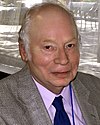
“The changes in the way we judge our theories have bothered philosophers and historians of science. Thomas Kuhn’s early book, The Structure of Scientific Revolutions, emphasized this process of change in our scientific standards. I think Kuhn went overboard in concluding that there was a complete incommensurability between present and past standards, but it is correct that there is a qualitative change in the kind of scientific theory we want to develop that has taken place at various times in the history of science. But Kuhn then proceeded to the fallacy—much clearer in what he has written recently—that in science we are not in fact moving toward objective truth. I call this a fallacy because it seems to me a simple non sequitur. I do not see why the fact that we are discovering not only the laws of nature in detail, but what kinds of laws are worth discovering, should mean that we are not making objective progress.”
“By the way, in this respect my friend Thomas Kuhn has a lot to answer for. He distances himself from the postmoderns and the social constructivists, but he is endlessly quoted by them. He distances himself in saying that there is a place for evidence and reason in the scientific process—good to hear—but he attacks the idea that we are moving toward objective truth. As far as I can tell from one of his recent articles, his reason for rejecting the idea that science moves toward objective truth is that he and other philosophers have not succeeded in defining truth—and he cannot say what truth would be. This seems a bit like saying that because farmers cannot define cows or the difference between cows and, say, buffaloes, one should doubt the objective existence of cows. I would argue that it’s not the job of farmers to define cows; that’s the job of zoologists. Likewise, it’s not the job of physicists or other scientists to define truth; that’s the job of philosophers. If they haven’t done that job, too bad for them. But just as the farmer generally knows cows when he sees them, we scientists usually know truth when we see it.”
“Now, that really was a paradigm shift. For Kuhn it seems to have been the paradigm of paradigm shifts, which set a pattern into which he tried to shoehorn every other scientific revolution. It really does fit Kuhn's description of paradigm shifts: it is extraordinarily difficult for a modern scientist to get into the frame of mind of Aristotelian physics, and Kuhn's statement that all previous views of reality have proved false, though not true of Newtonian mechanics or Maxwellian electrodynamics, certainly does apply to Aristotelian physics. Revolutions in science seem to fit Kuhn's description only to the extent that they mark a shift in understanding some aspect of nature from pre-science to modern science. The birth of Newtonian physics was a mega-paradigm shift, but nothing that has happened in our understanding of motion since then—not the transition from Newtonian to Einsteinian mechanics, or from classical to quantum physics—fits Kuhn's description of a paradigm shift.”