Thomas Jefferson on Jesus
← Back to Thomas Jefferson Profile
“I doubt whether the people of this country would suffer an execution for heresy, or a three years imprisonment for not comprehending the mysteries of the trinity.”
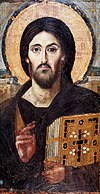
“The priests have so disfigured the simple religion of Jesus that no one who reads the sophistications they have engrafted on it, from the jargon of Plato, of Aristotle & other mystics, would conceive these could have been fathered on the sublime preacher of the sermon on the mount.”
“The Pennsylvania legislature, who, on a proposition to make the belief in God a necessary qualification for office, rejected it by a great majority, although assuredly there was not a single atheist in their body. And you remember to have heard, that when the act for religious freedom was before the Virginia Assembly, a motion to insert the name of Jesus Christ before the phrase, "the author of our holy religion," which stood in the bill, was rejected, although that was the creed of a great majority of them.”
“The Christian priesthood, finding the doctrines of Christ levelled to every understanding, and too plain to need explanation, saw in the mysticism of Plato, materials with which they might build up an artificial system, which might, from its indistinctness, admit everlasting controversy, give employment for their order, and introduce it to profit, power and pre-eminence. The doctrines which flowed from the lips of Jesus himself are within the comprehension of a child ; but thousands of volumes have not yet explained the Platonisms engrafted on them; and for this obvious reason, that nonsense can never be explained.”
“The truth is, that the greatest enemies of the doctrine of Jesus are those, calling themselves the expositors of them, who have perverted them to the structure of a system of fancy absolutely incomprehensible, and without any foundation in his genuine words. And the day will come when the mystical generation of Jesus, by the supreme being as his father in the womb of a virgin will be classed with the fable of the generation of Minerva in the brain of Jupiter... But may we hope that the dawn of reason and freedom of thought in these United States will do away with this artificial scaffolding, and restore to us the primitive and genuine doctrines of this most venerated reformer of human errors.”
“I, too, have made a wee-little book from the same materials, which I call the Philosophy of Jesus; it is a paradigma of his doctrines, made by cutting the texts out of the book, and arranging them on the pages of d blank book, in a certain order of time or subject. A more beautiful or precious morsel of ethics I have never seen; it is a document in proof that I am a real Christian, that is to say, a disciple of the doctrines of Jesus, very different from the Platonists, who call me infidel and themselves Christians and preachers of the gospel, while they draw all their characteristic dogmas from what its author never said nor saw. They have compounded from the heathen mysteries a system beyond the comprehension of man, of which the great reformer of the vicious ethics and deism of the Jews, were he to return on earth, would not recognize one feature.”
“The doctrines of Jesus are simple, and tend all to the happiness of man.
1. That there is one only God, and he all perfect.
2, That there is a future state of rewards and punishments.
3. That to love God with all thy heart and thy neighbor as thyself, is the sum of religion.
These are the great points on which he endeavored to reform the religion of the Jews. But compare with these the demoralizing dogmas of Calvin.
1. That there are three Gods.
2. That good works, or the love of our neighbor, are nothing.
3. That faith is every thing, and the more incomprehensible the proposition, the more merit in its faith.
4. That reason in religion is of unlawful use.
5. That God, from the beginning, elected certain individuals to be saved, and certain others to be damned; and that no crimes of the former can damn them; no virtues of the latter save.
Now, which of these is the true and charitable Christian? He who believes and acts on the simple doctrines of Jesus? Or the impious dogmatists, as Athanasius and Calvin? Verily I say these are the false shepherds foretold as to enter not by the door into the sheepfold, but to climb up some other way. They are mere usurpers of the Christian name, teaching a counter-religion made up of the deliria of crazy imaginations, as foreign from Christianity as is that of Mahomet. Their blasphemies have driven thinking men into infidelity, who have too hastily rejected the supposed author himself, with the horrors so falsely imputed to him. Had the doctrines of Jesus been preached always as pure as they came from his lips, the whole civilized world would now have been Christian. I rejoice that in this blessed country of free inquiry and belief, which has surrendered its creed and conscience to neither kings nor priests, the genuine doctrine of one only God is reviving, and I trust that there is not a young man now living in the United States who will not die an Unitarian.'''”
“48: And about the ninth hour Jesus cried with a loud voice, saying, Eli, Eli, lama sabachthani? that is to say, My God, my God, why hast thou forsaken me?
49: Some of them that stood there, when they heard that, said, This man calleth for Elias.
50: And straightway one of them ran, and took a spunge, and filled it with vinegar, and put it on a reed, and gave him to drink.
51: The rest said, Let be, let us see whether Elias will come to save him.
52: Jesus, when he had cried again with a loud voice, yielded up the ghost.
53: And many women were there beholding afar off, which followed Jesus from Galilee, ministering unto him:
54: Among which was Mary Magdalene, and Mary the mother of James and Joses, and the mother of Zebedee's children.
55: The Jews therefore, because it was the preparation, that the bodies should not remain upon the cross on the sabbath day, (for that sabbath day was an high day,) besought Pilate that their legs might be broken, and that they might be taken away.
56: Then came the soldiers, and brake the legs of the first, and of the other which was crucified with him.
57: But when they came to Jesus, and saw that he was dead already, they brake not his legs:
58: But one of the soldiers with a spear pierced his side, and forthwith came there out blood and water.
59: And after this Joseph of Arimathaea, being a disciple of Jesus, but secretly for fear of the Jews, besought Pilate that he might take away the body of Jesus: and Pilate gave him leave. He came therefore, and took the body of Jesus.
60: And there came also Nicodemus, which at the first came to Jesus by night, and brought a mixture of myrrh and aloes, about an hundred pound weight.
61: Then took they the body of Jesus, and wound it in linen clothes with the spices, as the manner of the Jews is to bury.
62: Now in the place where he was crucified there was a garden; and in the garden a new sepulchre, wherein was never man yet laid.
63: There laid they Jesus,
64: And rolled a great stone to the door of the sepulchre, and departed.”
“But the greatest of all the reformers of the depraved religion of his own country, was Jesus of Nazareth. Abstracting what is really his from the rubbish in which it is buried, easily distinguished by its lustre from the dross of his biographers, and as separable from that as the diamond from the dunghill, we have the outlines of a system of the most sublime morality which has ever fallen from the lips of man; outlines which it is lamentable he did not live to fill up. Epictetus and Epicurus give laws for governing ourselves, Jesus a supplement of the duties and charities we owe to others. The establishment of the innocent and genuine character of this benevolent moralist, and the rescuing it from the imputation of imposture, which has resulted from artificial systems,* invented by ultra-Christian sects, unauthorized by a single word ever uttered by him, is a most desirable object, and one to which Priestley has successfully devoted his labors and learning. It would in time, it is to be hoped, effect a quiet euthanasia of the heresies of bigotry and fanaticism which have so long triumphed over human reason, and so generally and deeply afflicted mankind; but this work is to be begun by winnowing the grain from the chaff of the historians of his life. I have sometimes thought of translating Epictetus (for he has never been tolerable translated into English) by adding the genuine doctrines of Epicurus from the Syntagma of Gassendi, and an abstract from the Evangelists of whatever has the stamp of the eloquence and fine imagination of Jesus. The last I attempted too hastily some twelve or fifteen years ago. It was the work of two or three nights only, at Washington, after getting through the evening task of reading the letters and papers of the day. But with one foot in the grave, these are now idle projects for me. My business is to beguile the wearisomeness of declining life, as I endeavor to do, by the delights of classical reading and of mathematical truths, and by the consolations of a sound philosophy, equally indifferent to hope and fear.”
“You will next read the new testament. It is the history of a personage called Jesus. Keep in your eye the opposite pretensions I. of those who say he was begotten by god, born of a virgin, suspended & reversed the laws of nature at will, & ascended bodily into heaven: and 2. of those who say he was a man of illegitimate birth, of a benevolent heart, enthusiastic mind, who set out without pretensions to divinity, ended in believing them, & was Punished capitally for sedition by being gibbeted according to the Roman law which punished the first commission of that offence by whipping, & the second by exile or death in furcâ. … Do not be frightened from this inquiry by any fear of it's consequences. If it ends in a belief that there is no god, you will find incitements to virtue in the comfort & pleasantness you feel in its exercise, and the love of others which it will procure you. If you find reason to believe there is a god, a consciousness that you are acting under his eye, & that he approves you, will be a vast additional incitement; if that there be a future state, the hope of a happy existence in that increases the appetite to deserve it; if that Jesus was also a god, you will be comforted by a belief of his aid and love. In fine, I repeat that you must lay aside all prejudice on both sides, & neither believe nor reject anything because any other persons, or description of persons have rejected or believed it. Your own reason is the only oracle given you by heaven, and you are answerable not for the rightness but uprightness of the decision. I forgot to observe when speaking of the new testament that you should read all the histories of Christ, as well of those whom a council of ecclesiastics have decided for us to be Pseudo-evangelists, as those they named Evangelists. Because these Pseudo-evangelists pretended to inspiration as much as the others, and you are to judge their pretensions by your own reason, & not by the reason of those ecclesiastics. Most of these are lost. There are some however still extant, collected by Fabricius which I will endeavor to get & send you.”
“His parentage was obscure; his condition poor; his education null; his natural endowments great; his life correct and innocent: he was meek, benevolent, patient, firm, disinterested, & of the sublimest eloquence. The disadvantages under which his doctrines appear are remarkable. 1. Like Socrates & Epictetus, he wrote nothing himself. 2. But he had not, like them, a Xenophon or an Arrian to write for him. On the contrary, all the learned of his country, entrenched in its power and riches, were opposed to him, lest his labors should undermine their advantages; and the committing to writing his life & doctrines fell on the most unlettered & ignorant men; who wrote, too, from memory, & not till long after the transactions had passed. 3. According to the ordinary fate of those who attempt to enlighten and reform mankind, he fell an early victim to the jealousy & combination of the altar and the throne, at about 33. years of age, his reason having not yet attained the maximum of its energy, nor the course of his preaching, which was but of 3. years at most, presented occasions for developing a complete system of morals. 4. Hence the doctrines which he really delivered were defective as a whole, and fragments only of what he did deliver have come to us mutilated, misstated, & often unintelligible. 5. They have been still more disfigured by the corruptions of schismatising followers, who have found an interest in sophisticating & perverting the simple doctrines he taught by engrafting on them the mysticisms of a Grecian sophist, frittering them into subtleties, & obscuring them with jargon, until they have caused good men to reject the whole in disgust, & to view Jesus himself as an impostor. Notwithstanding these disadvantages, a system of morals is presented to us, which, if filled up in the true style and spirit of the rich fragments he left us, would be the most perfect and sublime that has ever been taught by man. The question of his being a member of the Godhead, or in direct communication with it, claimed for him by some of his followers, and denied by others, is foreign to the present view, which is merely an estimate of the intrinsic merit of his doctrines. 1. He corrected the Deism of the Jews, confirming them in their belief of one only God, and giving them juster notions of his attributes and government. 2. His moral doctrines, relating to kindred & friends, were more pure & perfect than those of the most correct of the philosophers, and greatly more so than those of the Jews; and they went far beyond both in inculcating universal philanthropy, not only to kindred and friends, to neighbors and countrymen, but to all mankind, gathering all into one family, under the bonds of love, charity, peace, common wants and common aids. A development of this head will evince the peculiar superiority of the system of Jesus over all others. 3. The precepts of philosophy, & of the Hebrew code, laid hold of actions only. He pushed his scrutinies into the heart of man; erected his tribunal in the region of his thoughts, and purified the waters at the fountain head. 4. He taught, emphatically, the doctrines of a future state, which was either doubted, or disbelieved by the Jews; and wielded it with efficacy, as an important incentive, supplementary to the other motives to moral conduct.”
“My aim in that was, to justify the character of Jesus against the fictions of his pseudo-followers, which have exposed him to the inference of being an impostor. For if we could believe that he really countenanced the follies, the falsehoods and the charlatanisms which his biographers father on him, and admit the misconstructions, interpolations and theorizations of the fathers of the early, and fanatics of the latter ages, the conclusion would be irresistible by every sound mind, that he was an impostor. I give no credit to their falsifications of his actions and doctrines, and to rescue his character, the postulate in my letter asked only what is granted in reading every other historian. When Livy and Siculus, for example, tell us things which coincide with our experience of the order of nature, we credit them on their word, and place their narrations among the records of credible history. But when they tell us of calves speaking, of statues sweating blood, and other things against the course of nature, we reject these as fables not belonging to history. … I say, that this free exercise of reason is all I ask for the vindication of the character of Jesus. We find in the writings of his biographers matter of two distinct descriptions. First, a groundwork of vulgar ignorance, of things impossible, of superstitions, fanaticisms and fabrications. Intermixed with these, again, are sublime ideas of the Supreme Being, aphorisms and precepts of the purest morality and benevolence, sanctioned by a life of humility, innocence and simplicity of manners, neglect of riches, absence of worldly ambition and honors, with an eloquence and persuasiveness which have not been surpassed. These could not be inventions of the groveling authors who relate them. They are far beyond the powers of their feeble minds. They shew that there was a character, the subject of their history, whose splendid conceptions were above all suspicion of being interpolations from their hands. Can we be at a loss in separating such materials, and ascribing each to its genuine author? The difference is obvious to the eye and to the understanding, and we may read as we run to each his part; and I will venture to affirm, that he who, as I have done, will undertake to winnow this grain from its chaff, will find it not to require a moment's consideration. The parts fall asunder of themselves, as would those of an image of metal and clay. … There are, I acknowledge, passages not free from objection, which we may, with probability, ascribe to Jesus himself; but claiming indulgence from the circumstances under which he acted. His object was the reformation of some articles in the religion of the Jews, as taught by Moses. That sect had presented for the object of their worship, a being of terrific character, cruel, vindictive, capricious and unjust. Jesus, taking for his type the best qualities of the human head and heart, wisdom, justice, goodness, and adding to them power, ascribed all of these, but in infinite perfection, to the Supreme Being, and formed him really worthy of their adoration. Moses had either not believed in a future state of existence, or had not thought it essential to be explicitly taught to his people. Jesus inculcated that doctrine with emphasis and precision. Moses had bound the Jews to many idle ceremonies, mummeries and observances, of no effect towards producing the social utilities which constitute the essence of virtue; Jesus exposed their futility and insignificance. The one instilled into his people the most anti-social spirit towards other nations; the other preached philanthropy and universal charity and benevolence. The office of reformer of the superstitions of a nation, is ever dangerous. Jesus had to walk on the perilous confines of reason and religion: and a step to right or left might place him within the gripe of the priests of the superstition, a blood thirsty race, as cruel and remorseless as the being whom they represented as the family God of Abraham, of Isaac and of Jacob, and the local God of Israel. They were constantly laying snares, too, to entangle him in the web of the law. He was justifiable, therefore, in avoiding these by evasions, by sophisms, by misconstructions and misapplications of scraps of the prophets, and in defending himself with these their own weapons, as sufficient, ad homines, at least. That Jesus did not mean to impose himself on mankind as the son of God, physically speaking, I have been convinced by the writings of men more learned than myself in that lore. But that he might conscientiously believe himself inspired from above, is very possible.”