Thomas J. Sargent Quotes (1943-)
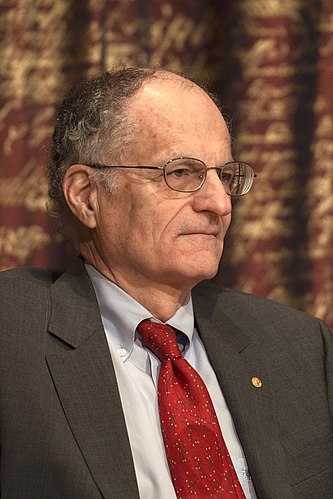

About Thomas J. Sargent

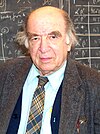
Thomas John "Tom" Sargent (born July 19, 1943) is an American economist, who is currently the W.R. Berkley Professor of Economics and Business at New York University. He specializes in the fields of macroeconomics, monetary economics and time series econometrics.

Best Thomas J. Sargent Quotes

Shortest
Earliest

Explore our curated collection of the most famous and impactful Thomas J. Sargent quotes.

β€œQ: β€œProfessor Sargent, can you tell me what CD rates will be in two years?”
Sargent: β€œNo.””
β€œWhat policymakers (and econometricians) should recognize, then, is that societies face a meaningful set of choices about alternative economic policy regimes.”
β€œIt is paradoxical that an administration that came to office rejecting the whole apparatus of Keynesian economics finds itself presiding over a stream of what threaten to be permanent deficits.”
β€œFor policy, the central fact is that Keynesian policy recommendations have no sounder basis, in a scientific sense, than recommendations of non-Keynesian economists or, for that matter, non-economists.”
Thomas J. Sargent
β€œMy published work is just a record of my learning. I'm sharing it with people so they won't make the same mistakes that I did. It's been a painful and slow process. My work is like a journey, a journey of discovery.”

Thomas J. Sargent Quotes by Topic

Find exactly what you are looking for by browsing this categorized list of Thomas J. Sargent quotes by topic.

Thomas J. Sargent on Great Depression

β€œI do not have a theory, nor do I know somebody else's theory that constitutes a satisfactory explanation of the Great Depression. It's really a very important, unexplained event and process, which I would be very interested in and would like to see explained.”
Thomas J. Sargent

Thomas J. Sargent on Rational expectations

β€œThese ideas have implications not only for theoretical and econometric practices but also for the ways in which policymakers and their advisers think about the choices confronting them. In particular, the rational expectations approach directs attention away from particular isolated actions and toward choices among feasible rules of the game, or repeated strategies for choosing policy variables. While Keynesian and monetarists macroeconomic models have been used to try to analyze what the effects of isolated actions would be, it is now clear that the answers they have given have necessarily been bad, if only because such questions are ill-posed.”
Thomas J. Sargent

Thomas J. Sargent on Macroeconomic model

β€œThese ideas have implications not only for theoretical and econometric practices but also for the ways in which policymakers and their advisers think about the choices confronting them. In particular, the rational expectations approach directs attention away from particular isolated actions and toward choices among feasible rules of the game, or repeated strategies for choosing policy variables. While Keynesian and monetarists macroeconomic models have been used to try to analyze what the effects of isolated actions would be, it is now clear that the answers they have given have necessarily been bad, if only because such questions are ill-posed.”
Thomas J. Sargent

Thomas J. Sargent on Economic equilibrium

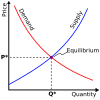
β€œThere's a lot of misplaced criticism of equilibrium models. For explaining 1950-, 1960-, 1970-type business cycles, they're a lot more robust than some people give them credit for. The failure of wages and prices to adjust is no problem because there's a lot of reasons, many of them coming from contract theory and models of enduring relationships, that would lead one not to expect the current real wage/price to adjust to clear the current labor market. [...] What we mean by equilibrium is essentially two things. First, we set out to explain data on prices and quantities as resulting from the interaction of individual decisions; that's the key thing together with the notion that markets clear in some sense. That doesn't mean everybody has a job every period. The notion of clearing may be much more complicated and may involve lotteries. There are various responses why workers are unemployed. [...] Another thing is that these environments are sufficiently complicated so that it's not automatic that equilibria are optimal.”
Thomas J. Sargent

Thomas J. Sargent on Economics

β€œI remember how happy I felt when I graduated from Berkeley many years ago. But I thought the graduation speeches were long. I will economize on words. Economics is organized common sense. Here is a short list of valuable lessons that our beautiful subject teaches.1. Many things that are desirable are not feasible. 2. Individuals and communities face trade-offs. 3. Other people have more information about their abilities, their efforts, and their preferences than you do. 4. Everyone responds to incentives, including people you want to help. That is why social safety nets don’t always end up working as intended. 5. There are tradeoffs between equality and efficiency. 6. In an equilibrium of a game or an economy, people are satisfied with their choices. That is why it is difficult for well-meaning outsiders to change things for better or worse. 7. In the future, you too will respond to incentives. That is why there are some promises that you’d like to make but can’t. No one will believe those promises because they know that later it will not be in your interest to deliver. The lesson here is this: before you make a promise, think about whether you will want to keep it if and when your circumstances change. This is how you earn a reputation. 8. Governments and voters respond to incentives too. That is why governments sometimes default on loans and other promises that they have made. 9. It is feasible for one generation to shift costs to subsequent ones. That is what national government debts and the U.S. social security system do (but not the social security system of Singapore). 10. When a government spends, its citizens eventually pay, either today or tomorrow, either through explicit taxes or implicit ones like inflation. 11. Most people want other people to pay for public goods and government transfers (especially transfers to themselves). 12. Because market prices aggregate traders’ information, it is difficult to forecast stock prices and interest rates and exchange rates.”
Thomas J. Sargent

What Thomas J. Sargent Said About Others

Discover personal opinions Thomas J. Sargent shared regarding contemporaries.

Thomas J. Sargent on Tjalling Koopmans

β€œKoopmans complained that macroeconomic models weren't satisfactory because they didn't handle randomness. He talked about building models in continuous time, which is something we're trying to do now.”
Thomas J. Sargent

Thomas J. Sargent on Leonid Hurwicz

β€œHurwicz talked in 1949 about the need to model strategic behavior. He said that Keynesian models were ignoring the fact that individuals aren't just stupid players who responded passively to what the government did, but that they had the option to change their strategy when the government changed its strategy. That's the rational expectations program. He was ignored for 20 years or more.”
Thomas J. Sargent

Thomas J. Sargent on James Tobin

β€œI want to tell you a story about Tobin. There was a conference at the Minnesota Fed in honor of Walter Heller, and all the old people, the heroes of my youth in economics, were there. It was a really nice occasion. Gardner Ackley was giving a talk; it was very negative about the direction of modern macro. saying that there was too much mathematics and that too many assumptions were unrealistic. He also was very critical of rational expectations and of all sorts of modern theorizing. It occurred after two days of really negative things being said about rational expectations. Nobody on our side said anything, in deference to Heller, I suppose. Then Tobin stood up and said that listening to Ackley's talk reminded him of going to the AEA meetings, after the war in 1946, at which the most-prominent old members of the profession were criticizing the young Keynesians for being unrealistic and too mathematical. Tobin said "We've had our chance, we haven't solved all the problems. There are a lot of problems left, there are unsatisfactory things about our models, and it's time to give these guys a chance." It was very gracious.”
Thomas J. Sargent

Quotes About Thomas J. Sargent

Gain deeper perspective through quotes about Thomas J. Sargent from others.

Alan S. Blinder on Thomas J. Sargent

β€œTom Sargent is a bit out of touch with the real world up there in his office in Minneapolis. A lot of the disagreement is ideologically based, though certainly not on Tom's part. I see this by talking to people. Certain people have a capacity for ignoring facts which are patently obvious, but are counter to their view of the world; so they just ignore them.”

Robert E. Lucas on Thomas J. Sargent

β€œI remember a seminar here while Tom was visiting in Chicago. Every body was talking; it was a very chaotic seminar. In the middle of the seminar. Tom made some point and the speaker didn't seem to understand it. Tom dropped it and didn't say anything for the rest of the seminar. At the end, he just handed the speaker a piece of paper with a bunch of equations on it and said, "Here's what I was trying to say." I thought it was a very friendly, constructive thing to do, but the speaker said, "this is Sargent's idea of a conversation" and laughed. I think it's just that Tom thinks he can get things settled on a more technical level. Tom and I talk quite a bit. I think that we influence each other a lot.”

Robert Solow on Thomas J. Sargent 2 quotes

β€œSargent said in a talk here last year that it is simply a methodological mistake to regard any macroeconomic policy action as an isolated episode. The only legitimate way to think of economic policy is as if the government adopts a policy rule (which may have a random element). What he meant was that he can't apply his methods to isolated policy episodes. My reaction is that the man in the street or even the man in the corporation boardroom, looking at the US Congress making macroeconomic policy, regards it as a possibly unstable episode. He not only doesn't know how it is going to come out, he doesn't imagine it to be the application of a policy rule plus a random error.”
Thomas J. Sargent
View all 2 quotes on Robert Solow →

Olivier Blanchard on Thomas J. Sargent

β€œUsing the popular macroeconomic models of the time, Lucas and Sargent showed how replacing traditional assumptions about expectations formation by the assumption of rational expectations could fundamentally alter the results. … Most macroeconomists today use rational expectations as a working assumption in their models and analyses of policy. This is not because they believe that people always have rational expectations. Surely there are times when people, firms, or financial market participants lose sight of reality and become too optimistic or too pessimistic. … But these are more the exception than the rule, and it is not clear that economists can say much about those times anyway. When thinking about the likely effects of a particular economic policy, the best assumption to make seems to be that financial markets, people, and firms will do the best they can to work out the implications of that policy. Designing a policy on the assumption that people will make systematic mistakes in responding to it is unwise.”
Thomas J. Sargent

About Thomas J. Sargent

Thomas John "Tom" Sargent (born July 19, 1943) is an American economist, who is currently the W.R. Berkley Professor of Economics and Business at New York University. He specializes in the fields of macroeconomics, monetary economics and time series econometrics.