Link Copied!
Theodoret Quotes (393-466)
Emperor, Author, King

About Theodoret
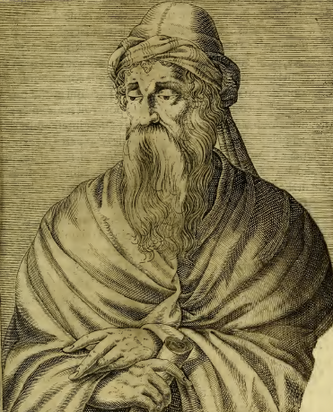
Theodoret of Cyrus (or Cyrrhus) (Greek: Θεοδώρητος Κύρρου) (c. 393 – c. 458/466) was an influential author, theologian, and Christian bishop of Cyrrhus, Syria (423–457). He played a pivotal role in many early Byzantine church controversies that led to various ecumenical acts and schisms. He is considered blessed or a saint by the Eastern Orthodox Church.
Best Theodoret Quotes
Shortest
Earliest
Explore our curated collection of the most famous and impactful Theodoret quotes.
“Orthodox: You should accept no argument that is not fully supported by Scriptural testimony.”
“'''''Eranistes'': Don't offer me human rationalizations or philosophical arguments, for I rely on divine Scripture alone.'''”
“The sun by the action of heat makes wax moist and mud dry, hardening the one while it softens the other, by the same operation producing exactly opposite results; thus, from the long-suffering of God, some derive benefit, and others harm; some are softened, while others are hardened.”
“Ac generosae quidem animae triumphatorum coelum nunc obambulant, et angelorum choris intersunt: eorum vero corpora non singula cujusque condunt monumenta, sed urbes et vici haec inter se partiti, animarum illos servatores corporumque medicos appellant, veneranturque tamquam urbium praesides atque custodies, et horum apud Deum universorum interventu divina per eos munera consequuntur. Sectis corum corporibus, integra et indivisa gratia perseverat: et tenues illae ac tantillae reliquiae integro nullasque in partes dissecto martyri parem habent virtutem.”
“The noble souls of the triumphant are sauntering around heaven, dancing in the choruses of the bodiless; and not one tomb for each conceals their bodies, but cities and villages divide them up and call them healers and preservers of souls and bodies, and venerate them as guardians and protectors of cities; and when they intervene as ambassadors before the Master of the universe the divine gifts are obtained through them; and though the body has been divided, its grace has continued undivided. And that little particle and smallest relic has the same power as the absolutely and utterly undivided martyr.”

“Alternate version: The noble souls of the victorious traverse the heavens and join in the dance of immaterial the beings. Their bodies are not hidden away each in its single grave, but the cities and villages that have divided them among themselves call them saviors of souls and bodies and doctors and honor them as protectors of cities and guardians and treat them as ambassadors before the master of the universe and through them receive divine gifts. And even though the body has been divided, the grace has remained undivided, and that minute relic possesses the same power as the martyr, just as if he had never in any way been divided.”
“I have often come across convinced adepts of Greek mythology who mock our faith under the pretext that we do not say anything else to those whom we instruct in divine things, but merely command them to believe.
They accuse the apostles of ignorance, labelling them barbarians, because they do not have the subtlety of eloquence; and they say that the cult of martyrs is ridiculous, considering it completely absurd for the living to seek assistance from the dead.
• Alternate translation: I have often encountered certain people still attached to the fables of pagan mythology who ridicule our belief and assert that faith is all we require of those whom we give religious instruction. They also point with scorn at the Apostles' lack of education and stigmatize these men as uncouth and ignorant of the niceties of cultivated speech. They further say that the veneration shown to the martyrs is absurd. And as for the living seeking to obtain the intercession of the dead, this, they declare, is the utmost folly.”

“Julian’s folly was yet more clearly manifested by his death. He crossed the river that separates the Roman Empire from the Persian, brought over his army, and then forthwith burnt his boats, so making his men fight not in willing but in forced obedience. The best generals are wont to fill their troops with enthusiasm, and, if they see them growing discouraged, to cheer them and raise their hopes; but Julian by burning the bridge of retreat cut off all good hope. A further proof of his incompetence was his failure to fulfil the duty of foraging in all directions and providing his troops with supplies. Julian had neither ordered supplies to be brought from Rome, nor did he make any bountiful provision by ravaging the enemy’s country. He left the inhabited world behind him, and persisted in marching through the wilderness. His soldiers had not enough to eat and drink; they were without guides; they were marching astray in a desert land. Thus they saw the folly of their most wise emperor. In the midst of their murmuring and grumbling they suddenly found him who had struggled in mad rage against his Maker wounded to death. Ares who raises the war-din had never come to help him as he promised; Loxias had given lying divination; he who glads him in the thunderbolts had hurled no bolt on the man who dealt the fatal blow; the boasting of his threats was dashed to the ground. The name of the man who dealt that righteous stroke no one knows to this day. Some say that he was wounded by an invisible being, others by one of the Nomads who were called Ishmaelites; others by a trooper who could not endure the pains of famine in the wilderness. But whether it were man or angel who plied the steel, without doubt the doer of the deed was the minister of the will of God. It is related that when Julian had received the wound, he filled his hand with blood, flung it into the air and cried, "Thou hast won, O Galilean." Thus he gave utterance at once to a confession of the victory and to a blasphemy. So infatuated was he.”

Theodoret Quotes by Topic
Find exactly what you are looking for by browsing this categorized list of Theodoret quotes by topic.
Theodoret on Virtue
Theodoret on Gender
Theodoret on True Cross
“When the empress beheld the place where the Saviour suffered, she immediately ordered the idolatrous temple, which had been there erected, to be destroyed, and the very earth on which it stood to be removed. When the tomb, which had been so long concealed, was discovered, three crosses were seen buried near the Lord's sepulchre. All held it as certain that one of these crosses was that of our Lord Jesus Christ, and that the other two were those of the thieves who were crucified with Him. Yet they could not discern to which of the three the Body of the Lord had been brought nigh, and which had received the outpouring of His precious Blood. But the wise and holy Macarius, the president of the city, resolved this question in the following manner. He caused a lady of rank, who had been long suffering from disease, to be touched by each of the crosses, with earnest prayer, and thus discerned the virtue residing in that of the Saviour. For the instant this cross was brought near the lady, it expelled the sore disease, and made her whole.”

What Theodoret Said About Others
Discover personal opinions Theodoret shared regarding contemporaries.
Theodoret on Symeon the Stylite 3 quotes
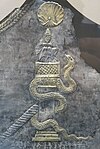
“More than all this I myself admire [Symeon's] endurance. Night and day he is standing within the view of all; for having removed the doors and demolished a sizeable part of the enclosing wall, he is exposed to all as a new and extraordinary spectacle—now standing for a long time, and now bending down repeatedly and offering worship to God. Many of those standing by count the number of these acts of worship. Once one of those with me counted 1,244 of them, before slackening and giving up count. In bending down he always makes his forehead touch his toes—for his stomach's receiving food once a week, and little of it, enables his back to bend easily. During the public festivals he displays another form of endurance: after the setting of the sun until it comes again to the eastern horizon, stretching out his hands to heaven he stands all night, neither beguiled by sleep nor overcome by exertion.”
Theodoret on Julian (emperor)
“Julian’s folly was yet more clearly manifested by his death. He crossed the river that separates the Roman Empire from the Persian, brought over his army, and then forthwith burnt his boats, so making his men fight not in willing but in forced obedience. The best generals are wont to fill their troops with enthusiasm, and, if they see them growing discouraged, to cheer them and raise their hopes; but Julian by burning the bridge of retreat cut off all good hope. A further proof of his incompetence was his failure to fulfil the duty of foraging in all directions and providing his troops with supplies. Julian had neither ordered supplies to be brought from Rome, nor did he make any bountiful provision by ravaging the enemy’s country. He left the inhabited world behind him, and persisted in marching through the wilderness. His soldiers had not enough to eat and drink; they were without guides; they were marching astray in a desert land. Thus they saw the folly of their most wise emperor. In the midst of their murmuring and grumbling they suddenly found him who had struggled in mad rage against his Maker wounded to death. Ares who raises the war-din had never come to help him as he promised; Loxias had given lying divination; he who glads him in the thunderbolts had hurled no bolt on the man who dealt the fatal blow; the boasting of his threats was dashed to the ground. The name of the man who dealt that righteous stroke no one knows to this day. Some say that he was wounded by an invisible being, others by one of the Nomads who were called Ishmaelites; others by a trooper who could not endure the pains of famine in the wilderness. But whether it were man or angel who plied the steel, without doubt the doer of the deed was the minister of the will of God. It is related that when Julian had received the wound, he filled his hand with blood, flung it into the air and cried, "Thou hast won, O Galilean." Thus he gave utterance at once to a confession of the victory and to a blasphemy. So infatuated was he.”

About Theodoret
Theodoret of Cyrus (or Cyrrhus) (Greek: Θεοδώρητος Κύρρου) (c. 393 – c. 458/466) was an influential author, theologian, and Christian bishop of Cyrrhus, Syria (423–457). He played a pivotal role in many early Byzantine church controversies that led to various ecumenical acts and schisms. He is considered blessed or a saint by the Eastern Orthodox Church.