Link Copied!
Theodor Adorno Quotes (1903-1969)
Philosopher, Composer
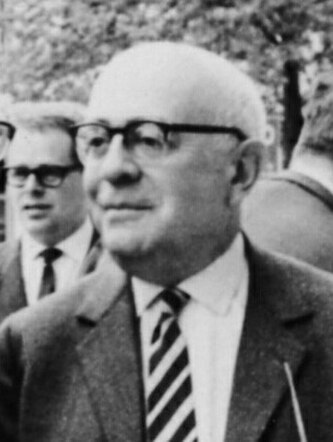












About Theodor Adorno
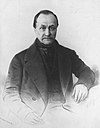
Theodor Ludwig Wiesengrund Adorno (September 11, 1903 – August 6, 1969) was a German sociologist, philosopher, musicologist and composer.
Best Theodor Adorno Quotes
Shortest
Earliest
Explore our curated collection of the most famous and impactful Theodor Adorno quotes.
“All the world's not a stage.”
“Es gibt kein richtiges Leben im falschen.”
“Kunst ist Magie, befreit von der Lüge, Wahrheit zu sein.”
“Philosophy ... must not bargain away anything of the emphatic concept of truth.”

“The dressing up and puffing up of the individual erases the lineaments of protest.”

“What appears as the positive is essentially the negative, i.e. the thing that is to be criticized.”
“We cannot think any true thought unless we want the true. Thinking is itself an aspect of practice.”
“Advancing bourgeois society liquidates memory, time, recollection as irrational leftovers of the past.”
“Jazz is the false liquidation of art — instead of utopia becoming reality it disappears from the picture.”
“Nun gilt für die kürzeste Verbindung zwischen zwei Personen die Gerade, so als ob sie Punkte wären.”
“The jargon of authenticity ... is a trademark of societalized chosenness, ... sub-language as superior language.”

“Die Glorifizierung der prächtigen underdogs läuft auf die des prächtigen Systems heraus, das sie dazu macht.”
“Zartheit zwischen Menschen ist nichts anderes als das Bewußtsein von der Möglichkeit zweckfreier Beziehungen.”
“Der Bürger aber ist tolerant. Seine Liebe zu den Leuten, wie sie sind, entspringt dem Haß gegen den richtigen Menschen.”
“When I made my theoretical model, I could not have guessed that people would try to realise it with Molotov cocktails.”
“Traditional philosophy's claim to totality, culminating in the thesis that the real is rational, is indistinguishable from apologetics.”
“Regressive listeners behave like children. Again and again and with stubborn malice, they demand the one dish they have once been served.”
“Die fast unlösbare Aufgabe besteht darin, weder von der Macht der anderen, noch von der eigenen Ohnmacht sich dumm machen zu lassen.”
“Even the most insensitive hit song enthusiast cannot always escape the feeling that the child with a sweet tooth comes to know in the candy store.”
“Sie möchte formal und material ebenjener Gestalt geistiger Freiheit helfen, die in den herrschenden philosophischen Richtungen keine Stel1e hat.”
“When I speak of 'negative dialectics' not the least important reason for doing so is my desire to dissociate myself from this fetishization of the positive.”
Theodor Adorno Quotes by Topic
Find exactly what you are looking for by browsing this categorized list of Theodor Adorno quotes by topic.
Theodor Adorno on Jargon 4 quotes
View all 4 quotes on Jargon →Theodor Adorno on Positivism 3 quotes
“The departmentalization of mind is a means of abolishing mind where it is not exercised ex officio, under contract.”
Theodor Adorno on Art 2 quotes
View all 2 quotes on Art →Theodor Adorno on Bourgeoisie 2 quotes
“Advancing bourgeois society liquidates memory, time, recollection as irrational leftovers of the past.”

Theodor Adorno on Philosophy 2 quotes
“Philosophy that satisfies its own intention, and does not childishly skip behind its own history and the real one, has its lifeblood in the resistance against the common practices of today and what they serve, against the justification of what happens to be the case.”
Theodor Adorno on Psychoanalysis
“In psychoanalysis nothing is true except the exaggerations.”

Theodor Adorno on Discrimination
“Tact is the discrimination of differences. It consists in conscious deviations.”
Theodor Adorno on Style
“Indifference to style ... is almost always symptomatic of the dogmatic sclerosis of content.”
Theodor Adorno on Conformity
“The power of the culture industry's ideology is such that conformity has replaced consciousness.”
What Theodor Adorno Said About Others
Discover personal opinions Theodor Adorno shared regarding contemporaries.
Theodor Adorno on Georg Wilhelm Friedrich Hegel
“Hegel ... destroyed the illusion of the subject's being-in-itself and showed that the subject is itself an aspect of social objectivity. ... However, ... we must ask this question: is this objectivity which we have shown to be a necessary condition and which subsumes abstract subjectivity in fact the higher factor? Does it not rather remain precisely what Hegel reproached it with being in his youth, namely pure externality, the coercive collective? Does not the retreat to this supposedly higher authority signify the regression of the subject, which had earlier won its freedom only with the greatest efforts, with infinite pains?”

Theodor Adorno on Marcel Proust
“The son of well-to-do parents who … engages in a so-called intellectual profession, as an artist or a scholar, will have a particularly difficult time with those bearing the distasteful title of colleagues. It is not merely that his independence is envied, the seriousness of his intentions mistrusted, that he is suspected of being a secret envoy of the established powers. … The real resistance lies elsewhere. The occupation with things of the mind has by now itself become “practical,” a business with strict division of labor, departments and restricted entry. The man of independent means who chooses it out of repugnance for the ignominy of earning money will not be disposed to acknowledge the fact. For this he is punished. He … is ranked in the competitive hierarchy as a dilettante no matter how well he knows his subject, and must, if he wants to make a career, show himself even more resolutely blinkered than the most inveterate specialist. The urge to suspend the division of labor which, within certain limits, his economic situation enables him to satisfy, is thought particularly disreputable: it betrays a disinclination to sanction the operations imposed by society, and domineering competence permits no such idiosyncrasies. The departmentalization of mind is a means of abolishing mind where it is not exercised ex officio, under contract. It performs this task all the more reliably since anyone who repudiates this division of labor—if only by taking pleasure in his work—makes himself vulnerable by its standards, in ways inseparable from elements of his superiority. Thus is order ensured: some have to play the game because they cannot otherwise live, and those who could live otherwise are kept out because they do not want to play the game.”

Quotes About Theodor Adorno
Gain deeper perspective through quotes about Theodor Adorno from others.
Fredric Jameson on Theodor Adorno
“Anyone surprised by the characterization of Adorno as a Marxist has not read much of his admittedly difficult writing. ... Most available secondary discussions tend to leave the Marxism out, as though it were some curious set of period mannerisms which a postcontemporary discussion no longer needs to take into consideration.”
Paul Gottfried on Theodor Adorno
“Adorno, Marcuse, and other members of the Frankfurt School were explicit about the link between “antifascism,” which was the banner they sported, and sympathy for Communist governments. Like Sartre and his collaborators at Les Temps Modernes, the Critical Theorists considered anti-Communist attitudes proof positive of fascist residues in those who expressed them. After the publication of The Authoritarian Personality in 1950, Adorno was shocked by a suggestion from one of his coworkers, Seymour Martin Lipset, that the psychic grid they had applied to right-wingers might work for left-wing extremists equally well.”
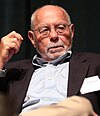
About Theodor Adorno
Theodor Ludwig Wiesengrund Adorno (September 11, 1903 – August 6, 1969) was a German sociologist, philosopher, musicologist and composer.