Link Copied!
Terry Eagleton Quotes (1943-)
Philosopher

About Terry Eagleton
Terence Francis Eagleton FBA (born February 22, 1943) is a British literary theorist, critics and philosopher. Eagleton is a Distinguished Professor of English Literature at Lancaster University, and as a former Visiting Professor at the National University of Ireland.
Best Terry Eagleton Quotes
Shortest
Earliest
Explore our curated collection of the most famous and impactful Terry Eagleton quotes.
“It is capitalism, not Marxism, that trades in futures.”


“Schizophrenic language has in this sense an interesting resemblance to poetry.”

“Deconstruction... insists not that truth is illusory but that it is institutional.”

“All desire springs from a lack, which it strives continually to fill.”
“When it comes to who exactly should be exploited, the system is admirably egalitarian.”
“It is difficult to think of an origin without wanting to go back beyond it.”
“Any attempt to define literary theory in terms of a distinctive method is doomed to failure.”
“Postmodernism is among other things a sick joke at the expense of... revolutionary avant-gardism.”

“You can tell that the capitalist system is in trouble when people start talking about capitalism.”

“"What perished in the Soviet Union was Marxist only in the sense that the Inquisition was Christian"”
“If the masses are not thrown a few novels, they may react by throwing up a few barricades.”
“Chaucer was a class traitor
Shakespeare hated the mob
Donne sold out a bit later
Sidney was a nob.”
Shakespeare hated the mob
Donne sold out a bit later
Sidney was a nob.”
“It is language which speaks in literature, in all its swarming 'polysemic' plurality, not the author himself.”


“The liberal state is neutral between capitalism and its critics until the critics look like they are winning.”

“If we were not called upon to work in order to survive, we might simply lie around all day doing nothing.”
“Capitalism cannot survive without a working class, while the working class can flourish a lot more freely without capitalism.”
“After all, if you do not resist the apparently inevitable, you will never know how inevitable the inevitable was.”
“Understanding is always in some sense retrospective, which is what Hegel meant by remarking that the owl of Minerva flies only at night.”

“All consciousness is consciousness of something: in thinking I am aware that my thought is 'pointing towards' some object.”

Terry Eagleton Quotes by Topic
Find exactly what you are looking for by browsing this categorized list of Terry Eagleton quotes by topic.
Terry Eagleton on Ideology 2 quotes
“It follows that through its constitution ideology is involved in the functioning of this social-imaginary relation, and is therefore necessarily false; its social function is not to give agents a true knowledge of the social structure but simply to insert them as it were into their practical activities supporting this structure. Precisely because it is determined by its structure, at the level of experience the social whole remains opaque to the agents. In class-divided societies this opacity is over-determined by class exploitation and by the forms which this exploitation takes in order to be able to function in the social whole. Hence, even if it includes elements of knowledge, ideology necessarily manifests an adequation / inadequation vis-à-vis the real.”

Terry Eagleton on Violence
Terry Eagleton on Post-structuralism
“Post-structuralism is among other things a kind of theoretical hangover from the failed uprising of ‘68, a way of keeping the revolution warm at the level of language, blending the euphoric libertarianism of that moment with the stoical melancholia of its aftermath.”

Terry Eagleton on Autonomy
“We face a conflict between civilisation and culture, which used to be on the same side. Civilisation means rational reflection, material wellbeing, individual autonomy and ironic self-doubt; culture means a form of life that is customary, collective, passionate, spontaneous, unreflective and irrational.”

Terry Eagleton on Psychoanalysis
“In conscious life, we achieve some sense of ourselves as reasonably unified, coherent selves, and without this action would be impossible. But all this is merely at the ‘imaginary’ level of the ego, which is no more than the tip of the iceberg of the human subject known to psychoanalysis. The ego is function or effect of a subject which is always dispersed, never identical with itself, strung out along the chains of the discourses which constitute it.”

Terry Eagleton on Capitalism
“We face a probable future of nuclear-armed states warring over a scarcity of resources; and that scarcity is largely the consequence of capitalism itself. For the first time in history, our prevailing form of life has the power not simply to breed racism and spread cultural cretinism, drive us into war or herd us into labour camps, but to wipe us from the planet. Capitalism will behave antisocially if it is profitable for it to do so, and that can now mean human devastation on an unimaginable scale. What used to be apocalyptic fantasy is today no more than sober realism. The traditional leftist slogan "Socialism or barbarism" was never more grimly apposite.”
Terry Eagleton on Socialism
“We face a probable future of nuclear-armed states warring over a scarcity of resources; and that scarcity is largely the consequence of capitalism itself. For the first time in history, our prevailing form of life has the power not simply to breed racism and spread cultural cretinism, drive us into war or herd us into labour camps, but to wipe us from the planet. Capitalism will behave antisocially if it is profitable for it to do so, and that can now mean human devastation on an unimaginable scale. What used to be apocalyptic fantasy is today no more than sober realism. The traditional leftist slogan "Socialism or barbarism" was never more grimly apposite.”

What Terry Eagleton Said About Others
Discover personal opinions Terry Eagleton shared regarding contemporaries.
Terry Eagleton on Jean-Jacques Rousseau 2 quotes
“His outlook was that of the petty-bourgeois peasant, clinging to his hard-won independence in the face of power and privilege. He sometimes writes as though any form of dependence on others is despicable. Yet he was a radical egalitarian in an age when such thinkers were hard to find. Almost uniquely for his age, he also believed in the absolute sovereignty of the people. To bow to a law one did not have a hand in creating was a recipe for tyranny. Self-determination lay at the root of all ethics and politics. Human beings might misuse their freedom, but they were not truly human without it.”

Terry Eagleton on Walter Benjamin
“Postmodernism, like Walter Benjamin's 'mechanical reproduction', seeks to dismantle the intimidating aura of high-modernist culture with a more demotic, user-friendly art, suspecting all hierarchies of value as privileged and elitist. There is no better or worse, just different.”
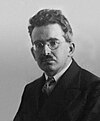
Terry Eagleton on Friedrich Nietzsche
“In Nietzsche's view, the death of God must also spell the death of Man—that is to say, the end of a certain lordly, overweening humanism—if absolute power is not simply to be transplanted from the one to the other. Otherwise humanism will always be secretly theological. It will be a continuation of God by other means.”

Terry Eagleton on Edmund Burke
“The writings of Burke, an Irish émigré, stand at the fountainhead of the quintessentially English "Culture and Society" tradition, which was to develop his concern with "organic" relations between human beings, and his scorn for a mean-spirited utilitarianism, into a resourceful critique of industrial capitalism. This is not, need one say, to claim this eighteenth-century Whig as a closet Marxist. But few things could be more of an affront to his values than the neo-liberalism of our own day, in which an abstract, universal drive for profit threatens much of what he held dear: the cultural needs of particular communities, the importance of human affections and customary bonds, the sense of history as a living process, the rootedness of men and women in particular places, the preciousness of that which cannot be bought or sold. Modern-day market forces, with their uprooting of whole communities, their severing of traditional bonds, their bogus universalism, their contractual view of society and eradication of history represent in Burkean terms, a virulent new strain of Jacobinism, even if the abstract dogmas in question are now those of Brussels bankers rather than French philosophes. The terms in which Burke censures the French revolutionaries of his time apply with striking specificity to the apologists for the global market-place today.”

Quotes About Terry Eagleton
Gain deeper perspective through quotes about Terry Eagleton from others.
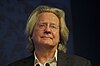
A. C. Grayling on Terry Eagleton
“There are many ways that reviewing can be dishonest. Here is one illustration, drawn from no less a personnage than the self-appointed doyen of the literature dons, Terry Eagleton. A standard rhetorical device in discursive literature has the form “some say X, but I say Y.” The author might not disagree with X, but thinks Y is the more important point. A scurrilous reviewer can systematically misrepresent the author by saying, “the author says X” and omitting the author’s rider “Y”. This is one of Eagleton’s techniques of choice (chapter and verse can be abundantly supplied). Of course, this might not be intentional on Eagleton’s part; he might merely be stupid or lazy. But since it is better to doubt this, we have to conclude instead that he is guilty of wilful misrepresentation. It is alarming to think that such are the ethics of criticism he teaches his students at Manchester University.”
Roger Kimball on Terry Eagleton 2 quotes
“Like most academic Marxists, Professor Eagleton knows that, put baldly, the doctrine of economic determinism is patently absurd. So he employs various gambits to soften or conceal the absurdity, without ever really denying the basic model of economic determinism. This is not to say that he is completely free of "vulgar Marxist" rhetoric; indeed, he sometimes sounds like nothing so much as a soapbox Marxist, railing (for example) against "a petty bourgeois liberal humanism, academically dispossessed and subordinated yet in intellectual terms increasingly hegemonic, [which] occupied the bastions of reactionary criticism from within as a dissentient bloc." Yet Professor Eagleton also takes great pains to distance himself from "vulgar Marxism"—the phrase occurs often in his works, always in his beloved scare quotes. The vulgar Marxist is a frank economic determinist and holds that the "superstructure" is a more or less direct reflection of economic processes. The sophisticated Marxist, well schooled in the writings of the Frankfurt School Marxists, allows that the superstructure is "relatively autonomous"—except when he wants to claim economic determination for some phenomenon of his own choosing. The "vulgar Marxist" is frankly Utopian and looks forward to the revolution and the establishment of a workers' paradise; a sophisticated Marxist like Professor Eagleton dandifies his utopianism with lots of high-flown rhetoric. "Once emancipated from material scarcity, liberated from labour," he writes in a typically starry-eyed passage, "[men] will live in the play of the mutual significations, move in the ceaseless 'excess' of freedom." Professor Eagleton's primary weapons against the charge of vulgar Marxism are words like "hegemony," "ideology," and "aesthetic," all of which in his hands have the wonderful property of meaning any of about six different and conflicting things.”

Camille Paglia on Terry Eagleton
“Terry Eagleton is a deft, witty summarizer of other people's ideas. Applied Marxism is, oddly, his weakest point. He also goes limply soft on academic feminism, whose bourgeois prudery, moralism, and Protestant word-fetishism he does not see. Eagleton'e thought-provoking arguments against the [literary] canon are unfortunately vitiated by the fact that he seems to have little feeling for art. Is education to be gutted merely because Terry Eagleton wandered into a profession for which he discovered too late that he had minimal talent? Like Foucault, Eagleton continues to push into one new field after another, restlessly searching for success in something.”

David Pickus on Terry Eagleton
“I think that the favorable expository literature on Žižek deepens his isolation [in refusing to answer or recognize criticism]. Consider the way Terry Eagleton quotes Žižek [in a passage from the latter's Did Somebody Say Totalitarianism?] in discussing how the idea of “destiny” can trivialize the understanding of tragedy: “Does not the term ‘tragedy,’ Žižek asks, “at least in its classical sense, still imply the logic of Fate, which is rendered ridiculous apropos the Holocaust? To say that the annihilation of the Jews obeyed a hidden Necessity of Fate is already to gentrify it.” Eagleton then adds, “Žižek is mistaken to assume that tragedy, even classical tragedy, invariably involves fate; but he is right to see that the notion can actually sanitize suffering, and Euripides is unlikely to have demurred.” Why credit Žižek with an insight at all, if one admits that he is wrong in his claim? Who has ever seriously tried to “gentrify” the Holocaust by saying that it probably has to do with one of the gods “More truth in . . . appearance than in . . . reality.” being offended and that it goes to show that we should not try to evade the words of the oracle? [Eagleton's] [g]iving Žižek credit for victory over a straw man prevents engagement with the actual content of his words.”
About Terry Eagleton
Terence Francis Eagleton FBA (born February 22, 1943) is a British literary theorist, critics and philosopher. Eagleton is a Distinguished Professor of English Literature at Lancaster University, and as a former Visiting Professor at the National University of Ireland.