Link Copied!
Ted Hughes Quotes (1930-1998)
Writer, Poet, Politician
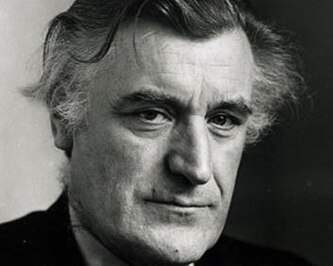
About Ted Hughes
Edward James Hughes, OM (17 August 1930 – 28 October 1998) was an English poet, translator and children's writer who for the last 14 years of his life occupied the role of Poet Laureate. He was the husband of Sylvia Plath, who influenced his writing style.
Best Ted Hughes Quotes
Shortest
Earliest
Explore our curated collection of the most famous and impactful Ted Hughes quotes.
“The gash in its throat was shocking, but not pathetic.”
“Nobody knew the Iron Man had fallen.
Night passed.”
Night passed.”
“But who is stronger than death?
Me, evidently.”
Me, evidently.”
“The world rolls under the long thrust of his heel.
Over the cage floor the horizons come.”
Over the cage floor the horizons come.”
“Who owns the whole rainy, stony earth? Death.
Who owns all of space? Death.”
Who owns all of space? Death.”
“The jaws' hooked clamp and fangs
Not to be changed at this date;
A life subdued to its instrument.”
Not to be changed at this date;
A life subdued to its instrument.”
“Nothing has changed since I began.
My eye has permitted no change.
I am going to keep things like this.”
My eye has permitted no change.
I am going to keep things like this.”
“The deeps are cold:
In that darkness camaraderie does not hold:
Nothing touches but, clutching, devours.”
In that darkness camaraderie does not hold:
Nothing touches but, clutching, devours.”
“The brassy wood-pigeons
Bubble their colourful voices, and the sun
Rises upon a world well-tried and old.”
Bubble their colourful voices, and the sun
Rises upon a world well-tried and old.”
“Pike, three inches long, perfect
Pike in all parts, green tigering the gold.
Killers from the egg: the malevolent aged grin.”
Pike in all parts, green tigering the gold.
Killers from the egg: the malevolent aged grin.”
“With a sudden sharp hot stink of fox,
It enters the dark hole of the head.
The window is starless still; the clock ticks,
The page is printed.”
It enters the dark hole of the head.
The window is starless still; the clock ticks,
The page is printed.”
“Stilled legendary depth:
It was as deep as England. It held
Pike too immense to stir, so immense and old
That past nightfall I dared not cast.”
It was as deep as England. It held
Pike too immense to stir, so immense and old
That past nightfall I dared not cast.”
“I sit in the top of the wood, my eyes closed.
Inaction, no falsifying dream
Between my hooked head and hooked feet:
Or in sleep rehearse perfect kills and eat.”
Inaction, no falsifying dream
Between my hooked head and hooked feet:
Or in sleep rehearse perfect kills and eat.”
“Cold, delicately as the dark snow,
A fox's nose touches twig, leaf;
Two eyes serve a movement, that now
And again now, and now, and now
Sets neat prints into the snow.”
A fox's nose touches twig, leaf;
Two eyes serve a movement, that now
And again now, and now, and now
Sets neat prints into the snow.”
“He swayed in the strong wind that pressed against his back. He swayed forward, on the brink of the high cliff. And his right foot, his enormous iron right foot, lifted-up, out, into space, and the Iron Man stepped forward, off the cliff, into nothingness.”
“The Iron Man came to the top of the cliff. How far had he walked? Nobody knows. Where did he come from? Nobody knows. How was he made? Nobody knows. Taller than a house the Iron Man stood at the top of the cliff, at the very brink, in the darkness.”
“No, the serpent did not
Seduce Eve to the apple.
All that's simply
Corruption of the facts.
Seduce Eve to the apple.
All that's simply
Corruption of the facts.
Adam ate the apple.
Eve ate Adam.
The serpent ate Eve.
This is the dark intestine.
The serpent, meanwhile,
Sleeps his meal off in Paradise—
Smiling to hear
God's querulous calling.”
“It took the whole of Creation
To produce my foot, my each feather:
Now I hold Creation in my foot.
Or fly up, and revolve it all slowly –
I kill where I please because it is all mine.
There is no sophistry in my body:
My manners are tearing off heads –
The allotment of death.”
To produce my foot, my each feather:
Now I hold Creation in my foot.
Or fly up, and revolve it all slowly –
I kill where I please because it is all mine.
There is no sophistry in my body:
My manners are tearing off heads –
The allotment of death.”
“Poems get to the point where they are stronger than you are. They come up from some other depth and they find a place on the page. You can never find that depth again, that same kind of authority and voice. I might feel I would like to change something about them, but they’re still stronger than I am and I cannot.”
“Why do human beings need to confess? Maybe if you don’t have that secret confession, you don’t have a poem — don’t even have a story. Don’t have a writer. If most poetry doesn’t seem to be in any sense confessional, it’s because the strategy of concealment, of obliquity, can be so compulsive that it’s almost entirely successful.”
“I think it’s the shock of every writer’s life when their first book is published. The shock of their lives. One has somehow to adjust from being anonymous, a figure in ambush, working from concealment, to being and working in full public view. It had an enormous effect on me. My impression was that I had suddenly walked into a wall of heavy hostile fire.”
“This house has been far out at sea all night,
The woods crashing through darkness, the booming hills,
Winds stampeding the fields under the window
Floundering black astride and blinding wet
The woods crashing through darkness, the booming hills,
Winds stampeding the fields under the window
Floundering black astride and blinding wet
Till day rose; then under an orange sky
The hills had new places, and wind wielded
Blade-light, luminous black and emerald,
Flexing like the lens of a mad eye.”
“Every poem that works is like a metaphor of the whole mind writing, the solution of all the oppositions and imbalances going on at that time. When the mind finds the balance of all those things and projects it, that’s a poem. It’s a kind of hologram of the mental condition at that moment, which then immediately changes and moves on to some other sort of balance and rearrangement. What counts is that it be a symbol of that momentary wholeness. That’s how I see it.”
“I’ve sometimes wondered if it wouldn’t be a good idea to write under a few pseudonyms. Keep several quite different lines of writing going. Like Fernando Pessoa, the Portuguese poet who tried four different poetic personalities. They all worked simultaneously. He simply lived with the four. What does Eliot say? “Dance, dance, / Like a dancing bear, / Cry like a parrot, chatter like an ape, / To find expression.” It’s certainly limiting to confine your writing to one public persona, because the moment you publish your own name you lose freedom.”

“From the age of about eight or nine I read just about every comic book available in England. At that time my parents owned a newsagent’s shop. I took the comics from the shop, read them, and put them back. That went on until I was twelve or thirteen. Then my mother brought in a sort of children’s encyclopedia that included sections of folklore. Little folktales. I remember the shock of reading those stories. I could not believe that such wonderful things existed. … throughout your life you have certain literary shocks, and the folktales were my first. From then on I began to collect folklore, folk stories, and mythology. That became my craze.”

Ted Hughes Quotes by Topic
Find exactly what you are looking for by browsing this categorized list of Ted Hughes quotes by topic.
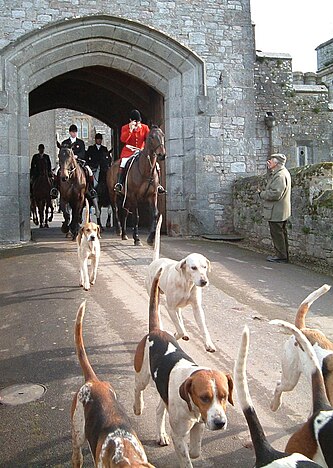
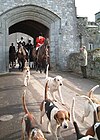
Ted Hughes on Fox hunting
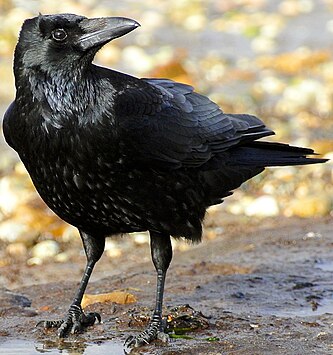
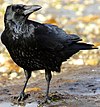
Ted Hughes on Crows
“Crows are the central bird in many mythologies. The crow is at every extreme, lives on every piece of land on earth, the most intelligent bird.”
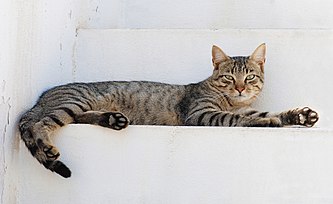
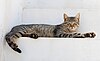
Ted Hughes on Cats
“Daylong this tomcat lies stretched flat As an old rough mat, no mouth and no eyes, Continual wars and wives are what Have tattered his ears and battered his head.”
Ted Hughes on Esox
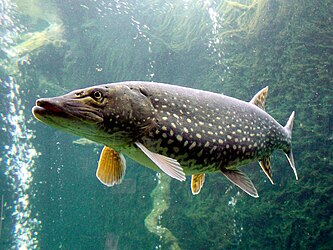
“Pike, three inches long, perfect Pike in all parts, green tigering the gold. Killers from the egg: the malevolent aged grin. They dance on the surface among the flies.”

Quotes About Ted Hughes
Gain deeper perspective through quotes about Ted Hughes from others.
Seamus Heaney on Ted Hughes
“No death outside my immediate family has left me feeling more bereft. No death in my lifetime has hurt poets more. He was a tower of tenderness and strength, a great arch under which the least of poetry's children could enter and feel secure. His creative powers were, as Shakespeare said, still crescent. By his death, the veil of poetry is rent and the walls of learning broken.”
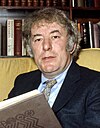
Drue Heinz on Ted Hughes
“His voice is commanding. He is often invited to read his work, the flow of his language enlivening the text. In appearance he is impressive, and yet there is very little aggression or intimidation in his look. Indeed, one admirer has said that her first thought sitting opposite him was that this was what God should look like “when you get there.””
Christopher Hitchens on Ted Hughes
“The feminist school has often looked in a manner of marked disapproval at her husband, Ted Hughes. I find it difficult to imagine him actually maltreating Sylvia physically, but there’s no doubt that he could be quite stupendously wanting in sensitivity.”
Philip Larkin on Ted Hughes
“The sky split apart in malice Stars rattled like pans on a shelf Crow shat on Buckingham Palace God pissed Himself.”
Martin Seymour-Smith on Ted Hughes
“Hughes began (The Hawk in the Rain, 1957; Lupercal, 1960) as an elemental poet of power; he was inchoate, but fruitfully aware both of the brute force of creation and of the natural world. Then a naive (q.v.) poet — he began to assume a mantic role; he has now turned into (Crow, 1970) a pretentious, coffee-table poet, a mindless celebrant of instinct.”
Tom Stoppard on Ted Hughes
“Orghast aims to be a leveller of audiences by appealing not to semantic athleticism but to the instinctive recognition of a "mental state" within a sound. One can hardly imagine a bolder challenge to the limits of narrative.”

About Ted Hughes
Edward James Hughes, OM (17 August 1930 – 28 October 1998) was an English poet, translator and children's writer who for the last 14 years of his life occupied the role of Poet Laureate. He was the husband of Sylvia Plath, who influenced his writing style.