Link Copied!
T. H. Green Quotes (1836-1882)
Philosopher, King

About T. H. Green
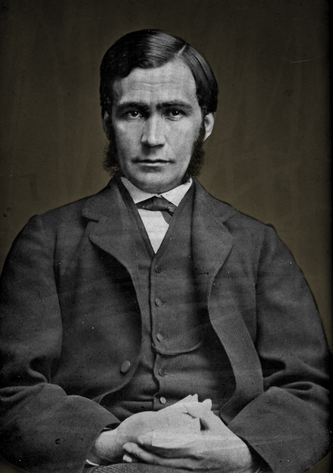
Thomas Hill Green (7 April 1836 – 26 March 1882), known as T. H. Green, was an English philosopher, political radical and temperance reformer, and a member of the British idealism movement. He was one of the thinkers behind the philosophy of social liberalism.
T. H. Green Quotes
Shortest
Earliest
Explore our curated collection of the most famous and impactful T. H. Green quotes.
“[I]t is quite certain that only through the equal presence to successive feeling of a subject other than they, which holds them together, and thus held together regards them as its object, are there related things or relations at all. It is not that first there are relations then they are conceived. Every relation is constituted by an act of conception. This is not to be understood as meaning that there is 'nothing but the soul and its feelings,' or that realities are feelings, even feelings as determined by thought. It is through feeling as determined by thought that for us there comes to be reality, but the reality is not to be identified with the process by which we, as thinking animals, arrive at it. Even simple facts of feeling (e.g. the fact that a certain sweet smell accompanies the sight of a rose) are not feelings as felt: more clearly, the conditions of such facts are not feelings, even as determined by thought. A 'feeling determined by thought' would probably mean a feeling which but for thought I should not have, e.g. emotion at the spectacle of a tragedy. Objective facts are not of this sort, not feelings determined by thought, though but for the determination of feeling by thought they would not exist for our consciousness.”
T. H. Green Quotes by Topic
Find exactly what you are looking for by browsing this categorized list of T. H. Green quotes by topic.
T. H. Green on Fact
“[I]t is quite certain that only through the equal presence to successive feeling of a subject other than they, which holds them together, and thus held together regards them as its object, are there related things or relations at all. It is not that first there are relations then they are conceived. Every relation is constituted by an act of conception. This is not to be understood as meaning that there is 'nothing but the soul and its feelings,' or that realities are feelings, even feelings as determined by thought. It is through feeling as determined by thought that for us there comes to be reality, but the reality is not to be identified with the process by which we, as thinking animals, arrive at it. Even simple facts of feeling (e.g. the fact that a certain sweet smell accompanies the sight of a rose) are not feelings as felt: more clearly, the conditions of such facts are not feelings, even as determined by thought. A 'feeling determined by thought' would probably mean a feeling which but for thought I should not have, e.g. emotion at the spectacle of a tragedy. Objective facts are not of this sort, not feelings determined by thought, though but for the determination of feeling by thought they would not exist for our consciousness.”

T. H. Green on Feelings
“[I]t is quite certain that only through the equal presence to successive feeling of a subject other than they, which holds them together, and thus held together regards them as its object, are there related things or relations at all. It is not that first there are relations then they are conceived. Every relation is constituted by an act of conception. This is not to be understood as meaning that there is 'nothing but the soul and its feelings,' or that realities are feelings, even feelings as determined by thought. It is through feeling as determined by thought that for us there comes to be reality, but the reality is not to be identified with the process by which we, as thinking animals, arrive at it. Even simple facts of feeling (e.g. the fact that a certain sweet smell accompanies the sight of a rose) are not feelings as felt: more clearly, the conditions of such facts are not feelings, even as determined by thought. A 'feeling determined by thought' would probably mean a feeling which but for thought I should not have, e.g. emotion at the spectacle of a tragedy. Objective facts are not of this sort, not feelings determined by thought, though but for the determination of feeling by thought they would not exist for our consciousness.”

Quotes About T. H. Green
Gain deeper perspective through quotes about T. H. Green from others.
Noel Annan on T. H. Green
“The young were taught in sixth form and university all the fallacies in John Stuart Mill's Essay on Liberty and were encouraged to believe that T. H. Green's definition of positive freedom was superior. Gladstonian liberals declared that socialist plans to nationalize industry and control production infringed personal freedom. But Green argued that so far from diminishing freedom such measures could increase it. A few people's freedom would be curtailed but vastly more people would now be made free to do things that hitherto they had been unable to do. The sum of freedom would increase. "Freedom for an Oxford don," it was said, "is a very different freedom for an Egyptian peasant."”
James Bryce on T. H. Green
“He was a thoroughgoing Liberal, or what used to be called a Radical, full of faith in the people, an advocate of pretty nearly every measure that tended to democratise English institutions, a friend of peace and of non-intervention.”
Frank Field on T. H. Green 2 quotes
“T. H. Green taught philosophy from his base at Balliol College in Oxford and his work resulted in lifting much of the honey from the Christian hive and securing it in a public ideology to which Christians and non-Christians could subscribe. He recognised that a literal belief in the New Testament miracles had become the tripwire into disbelief for all too many people. Green successfully divorced Christian morality from dogma and English Idealism was born. For a century our country's hymn sheet was based on Green's work. Most people were probably unaware of their debt to this obscure Oxford don but that did not stop them gustily singing the same songs as everyone else.”
John Morley on T. H. Green
“At Oxford a leading mind between 1860 and 1880 was T. H. Green, a man remarkable both in mental power and influence. He first gave a shake to Mill's supremacy as logician and metaphysician. But, notwithstanding Mill's conviction that false philosophy is the support of bad institutions, his critic's intuitionist philosophy did not prevent Green from being an ardent reformer, with Cobden and Bright for idols. In 1858 he ventured on a motion at the Union in approval of Bright. "It was frantically opposed," he said, "and after two days' discussion I found myself in a minority of two. I am almost ashamed to belong to a university which is in such a state of darkness."”
Peter Weiler on T. H. Green 2 quotes
“The inspiration for Toynbee, as for a whole generation of social reformers, came from the Oxford philosopher Thomas Hill Green (1836–82). Green's reappraisal of the central tenets of Liberalism makes him the most important figure of this period... [I]n his attempt to revise traditional Liberal theories to meet new situations, Green broke with traditional English empiricism and adopted an idealist metaphysics. His adoption of idealism allowed Green to redefine the Liberal ideas of freedom and society in order to permit state action.”
About T. H. Green
Thomas Hill Green (7 April 1836 – 26 March 1882), known as T. H. Green, was an English philosopher, political radical and temperance reformer, and a member of the British idealism movement. He was one of the thinkers behind the philosophy of social liberalism.