Link Copied!
T. E. Lawrence Quotes (1888-1935)
Writer
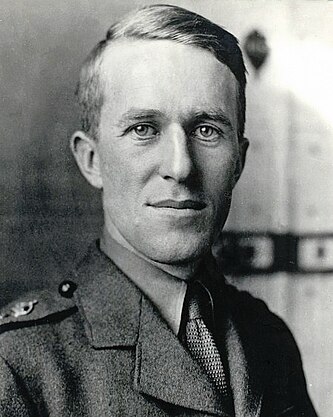

About T. E. Lawrence
Thomas Edward Lawrence T. E. Lawrence (16 August 1888 – 19 May 1935) was a British archaeologist, army officer, diplomat, and writer known for his role in the Arab Revolt and the Sinai and Palestine Campaign against the Ottoman Empire during the First World War. Commonly referred to as Lawrence of Arabia, he adopted T. E. Shaw as a pseudonym.
Best T. E. Lawrence Quotes
Shortest
Earliest
Explore our curated collection of the most famous and impactful T. E. Lawrence quotes.


“Rebels, especially successful rebels, were of necessity bad subjects and worse governors.”

“An opinion can be argued with; a conviction is best shot. The logical end of a war of creeds is the final destruction of one, and Salammbo is the classical text-book instance.”


“I've been & am absurdly over-estimated. There are no supermen & I'm quite ordinary, & will say so whatever the artistic results. In that point I'm one of the few people who tell the truth about myself.”
“All the revision in the world will not save a bad first draft: for the architecture of the thing comes, or fails to come, in the first conception, and revision only affects the detail and ornament, alas!”
“This death’s livery which walled its bearers from ordinary life was sign that they have sold their wills and bodies to the State: and contracted themselves into a service not the less abject for that its beginning was voluntary.”
“Nine-tenths of tactics are certain, and taught in books: but the irrational tenth is like the kingfisher flashing across the pool, and that is the test of generals. It can only be ensured by instinct, sharpened by thought practicing the stroke so often that at the crisis it is as natural as a reflex.”
“Do not try to do too much with your own hands. Better the Arabs do it tolerably than that you do it perfectly. It is their war, and you are to help them, not to win it for them. Actually, also, under the very odd conditions of Arabia, your practical work will not be as good as, perhaps, you think it is.”
“You wonder what I am doing? Well, so do I, in truth. Days seem to dawn, suns to shine, evenings to follow, and then I sleep. What I have done, what I am doing, what I am going to do, puzzle and bewilder me. Have you ever been a leaf and fallen from your tree in autumn and been really puzzled about it? That's the feeling.”
“In fifty words: Granted mobility, security (in the form of denying targets to the enemy), time, and doctrine (the idea to convert every subject to friendliness), victory will rest with the insurgents, for the algebraical factors are in the end decisive, and against them perfections of means and spirit struggle quite in vain.”

“Whether they are fit for independence or not remains to be tried. Merit is no qualification for freedom. Bulgars, Afghans, and Tahitans have it. Freedom is enjoyed when you are so well armed, or so turbulent, or inhabit a country so thorny that the expense of your neighbour's occupying you is greater than the profit.”

“He saw me shivering, partly I think, with cold, and made it whistle over my ear, taunting me that before his tenth cut I would howl for mercy, and at the twentieth beg for the caresses of the Bey; and then he began to lash me madly across and across with all his might, while I locked my teeth to endure this thing which lapped itself like flaming wire about my body.”
“... wait and watch with the deepest interest the development of the Jewish National Home. If Jews succeeded in translating the policy embodied in the Balfour Declaration [to action by establishing a state], it would certainly be a performance unique in the history of mankind.”
“"The Jewish experiment is a conscious effort, on the part of the least European people in Europe, to make head against the drift of the ages, and return once more to the Orient from which they came.” as quoted by R.Elie Mishel, "Lawrence of Arabia, the Unexpected Zionist"”

“The sword was odd. The Arab Movement was one: Feisal another (his name means a flashing sword): then there is the excluded notion, Garden of Eden touch: and the division meaning, like the sword in the bed of mixed sleeping, from the Morte d'Arthur. I don't know which was in your mind, but they all came to me — and the sword also means clean-ness, and death.”

“Some Englishmen, of whom Kitchener was chief, believed that a rebellion of Arabs against Turks would enable England, while fighting Germany, simultaneously to defeat Turkey. Their knowledge of the nature and power and country of the Arabic-speaking peoples made them think that the issue of such a rebellion would be happy: and indicated its character and method. So they allowed it to begin...”

“The people of England have been led in Mesopotamia into a trap from which it will be hard to escape with dignity and honor. They have been tricked into it by a steady withholding of information. The Baghdad communiques are belated, insincere, incomplete. Things have been far worse than we have been told, our administration more bloody and inefficient than the public knows. It is a disgrace to our imperial record, and may soon be too inflamed for any ordinary cure. We are today not far from a disaster.”
“[B]ut suppose we were an influence (as we might be), an idea, a thing invulnerable, intangible, without front or back, drifting about like a gas? Armies were like plants, immobile as a whole, firm-rooted, nourished through long stems to the head, we might be a vapor, blowing where we listed. Our kingdoms lay in each man's mind, as we wanted nothing material to live on, so perhaps we offered nothing material to the killing. It seemed a regular soldier might be helpless without a target. He would own the ground he sat on, and what he could poke his rifle at.”
“Some of the evil of my tale may have been inherent in our circumstances. For years we lived anyhow with one another in the naked desert, under the indifferent heaven. By day the hot sun fermented us; and we were dizzied by the beating wind. At night we were stained by dew, and shamed into pettiness by the innumerable silences of stars. We were a self-centred army without parade or gesture, devoted to freedom, the second of man's creeds, a purpose so ravenous that it devoured all our strength, a hope so transcendent that our earlier ambitions faded in its glare.”
T. E. Lawrence Quotes by Topic
Find exactly what you are looking for by browsing this categorized list of T. E. Lawrence quotes by topic.
T. E. Lawrence on Desert 2 quotes
“The desert was held in a crazed communism by which Nature and the elements were for the free use of every known friendly person for his own purposes and no more. Logical outcomes were the reduction of this licence to privilege by the men of the desert, and their hardness to strangers unprovided with introduction or guarantee, since the common security lay in the common responsibility of kinsmen.”

T. E. Lawrence on Antinatalism
T. E. Lawrence on Dreams
“All men dream: but not equally. Those who dream by night in the dusty recesses of their minds wake in the day to find that it was vanity: but the dreamers of the day are dangerous men, for they may act their dream with open eyes, to make it possible. This I did.”
T. E. Lawrence on Abrahamic religions
“The common base of all the Semitic creeds, winners or losers, was the ever present idea of world-worthlessness. Their profound reaction from matter led them to preach bareness, renunciation, poverty; and the atmosphere of this invention stifled the minds of the desert pitilessly.”

T. E. Lawrence on Tigris–Euphrates river system
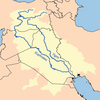
“My guides, sniffing the air like dogs, led me from crumbling room to room, saying, 'This is jessamine, this violet, this rose'. But at last Dahoum drew me: 'Come and smell the very sweetest scent of all', and we went into the main lodging, to the gaping window sockets of its eastern face, and there drank with open mouths of the effortless, empty, eddyless wind of the desert, throbbing past. That slow breath had been born somewhere beyond the distant Euphrates and had dragged its way across many days and nights of dead grass, to its first obstacle, the man-made walls of our broken palace.”
What T. E. Lawrence Said About Others
Discover personal opinions T. E. Lawrence shared regarding contemporaries.
T. E. Lawrence on Cecil Day-Lewis
“I have found the one great man in these lands - his name is Cecil Day-Lewis.”
T. E. Lawrence on Winston Churchill
“1919: but two years later Mr. Winston Churchill was entrusted by our harassed Cabinet with the settlement of the Middle East; and in a few weeks, at his conference in Cairo, he made straight all the tangle, finding solutions fulfilling (I think) our promises [to the Arabs] in letter and spirit (where humanly possible) without sacrificing any interest of our Empire or any interest of the peoples concerned. So we were quit of the wartime Eastern adventure, with clean hands, but three years too late to earn the gratitude which peoples, if not states, can pay.”

Quotes About T. E. Lawrence
Gain deeper perspective through quotes about T. E. Lawrence from others.
Edmund Allenby on T. E. Lawrence
“There is no other man I know who could have achieved what Lawrence did. As for taking undue credit for himself, my own personal experience with Lawrence is that he was utterly unconcerned whether any kudos was awarded him or not.”
Winston Churchill at an unveiling of a memorial on T. E. Lawrence
“The world looks with some awe upon a man who appears unconcernedly indifferent to home, money, comfort, rank, or even power and fame. The world feels not without a certain apprehension, that here is some one outside its jurisdiction; someone before whom its allurements may be spread in vain; some one strangely enfranchised, untamed, untrammelled by convention, moving independent of the ordinary currents of human action.”
Paul Gray on T. E. Lawrence
“With hindsight, it is easy to see why a slim, self-effacing Englishman named Thomas Edward Lawrence became one of this century's most ballyhooed celebrities. Out of the appalling carnage of World War I — the mud-caked anonymity of the trenches, the hail of mechanized death that spewed from machine guns and fell from airplanes — there emerged a lone Romantic, framed heroically against the clean desert sands of Arabia. U.S. journalist Lowell Thomas was the first to recognize that Lawrence's wartime work — organizing disparate Arab tribes into armed revolt against the occupying Turks, allies of Germany — had pop-myth possibilities. Thomas' publicity essentially created the figure known as Lawrence of Arabia, but others contributed to the saga. Robert Graves wrote a life of Lawrence that appeared in 1927, when its subject was only 39. Lawrence told his own story in Seven Pillars of Wisdom, which was published shortly after his death from a motorcycle accident in 1935. Since then, the Lawrence legend has thrived through a steady stream of biographies and memoirs. … He would be easier to understand if he were simply larger than life or what his detractors claimed: a self-aggrandizing charlatan. But he took no pleasure in his notoriety; he ran from it. The Selected Letters adds another interpretation to an already overwrought tale. The age demanded a hero, Lawrence qualified, and the 20th century then got what it deserved: a loner, an ascetic, a man who might have been happier as a medieval monk than as the public cynosure he became. No paragon in his own eyes, Lawrence nonetheless remains a haunting presence in the contemporary consciousness, an indissoluble mixture of weaknesses and strength.”
David Lloyd George on T. E. Lawrence
“He is one of the few romantic figures of this mechanical war. ... Two or three hypnotic personalities alone appeared. Lawrence of Arabia was one of them. In the Hejaz he got on amazingly well with the Arabs, whose confidence he was able to win in the fullest measure, and he became an adviser and military leader among them in a series of intrepid adventures which harassed and embarrassed the unorganised, ill-equipped Turk. Without any military training, like Clive, he developed a remarkable military flair. Largely owing to his inspiration, a mobile force of irregular cavalry was raised amongst the Arabs who had rebelled against Turkish rule. Although the force raised was a small one, compared with the enormous numbers of men engaged on both sides on the Palestine Fronts, it is difficult to overestimate the value of the service they rendered in the attack upon the Turkish positions.”

About T. E. Lawrence
Thomas Edward Lawrence T. E. Lawrence (16 August 1888 – 19 May 1935) was a British archaeologist, army officer, diplomat, and writer known for his role in the Arab Revolt and the Sinai and Palestine Campaign against the Ottoman Empire during the First World War. Commonly referred to as Lawrence of Arabia, he adopted T. E. Shaw as a pseudonym.