Link Copied!
Swathi Thirunal Rama Varma Quotes (1813-1846)
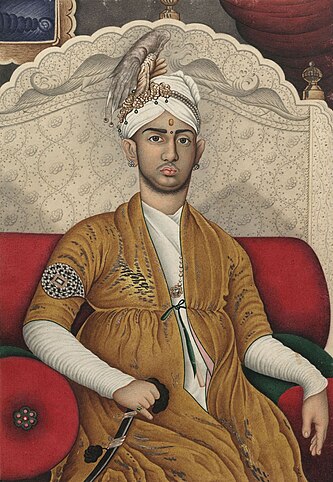
About Swathi Thirunal Rama Varma
Swathi Thirunal Rama Varma, known by the full name Sree Padmanabhadasa Sree Swathi Thirunal Rama Varma (Malayalam: ശ്രീ പദ്മനാഭദാസ ശ്രീ സ്വാതി തിരുനാള് രാമവർമ്മ)(Tamil:ஸ்ரீ சுவாதி திருநாள் ராம வர்மா (April 16, 1813 – December 27, 1846) was the Maharaja of the state of Travancore തിരുവിതാംകൂര്)) )) in India. He modernized Travancore with a well-formulated code of laws, courts of Justice, introduction of English education, construction of an observatory, installation of the first Government printing press, establishment of the first manuscripts library and many more activities. Efficiency was the key word and corruption, a taboo in his administration.
Swathi Thirunal Rama Varma Quotes
Shortest
Earliest
Explore our curated collection of the most famous and impactful Swathi Thirunal Rama Varma quotes.

“My sense of the high advantage derived from this establishment in a scientific point of view, as I am fully sensible that by reason of my patronizing it, my name, however, undeserving of any celebrity is favorably noticed even in distant regions, among the scientific personages of the present day.”
Quotes About Swathi Thirunal Rama Varma
Gain deeper perspective through quotes about Swathi Thirunal Rama Varma from others.
V. K. Subramanian on Swathi Thirunal Rama Varma 4 quotes
“Very few rulers could come anywhere near Swati Tirunal in his patronage of arts, his catholicity of religious outlook, his transcendence of narrow regional, religious and caste barriers. He was truly a evolved royal sage.”
P. Shungoony Menon on Swathi Thirunal Rama Varma 2 quotes
“It was a tradition with the Travancore royalty to prefix the names of their children with the asterism under which they were born. The new born was named Swati Tirunal Rama Varma. Submitting to the commands of Lord Minto, the Queen arranged for the coronation of four-month-old Swati Tirunal as King of Travancore on August 28, 1813, and stepped down to rule as his regent. He was now -- Sree Padmanabha Dasa Vanchi Pala Rama Varma Kulasekhara Kiritapathi Swati Rama Raja Manney Sultan…”
Colonel Welsh on Swathi Thirunal Rama Varma
“Swati Tirunal, now thirteen... took up a book of mathematics and selecting the forty seventh proposition of Euclid sketched the figure on a country slate but what astonished me most was his telling us in English that Geometry was derived from the Sanskrit, which as Jaw metor (Jyamiti) to measure the earth and that many of our mathematical terms were also derived from the same source such as hexagon, heptagon, octagon... This promising boy is now, I conclude, sovereign of the finest country in India for he was to succeed to the Musnud (throne) the moment he had attained his 16th year.”
Lakshmi Devnath on Swathi Thirunal Rama Varma 5 quotes
“On April 20, 1829, Swati Tirunal formally assumed charge of his kingdom. Those were tough times for Indians.”
Sir Thomas Munro on Swathi Thirunal Rama Varma
“There is perhaps no example of any conquest in which the natives have been so completely excluded from all share of the government of their country as in British India....Foreign conquerors have treated the natives with violence, and often with great cruelty, but none has treated them with so much scorn as we...”
About Swathi Thirunal Rama Varma
Swathi Thirunal Rama Varma, known by the full name Sree Padmanabhadasa Sree Swathi Thirunal Rama Varma (Malayalam: ശ്രീ പദ്മനാഭദാസ ശ്രീ സ്വാതി തിരുനാള് രാമവർമ്മ)(Tamil:ஸ்ரீ சுவாதி திருநாள் ராம வர்மா (April 16, 1813 – December 27, 1846) was the Maharaja of the state of Travancore തിരുവിതാംകൂര്)) )) in India. He modernized Travancore with a well-formulated code of laws, courts of Justice, introduction of English education, construction of an observatory, installation of the first Government printing press, establishment of the first manuscripts library and many more activities. Efficiency was the key word and corruption, a taboo in his administration.