Link Copied!
Sviatoslav Richter Quotes (1915-1997)
Composer
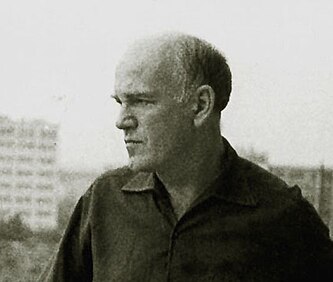
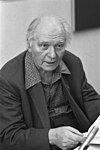
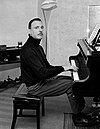


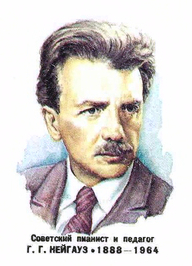

About Sviatoslav Richter
Sviatoslav Teofilovich Richter (March 20 O.S. March 7 1915 – August 1, 1997) was a Soviet pianist well known for the depth of his interpretations, virtuoso technique, and vast repertoire. He is widely considered one of the greatest pianists of the 20th century.
Sviatoslav Richter Quotes
Shortest
Earliest
Explore our curated collection of the most famous and impactful Sviatoslav Richter quotes.
“The interpreter is really an executant, carrying out the composer's intentions to the letter. He doesn't add anything that isn't already in the work. If he is talented, he allows us to glimpse the truth of the work that is in itself a thing of genius and that is reflected in him. He shouldn't dominate the music, but should dissolve into it.”
“I am not a complete idiot, but whether from weakness or laziness have no talent for thinking. I know only how to reflect: I am a mirror ... Logic does not exist for me. I float on the waves of art and life and never really know how to distinguish what belongs to the one or the other or what is common to both. Life unfolds for me like a theatre presenting a sequence of somewhat unreal sentiments; while the things of art are real to me and go straight to my heart.”

Sviatoslav Richter Quotes by Topic
Find exactly what you are looking for by browsing this categorized list of Sviatoslav Richter quotes by topic.
Sviatoslav Richter on Piano Sonata No. 6 (Prokofiev)
“The remarkable stylistic clarity and the structural perfection of the music amazed me. I had never heard anything like it. With wild audacity the composer broke with the ideals of Romanticism and introduced into his music the terrifying pulse of twentieth-century music. Classically well-balanced in spite of all its asperities, the Sixth Sonata is an utterly magnificent work.”
Sviatoslav Richter on Piano Sonata No. 9 (Prokofiev)
“It was Prokofiev’s birthday [probably 1947], and he invited me to visit him for the first time at his dacha at Nikolina Gora. “I’ve something interesting to show you,” he announced as soon as I arrived, whereupon he produced the sketches of his Ninth Sonata. “This will be your sonata. But do not think it’s intended to create an effect. It’s not the sort of work to raise the roof of the Grand Hall.” And at first glance it did indeed look a little simplistic. I was even a tiny bit disappointed. ... In 1951 he turned sixty. On his birthday Prokofiev was once again ill. On the eve of his birthday a concert was held at the Composers’ Union and he listened to it over the phone. It was on this occasion that I played the Ninth Sonata for the first time, a radiant, simple and even intimate work. In some ways it is a Sonata domestica. The more one hears it, the more one comes to love it and feels its magnetism. And the more perfect it seems. I love it very much.”
Sviatoslav Richter on Piano Sonata No. 7 (Prokofiev)
“Early in 1943, I received the score of the Seventh Sonata, which I found fascinating and which I learned in just four days.... The work was a huge success. The audience clearly grasped the spirit of the work, which reflected their innermost feelings and concerns. (This was also felt to be the case with Shostakovich’s Seventh Symphony, which dates from more or less the same period.) With this work we are brutally plunged into the anxiously threatening atmosphere of a world that has lost its balance. Chaos and uncertainty reign. We see murderous forces ahead. But this does not mean that what we lived by before thereby ceases to exist. We continue to feel and love. Now the full range of human emotions bursts forth. Together with our fellow men and women, we raise a voice in protest and share the common grief. We sweep everything before us, borne along by the will for victory. In the tremendous struggle that this involves, we find the strength to affirm the irrepressible life-force.”
Sviatoslav Richter on Piano Sonata No. 8 (Prokofiev)
“Prokofiev himself played it at the Composers’ Union but it was Gilels who gave the first public performance. Prokofiev played it twice. Even after a single hearing, it was clear that this was a remarkable work, but when I was asked whether I planned to play it myself, I was at a loss for an answer. S. S. now had difficulty playing. He no longer had his former confidence, and his hands fluttered helplessly over the keys. After the second hearing, I was firmly resolved to learn the piece. Someone began to snigger: “It’s completely outdated! You don’t really want to play it?!” Of all Prokofiev’s sonatas, this is the richest. It has a complex inner life, profound and full of contrasts. At times it seems to grow numb, as if abandoning itself to the relentless march of time. If it is sometimes inaccessible, this is because of its richness, like a tree that is heavy with fruit. It remains one of my three favorite works, alongside the Fourth and Ninth Sonatas. Gilels played it magnificently at his recital in the Grand Hall.”

What Sviatoslav Richter Said About Others
Discover personal opinions Sviatoslav Richter shared regarding contemporaries.
Sviatoslav Richter on Josef Hofmann
“His playing is stunning, with absolutely no smudging.”
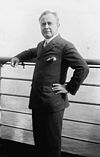
Sviatoslav Richter on Vladimir Sofronitsky
“Sofronitsky was made for Scriabin, and Scriabin for Sofronitsky!”
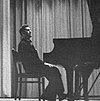
Sviatoslav Richter on Sergei Prokofiev
“I remember being struck by his way of playing virtually without any pedal. And his manner was so polished.”
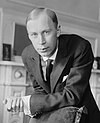
Sviatoslav Richter on Joseph Haydn
“Dear Haydn, how I love you! But other pianists? They're rather lukewarm towards you. Which is a great shame.”
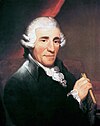
Sviatoslav Richter on Dinu Lipatti
“In this performance, this partita is really prodigious. Bach's beauty and charm; a magnificent piano tone and a magnificent pianist!”
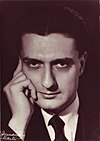
Sviatoslav Richter on Anton Webern
“Webern attracts me, though there's a lot that I don't understand. His music is a combination of purity, complexity and abstraction in the very best sense of the term.”
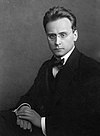
Sviatoslav Richter on Alexander Scriabin
“Scriabin isn't the sort of composer whom you'd regard as your daily bread, but is a heavy liqueur on which you can get drunk periodically, a poetical drug, a crystal that's easily broken.”
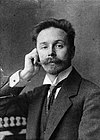
Sviatoslav Richter on Dmitry Kabalevsky
“Neuhaus summed him up rather well when he called him the poor man's Prokofiev or Shostakovich. I knew him, but it would never have occured to me to play his threatbare music. (...) K. was a true intellectual, someone who was genuinely cultured, but as a person he was compromised, and deeply unpleasant.”
Quotes About Sviatoslav Richter
Gain deeper perspective through quotes about Sviatoslav Richter from others.
Piotr Anderszewski on Sviatoslav Richter
“Richter was like a god to me. I met him in Warsaw in 1991. Because I wanted to watch him rehearsing, I literally lay on the floor behind the stage. When he arrived, he didn't even try the piano. The next day I got a phone call. They needed someone to turn pages for him. In fact a young girl had been chosen to do it, but when Richter knew that he said he couldn't play with a woman beside him because he would find her breasts too inhibiting! Later I discovered he never tried the piano before a concert. He used to say that a concert was a matter of fate. That made a big impression on me and I tend to take a similar approach.”
Leif Ove Andsnes on Sviatoslav Richter
“My teacher was influenced by the Russian piano school. For him, Richter and Gilels were the great heroes and they became for me also. Especially Richter. When I was about 20, I couldn’t listen to any other pianist because I was completely obsessed by Richter. He was such a great personality, had the most phenomenal talent, and played so much of the repertoire. When everything worked, it was incredible.”
Vladimir Ashkenazy on Sviatoslav Richter
“Richter magnetized me, like he did so many others, and I wouldn't have missed his concerts for anything. I think he communicated more than anyone else complete devotion and sincerity to his art. When I look back, this is what attracted me most to him then, and continues to do so today. I now understand that the strongest element in his magnetic appeal to audiences is his conviction that what he does is absolutely right at that particular moment. It comes from the fact that he has created his own inner world, absolutely complete in his mind, and if you argue with him about anything it's almost no use. He might say "Yes, perhaps you're right, but I just don't feel it that way. This is what I feel and this is the way I play." And that's it. I don't often agree him after the performance, but during it I can see that everything fits together and is completely sincere and devoted, and that wins me over. I'm sure that many people feel exactly the same but, in my case, since I am a practising musician, the fact that I am won over at the time of the performance is extraordinary. In almost all other cases I disagree right there and then at the moment when a performance is taking place! In addition to his many other wonderful qualities Richter is for me the greatest interpreter of Debussy; his playing really has three or four dimensions. It's not just beautiful sounds and beautiful sonorities; I find the imagination behind the sonorities unmatchable. There is a fantastic feeling of spontaneity and of "creating at this moment". In fact, everything is worked out before, but at the same time he always creates "at this moment", and this feeling is marvellous.”
Boris Berman on Sviatoslav Richter
“Of all the pianists with whom Prokofiev worked during the Soviet period of his life, he clearly preferred Richter. One of the testaments to this, de scribed here for the first time, is a note in Prokofiev’s handwriting preserved in Richter’s archive. It seems to be a draft of a congratulatory cable—the text lacks punctuation marks—that says, “Warm salute to pianist best in Soviet Union and round whole globe the Prokofievs.””
Lazar Berman on Sviatoslav Richter
“Sviatoslav Richter amazed me by his spontaneity. I emphasize - the spontaneity of Richter's art of the 40's-50's is a unique phenomenon in pianism. For instance, today nothing is heard of spontaneity. And Emil Gilels has always been a mentor for me. I have always felt and still feel taken over by the wonder of Gilels' unique tone. Undoubtedly Richter and Gilels inspired me as magnificent virtuosos by their technique. The more so, as at that time I already had my own considerable technical achievements. In this respect everything was even too good, I would say.”
Harold Craxton on Sviatoslav Richter 2 quotes
“Why this wave of emotion and excitement? Some attributed it to a great publicity build-up, and one writer objected to the use of the phrase, 'The Pianist of the Century'. 'Which century?' he asked. This was the same critic who labelled Horowitz on his debut as 'the greatest pianist, living or dead'. It is obvious that Richter's gramophone records were his best publicity agent, for these fine recordings have been available for some time and they have so impressed the discerning listener that the message has been passed round-'Here is a great pianist'. Publicity has not suppressed judgment here.”
Jed Distler on Sviatoslav Richter 3 quotes
“Great pianists usually have one or two facets that dominate their performances in ways that beget adjectives: Horowitzian thunder, Gouldian staccato, Serkin-like nervous energy, Hofmannesque inner-voices, Cortotish rubato. Yet what makes Sviatoslav Richter's playing "Richterian" is not so easy to pin down. The recordings display a multitude of Richters at work. He can be delicate or brusque, withdrawn or optimistic, scrupulous or cavalier, an architect or a miniaturist, a poet or a pedant. One consistent attribute is the pianist's distinctive tone. The beauty and clarity of his sound shimmers with prismatic transparency at all dynamic levels. Chords are always translucent and well balanced. Few pianists can summon the concentration and control that enable Richter, with his hypnotic legato, not only to sustain the unusually slow pace of the Sarabande of Bach's Third English Suite, or the First Movement of the Schubert G Major Sonata, D.894, but also to draw the listener into his sound world.”
Glenn Gould on Sviatoslav Richter
“I believe you can divide musical performance into two categories: those who seek to exploit the instrument they use and those who do not. In the first category, if we believe history, is a place for such legendary characters as Liszt and Paganini as well as many allegedly demanding virtuosi of more recent vintages. That category belongs essentially to musicians determined to make us aware of their relationship with their instrument. They allow that relationship to become the focus of attention. The second category includes musicians who try to bypass the whole question of the performing mechanism, to create the illusion of a direct link between themselves and a particular musical score. And, therefore, help the listener to achieve a sense of involvement, not with the performance per se but rather with the music itself. And in our time, there's no better example of that second musician than Sviatoslav Richter. What Richter does is insert between the listener and the composer his own enormously powerful personality as a kind of conduit. And we gain the impression that we're discovering the work anew and, often, from a quite different perspective than we're accustomed to.”

Bernard Holland on Sviatoslav Richter
“Such is our reverence for Mr. Richter's distinguished career that we tend to overlook its ambivalence. He has indeed risen above his Soviet milieu, but he is also anchored to it. A part of him realizes that the instrument is just that: a device used to make something else, namely music. The other part of him surrenders to the primary tenet of the Soviet school: that the instrument dictates the style of performance, and that when music and that style clash, music must adjust. Mr. Richter is an honest man. He reads scores with sober, selfless care. Listen to him play Scriabin etudes, and you will hear a compelling need to tell complex musical stories with absolute clarity. Mr. Richter's uprightness extends to phrasing. No one has better calculated the needed breathing space between musical sentences. He teaches by example. On the opening page of Schumann's "Des Abends," Mr. Richter's withholding of the accented tone ideally describes the clash of moving melody note against a settled harmony beneath. It is a textbook lesson in rubato, sternly delivered. He has the moral courage to sustain the slowest of tempos in the first movement of the Chopin F minor Concerto. The slow movement peels away accumulated sentiment and admires Chopin's marvelous long breaths of movement. When it is time to laugh and be merry -- say, in Schumann's skipping, skittering "Traumes Wirren" -- merriment is not left to chance. If Mr. Richter has ever played a casual passage on the piano, I am unaware of it. Authority rises around his performances like great stone monuments. Mr. Richter does not interpret a piece of music; he looms over it.”
Vladimir Horowitz on Sviatoslav Richter
“Of the Russian pianists I like only one, Richter. Gilels did some things well, but I did not like his mannerisms, the way he moved around while he was playing.”
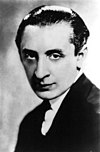
Norman Lebrecht on Sviatoslav Richter
“Amid all the tributes that will mark tomorrow’s centenary of the birth of Sviatoslav Richter, none will find the right adjective to go before the noun ‘pianist’. Richter was unlike any pianist before or since, so much so that the very term pianist distorts and belittles the essence of his being.”
Piero Rattalino on Sviatoslav Richter
“How many pianists can claim today to be at [Richter's] level? How many are his peers, in the whole history of piano playing? Although I may appear unduly selective, only two names come to mind: Franz Liszt and Feruccio Busoni. The first was born in 1811; the second in 1866, fifty-one years later. And Richter was born in 1915, forty-nine years after Busoni.”
About Sviatoslav Richter
Sviatoslav Teofilovich Richter (March 20 O.S. March 7 1915 – August 1, 1997) was a Soviet pianist well known for the depth of his interpretations, virtuoso technique, and vast repertoire. He is widely considered one of the greatest pianists of the 20th century.