Link Copied!
Stephen Walt Quotes (1955-)
Author


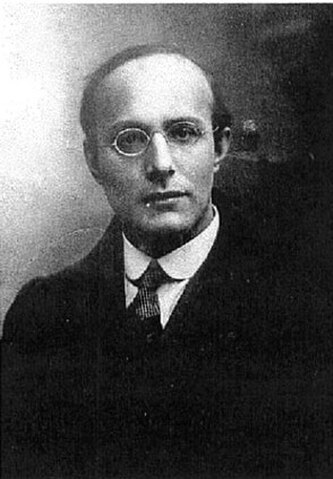
About Stephen Walt
Stephen Martin Walt (born July 2, 1955) is an author and professor of international affairs at Harvard University's John F. Kennedy School of Government.
Best Stephen Walt Quotes
Shortest
Earliest
Explore our curated collection of the most famous and impactful Stephen Walt quotes.

“Second, we can be confident that neither Trump nor Biden is going to resurrect old-style neoliberal hyperglobalization.”
“Far from making ‘America great again,’ this epic policy failure will further tarnish the United States’ reputation as a country that knows how to do things effectively.”
“So here’s the puzzle: Realist advice has performed better than its main rivals over the past two-and-a-half decades, yet realists are largely absent from prominent mainstream publications.”
“Finally, this election will not end the deep polarization and reflexive partisanship that have roiled U.S. domestic politics for more than two decades, and this condition will continue to exert baleful effects on America’s international position.”

“If U.S. policies were so successful, why did the Obama administration have to send more troops to Europe to reassure America’s prosperous but poorly equipped allies, and why did Trump ultimately do the same, despite his all-too-obvious skepticism about NATO’s value?”
“Polarization will continue to hamper efforts to address the pandemic. It will encourage and facilitate foreign interference in U.S. domestic politics (or even the mere suspicion of the same)....and it makes other states warier of making long-term agreements with the United States because they cannot be sure that any promises that U.S. officials make will survive the next election cycle.”
“It is obvious that this approach failed, which is why U.S. leaders now worry about unfavorable power trends in Asia and are actively trying to build a balancing coalition to contain Chinese power. I share their concerns and agree with this prescription (and said so in the book), yet Gavin apparently regards the policies that led to this worrisome situation as a great success. They surely were for China—but not for the United States.”

“...stop subsidizing the security of wealthy allies that have the wherewithal to defend themselves; and stop pursuing hyperglobalization without regard for its damaging consequences at home and its impact on the balance of power abroad. We believe these adjustments would allow the country to concentrate its resources on the challenge that a rising China presents and help address the accumulating problems it faces domestically.”
“...stop subsidizing the security of wealthy allies that have the wherewithal to defend themselves; and stop pursuing hyperglobalization without regard for its damaging consequences at home and its impact on the balance of power abroad. We believe these adjustments would allow the country to concentrate its resources on the challenge that a rising China presents and help address the accumulating problems it faces domestically.”
“This argument carries some obvious implications for the next U.S. administration. First, as Sino-American rivalry heats up, winning (or at least not losing) will require more than tariffs, restrictions on Chinese students and high-tech firms, and bombastic speeches. It will also require preserving or regaining the lead in critical areas like artificial intelligence and 5G technology, which in turn means leveraging and incentivizing the impressive innovative capacity of U.S. firms and research institutions.”
“So here’s my challenge to Rupert Murdoch, Jeff Bezos, the Sulzberger family, and anyone else who runs a major media operation: Why not hire a realist? If you’re looking for some suggestions, how about Paul Pillar, Chas Freeman Jr., Robert Blackwill, Steve Clemons, Michael Desch, Steve Chapman, John Mearsheimer, Barry Posen, Andrew Bacevich, or Daniel Larison? Give one of them a weekly column, and then you could genuinely claim to be offering your readers a reasonably comprehensive and balanced range of opinion on international affairs. I mean: What are you folks so afraid of?”
“Deng Xiaopeng's “Four Modernizations” began the process of unleashing China's enormous potential, but the United States consciously aided its ascent, based on the hope that doing so would hasten its transition to democracy, turn Beijing into a “responsible stakeholder,” and bind it so tightly within U.S.-led institutions that future conflicts would be easy to manage. One is hard-pressed to think of another case where an overwhelmingly dominant great power deliberately facilitated the rise of the only country that could possibly pose a serious challenge to its privileged position.”
Stephen Walt Quotes by Topic
Find exactly what you are looking for by browsing this categorized list of Stephen Walt quotes by topic.
Stephen Walt on Realism (international relations)
“So here’s the puzzle: Realist advice has performed better than its main rivals over the past two-and-a-half decades, yet realists are largely absent from prominent mainstream publications.”

What Stephen Walt Said About Others
Discover personal opinions Stephen Walt shared regarding contemporaries.
Stephen Walt on Ernest Gellner
“The state is the dominant political form in the world today, and nationalism remains a powerful political force. This book will help you understand where it came from and why it endures.”


About Stephen Walt
Stephen Martin Walt (born July 2, 1955) is an author and professor of international affairs at Harvard University's John F. Kennedy School of Government.