Link Copied!
Slavoj Žižek Quotes (1949-)
Philosopher



About Slavoj Žižek
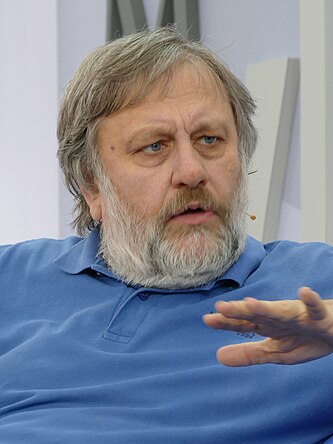
Slavoj Žižek (born 21 March 1949) is a Slovenian sociologist, philosopher and cultural critic. Zizek is a known for his controversial public personality, use of "dirty humor", and complex philosophy that synthesizes the philosophies of Karl Marx, Hegel, and Jacques Lacan.
Best Slavoj Žižek Quotes
Shortest
Earliest
Explore our curated collection of the most famous and impactful Slavoj Žižek quotes.
“16”
“Even the dead will not be safe from the enemy if he wins.”
“The force of universalism is in you Basques, not in the Spanish state”

“Heidegger is 'great' not in spite of, but because of his Nazi engagement...”
“A spectre is haunting Western academia (...), the spectre of the Cartesian subject.”

“...one should also not allow our opponents to determine the field and topic of the struggle.”
“'''Lenin is best remembered for his famous retort,'Freedom- yes, but for WHOM? To do WHAT?''''”
“As a Marxist, let me add: if anyone tells you Lacan is difficult, this is class propaganda by the enemy.”
“...there is never a "right moment" for the revolutionary act - the act is always, by definition, "premature".”

“I may still be a kind of a Marxist but I'm very realistic, I don't have these dreams of revolutions around the corner.”
“All the proper balances of our daily life are disturbed, everything we do is colored by the underlying thought of "that".”
“Man as such is nature sick unto death, derailed, run off the rails through a fascination with a lethal Thing.”
“As Bertolt Brecht puts in his Threepenny Opera: '' What is the robbery of a bank compared to the foundation of a new bank?'”
“I think that the task of philosophy is not to provide answers, but to show how the way we perceive a problem can be itself part of a problem.”

“The original question of desire is not directly 'What do I want?', but 'What do others want from me? What do they see in me? What am I to others?'”
“...crazy, tasteless even, as it may sound, the problem with Hitler was that he was not violent enough, that his violence was not 'essential' enough...”
“A woman is not complimentary to a man, but she embodies his lack (which is why Lacan can say that a beautiful woman is a perfect incarnation of man's castration).”

Slavoj Žižek Quotes by Topic
Find exactly what you are looking for by browsing this categorized list of Slavoj Žižek quotes by topic.
Slavoj Žižek on Iraq 3 quotes
“The problem, again, was that there were too many reasons for the war. What conferred a semblance of consistency on this multitude of reasons was, of course, ideology.”

Slavoj Žižek on Freedom 2 quotes
View all 2 quotes on Freedom →Slavoj Žižek on Sublime (philosophy) 2 quotes
“The "Fall" is the theological name for such an unconscious choice, and it designates the wound (of separation, of the constitutive loss) which characterizes our being-human as finite and sexed. Musk (and other proponents of Neuralink) wants to heal the wound literally: to fill in the gap, to have man united with god by way of making him god-like, i.e., by way of providing him with properties and capacities which we (till now) experienced as "divine." What makes this option properly traumatic is that it turns around the gap that separates our ordinary daily experience from sublime speculations about our proximity to god.”
Slavoj Žižek on Atheism
Slavoj Žižek on Human sexual activity
Slavoj Žižek on Love
Slavoj Žižek on Philosophy
“What characterizes philosophy is this "step back" from actuality into possibility — the attitude best rendered by Adorno's and Horkheimer's motto quoted by Fredric Jameson: "Not Italy itself is given here, but the proof that it exists."”
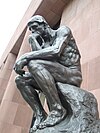
Slavoj Žižek on Undead
“[I]f there is a phenomenon that fully deserves to be called the "fundamental fantasy of contemporary mass culture," it is this fantasy of the return of the living dead: the fantasy of a person who does not want to stay dead but returns again and again to pose a threat to the living.”

Slavoj Žižek on They Live
“They Live is definitely one of the forgotten masterpieces . ... The sunglasses function like a critique of ideology. They allow you to see the real message beneath all the propaganda, glitz, posters and so on.
... When you put the sunglasses on you see the dictatorship in democracy, the invisible order which sustains your apparent freedom.”

Slavoj Žižek on Communism
“The perversion of Stalinist Communism consists in the fact that the view by means of which the Party looks at history coincides immediately with history's gaze upon itself. To use good old Stalinist jargon, today already half-forgotten, Communists act immediately in the name of "objective laws of historical progress"; it is history itself, its necessity, that speaks through their mouths.”

Slavoj Žižek on Palestine (region)
“Both the Germans and the Zionists wanted as many Jews as possible to move to Palestine. The Germans preferred to have them out of Western Europe, and the Zionists themselves wanted the Jews in Palestine to outnumber the Arabs as quickly as possible. [...] In both cases, the purpose was a kind of 'ethnic cleansing', that is, a violent change in the ratio of ethnic groups in the population.”
Slavoj Žižek on September 11 attacks
“Not only were the media bombarding us all the time with talk about the terrorist threat; this threat was also obviously libidinally invested — just remember the series of movies from Escape from New York to Independence Day. That is the rationale of the often-mounted association of the attacks with Hollywood disaster movies: the unthinkable which happened was the object of fantasy, so that, in a way, America got what it fantasized about, and that was the biggest surprise.”

What Slavoj Žižek Said About Others
Discover personal opinions Slavoj Žižek shared regarding contemporaries.
Slavoj Žižek on Baruch Spinoza 3 quotes
“Instead of engaging in this rather boring academic exercise of opposing Spinoza and Levinas, what I want to accomplish is a consciously old-fashioned Hegelian reading of Spinoza - what both Spinozeans and Levinasians share is radical anti-Hegelianism. My starting hypothesis is that, in the history of modern thought, the triad of paganism-Judaism-Christianity repeats itself twice, first as Spinoza-Kant-Hegel, then as Deleuze-Derrida-Lacan. Deleuze deploys the One-Substance as the indifferent medium of multitude; Derrida inverts it into the radical Otherness which differs from itself; finally, in a kind of "negation of negation," Lacan brings back the cut, the gap, into the One itself. The point is not so much to play Spinoza and Kant against each other, thus securing the triumph of Hegel; it is rather to present the three philosophical positions in all their unheard-of radicality - in a way, the triad Spinoza-Kant-Hegel does encompass the whole of philosophy.”

Slavoj Žižek on Tony Blair 2 quotes
“Tony Blair, a passionate Christian, has expressed his conviction that WMDs will be found in almost directly religious terms of credo quia absurdum: despite the lack of evidence, he personally is deeply convinced that they will be found. ... The only appropriate answer to this conundrum is not the boring liberal plea for innocence until guilt is proved but, rather, the point made succintly by 'Rachel from Scotland' on the BBC website in September 2003: 'We know he had weapons; we sold him some of them.' This is the direction a serious investigation should have taken.”

Slavoj Žižek on Martin Heidegger
“Heidegger is 'great' not in spite of, but because of his Nazi engagement...”

Slavoj Žižek on Jacques Lacan
“As a Marxist, let me add: if anyone tells you Lacan is difficult, this is class propaganda by the enemy.”

Slavoj Žižek on Adolf Hitler
“...crazy, tasteless even, as it may sound, the problem with Hitler was that he was not violent enough, that his violence was not 'essential' enough...”

Slavoj Žižek on George Soros
“Half the day he engages in the most ruthless financial exploitations, ruining the lives of hundreds of thousands, even millions. The other half [of the day] he just gives part of it back.”

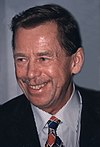
Slavoj Žižek on Václav Havel
“Havel … invokes … "higher law" when he claims that "human rights, human freedoms . . . and human dignity have their deepest roots somewhere outside the perceptible world …while the state is a human creation, human beings are the creation of God." He seems to be saying that NATO forces were allowed to violate international law because they acted as direct instruments of the "higher law" of God — a clear-cut case of religious fundamentalism.”
Slavoj Žižek on Confucius
“Confucius was not so much a philosopher as a proto-ideologist: what interested him was not metaphysical Truths but rather a harmonious social order within which individuals could lead happy and ethical lives. He was the first to outline clearly what could lead happy and ethical lives. He was the first to outline clearly what one is tempted to call the elementary scene of ideology, its zero-level, which consists in asserting the (nameless) authority of some substantial Tradition.”

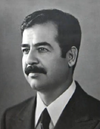
Slavoj Žižek on Saddam Hussein
“The images of Saddam Hussein endlessly repeated on our screens before the war (Saddam firing a rifle into the air) made him into some kind of Iraqi Charlton Heston — the president not only of Iraq, but also of the Iraqi Rifle Association. The true interest of these images, however, is that they remind us how the ideological struggle is fought out not only at the level of arguments but also at the level of images: which image will hegemonize a field, and function as the paradigmatic embodiment of an idea, a regime, a problem.”
Quotes About Slavoj Žižek
Gain deeper perspective through quotes about Slavoj Žižek from others.
John Gray on Slavoj Žižek
“Few thinkers illustrate the contradictions of contemporary capitalism better than the Slovenian philosopher and cultural theorist Slavoj Žižek.”
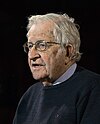
Noam Chomsky on Slavoj Žižek
“What you’re referring to is what’s called “theory.” And when I said I’m not interested in theory, what I meant is, I’m not interested in posturing–using fancy terms like polysyllables and pretending you have a theory when you have no theory whatsoever. So there’s no theory in any of this stuff, not in the sense of theory that anyone is familiar with in the sciences or any other serious field. Try to find in all of the work you mentioned some principles from which you can deduce conclusions, empirically testable propositions where it all goes beyond the level of something you can explain in five minutes to a twelve-year-old. See if you can find that when the fancy words are decoded. I can’t. So I’m not interested in that kind of posturing. Žižek is an extreme example of it. I don’t see anything to what he’s saying.”
Paul Kingsbury on Slavoj Žižek
“...the works of Slavoj Žižek can advance the field of emotional geographies, as well as our understandings of emotion, space, and society. Žižek provides a rich social theoretical vocabulary that can help explain cultural discontent, how emotional worlds bond and fall apart, why there is no guaranteed harmony in love with our partner, and how emotional worlds are organized in ways so that people can hold onto something that resembles ‘subjectivity’ and ‘reality’.”
Eric Hobsbawm on Slavoj Žižek
“I suppose Zizek is rightly described as a performer. He has this element of provocation that is very characteristic and does help to interest people, but I'm not certain that people who are reading Zizek are actually drawn very much nearer rethinking the problems of the left.”
Adam Kirsch on Slavoj Žižek
“The curious thing about the Žižek phenomenon is that the louder he applauds violence and terror—especially the terror of Lenin, Stalin, and Mao, whose "lost causes" Žižek takes up in another new book, In Defense of Lost Causes—the more indulgently he is received by the academic left, which has elevated him into a celebrity and the center of a cult.”
Adrian Johnston on Slavoj Žižek
“Maybe, many years ago, Zizek made a bet with some of his Slovenian colleagues about how much post-modern sounding gibberish he could get contemporary academics to swallow-keep in mind that, recently, he's been trying to persuade people to embrace as unproblematic the juxtaposition of Stalinist dialectical materialism and Christian theology.”
Tony Judt on Slavoj Žižek
“The shortage of public intellectuals (in the English-speaking world) goes back to the decline of the written media: the first TV intellectual was Foucault, who was at home in both media, but his successors and imitators know only the camera. This forces sound bites upon even the most complex material: see Schama, Ferguson e tutti quanti. Also, and paradoxically: public intellectuals are best when they are grounded in a particular language, culture, debate. Thus Camus was French, Habermas is German, Sen is Bengali, Orwell was deep English. This made their cross-frontier ventures plausible, in the same way that Havel or Michnik today have street cred because they started out as courageous dissidents in a very particular time and place. The opposite is the ridiculous Slavoj Zizek: a “global”’ public intellectual who is therefore of no particular interest in any one place or on any one subject. If he is the future of public intellectuals, then they have no future.”

David Pickus on Slavoj Žižek
“[I]t needs to be recognized that instead of being an “interdisciplinary philosopher” or “playfully Hegelian,” Žižek elevates the most un-Hegelian idea of all, arbitrariness, to be his guiding method. Throughout a long book [i.e., Did Somebody Say Totalitarianism?] he brings up dozens of topics without providing any coherent explanation of why he chooses to discuss one topic rather than another. Thus, even someone sympathetic to a specific opinion can never be entirely sure whether Žižek will stand by his own case, or will simply drop it as he flits to another topic. In addition, though he quotes and makes allusions and references to a wide variety of well-known authors and canonical works, he does not provide reasons for his views of the cited texts. Rather, he makes highly tendentious assertions and expects his readers to submit to what are supposed to be apodictic statements. Should they be skeptical, they can be told that Žižek is above “standard” treatments and that he is following a dialectic.”
Roger Scruton on Slavoj Žižek
“To summarize Žižek's position is not easy: he slips between philosophical and psychoanalytical ways of arguing, and is spell-bound by Lacan's gnomic utterances. He is a lover of paradox, and believes strongly in what Hegel called 'the labour of the negative' though taking the idea, as always, one stage further towards the brick wall of paradox.”

About Slavoj Žižek
Slavoj Žižek (born 21 March 1949) is a Slovenian sociologist, philosopher and cultural critic. Zizek is a known for his controversial public personality, use of "dirty humor", and complex philosophy that synthesizes the philosophies of Karl Marx, Hegel, and Jacques Lacan.